

Colorado PUC report highlights benefits, downside to new state law on wholesale electric market

A state law requiring Colorado’s electric power producers to participate in “an organized wholesale market” for electricity could negatively impact the state’s “nationally recognized success with robust competition for generation development,” a report issued by the Colorado Public Utilities Commission warns.
Joining one particular wholesale market could, for example, subordinate Colorado’s power needs to another state’s parochial interests, not to mention invite system reliability issues, the report said.
In 2019, the legislature passed the Colorado Transmission Coordination Act, ordering the utilities commission to study the costs and benefits of organized wholesale energy markets. Earlier this year, the legislature passed a law requiring all Colorado power producers to join a wholesale market by 2030.
The report, issued earlier this month, says implementation of the law “would transfer functional control of Colorado’s electric utility transmission assets to a broader regional process” while optimizing the flow of energy in the western power grid.
While the report details the potential economic, environmental and grid-reliability benefits of a regional wholesale market, it also “considered the possible negative impacts associated with shifting state control over core generation, interconnection, and transmission decision-making, which have generally worked well in Colorado, to regional approaches that may currently be ineffective.”
Two existing wholesale markets – the California Independent System Operator to the west and the Southwest Power Pool to the east – seem to be in contention, according to the report. But each has potential downsides, the utilities commission says.
“CAISO would appear to be particularly well-suited to lead the effort to expand regional coordination since it already optimizes real-time imbalance energy over 84 percent of the western footprint,” the report says. On the other hand, “CAISO could protect California’s parochial interests at the expense of what is best for the region. … Recent filings by CAISO … appear to have significantly exacerbated and given substance to these concerns.”
Another serious concern voiced by the utilities commission has to do with electric system reliability: “CAISO has, for the last few summers, been experiencing extreme capacity shortages often resulting in rolling blackouts,” the report says.
Moreover, the utilities commission says, Colorado already has a robust, low-cost regulatory system in place. “In considering the impact of Colorado utilities joining an organized wholesale market, the Commission should consider the beneficial processes we have today … that efficiently flows the benefits of low-cost generation … to customers.”
Another problem with wholesale markets is that they interfere with the process by which grid operators decide when to build and retire facilities.
“In theory and in practice, prices … are the primary tool by which grid operators ensure reliability,” the report says.
The fuel cost of wind and solar generation is “essentially zero,” according to the report, so it drives down the cost of electricity.
“This in turn impacts the profitability of new generation resources,” the utilities commission says. “While ratepayers certainly benefit from lower prices, the price needs to be high enough to attract developers to bring on new generation resources to meet demand.”
This is already playing out in some markets, according to the utilities commission. Additionally, wholesale markets appear to be having problems dealing with grid expansion projects.
“In (the Southwest Power Pool ) alone, the interconnection queue backlog amounts to over 100GW of primarily wind and solar generation projects – more than twice the size of all of SPP. … It is not clear why Colorado would trade its current well-functioning interconnection processes for a system that has created such inefficient and unequitable access.”
“The Commission’s quantitative analysis concluded that markets have the potential to deliver substantial economic benefits through reduced operation and investment costs” amounting to perhaps $230 million annually, about 4% to 5% of annual revenues.
“However, the Commission is concerned with the effects that market participation would have on the State’s robust resource planning and interconnection queue processes and the PUC’s authority over such issues as resource adequacy, emissions tracking and transmission cost allocation, and planning,” the report concludes.

With the deadline missed, Bureau of Reclamation plans to move forward on Colorado River operations
Marianne Goodland
marianne.goodland@coloradopolitics.com
Updated 7 hours ago
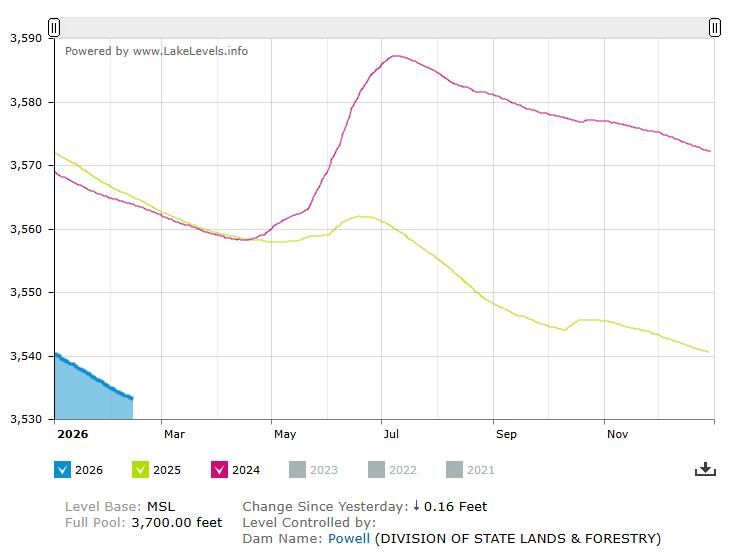
Feb. 14 was no Valentine for the seven states of the Colorado River, which failed to come up with an agreement by that deadline on how to manage the river beginning Oct. 1. The Department of the Interior and the...
Democrat Shannon Bird qualifies by petition for primary ballot in Colorado’s toss-up 8th CD
Ernest Luning
ernest.luning@coloradopolitics.com
Updated 5 hours ago
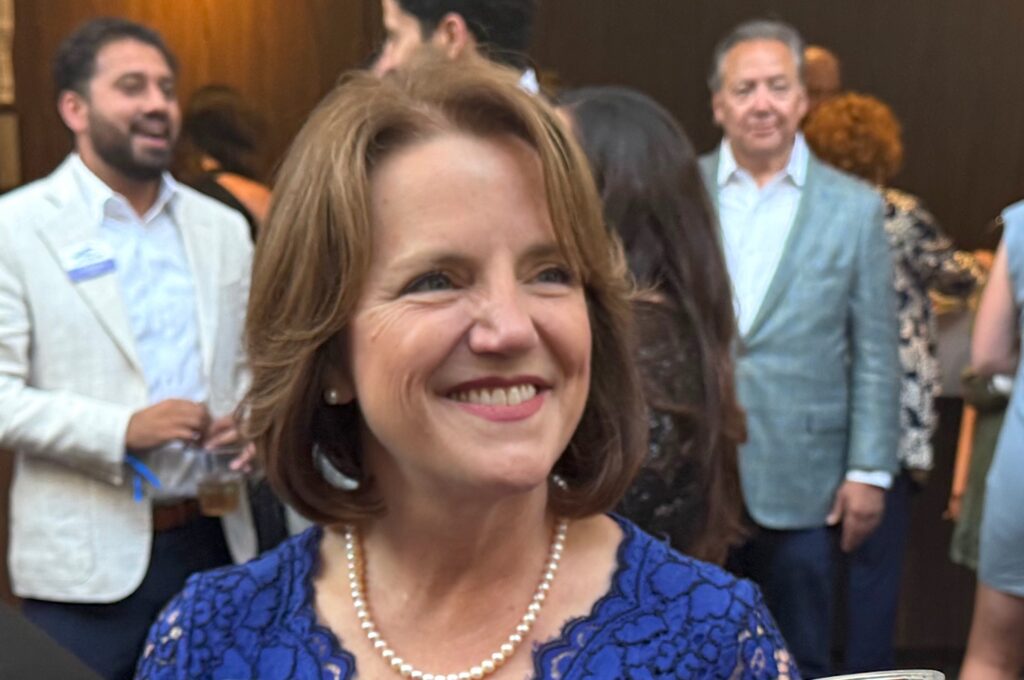
Former state Rep. Shannon Bird has qualified for the Democratic primary ballot in Colorado’s hotly contested 8th Congressional District by submitting a sufficient number of petition signatures, state election officials said this week. The winner of the Democrats’ June 30...
Colorado Supreme Court accepts cases about reliability of gun-to-bullet matching
Michael Karlik
michael.karlik@coloradopolitics.com
Updated 6 hours ago
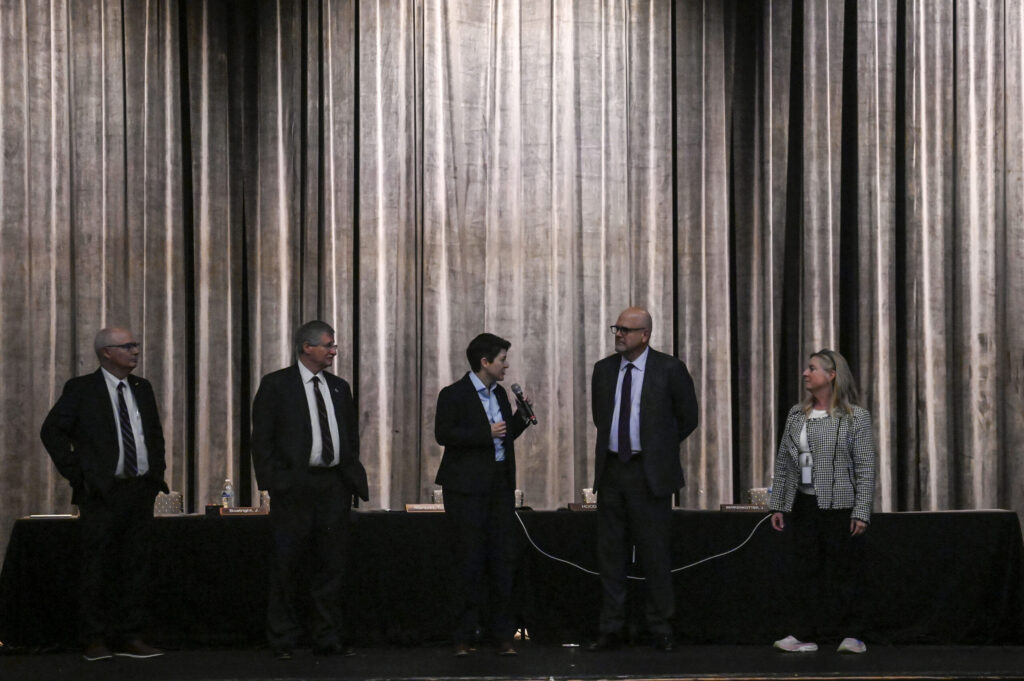
The Colorado Supreme Court announced on Monday that it will hear two cases questioning the reliability of expert testimony that purports to identify whether a specific bullet was fired from a specific gun. At least three of the court’s seven...
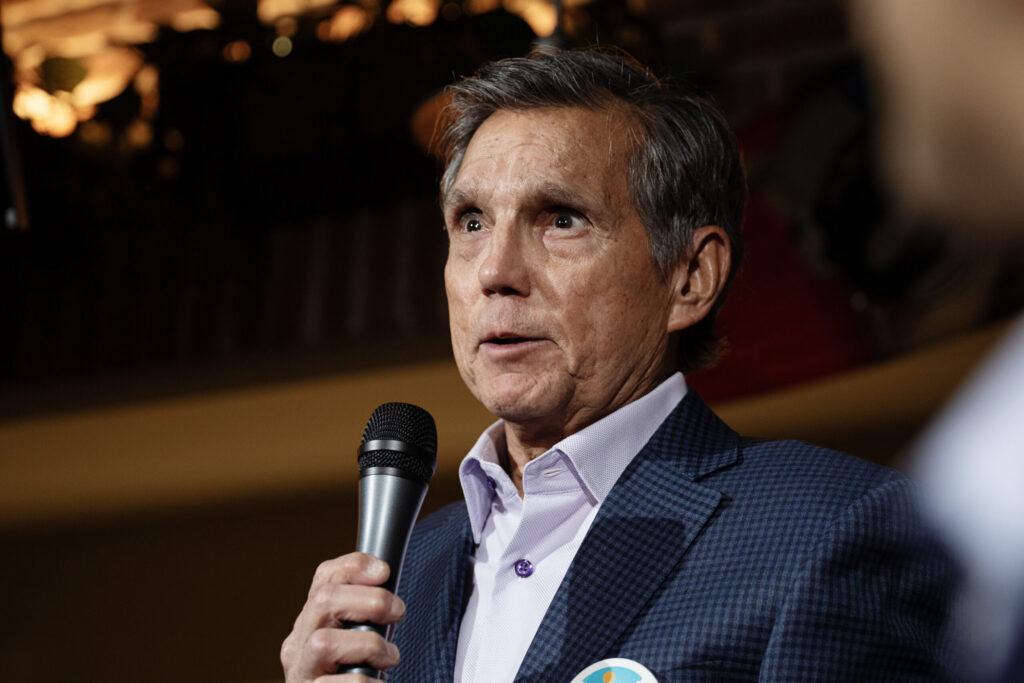
State Rep. Peña outlines significant inequalities in Colorado’s school finance law | A LOOK BACK
Rachael Wright, Special to Colorado Politics
rachael.wright@coloradopolitics.com
Updated 3 days ago
Forty-Five Years Ago This Week: In a guest column published in The Colorado Statesman, House Minority Leader Rep. Federico Peña, D-Denver, wrote that his greatest disappointment with the legislative process was “the inability, or unwillingness, of the General Assembly to...
Colorado Politics Calendar Feb. 16-22
Rachael Wright, Special to Colorado Politics
rachael.wright@coloradopolitics.com
Updated 2 days ago
CoPo’s weekly political calendar will help you find political and public-policy events throughout Colorado. It includes candidate and issue campaign events, public policy meetings, court hearings, state and local party conventions, assemblies, debates, rallies, parades, speaking engagements, traveling dignitary appearances,...
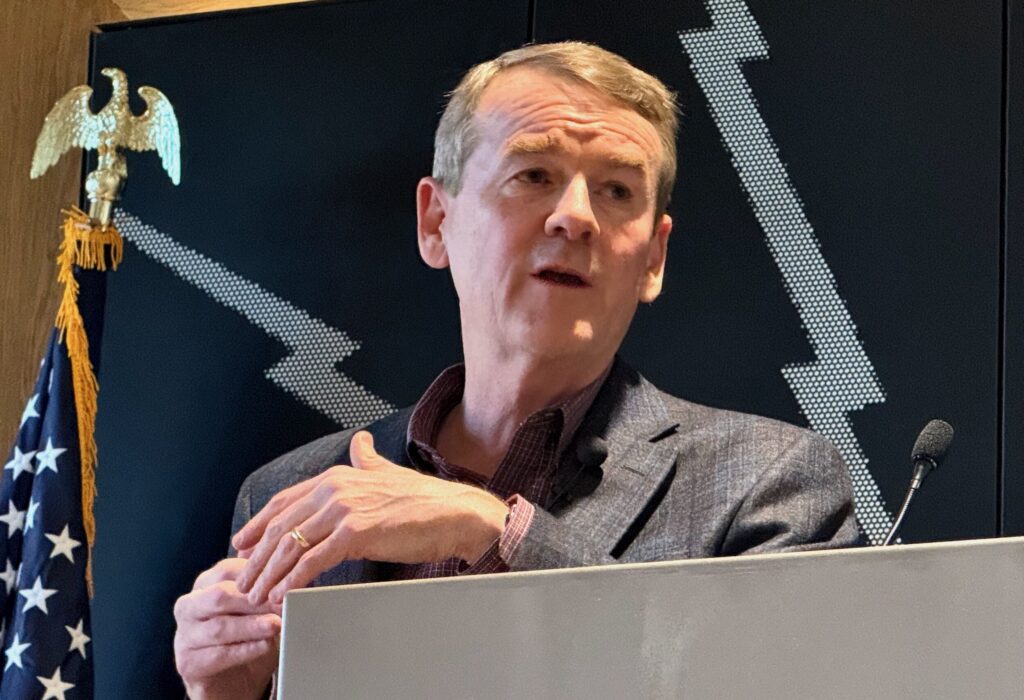
Michael Bennet and ‘the question’ | SONDERMANN
Eric Sondermann
eric-sondermann@coloradopolitics.com
Updated 2 hours ago
The train usually runs only one way. The route goes from the state Capitol to Washington, D.C. State legislators become members of Congress; governors become senators. See Hickenlooper, John. Including our junior senator, no matter his years, a total of...

Colorado District Attorneys unveil 2026 legislative priorities | WHAT’S YOUR AGENDA?
Marissa Ventrelli
marissa.ventrelli@coloradopolitics.com
Updated 2 days ago
Welcome to What’s Your Agenda?: The Colorado Politics’ weekly publication of trade association priorities for the state’s 2026 legislative session. The Colorado District Attorneys’ Council provides training, resources, and legislative support to every prosecutor in the state. In order to...

A day in the life of the Capitol: Capitol M | Week of Feb. 14, 2026
Marianne Goodland
marianne.goodland@coloradopolitics.com
Updated 2 days ago
The lighter side of the Capitol, usually. If you were walking around the Capitol on Feb. 12, there was plenty to see and to be amused (or delighted) by. Let’s start with the high school kids from Greeley’s District 6....
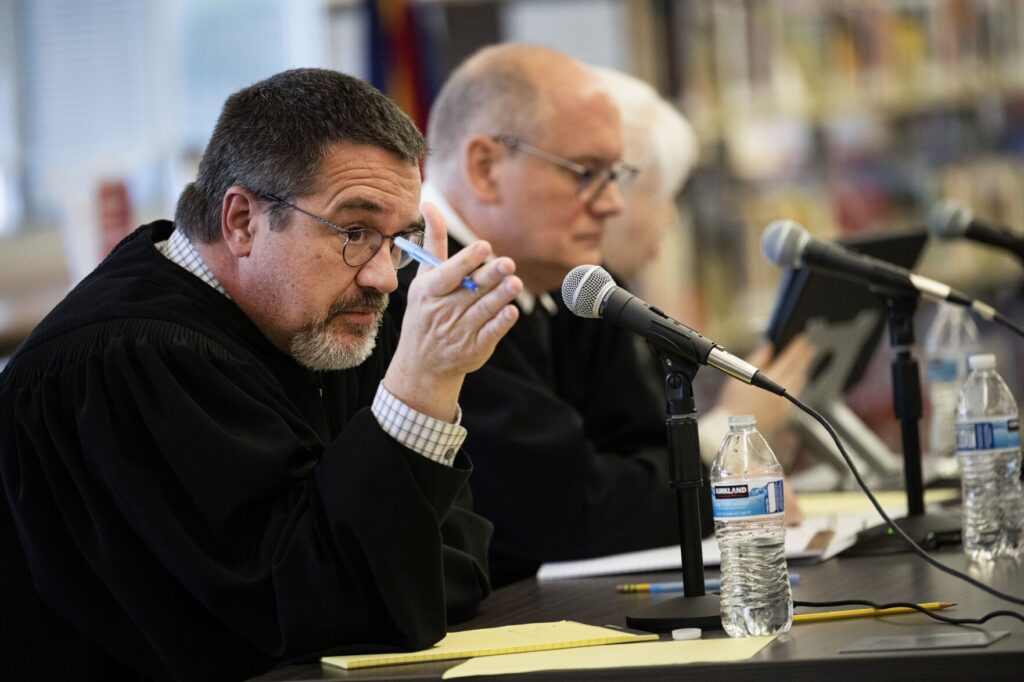
Appeals court clarifies what materials judges may rely on for postconviction decisions
Michael Karlik
michael.karlik@coloradopolitics.com
Updated 1 day ago
Colorado’s second-highest court clarified on Thursday that trial judges who are deciding whether to grant relief to convicted defendants may rely on the materials attached to, or referenced in, the parties’ arguments. In contrast to direct appeals of criminal convictions,...

Here’s what to know about the Homeland Security shutdown starting this weekend
Deborah Grigsby
deborah.smith@denvergazette.com
Updated 1 day ago
Another shutdown for parts of the federal government is expected this weekend, following an impasse over funding for the U.S. Department of Homeland Security amid a push by Democrats for changes in immigration enforcement. Funding for the federal agency is set to...
PREV
PREVIOUS
Feds rename Clear Creek County mountain in honor of Southern Cheyenne leader
The U.S. Board on Geographic Names made it official Thursday with a unanimous vote: Squaw Mountain in Clear Creek County is now Mestaa’?hehe Mountain. The vote ends a four-year effort to remove the old name, offensive to Native Americans as some view it is an English version of a Algonquin word for female genitalia. In October, […]

Express lanes on I-25 South 'Gap' ready to open
Drivers along the 18-mile stretch of Interstate 25 between Monument and Castle Rock can get to their destinations quicker beginning Friday morning, when state transportation officials open new express lanes in each direction of the highway. The express lanes will open at 8 a.m. Friday for testing, about three weeks after state and local leaders […]