

A LOOK BACK | State legislative campaign costs rise steeply

Forty Years Ago This Week: Rep. Jack McCroskey, D-Denver, told The Colorado Statesman that the costs of running a campaign were rising and that while it wasn’t one of the joys of being a legislator, the art of fundraising to finance expensive campaigns had become “as important as serving.”
Expenses for 1980 state legislative campaigns ranged from over $55,000 – for the race between Rep. Jerry Kopel, D-Denver, and Republican Paul Swalm, for example – and as low as $1,133, the amount spent by Rep. Stephen Erickson, R-Loveland, in his uncontested bid.
Rep. Donald Eberle, D-Denver, said that candidates in some districts could expect expensive races no matter who their challenger was because the districts had been targeted by both parties.
“These usually are the districts in which voter registrations is relatively equal,” Eberle said, “and both parties stand a good chance of victory. Conversely, some districts are left alone by one or both parties.”
Statesman reporters questioned a selection of legislators whether they would support a law similar to New Jersey’s that would publicly finance state elections. Most felt that the state budget had more pressing responsibilities and that access to funds would create inevitable inequality especially in less contested races.
“The New Jersey law is a farce,” Kopel said, as it had led to “the entrance of some unpopular candidates who otherwise could never find the public support to run for office.”
Rep. Gregory Rogers, R-Denver, said, “Part of running for office is funding the campaign. I think anyone who wants to should run for office, but why should the public finance unpopular efforts?”
Rogers’s district was set to be expanded in 1982, and he had already anticipated rising costs for mailings and other efforts to “meet” his many new voters.
Twenty Years Ago: The Rocky Mountain chapter of the Sierra Club released a study concerning faults with the management of Great Outdoors Colorado, an agency that had been created to manage financial proceeds from the state lottery.
The Sierra Club’s report found that GOCO had been drifting from policies of permanent land acquisition for the purpose of preservation to that of temporary land easements and had been cutting funding for “Legacy Projects,” a large-scale land preservation program.
Since GOCO was created by voters in 1992 it had awarded over $240 million in grants for 1,419 projects, conserved 156,000 actress of open space, and facilitated the purchase of 15,259 acres of land for future state parks.
But Aimée Cartier, conservation organizer for the Rocky Mountain chapter of the Sierra Club, said that GOCO had started to stray from it publicly mandated directive.
Chris Leding, communications director for GOCO, pushed back, arguing that after 14 state-wide meetings with concerned citizens, GOCO had created a strategic plan to determine its priorities and goals for the next ten years. Its findings included continued protection of river corridors, agricultural land, parks and recreation and wildlife habitats.
“The Sierra Club has approached the GOCO campaign without understanding GOCO’s constitutional mandate and is giving a false impression that GOCO is abandoning land protection overall when in fact there has been a shift in funding in one quadrant,” Leding said.
Leding responded particularly to his agency’s decision to allow the Department of Wildlife to spent $8.45 million, 80% of GOCO wildlife funds, on species protection work. “It is important to note we are talking about DOW’s 25% constitutional share of GOCO funds,” Leding said. “We are not talking about the whole of GOCO funds where land protection is a significant focus.”
But Cartier disagreed.
“The GOCO board’s guiding principles state it shall be directed by the needs and aspirations of the people of Colorado,” Cartier said. “GOCO was created to preserve, protect and enhance Colorado’s greater outdoors, not to patch holes in state agency budgets.”
Rachael Wright is the author of the Captain Savva Mystery series, with degrees in Political Science and History from Colorado Mesa University, and is a contributing writer to Colorado Politics and The Gazette.

Appeals court reinstates Garfield County arson charge
Michael Karlik
michael.karlik@coloradopolitics.com
Updated 2 hours ago
Colorado’s second-highest court reinstated a Garfield County defendant’s arson charge on Thursday, concluding a trial judge improperly credited a witness’s claim that she alone was responsible for starting the fire. A sheriff’s deputy responded to a brush fire near Parachute...

Democratic US Sen. John Hickenlooper qualifies for Colorado primary by petition, will skip assembly
Ernest Luning
ernest.luning@coloradopolitics.com
Updated 31 minutes ago
U.S. Sen. John Hickenlooper has qualified for Colorado’s Democratic primary after the first-term incumbent submitted enough valid petition signatures to make the ballot, state officials said. Hickenlooper is facing primary challenges from state Sen. Julie Gonzales, D-Denver, and university professor...
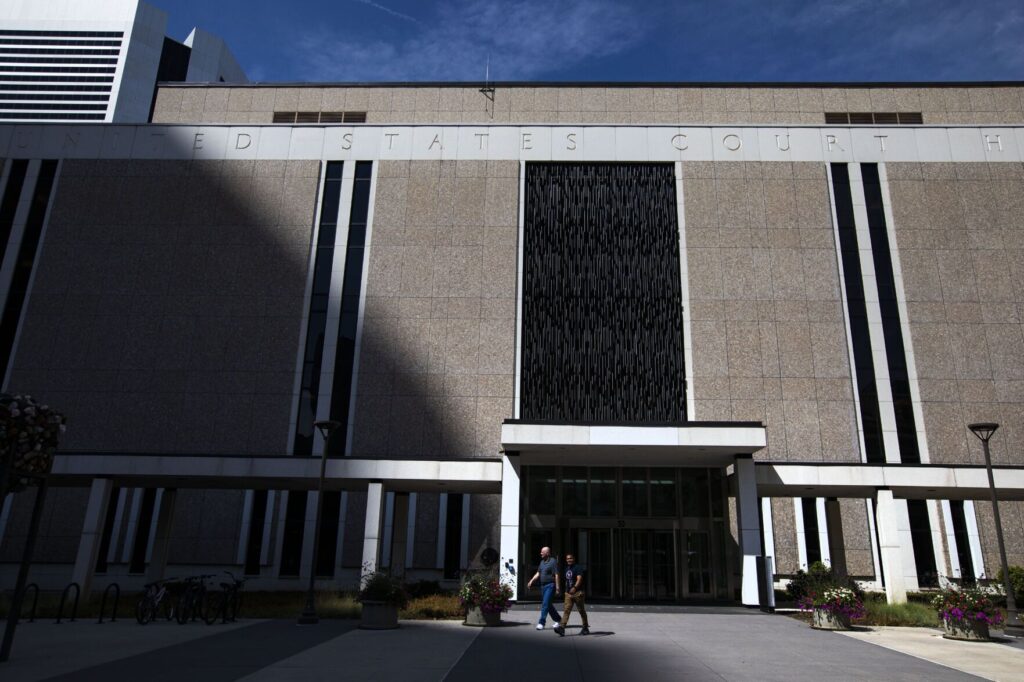
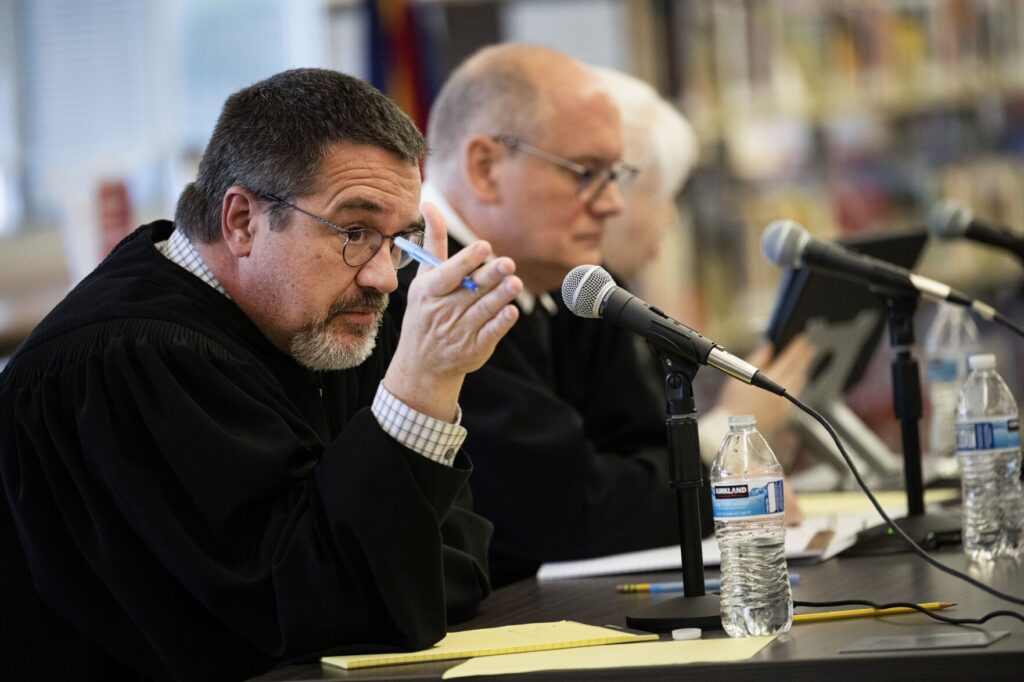
Federal judges rebuke ex-Colorado judicial discipline director for conduct in lawsuit
Michael Karlik
michael.karlik@coloradopolitics.com
Updated 3 hours ago
A pair of federal judges expressed a desire on Thursday to break the logjam on a lawsuit by Colorado’s former judicial discipline director against the state Supreme Court and related entities, while simultaneously showing little tolerance for the plaintiff’s scorched-earth...
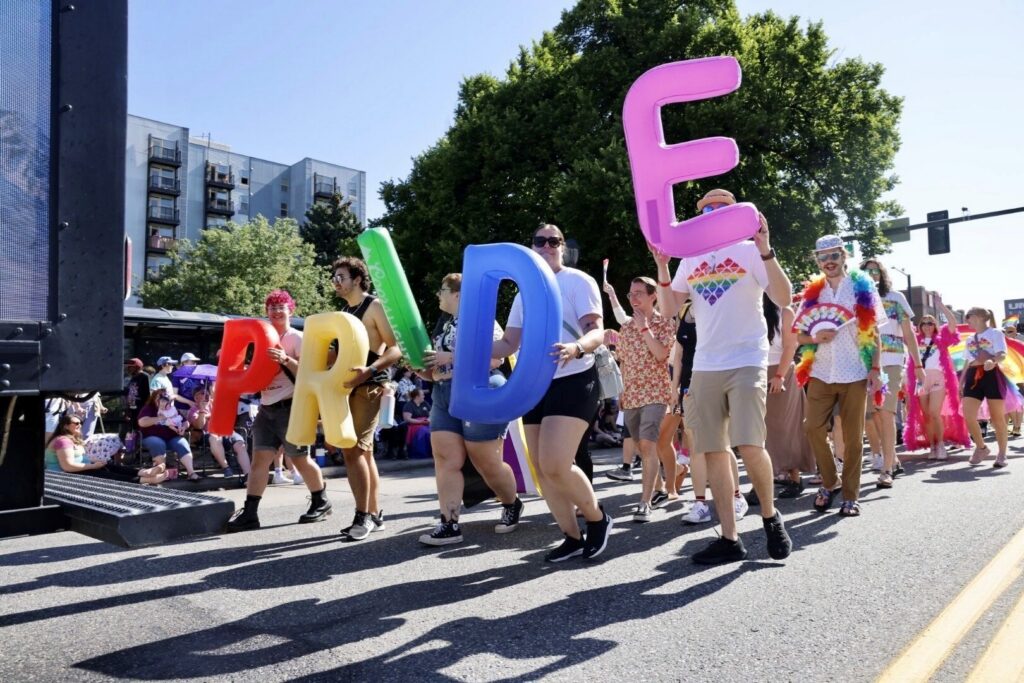
Democratic bill would let recipients of ‘conversion therapy’ sue Colorado providers with no statute of limitations
Marissa Ventrelli
marissa.ventrelli@coloradopolitics.com
Updated 49 minutes ago
Colorado lawmakers have advanced a proposal that would allow people who underwent conversion therapy to sue licensed providers for damages, moving the measure forward on a party-line vote in the House Judiciary Committee. House Bill 1322, proposed by Democratic Reps....
Pinnacol separation bill delayed as Colorado budget remains in flux due to $1.5B deficit
Marianne Goodland
marianne.goodland@coloradopolitics.com
Updated 12 minutes ago
A bill that would allow Pinnacol Assurance to formally sever its remaining ties with the state appears unlikely to emerge anytime soon, as House leaders juggle a massive budget shortfall, unresolved negotiations with key stakeholders, and growing doubts about whether...
100 days until America250: Five host cities unveiled for July 4 celebrations
Emily Hallas, Washington Examiner
emily.hallas.washington.examiner@gazetteedit.wpenginepowered.com
Updated 6 hours ago
America250, the entity tasked by Congress with marking the United States’ semiquincentennial, on Thursday revealed further details about its sweeping plans to celebrate the milestone. America250 chairwoman Rosie Rios launched the official 100-day countdown to July 4, and said the...
U.S. Sen. Michael Bennet qualifies by petition for Colorado’s Democratic gubernatorial primary
Ernest Luning
ernest.luning@coloradopolitics.com
Updated 1 hour ago
U.S. Sen. Michael Bennet on Tuesday became the first gubernatorial candidate to qualify for Colorado’s June primary ballot after state election officials determined the three-term Democrat’s campaign submitted enough valid petition signatures. Bennet is running against Attorney General Phil Weiser...

Thornton police investigating homicide
Matt Kyle
matt.kyle@denvergazette.com
Updated 2 hours ago
Police in Thornton are investigating a homicide that happened late Wednesday night. Thornton Police Department officers responded just before 11 p.m. near the intersection of East 88th Avenue and Grant Street after a 911 caller reported someone bleeding. Upon arrival,...
Colorado legislators consider $500 million in general fund cuts amid $1.5 billion deficit
Marianne Goodland
marianne.goodland@coloradopolitics.com
Updated 1 day ago
The legislature’s Joint Budget Committee is working through a list Wednesday of about 150 suggestions to cut as much as $1.5 billion in general fund dollars out of next year’s budget. The largest on the list prepared by JBC staff...
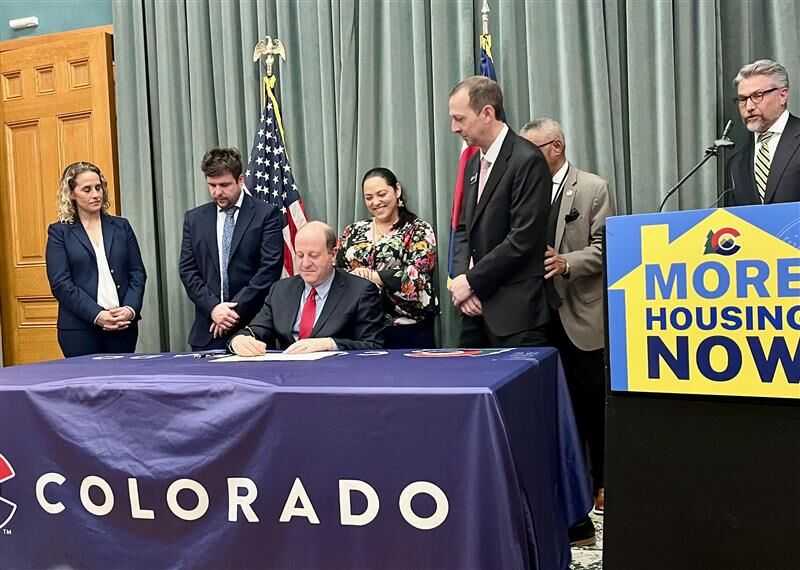
Gov. Jared Polis signs housing bills amid push for ‘affordability’
Marissa Ventrelli
marissa.ventrelli@coloradopolitics.com
Updated 1 hour ago
Gov. Jared Polis held the first public bill signing of the 2026 legislative session on Wednesday on a pair of housing measures that, sponsors said, are aimed at affordability. Part of Democrats’ “affordable” housing package this year, the bills —...
PREV
PREVIOUS

California GOP Rep. Mike Garcia endorses Eli Bremer in Colorado Senate race
The California Republican who flipped one of the state’s Democratic-held congressional seats for the first time in more than two decades last year is endorsing Eli Bremer’s bid for the U.S. Senate seat held by Democrat Michael Bennet. U.S. Rep. Mike Garcia, a first-generation American citizen and a decorated Navy veteran, said he believes Bremer […]
COVER STORY | An off-year election in Colorado still gave conservatives hope
While Colorado conservatives took their lumps on the home front in this year’s election, losing bids to lower property tax rates and increase oversight of the process of spending taxpayer money (as well as a higher pot tax going down), they had signs of hope by looking east. Results of a governor’s race in recently reliably […]