

POINT | Where there’s a heartbeat, there’s a life
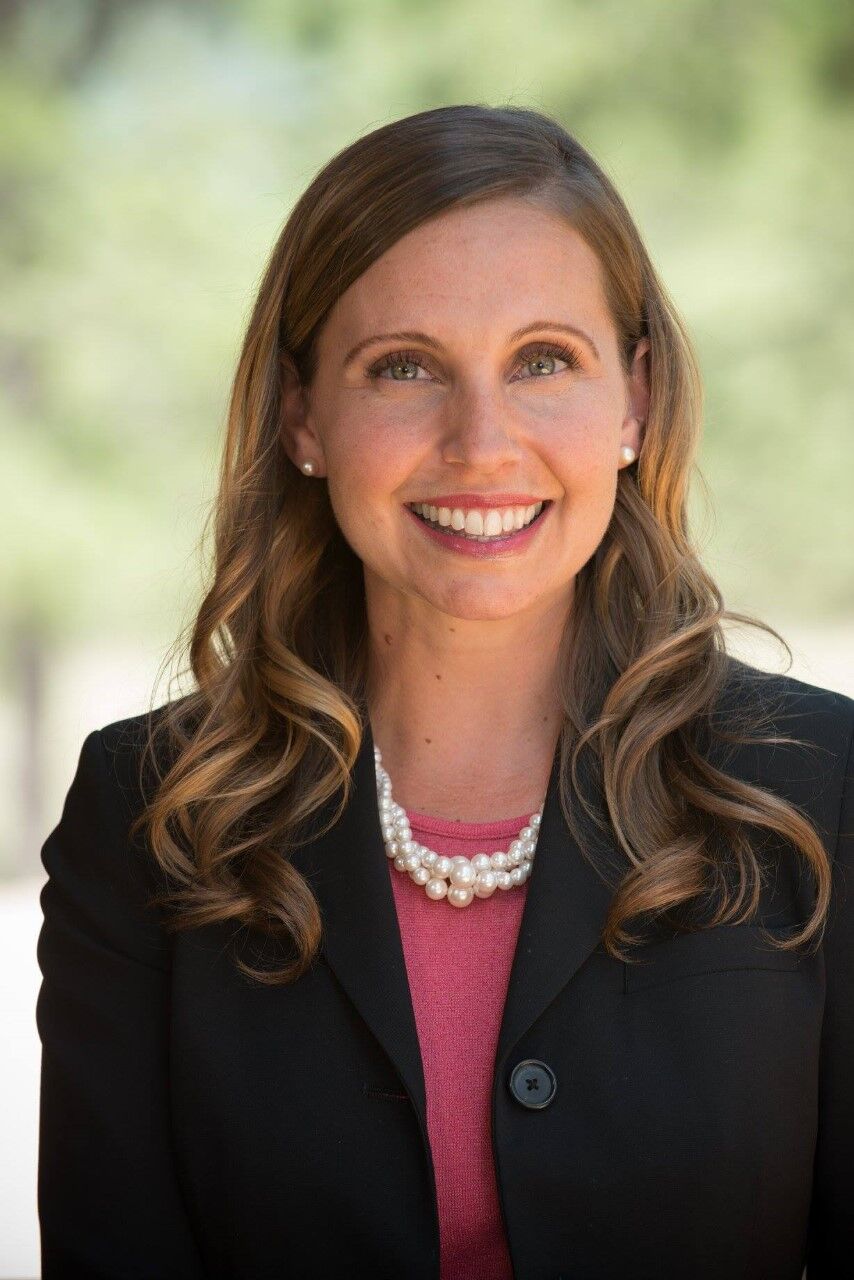
Nicole C. Hunt

It’s been nearly 50 years since the United States Supreme Court legalized abortion in Roe v. Wade, and finally, the Texas fetal heartbeat bill may demonstrate a way for states to move forward with legislation that promotes a culture of life — not death. The heartbeat bill marks the beginning of a new era of abortion policy in America, where the inherent value of an unborn human life once again has protection under the law based on the simple truth that it is human.
Also read: COUNTERPOINT | Abortion restriction wouldn’t help
Since the implementation of the Texas heartbeat law, Colorado has become a travel destination for abortion. This is the wrong direction for our state. Colorado should follow suit and enact a heartbeat bill to protect unborn human life and end the horrific and inhumane practice of abortion.
On Sept. 1, the Texas fetal heartbeat bill went into effect. The law protects the life of an unborn fetus once a heartbeat is detected. It allows for abortion up to approximately six weeks gestation and when the mother is experiencing a medical emergency that necessitates an abortion.
This law is unique because it creates a private cause of action and allows individuals to sue abortion providers or anyone else aiding or abetting illegal abortions instead of requiring public officials to enforce the law. Lawsuits will target the abortion industry — not women.
Pro-life groups believe at least 150 babies will be saved from death by abortion in Texas every day because of the fetal heartbeat bill. That’s over 1,000 lives a week.
Abortion advocates inaccurately label abortion a reproductive health issue. Abortion is not a health issue. Abortion is the intentional taking of human life.
Science tells us that human life begins at conception and starts as a fertilized egg. The unborn fetus has its own unique DNA, sex, eye color, and even fingerprints. The Mayo Clinic describes week three of fetal development as fertilization and explains that chromosomes contributed by the biological mother and father “determine your baby’s sex and physical traits.” Every human began as a fertilized egg. That’s just science.
Abortion advocates argue that human life growing in the womb is just a clump of cells. That argument is more than misleading, it’s intellectually dishonest and anti-science. Again, consider the Mayo Clinic’s description of unborn life at week six of fetal development. “The neural tube along your baby’s back is closing. The baby’s brain and spinal cord will develop from the neural tube. The heart and other organs also are starting to form and the heart begins to beat.”
The value and status of human life is not dependent on age, size, location, or ability. Abortion advocates like to argue that an unborn baby’s right to life doesn’t exist unless certain conditions are met, but the truth is human life in the womb has intrinsic value because it is human life. If we were to apply some of the same conditions that abortion advocates like to use to dehumanize babies in the womb to toddlers or the mentally or physically disabled, the result would be appalling, and rightly so. Some of the worst human rights injustices in the world resulted from people denying the humanity and personhood of other humans.
Colorado leaders ended the death penalty for convicted murders but won’t end the death penalty for innocent preborn humans. It’s time for Colorado to embrace the sanctity of life for our most vulnerable.
Nicole C. Hunt is a wife, mother of four, attorney, crisis pregnancy volunteer, and the co-founder of the Coalition to Help Moms and Save Babies, a Colorado issue committee established to end late-term abortion.
Colorado Politics Must-Reads:


Pay raises for incompetence at the Colorado Capitol | Jon Caldara
Jon Caldara
jon-caldara@coloradopolitics.com
Updated 8 hours ago
By Jon Caldara I am personally responsible for helping overpay socialists to make Colorado unaffordable, overregulated and one windstorm away from a power blackout. I failed you. Colorado legislators already get automatic inflation raises. You know, just like your job...

Founding documents reconnect us to our shared American roots – and rebelliousness | Vince Bzdek
Vince Bzdek
vince.bzdek@gazette.com
Updated 16 hours ago
When you first lay eyes on the actual founding documents of our country that, for the first time in history, have traveled together from their gilded cages in Washington to visit us out here in the hinterlands, you’re struck not...

Attorney General Phil Weiser’s underdog campaign for Colorado governor| Cronin and Loevy
Tom Cronin Bob Loevy
tom-cronin-bob-loevy@coloradopolitics.com
Updated 8 hours ago
Phil Weiser, 58, Colorado’s attorney general, is in a heated race against U.S. Sen. Michael Bennet, 61, for the Democratic nomination for governor. They are friends and share mostly similar progressive, Democratic policy views. Primary election day is June 30....
Would you hire Jena Griswold to handle your case? | SONDERMANN
By Eric Sondermann
by-eric-sondermann@coloradopolitics.com
Updated 5 days ago
If you were in a child custody dispute with a former spouse, would you hire an attorney with experience in family law or would you trust your case to an operative with virtually zero mastery? If you were getting ready...
Trends to track as Colorado’s in precarious position pre-gubernatorial primaries | Paula Noonan
Paula Noonan
paula-noonan@coloradopolitics.com
Updated 3 days ago
As they say on Colorado Public Radio’s Marketplace, let’s do the numbers. April 2026 voter registrations continued a long-term Colorado trend with a large majority of new or changed voter registrations joining the unaffiliated cohort. Total registrations of Democrats, Republicans...
High-potency hemp products are hurting Colorado kids | GUEST COLUMN
Colorado Politics
colorado-politics@coloradopolitics.com
Updated 3 days ago
By Heidi Lawrence Six years ago, my daughter, by most metrics, was a typical overachieving teenager. She was a straight-A, pre-professional ballet dancer. She loved school and art, had lots of friends, and above all else, she was kind, funny...
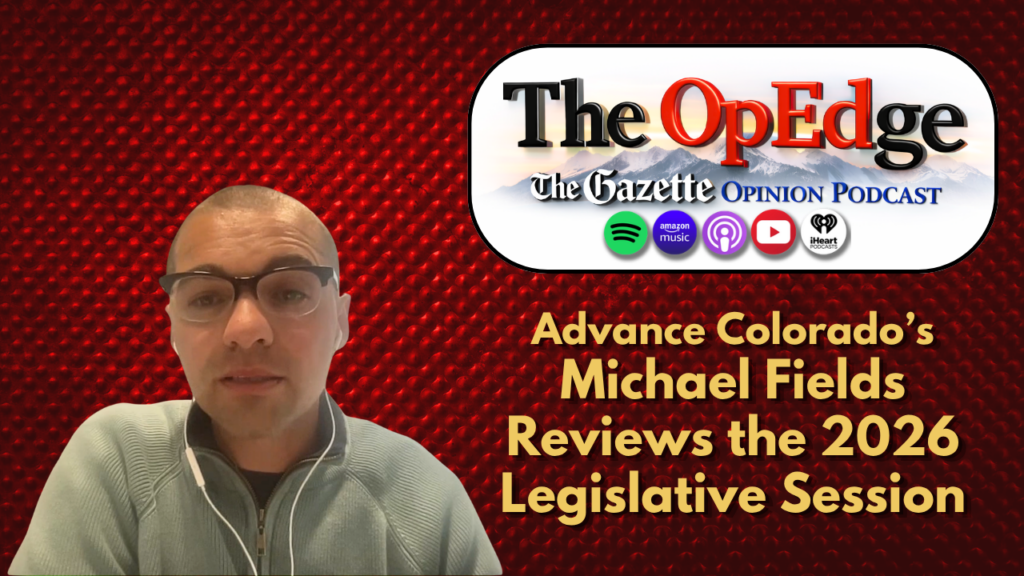
Michael Fields reviews Colorado’s 2026 legislative session | The OpEdge Podcast
Tony Olivero
tony.olivero@gazette.com
Updated 4 days ago
Michael Fields, executive director of Advance Colorado, joins OpEdge host and investigative columnist Jimmy Sengenberger to assess the good, the bad and the ugly of the Colorado General Assembly’s 2026 legislative session. Reflecting on the 120 bills passed in 120...
From secret huddles to Zebulon — the high cost of the Dougco BOCC’s shady governance | PODIUM
Colorado Politics
colorado-politics@coloradopolitics.com
Updated 4 days ago
By Bob Marshall, Lora Thomas and Julie Gooden In Douglas County, a new and dangerous standard of governance has taken root: if the public doesn’t like your plan, simply stop letting the public in the room. During the last year,...

Election must be decided on issues of combating public corruption, restoring integrity in government | FEEDBACK
Colorado Politics
colorado-politics@coloradopolitics.com
Updated 4 days ago
There has been considerable press and outrage regarding Gov. Jared Polis’ commutation of former Mesa County Clerk and Recorder Tina Peters’s remaining prison sentence. The outrage is reinforced by President Donald J. Trump’s creation of a $1.776 billion compensation fund...
Is the ‘penumbra of privacy’ going, going, gone in Colorado? | Hal Bidlack
Hal Bidlack
hal-bidlack@coloradopolitics.com
Updated 6 days ago
Once again, there are too many things in Colorado Politics that are newsworthy and should be written about. Unless my kindly editor will allow me to write a book-length column this week? (Ed: not so much…) First up, I’d like...
PREV
PREVIOUS

COUNTERPOINT | Abortion restriction wouldn't help
Candace Woods There was a time not too long ago when I would’ve been writing this opinion piece in favor of a heartbeat bill, or six-week abortion ban. As a pastor’s kid who was raised in Evangelical churches, I was all in on “saving babies” and cheered during the 2004 election (my first presidential election […]

CALDARA | The honorable business of death
Jon Caldara In a country where occupational mobility is still celebrated, we have great control in choosing the industries in which we work. I understand why some people want to become astronauts, architects, musicians. It’s fortunate that people go into accounting and computer coding. I’d go mad in such fields. I’m humbled that people choose […]