

Waters of the US: just what the heck is going on?
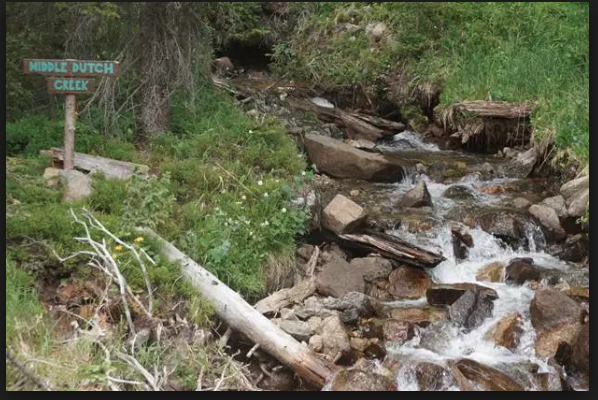
What are Waters of the United States (WOTUS) and why does it matter?
The rules, which determine just which bodies of water are subject to federal regulation, has seesawed among the two previous presidential administrations and is now undergoing another major rewrite under the Biden administration.
One of the last discussions during the 2021 Colorado Water Congress summer conference was to figure out just what’s going on with WOTUS and where it’s headed.
The issue of just which waters to protect got its early start as a U.S. Supreme Court case in 2006 in Rapanos v. United States over federal jurisdiction on wetlands. In an unusual 4-1-4 ruling, one opinion held that waters must have a “significant nexus” to navigable (i.e. where boats/ships can travel) rivers and seas in order to be protected; a second opinion that said the Clean Water Act “only applies to non-navigable waters if the waters are ‘relatively permanent, standing or flowing bodies of water,’ such as streams, rivers, lakes, and bodies of waters forming geographical features.” But that led to confusion about just how far upstream federal jurisdiction should go in order to protect bodies of water.
Along came the Environmental Protection Agency during the Obama administration in 2014, which issued proposed rules to define exactly what waters would be covered under WOTUS. The proposed rules, set to become permanent in 2015, included wetlands connected to tributaries. The rule drew howls of outrage from the agriculture, oil and gas and homebuilders industries, which all claimed it was massive government overreach. That led to lawsuits and eventually court decisions that blocked the rules from going into place.
The Trump administration repealed the 2015 Obama rules under executive order, loosening the definition to exclude wetlands and “ephemeral waters” (dry streams that fill when it rains). According to Water Education Colorado, “the US Geological Survey estimates 44 percent of Colorado’s streams are intermittent, meaning they are sometimes dry, and 24 percent are ephemeral, meaning they can be dry for months or years and appear only after extraordinary rain or snow. Just 32 percent of Colorado streams are classified as being perennial, meaning they flow year round.”
Along came the Biden administration, which this year announced a two-step process to deal with WOTUS: the first is to rescind the Trump rule, the second is to hold a series of open forums for the public to comment, which is currently underway.
Mark Pifher, a member of the water congress board, attended one of the early forums, which drew 176 callers. The comments ranged from how wonderful the Trump rule was to how horrible the Trump rule was and that it would cost the nation its wetlands. But along with the comments on the merits or lack thereof of the Trump rule, there was a request from business interests for certainty around the rules, and to consider regional differences in how to deal with WOTUS. The administration has shown a willingness to look at that, Pifher said.
The rules’ oscillation between administrations has made knowing just which waters are protected vague, according to Gabe Racz, a water attorney with the Boulder firm Vranesh and Raisch.
The question now is how to move forward with infrastructure projects, housing and agriculture while protecting aquatic resources, Racz said. The Biden administration would like to end up with a rule that can stand up to competing interests, Racz explained. That means a rule that could survive challenges and “put in the rear view mirror” which waters are subject to the Clean Waters Act, according to Shaun McGrath, the director of environmental health and protection for the Colorado Department of Public Health and Environment.
The Trump rule significantly narrowed the definition of protected waters, McGrath said. Not only did it exclude wetlands and ephemeral streams, it also left out groundwater. However, the state’s Water Quality Act does cover and protect those waters.
But not all waters are the same, he added. While the Clean Water Act applies to the entire country, it would be difficult to write a rule that is flexible enough to address the regional differences. But “I would suggest this is one of those times. In the arid West, we have to look at our waters differently.” But MCGrath said he also disagreed with those who say ephemeral streams are not worthy of protection. The challenge is when specific streams are identified, McGrath said.
He also supports the call for certainty. “You need to know whether you’re in or out. You can’t have cyclical changing” of the rules, he said. That uncertainty is problematic for regulators, too. If one administration says water is important and the next one says it’s not, and the next one says it is, “that’s not to anyone’s benefit.”
The 2020 rule had another drawback as it applied to “dredge and fill” permits. That’s when a construction project needs to dredge and fill a site before the project can be built. But some of the sites may be near wetlands or surface waters, and that requires a federal permit. The 2020 rule allowed for dredge and fill permits but only for waters covered under the Trump administration definition, leaving 50% of Colorado’s wetlands exposed. Colorado regulators at the CDPHE would like to add a state permit program, but that effort so far hasn’t gained traction at the state Capitol.
“We are seeking legislative authority to [set up] a permitting program for these ‘gap waters,'” McGrath* said.
Also weighing in: Nicole Rowan, director of the Colorado Water Quality Control Division, who said they are relieved the EPA is moving toward a pre-2015 status on WOTUS, although she believes the outcome of the Biden administration rulemaking is likely to be more lawsuits.
Correction: previous version misidentified one of the speakers.


Suddenly, Colorado has a private school choice program │ Vince Bzdek
Vince Bzdek
vince.bzdek@gazette.com
Updated 9 hours ago
By Vince Bzdek When I was a kid going to St. John’s Catholic grade school in Denver, I remember asking my mom if she and dad minded paying taxes for public schools since all her kids attended Catholic ones. We...
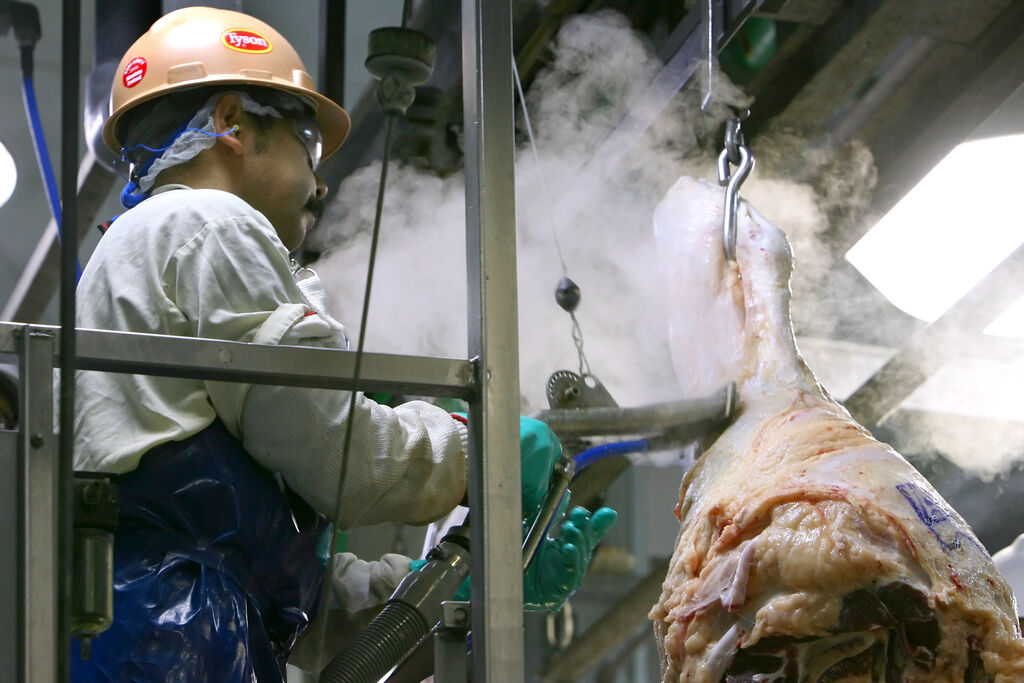
Tyson’s beef plant closure in Nebraska to impact town, ranchers nationwide | OUT WEST ROUNDUP
Ernest Luning
ernest.luning@coloradopolitics.com
Updated 4 days ago
NEBRASKA Beef plant’s closure could ripple OMAHA — Tyson Foods’ decision to close a beef plant that employs nearly one third of residents of Lexington, Nebraska, could devastate the small city and undermine the profits of ranchers nationwide. Closing a...
Calendar Dec. 15-21
Rachael Wright
rachael.wright@coloradopolitics.com
Updated 4 days ago
CoPo’s weekly political calendar will help you find political and public-policy events throughout Colorado. It includes candidate and issue campaign events, public policy meetings, court hearings, state and local party conventions, assemblies, debates, rallies, parades, speaking engagements, traveling dignitary appearances,...
Denver Mayor Peña makes unexpected announcement | A LOOK BACK
Rachael Wright
rachael.wright@coloradopolitics.com
Updated 4 days ago
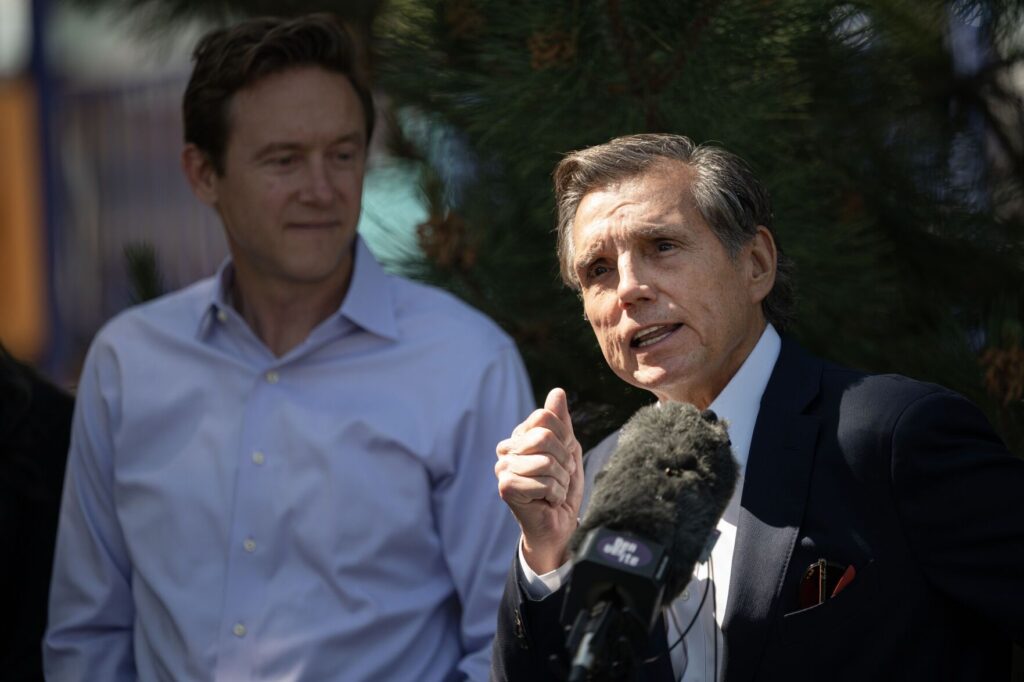
Thirty-Five Years Ago This Week: Denver Mayor Federico Peña announced personal news that caught many of his supporters and Denver residents who paid close attention to politics off guard. Just two weeks prior on Nov. 16, 1990, The Colorado Statesman...

Julie Gonzales’s long but not impossible odds | SONDERMANN
Eric Sondermann
eric-sondermann@coloradopolitics.com
Updated 4 days ago
Allow me to start with a flashback. It was Thanksgiving 2024, just over 12 months back. For the first time, our son Clarke hosted the family Thanksgiving near New York City. It is a sign of our aging when the...

Performers announced for 14th Klezfest | NONPROFIT REGISTER
Thelma Grimes
thelma.grimes@coloradopolitics.com
Updated 2 days ago
MIZEL MUSEUM JCC DENVER Denver News: Klezfest 2025, which takes place Dec. 20, will feature performances by a host of popular Jewish entertainers: Rabbi Joe Black and Steve Brodsky; Hal Aqua & The Lost Tribe; Mishmish and Gora Gora Orkestar. Rabbi Black is a pioneer of contemporary Jewish music and has...
Colorado commission makes new access-to-justice recommendations after renewed listening tour
Michael Karlik
michael.karlik@coloradopolitics.com
Updated 1 day ago
Adding judges to handle caseloads. Expanding authority for paraprofessionals in civil cases. Allowing self-represented litigants to file electronically. Making the judiciary’s website user-friendly. Those were among the recommendations advanced by the Colorado Access to Justice Commission in a report released Friday,...
Trump targets Colorado AI law with executive order, setting stage for legal fight
Marianne Goodland
marianne.goodland@coloradopolitics.com
Updated 2 days ago
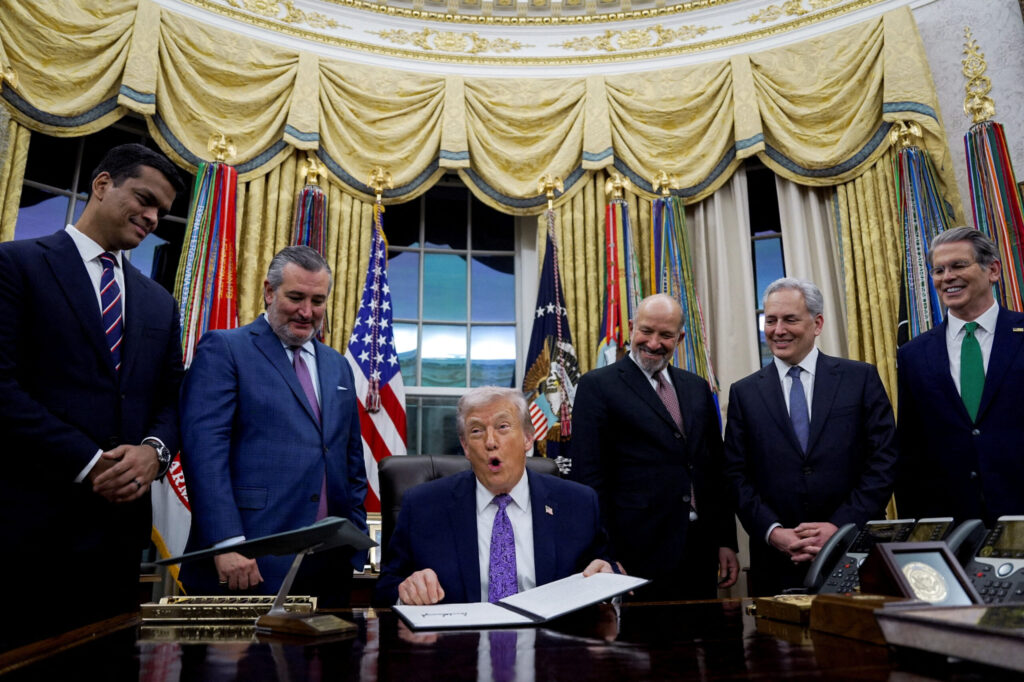
Colorado’s 2024 effort to regulate artificial intelligence is facing a direct challenge from the Trump administration. President Donald Trump signed an executive order on Thursday to block states from enforcing their own AI laws. Trump also announced the creation of...
Colorado residents face high energy bills after regulators turn away from natural gas, experts say
Mark Samuelson Special to The Denver Gazette
mark.samuelson@denvergazette.com
Updated 2 days ago
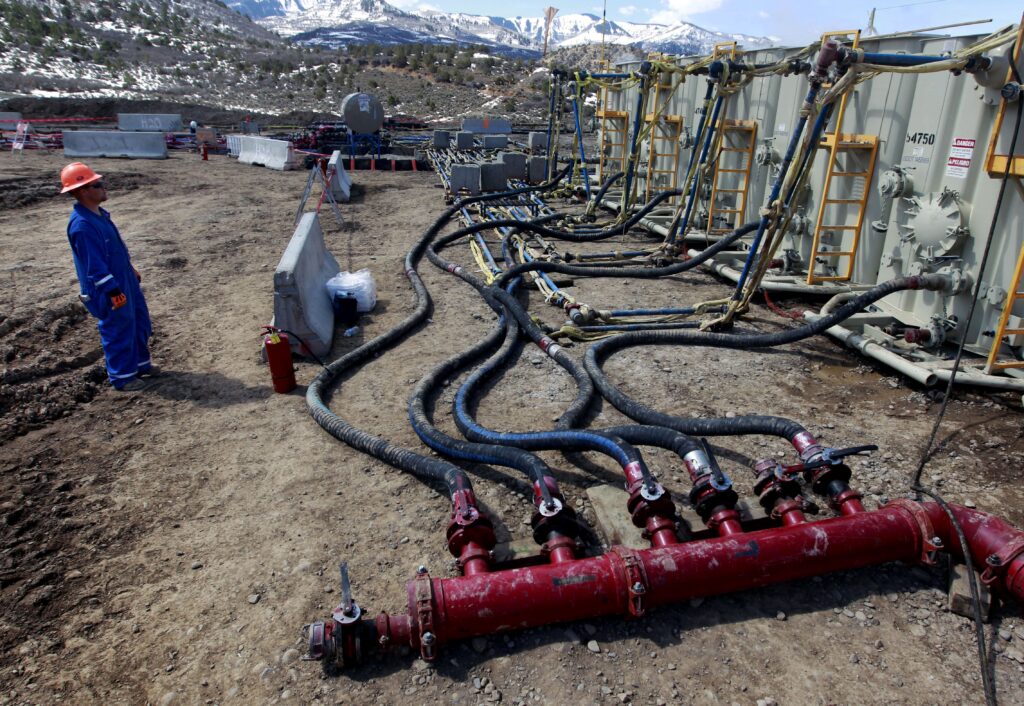
Colorado residents could be paying a lot more for home energy, following the state’s decision last week to turn away from natural gas as a home cooking and heating fuel, experts said. Some 1.9 million Colorado households warm their homes...
Colorado’s government spending has outpaced inflation, analysis finds
Marissa Ventrelli
marissa.ventrelli@coloradopolitics.com
Updated 2 days ago
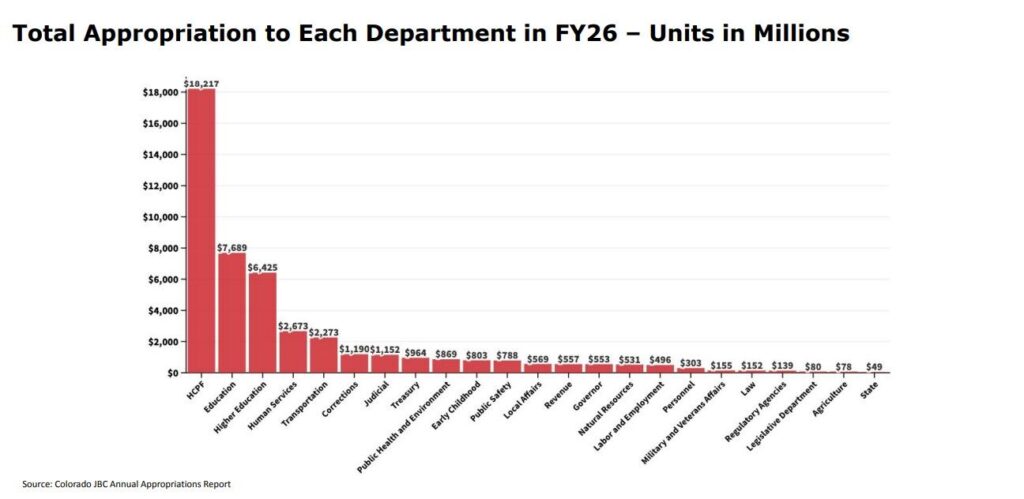
Colorado’s per-person spending has increased by 31% over the last two decades despite slowed population growth, according to a new analysis by the Common Sense Institute. The annual report compares state spending by department over the last 20 years, tracking...
PREV
PREVIOUS

Coloradans will vote on hiking marijuana taxes to fund out-of-school-learning
Colorado voters will decide whether to hike pot taxes to boost funding for out-of-school learning programs when they fill out ballots for the upcoming election in November. The Colorado Secretary of State’s office on Wednesday announced supporters of Initiative 25, titled the Learning Enrichment and Academic Progress Program, are projected to have gathered enough signatures to […]

Weiser announces deal to distribute $400 million from national opioid settlement
Attorney General Phil Weiser announced Thursday morning that Colorado has a plan to distribute $400 million from drug makers as part of a national settlement related to opioid abuse. The state Colorado Department of Law reached agreement on a framework to distribute the money after working with representatives from the counties, municipalities, other local government […]