

Council advances Denver bond measures toward ballot amid heavy pushback on National Western arena

Denver council members on Monday night advanced a bond package worth $450 million, covering more than 80 projects, that voters would see on the November ballot should it survive one final vote.
But first, the council heard from numerous residents of the Globeville and Elyria Swansea neighborhoods protesting the $190 million destined for the nearby National Western campus, mostly for a new 10,000 seat arena.
“Unfortunately, community benefits have not been identified yet after eight years of talking about it,” said Nola Miguel, director of the Globeville Elyria Swansea Coalition. “We don’t feel like a real partner in this development….We have lost homes and businesses.”
Others, including Spanish-speaking residents, described in stark terms the false promises, displacement and the “pattern of systemic white supremacy” targeting the largely Hispanic neighborhoods north of downtown. Councilwoman Candi CdeBaca was one of multiple members who warned against ignoring the wishes of neighbors.
“Tonight there was not a single GES resident that spoke in support this,” she said. “This is the most marginalized community and the most impacted for these projects.”
Representatives of multiple organizations spoke of the importance of a new National Western arena, with stock show president and CEO Paul Andrews calling it “the centerpiece that makes everything else work on this site.” The facility is intended to be a year-round destination with a public market and a Colorado State University campus, among other features.
Councilwoman Amanda Sawyer bristled at the suggestion that Denver residents should not have a say over the bond measures. “Whether I agree that the package in front of us is worthwhile or not, it should go to the voters,” she said. “That’s what we do in America. That’s democracy.”
In addition to the National Western Center, the 2021 “RISE” bond measures would include $104 million for Denver facilities, $38.6 for housing and sheltering, $63.3 million for transportation, and $54 million for parks and recreation.
Brendan Hanlon, the city’s chief financial officer, told the council that the bond issues were part of the COVID-19 recovery effort. Some members wondered why the city was exploring another bond issue, given that two-thirds of the 2017 “Elevate Denver” bond program remains unspent.
CdeBaca voted against referring all of the bond measures to the ballot, and Council members Paul Kashmann, Amanda Sandoval and Robin Kniech joined her for the National Western Center measure.
“I do think that not everything is appropriate to be referred,” said Kniech. “I trust the voters to make sound decisions, but they also trust me and the people up here to do some vetting.”
The council also split 10-3 on a vote to take the Office of Special Events, which currently is part of the mayor’s office, and establish it as a standalone agency in the municipal code. Principally, the change would allow the office to issue a special event permit and mandate community notifications of events. It would also enable the office to require emergency management plans for events, covering scenarios from hailstorms to drive-by shootings.
“Our agency was set up as a coordinate agency so that the maze of agencies and requirements that an organizer would be faced with, that we can help them through that,” said Katy Strascina, the director of the office. She said her organization is only involved with temporary events on public property in which more than one city agency is involved.
Voting no on the proposal were Councilwomen Jamie Torres, Sandoval and CdeBaca.
“I just don’t like the added fee on top of everything,” said Sandoval. “My constituents don’t want added bureaucracy.”
The new agency would charge an application processing fee starting with events in 2023, which would range from $25 to $250 based on the size of the event. The city estimated the fee would increase the budget for events by less than one-tenth of one percent.


Ethics panel dismisses complaint against Colorado agency chief Dan Gibbs
Marianne Goodland
marianne.goodland@coloradopolitics.com
Updated 30 minutes ago
A state ethics panel has dismissed a complaint against Dan Gibbs, executive director of the Colorado Department of Natural Resources. The complaint, filed in December 2021 by the Republican-affiliated group Defend Colorado, alleged Gibbs awarded the think tank Keystone Policy...

Despite ICE deployments to ease airport backups, Denver sees smooth, short security lines
Bernadette Berdychowski
bernadette.berdychowski@denvergazette.com
Updated 24 minutes ago
As President Donald Trump deployed immigration agents to help U.S. airports manage hours‑long security lines during the partial government shutdown, Denver International Airport remained relatively calm on Monday. At the nation’s third‑busiest airport, TSA PreCheck lanes remained open to start...
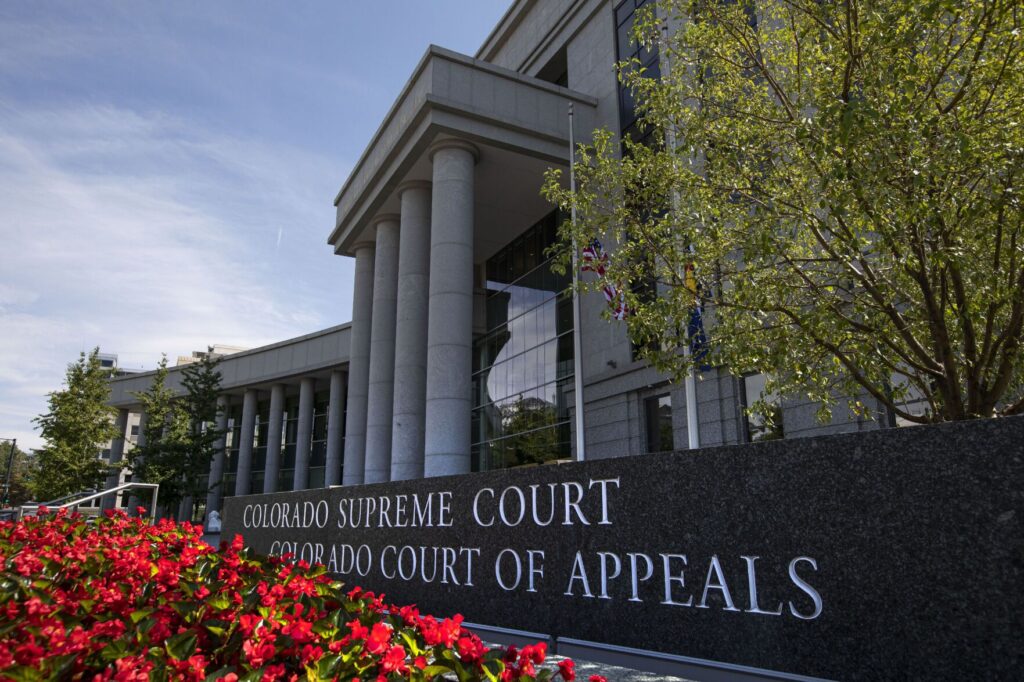
Appeals court recognizes longer window to sue insurers for withholding policy details
Michael Karlik
michael.karlik@coloradopolitics.com
Updated 2 hours ago
Colorado’s second-highest court split with its own prior decision earlier this month and concluded injured motorists have two years, not one, to sue insurance companies for withholding relevant information about an at-fault driver’s policy. In 2019, Colorado lawmakers enacted a measure to...

Trump open to $5 billion ICE funding cut if SAVE Act package passes
Zach LaChance, Washington Examiner
zach.lachance.washington.examiner@gazetteedit.wpenginepowered.com
Updated 3 hours ago
President Donald Trump signaled he is open to a $5 billion funding cut for U.S. Immigration and Customs Enforcement if the Senate passes the Save America Act, along with other amendments. “I don’t think we should make any deal with...

Appeals court decides free speech cases, error-prone judge reversed again | COURT CRAWL
Michael Karlik
michael.karlik@coloradopolitics.com
Updated 4 hours ago
Welcome to Court Crawl, Colorado Politics’ roundup of news from the third branch of government. The state’s Court of Appeals decided multiple cases implicating free speech rights, plus Colorado’s most error-prone judge was reversed on appeal yet again. Heard on...
It’s time to let unaffiliated voters caucus | Vince Bzdek
Vince Bzdek
vince.bzdek@gazette.com
Updated 5 hours ago
There’s no getting around it: Colorado’s 3,000 county caucuses, which just wrapped up recently, left half the electorate out in the cold. Since unaffiliated voters now make up 51% of all Colorado voters, a majority of Colorado electors are barred...

With new medical school set to open, Feinstein will step down as UNC president
Hap Fry, Special to The Gazette
hap-fry@gazette.com
Updated 1 day ago
GREELEY • Dr. Andrew “Andy” Feinstein, the charismatic president of the University of Northern Colorado, has announced that he will step down from his leadership role just on the cusp of what is perhaps his signature accomplishment being realized. He’ll...
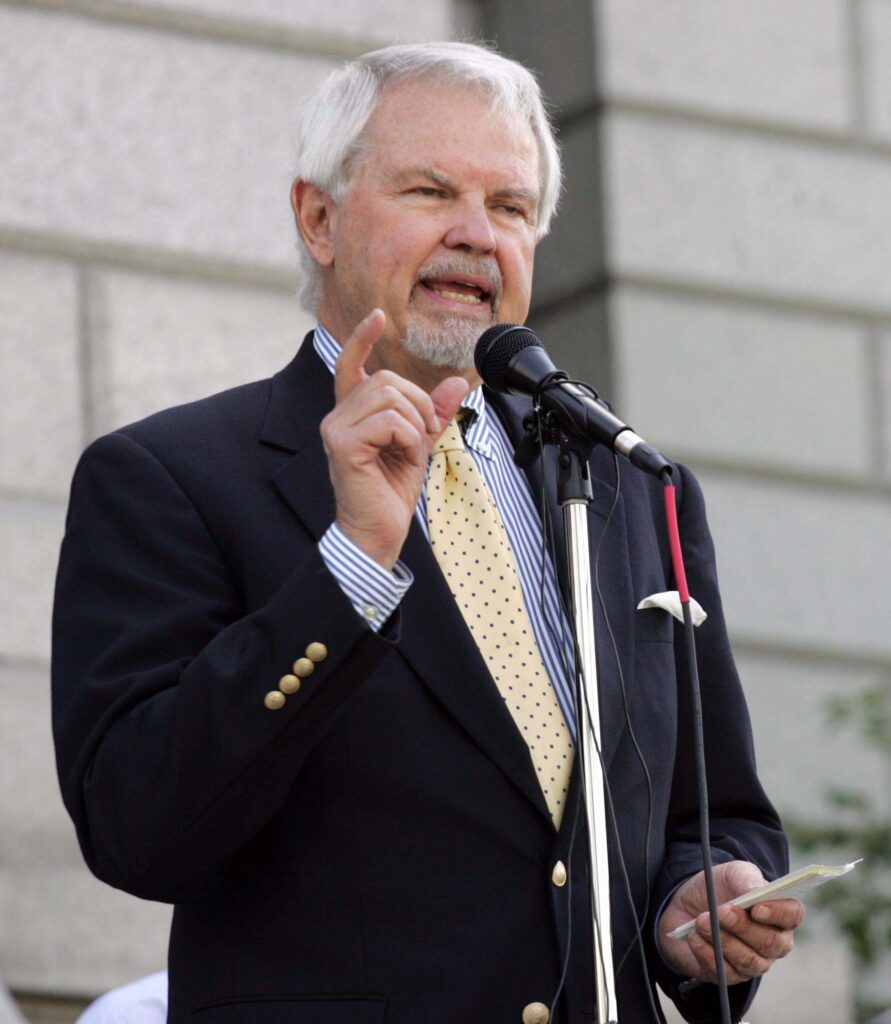
Governor warns energy development both a boon and a risk to Colorado | A LOOK BACK
Rachael Wright, Special to Colorado Politics
rachael.wright@coloradopolitics.com
Updated 5 days ago
Forty-Five Years Ago This Week: “The real opportunity and the dangers before us are both real,” said Gov. Dick Lamm in his January state of the state address before the Colorado General Assembly. Lamm argued that energy development would continue...
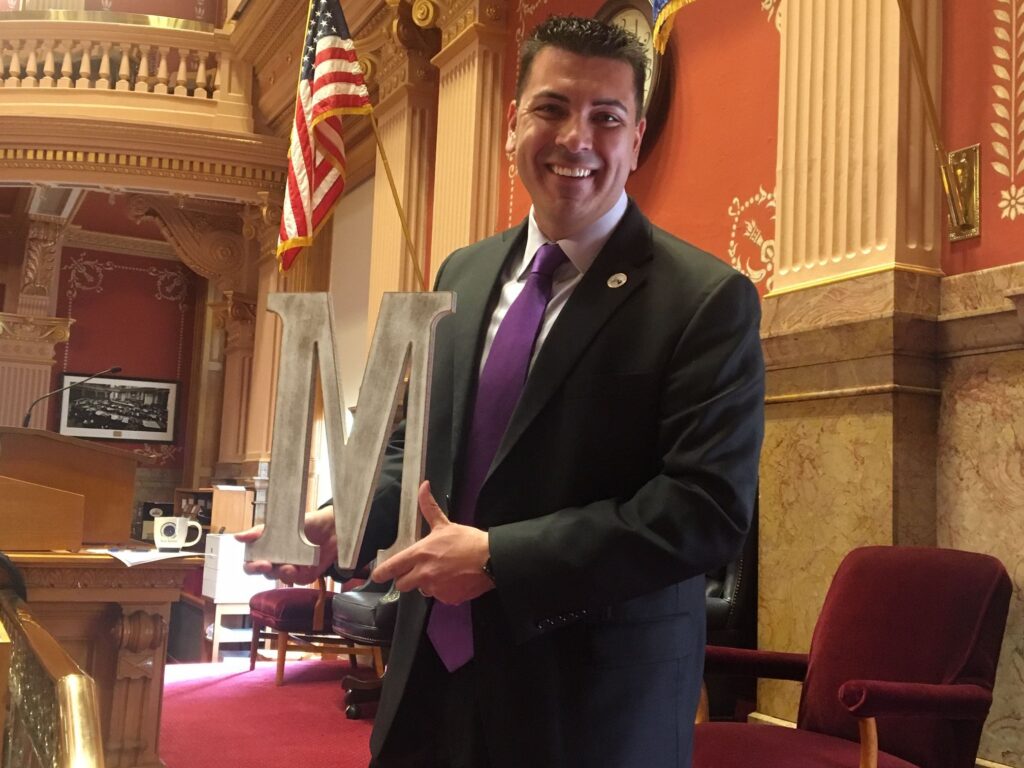
A Mile High, again: Capitol M | Week of March 21, 2026
Marianne Goodland
marianne.goodland@coloradopolitics.com
Updated 5 days ago
The lighter side of the Capitol, usually…. Local Journalism Day, except they forgot their very own local journalists. The state Senate on Thursday, March 19, passed a resolution recognizing Local Journalism Day. Everyone voted for it, which is good, because...

Colorado Politics Calendar Mar. 23-29
Rachael Wright, Special to Colorado Politics
rachael.wright@coloradopolitics.com
Updated 4 days ago
CoPo’s weekly political calendar will help you find political and public-policy events throughout Colorado. It includes candidate and issue campaign events, public policy meetings, court hearings, state and local party conventions, assemblies, debates, rallies, parades, speaking engagements, traveling dignitary appearances,...
PREV
PREVIOUS
Intel community defends itself after US was caught out by speed of Taliban takeover
The speed at which the Taliban took over Afghanistan, despite claims from the Biden administration last week that the fall of Kabul wasn’t imminent, has led to accusations the events of the past 72 hours represent a catastrophic intelligence failure, on top of a military and political one. In a speech from the White House […]

Congressional delegation aiding Colorado veteran's effort to save Afghan interpreter
A bipartisan trio from Colorado’s congressional delegation is working with Broomfield Army veteran Scott Henkel to save an interpreter he worked with while deployed in Afghanistan. CBS4 reported Hinkel is being aided in his efforts to evacuate the interpreter from Kabul in the wake of the Taliban takeover of the country by Reps. Joe Neguse, […]