

Denver City Council takes first votes on cultural district, hair discrimination, ‘illegal alien’ terminology

The Denver City Council approved the first votes of several ordinances Monday, including designating a new historic cultural district, prohibiting discrimination based on protective hairstyles and removing “illegal alien” from city law.
All three ordinances were passed unanimously without comment. They will each need to pass another full council vote before being implemented.
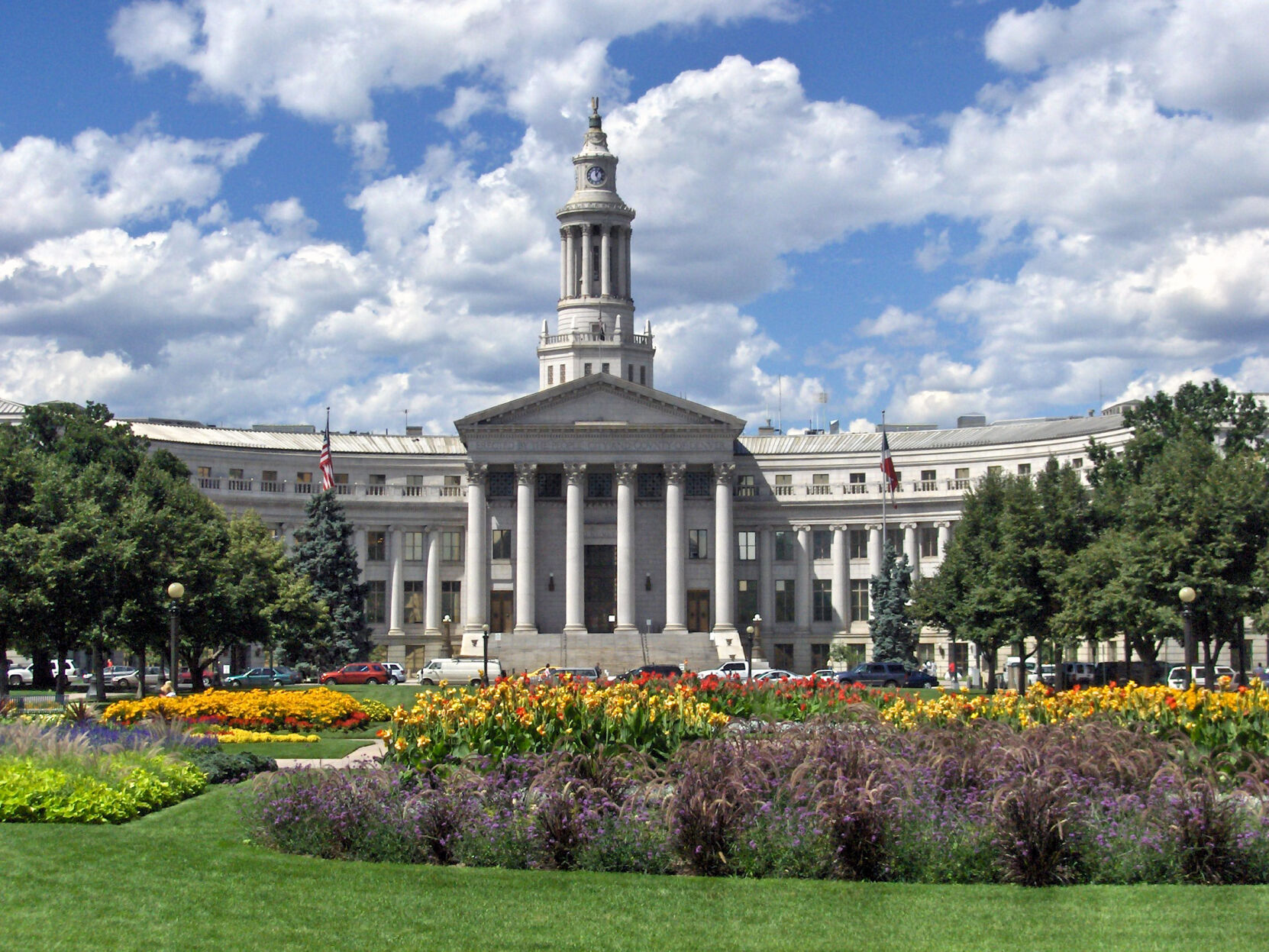
Monday’s meeting was the first full council meeting to be held in person since the COVID-19 pandemic began. Over two dozen community members attended the meeting in the City and County Building, though remote participation is still available via Zoom.
Historic cultural district
If passed, the first ordinance would designate the La Alma Lincoln Park neighborhood as Denver’s second historic cultural district.
This designation would preserve the cultural history of one of Denver’s oldest residential neighborhoods and the site of extensive Chicano history, protecting significant buildings and sites within La Alma Lincoln Park, backers said.
“The cultural history of the neighborhood is reflected in the built environment,” said Kara Hahn with Community Planning and Development. “Its layers of history and cultural significance provide an understanding of how the site has been used by past generations and changed overtime.”
La Alma Lincoln Park community boosters have pushed for historical designation for more than four years and applied in March after a policy change made the neighborhood eligible.
In 2019, Denver updated its landmark preservation ordinance to allow landmark designations based on cultural significance. Backers say La Alma Lincoln Park qualifies as the home of important events and leaders connected to the Chicano movement.
La Alma Lincoln Park was established as a working-class neighborhood in the 1870s and 1880s, near the railroad and Burnham Yards. From the 1960s to the 1980s, the neighborhood housed much of Denver’s Chicano community and was the meeting place for gatherings and equal rights advocacy, backers said.
“For many years La Alma Lincoln Park has been one of the pillars in our community and culture,” said Larry Martinez, a Mexican-American Denver native. “From Aztec dancers to murals, sporting events, festivals, community gatherings … La Alma Lincoln Park has been the common connection to our culture for so many in the region.”
If approved by the council, La Alma Lincoln Park would be Denver’s 57th historic district and second historic cultural district. It would also be the first historic cultural district in Denver to recognize Latino, Mexican-American and Chicano residents.
Protective hairstyle discrimination
The second ordinance would modify Denver’s anti-discrimination ordinance to add a provision prohibiting discrimination based on protective hairstyles.
This would prohibit discrimination in public education, employment, housing, public accommodations and advertising because of a person’s hair texture, hair type or a protective hairstyle.
This comes as society has begun to recognize that stigmas against hair texture and hairstyles perpetuate racism and racial biases, usually against people of African, Jewish, Latinx or Native American descent, said Darius Smith with the Anti-Discrimination Office.
“Society has used hair texture, hair types and protective hairstyles in conjunction with skin color to discriminate against people,” Smith said. “Communities suffer harmful discrimination in employment, housing, education … based upon long-standing race stereotypes.”
Colorado passed its own hair discrimination law in March 2020, the Crown Act, led by Rep. Leslie Herod who said she faced the issue when growing up, being told she had to straighten her hair to look professional or beautiful.
As of March 2021, eight states in the U.S. have passed their own Crown Acts to ban hair discrimination, according to Global Citizen.
The proposal has received support from the Mayor’s Office of Social Equity and Innovation, the Office of Immigrant and Refugee Affairs, Economic Development and Opportunity, the Office of Anti-Discrimination and the City Attorney’s Office.
“We’re starting to see that shift, I think, within our city agencies,” said Council President Stacie Gilmore during a committee meeting, in support of the ordinance. “Folks are prepared to answer these questions around equity.”
“Illegal alien” terminology
The final ordinance is another equity proposal that would amend sections of the city code that use the term “illegal alien,” replacing it with “worker without authorization.”
Historically, the term “illegal alien” has been used to describe a person who is not a citizen or a national of the United States. However, many advocates have raised issue with the terminology in recent years, calling it offensive and dehumanizing.
“The term illegal alien criminalizes individuals, but it also dehumanizes our residents based solely on their immigration status,” said Atim Otii, director of the Office of Immigrant and Refugee Affairs.
Otii said the new terminology is person-centered and focuses on the context in which it is being used, since it is used in public service contracts regarding the employment of a person without work authorization.
In April, the state of Colorado passed similar legislation, replacing “illegal alien” with “worker without authorization” in public service contracts.
President Joe Biden’s administration has also moved away from the term, instructing federal agencies, U.S. Immigration and Customs Enforcement and Customs and Border Protection to use “undocumented citizen” instead.
“As I read contracts and I see that term ‘alien,’ it is a trigger for me,” Councilwoman Amanda Sandoval said during a committee meeting. “Thank you for doing these things and holding this space; I think it’s so important.”
The council will hold a final vote on the ordinances during its next meeting on Aug. 2. There will also be a public hearing for the proposal to designate the La Alma Lincoln Park neighborhood as a historic cultural district.

The relevance of Watergate more than a half-century later | SONDERMANN
By Eric Sondermann
by-eric-sondermann@coloradopolitics.com
Updated 3 days ago
It was the scandal for which all other scandals are now named. In June 1972, a small group of Cuban burglars with high-level connections broke into the headquarters of the Democratic National Committee. Those headquarters were located in the Watergate...

Wirth downplays Social Security disaster talk | A LOOK BACK
Rachael Wright, Special to Colorado Politics
rachael.wright@coloradopolitics.com
Updated 2 days ago
Forty-five years ago this week: “As time goes on,” said Democratic U.S. Rep. Tim Wirth, of the 2nd Congressional District, “we are finding that the safety net, which was proposed earlier this year, has some very large holes in it,”...

Colorado Politics Calendar Aug. 10-16
Rachael Wright, Special to Colorado Politics
rachael.wright@coloradopolitics.com
Updated 2 days ago
CoPo’s weekly political calendar will help you find political and public-policy events throughout Colorado. It includes candidate and issue campaign events, public policy meetings, court hearings, state and local party conventions, assemblies, debates, rallies, parades, speaking engagements, traveling dignitary appearances,...

Democratic group aims Spanish-language TV ad at Gabe Evans in Colorado’s battleground 8th CD
Ernest Luning
ernest.luning@coloradopolitics.com
Updated 10 hours ago
A national group tied to House Democratic leadership launched a six-figure Spanish-language TV ad in Colorado this week targeting Republican U.S. Rep. Gabe Evans and the GOP’s signature budget legislation. The 30-second spot is part of $15 million in new...

Colorado School of Mines lands major share in Trump’s $100M mining-education plan
Thelma Grimes
thelma.grimes@coloradopolitics.com
Updated 11 hours ago
President Donald Trump on Friday named the Colorado School of Mines among roughly a dozen institutions that will share in a $100 million commitment “to train the next generation of American miners.” Paul Johnson, the university’s president, said he is...
Local party leaders, incoming judge among members of judicial performance commission that violated law
Michael Karlik
michael.karlik@coloradopolitics.com
Updated 12 hours ago
A local Democratic leader and 2024 presidential elector. A legislative aide and leader in the Young Republicans. An incoming county court judge freshly appointed by the governor. They are among the eight members of the northeastern Colorado judicial performance commission...
Judge dismisses lawsuit seeking records from Colorado Democratic group
Marianne Goodland
marianne.goodland@coloradopolitics.com
Updated 12 hours ago
A lawsuit seeking to obtain records from Democratic lawmakers affiliated with a caucus has been thrown out by a Denver District Court judge. On July 17, Judge Ericka Englert dismissed the April lawsuit filed by progressive activist Derrick Blanton, who...
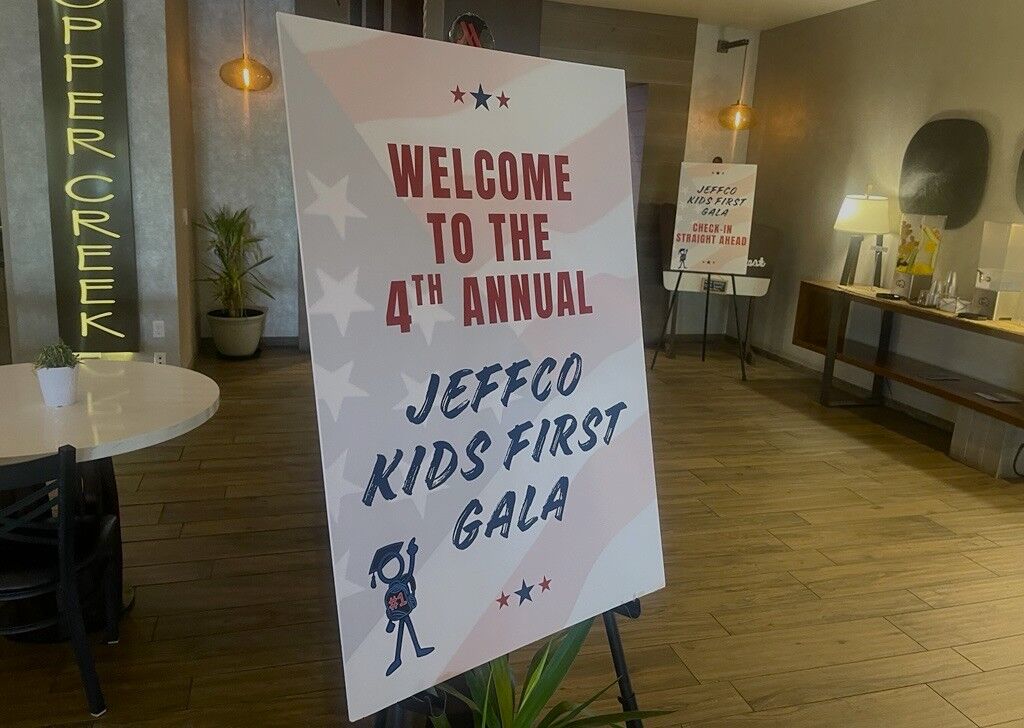
DOJ official decries ‘nonsense’ in Jeffco schools at fundraising gala
Matt Kyle
matt.kyle@denvergazette.com
Updated 17 hours ago
Amid a legal battle between Jeffco Public Schools and the federal government, a Department of Justice official spoke at a fundraising gala and decried “crazy stuff” and “nonsense” in the school district. The gala was for Jeffco Kids First, an...
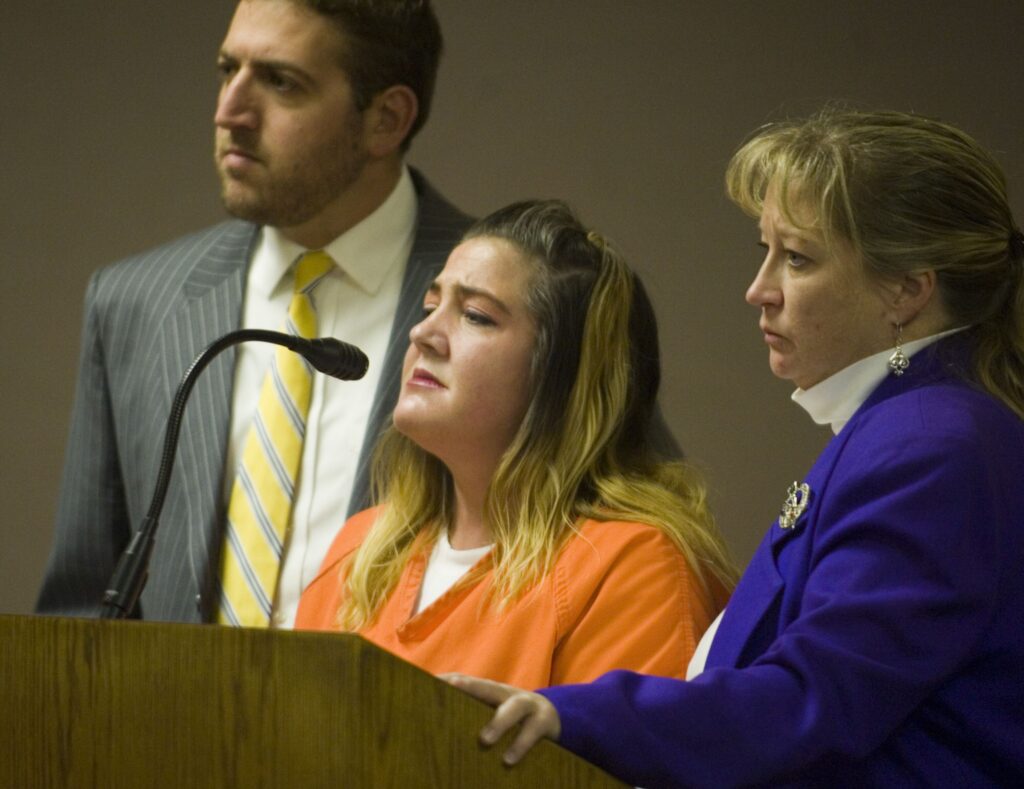
Colorado Springs mother Deborah Nicholls’ murder conviction overturned
Nick Smith
nick-smith@coloradopolitics.com
Updated 1 day ago
A Colorado Springs mother convicted in 2008 of murdering her three children in a house fire might get a new trial after a judge ruled that prosecutors withheld key evidence that could have impacted the jury’s verdict. Deborah Nicholls, whose...

Aurora Community College student journalist accuses college of ‘unconstitutional gag order’
Kyla Pearce
kyla.pearce@gazette.com
Updated 19 hours ago
An Aurora Community College student is accusing the college of putting an “unconstitutional gag order” on his student-run publication, saying the college banned it from publishing until students jumped through “countless bureaucratic hoops.” A college spokesperson said the college is...
PREV
PREVIOUS

Source: Denver police requested federal officials step in to ensure hotel arrest suspects stayed in custody
Federal authorities took custody of three of the suspects arrested in connection with a stash of guns and drugs found in a downtown hotel earlier this month at the request of police to ensure the suspects would not be released, a senior city government official has confirmed to The Denver Gazette. On July 9, as […]

Appeals court upholds Colorado's anti-discrimination act in face of LGBTQ-focused challenge
Colorado’s anti-discrimination law is constitutional, and its goal of eliminating prejudicial treatment of marginalized groups outweighs a business’s right to communicate their anti-LGBTQ beliefs, the federal appeals court based in Denver ruled on Monday. By a 2-1 decision, a panel of the U.S. Court of Appeals for the 10th Circuit rejected a First Amendment challenge […]