

CRONIN & LOEVY | Policy jam on Pennsylvania Ave.


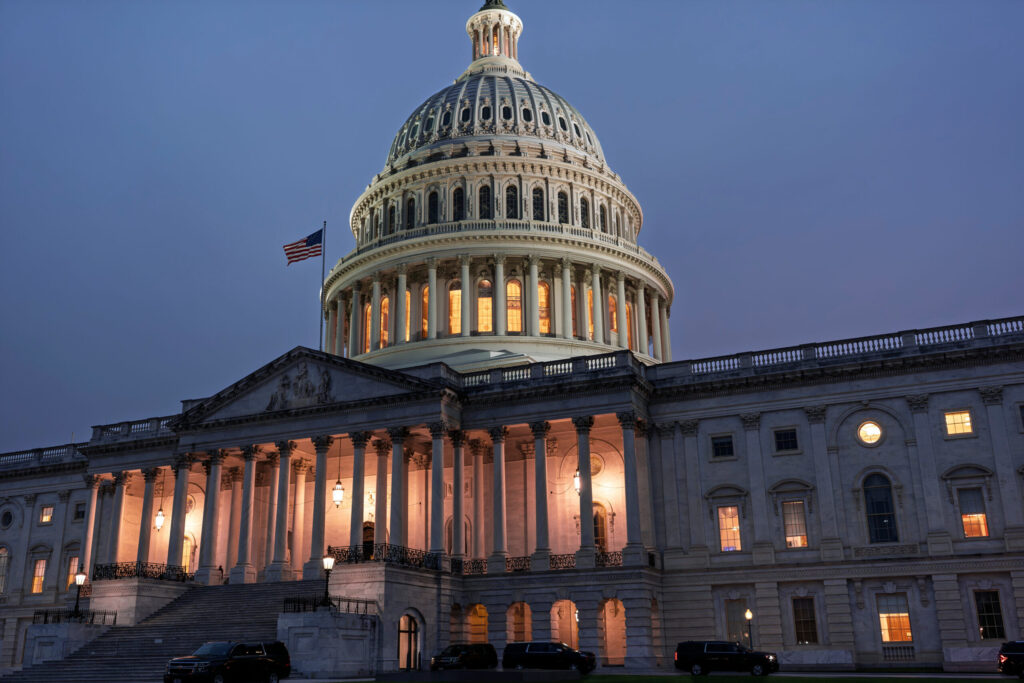
The U.S. Congress meets and votes in the Capitol building atop Capitol Hill, 16 blocks east of the White House on Pennsylvania Avenue in downtown Washington, D.C. Nowadays, those long blocks are hot, humid, and hard to travel.
Americans understandably turn to presidents and the Congress to help solve major public policy problems. We understandably salute those national leaders who successfully managed and ended wars or economic downturns.
But most public policy making – outside of confronting a crisis – is characterized by its slow and incremental nature. This is true at all levels of government – national, state, and local.
On how many issues can a president and Congress, at one time, provide leadership? Most experts would say a president can provide only some measure of responsible leadership on just a few issues in one four-year term.
Democrats have historically turned to the White House and to Congress, asking their presidents to respond more aggressively to problems than Republican presidents usually do. Democrat Woodrow Wilson fought World War I and unsuccessfully urged the U.S. to join the League of Nations. His successor, Republican Warren G. Harding, was famous for not doing very much.
Republican President Herbert Hoover took limited actions to end the Great Depression of the 1930s. He was followed by Democrat Franklin D. Roosevelt, who launched a series of government economic programs, called the New Deal, to mitigate the effects of the economic downturn.
Republican President Dwight D. Eisenhower was famous for his political moderation and building interstate highways. A little later came along Democrat Lyndon Johnson, who got Congress to enact the Civil Rights Act of 1964, the Voting Rights Act of 1965, the Medicare law to provide medical care for senior citizens, and poverty programs for American cities.
Republican Ronald Reagan liked to say that government is not the answer, it’s the problem. But Americans of all persuasions now go with the Democrats and turn to their government for help in solving problems.
A long list of pro-government liberal interests is calling on President Biden and the Congress to provide more national leadership on climate change, voting rights, law-enforcement reform, gun regulation, infrastructure spending, tax reform, regulating monopolies, immigration reform, marijuana legalization, and various anti-hate initiatives.
At the same time, conservative interests are calling for more vigorous national leadership on border security, federal debt reduction initiatives, help for our loyalist friends in Afghanistan, banning “critical race theory” in schools, and for more law enforcement and crackdowns on crime.
In many cases activists claim their particular issue is a national crisis, even an “existential” crisis, to use the increasingly over-used adjective. But even this exceptionally wealthy and blessed nation can only respond to a few major public-policy problems at a time. What can be done? What should be done? What should get priority.
Imagine yourself right now as a top advisor in the White House or in the office of a U.S. Senator. How would you answer these questions?
· Are we doing enough to respond to the Covid-19 challenge?
· How can we prevent the Afghanistan withdrawal from being a disaster?
· How can we improve the integrity and legitimacy of American elections?
· How do we reduce crime in America?
· What should we do about the “dreamers,” young people brought into the country as small children who lack a path to citizenship?
· How much should we spend on human infrastructure programs?
· How do we encourage unity and tolerance among America’s multi-racial and diverse regional constituencies?
· How can we jumpstart efforts to prevent a climate change disaster?
· What should we do about China, Cuba, Haiti, Iran, Iraq, North Korea, Russia, the Ukraine, etc.
· How do we encourage more accelerated technical innovations to benefit the U.S. economically?
· How do we respond to cyberattacks?
· Are we adequately preparing for the next pandemic?
· And which of these issues should be addressed first?
Poets and philosophers can meditate on difficult questions. But politicians have to act. They have to mediate and somehow reconcile different aspirations and contending values. They have to figure out how we can enact, afford, and manage programs that might respond to these urgent problems.
Halfway through Joe Biden’s first year, there is a policy traffic jam on Pennsylvania Avenue between the White House and Congress. yet many of the most difficult issues require Congress to act together with the White House.
The Senate and House of Representatives have recently been on vacation back in their home states, and they are soon headed for an August recess. But Covid-19 and climate change have definitely not gone on vacation. The list of needed policy actions gets longer by the month – while political trafficking between the White House and Capitol Hill gets slower and more difficult.
Even as we experience a sense of relief and liberation from this horrible pandemic year, we are also worrying that we might have a system-overload. Can our balance of power system – president vs. Congress – address all of these problems?
Congress was designed to act deliberately and slowly. Public opinion generally supports moderate, rather than bold, public policy initiatives. At the same time, we always have high, and perhaps unrealistic, expectations for a new president. And that won’t change.
Thinking of those 16 difficult blocks between the White House and the Congress suggests a new version of that old country-Western song, Sixteen Tons: “You walk 16 blocks; What d’ya get? More frustration; And deeper in debt…’
Our policy problems have become increasingly national and global. And with this has come a nationalization and centralization that was never anticipated when our system was designed. Are we asking too much of government? (Sure.) Will our 18th century constitutional framework be able to improvise and adjust to new challenges? (Maybe.)
These are among the thorny yet important questions to ask about our governing system as it tries to respond to more challenges than it was designed to handle – at least in the short run.
Meanwhile, hooray for those who are trying to get us through the policy jam, trying to reconcile competing values, and trying to make our creaky two-party Madisonian federalist system work. Giving up on politics is not an option. And if we can now regularly send people into outer space–we should be redoubling our efforts to solve our major challenges here on earth.
Tom Cronin and Bob Loevy are retired political science professors who taught at Colorado College and now regularly write about Colorado and national politics.


Dems try to hijack Colorado’s congressional map | Dick Wadhams
Dick Wadhams
dick-wadhams@coloradopolitics.com
Updated 2 days ago
Colorado Democrats are hellbent to sideline the Independent Congressional Redistricting Commission in the 2026 election and ultimately steal three Republican congressional seats in 2028 and 2030. A hilariously named group that calls itself “Coloradans for a Level Playing Field” wants...

Like Trump nationally, incumbent Colorado Dems lose sight of what matters to everyday people | Miller Hudson
Miller Hudson
miller-hudson@coloradopolitics.com
Updated 2 days ago
My years as a high-level radioactive waste manager took me in and out of Washington, D.C. frequently during the 1990s. Following Newt Gingrich’s successful 1994 ouster of the Democratic majority in Congress, following their 40-year reign, I was surprised many...

Colorado farmers fight fires one day, stand in line for ashes the next | Rachel Gabel
Rachel Gabel
rachel-gabel@coloradopolitics.com
Updated 2 days ago
Fires on the plains are not the roaring, mosaic burns in the mountains that leap across canyons and leave the skeletons of trees behind as monuments of destruction. In this country, the first gust of wind hits like a left...

The First Amendment protects the Second | Jon Caldara
Jon Caldara
jon-caldara@coloradopolitics.com
Updated 3 days ago
It’s not an attack on the Second Amendment, but the First Amendment. I know this is going to sound crazy but, there was a time when liberals, not conservatives, were the champions of free speech. Today? Now in Colorado it...

What Gallup polls teach us about presidents | Cronin & Loevy
Tom Cronin Bob Loevy
tom-cronin-bob-loevy@coloradopolitics.com
Updated 2 days ago
The Gallup organization, founded by George Gallup, announced Feb. 11 they will no longer conduct their well-known polls that rate whether the Americans approve or disapprove the way presidents handle the job. Gallup began these polls in the late 1930s...
One small step for dialing back the partisanship | SONDERMANN
Eric Sondermann
eric-sondermann@coloradopolitics.com
Updated 4 days ago
Much ink, including a good deal of my own, has been spilled on the excesses of super-charged, toxic partisanship in this current era. Except for true believers along with those who profit from this all-consuming poison, there is broad agreement...

This bill’s bogus title is the real deception | OPINION
Mark Hillman
mark-hillman@coloradopolitics.com
Updated 3 days ago
Among the most absurd bills currently under consideration by the Colorado legislature is House Bill 1012, deceptively titled “Concerning Consumer Protections to Promote Fair Market Pricing.” The first absurdity is the claim this legislation and promoting free-market pricing have anything...
Colorado’s municipal jails should follow same standards as county jails | OPINION
Colorado Politics
colorado-politics@coloradopolitics.com
Updated 3 days ago
By Michael Carter Coloradans have the right to safe, humane and lawful jail facilities, regardless of where they’re held. However, the state law requiring jails in Colorado to meet those basic standards doesn’t apply to all the jail facilities in...

Aurora City Council should narrow retail licensing ordinance | OPINION
Colorado Politics
colorado-politics@coloradopolitics.com
Updated 3 days ago
By Samuel G. Michael Many of my members have voiced concern about the Aurora City Council’s tobacco retail licensing proposal. As the head of the Ethiopian Community of Colorado, EthioCO.org, I share, understand and support the city’s responsibility to protect young people...

Will President Trump’s emissions ‘progress’ turn into pollution regression? | Paula Noonan
Paula Noonan
paula-noonan@coloradopolitics.com
Updated 4 days ago
Will President Donald Trump allow gasoline producers to put lead back in petrol? Will he declare by executive order fuel engines no longer need catalytic converters? Just wondering how far he will take his environmental policies before his four years...
PREV
PREVIOUS

OPINION | Are Colorado schools underfunded? A teacher's view
Cory Gaines You might read the oft-repeated claim that Colorado underfunds its schools. Trying to dig into that claim, you’ll find that one group says it looks that way because the reporters don’t use an apples-to-apples comparison – i.e., our state is not the sole source of funding for schools. Districts get money from many […]

BIDLACK | Send Space Force home to the Air Force
Hal Bidlack A few months back, I visited my eldest daughter at her home in far off Yuma, Arizona. It’s a lovely little town and it is home to a Marine Corps air station, from which my son-in-law flies his F-35 in defense of our great nation. In fact, when I visited, he was deployed […]