

NONPROFITS | Invisible Disabilities Association celebrates passage of bill creating ‘disability symbol’ ID
To look at Sherri Connell, one would never guess she lives with a host of debilitating health issues: Primary Progressive Multiple Sclerosis, Late-Stage Chronic Lyme Disease and a fragrance intolerance that precipitates migraines, fatigue and allergic reactions.
The former actress and model doesn’t look sick – which is exactly why, months after their 1996 marriage, her husband, Wayne Connell, established the Invisible Disabilities Association.
Almost immediately, the IDA became worldwide in scope as Wayne devoted countless hours to making her life and the lives of others similarly affected free from discrimination or humiliation.
And it was in their honor that Wayne spent the past three years fighting for the passage of House Bill 21-1014, the Disability Symbol Identification Bill.
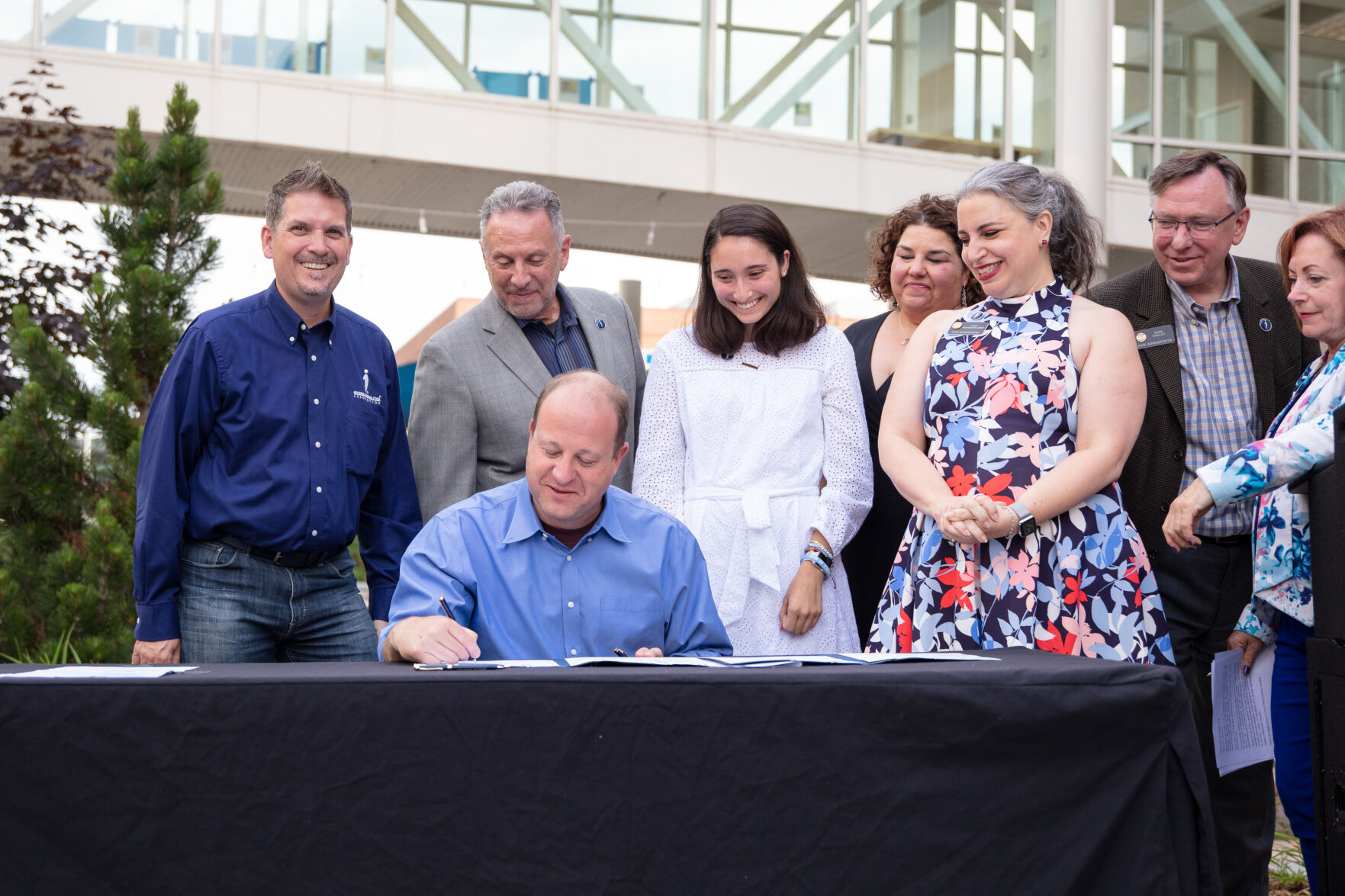
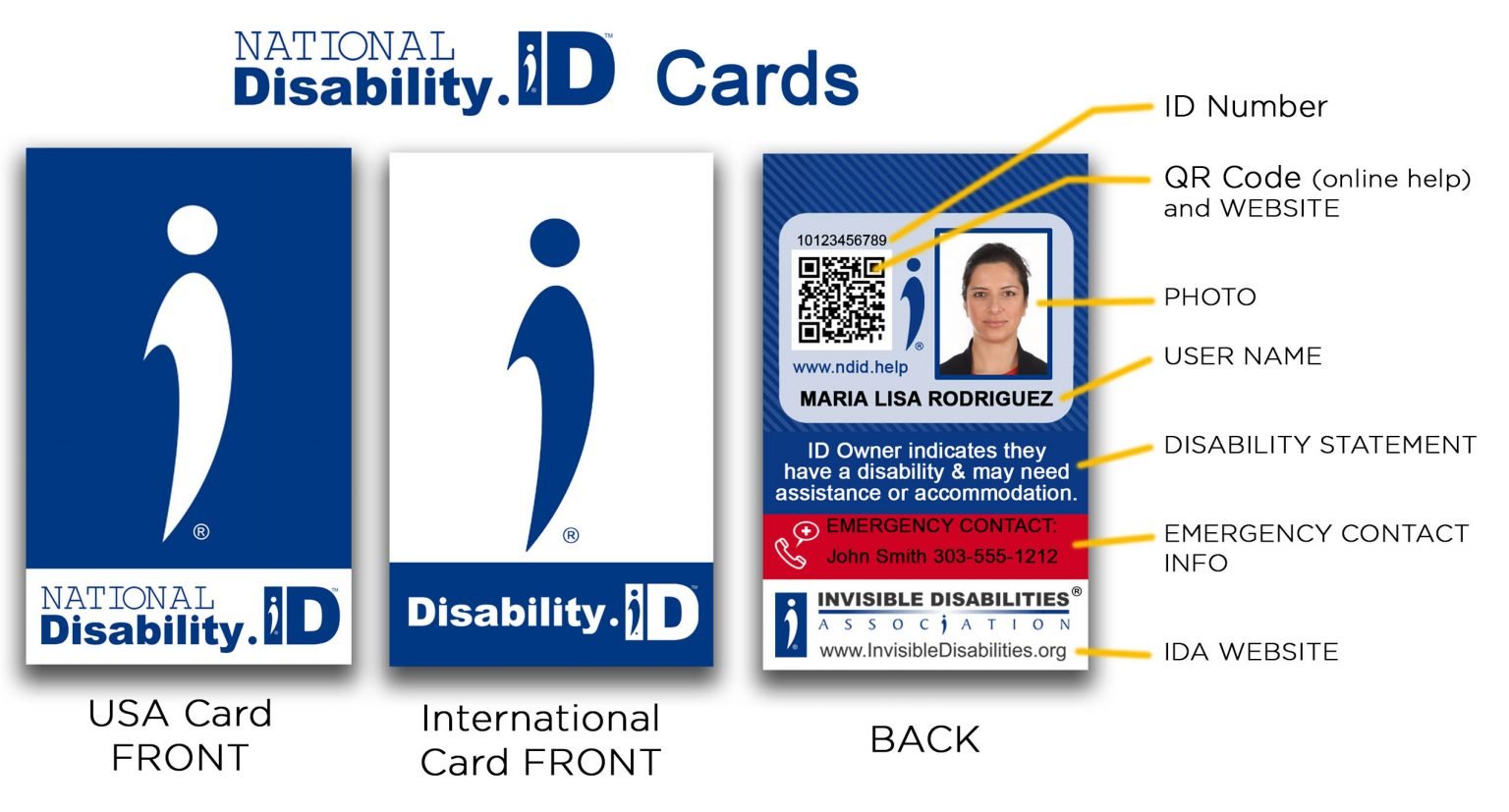
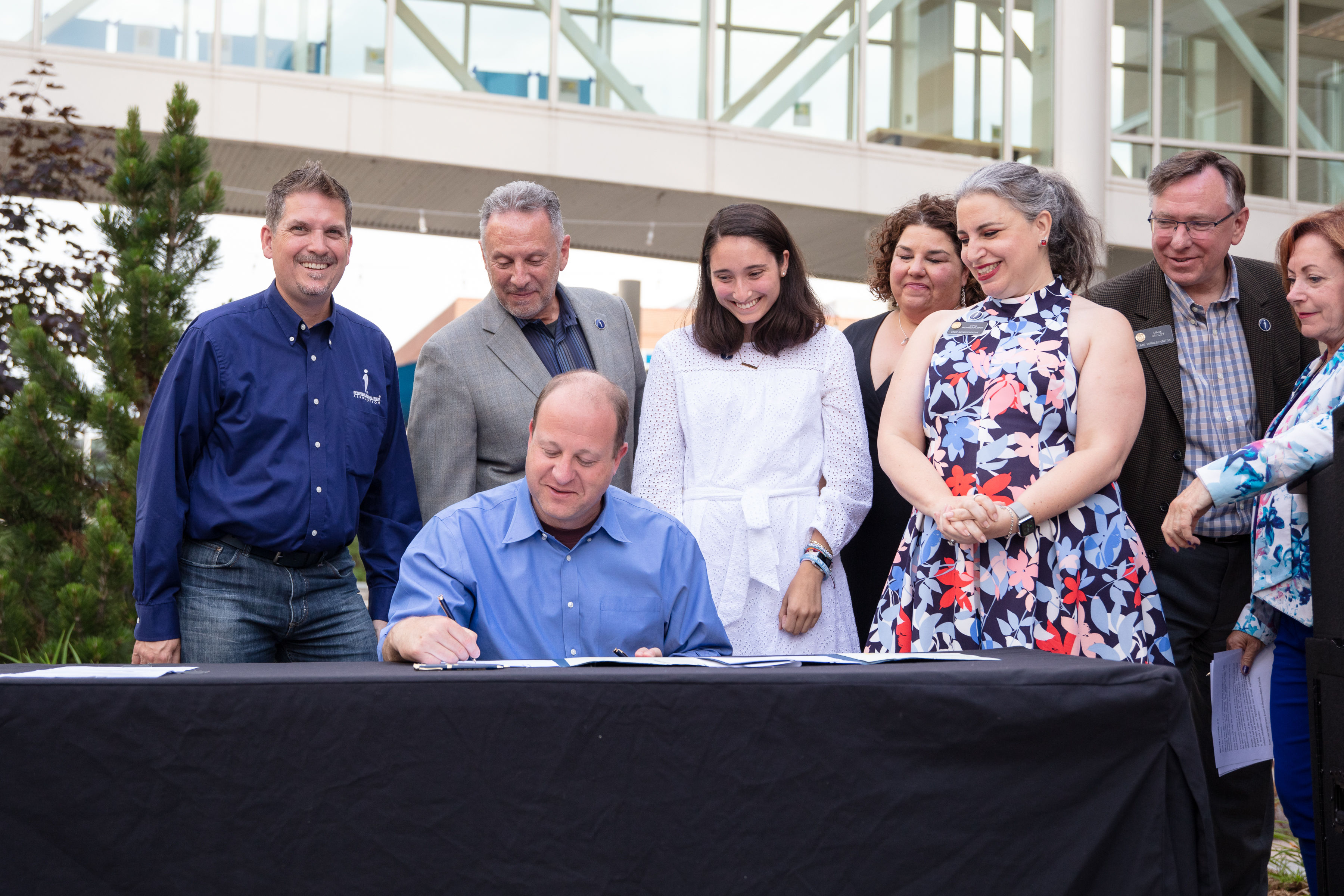
Signed into law by Gov. Jared Polis on July 1 at Craig Hospital in Englewood, the bill paves the way for those electing to do so to have an identifying symbol, like the heart on a driver’s license that indicates the holder is an organ donor, imprinted on a state identification card or driver’s license.
Each participant’s disability can be recorded in a database accessible to law enforcement officers and other first responders. This, Wayne Connell said, will “Make a drastic difference in helping save lives and raise awareness for people living with disabilities, both invisible and apparent, and/or a neurodiversity.”
What’s important, Connell said, is the emphasis on the word “choose.”
“No one is required to register,” he said. “Everything is strictly voluntary. If someone doesn’t want it, they don’t have to have it. It’s as simple as that.”
Having a symbol on a government-issued identification, Connell added, “Provides visibility to the invisible. It gives law enforcement a simple, extra tool that can help diffuse situations from escalating.
“For example, when an officer pulls someone over and runs the (license) plates, the database would let the officer know that the slurred speech is because the person in the car is a stroke survivor, not someone who is intoxicated. Or that a person with autism isn’t being disrespectful when eye contact isn’t made.”
Some 40 agencies, ranging from the Anti-Defamation League to arc Thrift and Natural Grocers, supported the IDA’s efforts to get the bill passed. Mainly, Connell feels, “Because it’s just as much a civil rights issue as it is anything else. Eighty percent of those with invisible disabilities don’t use an assistive device, so how is someone to know that this guy over here in the long pants has a prosthetic leg or that guy over there is deaf? We pre-judge what we can’t see.”
Connell estimated that it will cost “just under” $90,000 to produce the symbol and descriptive literature, and to develop the program that will enable the Department of Motor Vehicles to imprint it on driver’s licenses. There is no charge to those wishing to participate, and participation can be terminated any time a person wishes.
Connell expects that the start date in Colorado will be in July 2022.
Alaska was the first state to pass and adopt this type of legislation. Similar bills have passed in Ohio, Georgia and Wisconsin, with New York, Pennsylvania, Alabama and Utah considering it. One day, Connell hopes, every state will have the program.
Connell, senior manager of the telecom infrastructure team at Dish Network and Sling TV, said that it was his wife who coined the phrase “invisible disabilities” after numerous experiences where people would yell or curse at her, causing her to be humiliated in public because her limitations weren’t apparent.
“We would park in accessible parking with a registered placard, and since Sherri had regained the use of her legs, even though she felt bone-crushing pain, she no longer needed a wheelchair,” Connell said. “People would yell at her for parking in an accessible spot or wrongfully using a placard. One time after shopping in Douglas County, she returned to her car and started to back out of her parking spot when she noticed flashing lights in her rear-view mirror.
“Because of the flashing lights and commotion, a crowd gathered, excited to see someone finally getting ticketed for parking in a spot reserved for the handicapped. The officer eventually moved on, but Sherri was overwhelmed, embarrassed – and a bit angry.
“People were yelling at her because she wasn’t in a wheelchair. They were taking away her dignity when a symbol on her license would have hopefully changed the conversation. Our hope, with the passage of HB21-1014, is that people living with disabilities will not have to be disregarded, discriminated against or called liars and fakers, such as the way my wife was treated over two decades ago.”
Connell credits 17-year-old Rebecca Zickerman, an intern at the IDA, with bringing the dream to the state legislature. “Rebecca has a mild form of cerebral palsy, so this was a personal issue for her. She can fall easily, and if she’s under stress and you asked her to walk a straight line, she couldn’t,” Connell said.
Zickerman, daughter of author Nancy Sharp and Steve Saunders, chief communications officer for the Westminster Public Schools and son of former newspaper columnist Dusty Saunders, reached out to state Rep. Dafna Michaelson Jenet, asking her to consider sponsoring what became HB21-1014. She did, and after months of committee hearings and testimony, the Disability Symbol Identification Bill was passed.
When Connell founded the Parker-based Invisible Disabilities Association in 1996, positive response was immediate. “We had a website, so people from across the country and around the world found us.”
He ran the association with the exclusive help of volunteers until the recent hire of Jess Stainbrook as executive director. Stainbrook came to the IDA with a strong background in television, having won eight Emmy Awards for producing and directing major sports programming at events like the Olympics, World Cup Skiing and the National Football League. In late 2019 he launched the IDA podcast, The Invisible No More Show.
The IDA’s educational efforts include a virtual Brain Ideas Symposium where experts deliver science-based talks on topics relating to subjects like Alzheimer’s disease, autism, PTSD and therapeutic humor; the Cleaner Indoor Air Campaign, which offers information about lessening the amount of scents that can trigger allergic or neurological reactions; and But You LOOK Good, a book that gives those living with chronic illness and pain a voice about how they feel, what they need and how others can be an encouragement to them.
Its online “community,” established in 1999, connects 750,000 patients, families, friends and caregivers with support and inspiration.
Or, as Connell put it: “Our little organization is all about how we can change the world for millions of people.”

Victor Marx says he’ll only debate Phil Weiser once in Colorado governor’s race — without a moderator
Ernest Luning
ernest.luning@coloradopolitics.com
Updated 14 hours ago
Colorado Republican gubernatorial nominee Victor Marx said on Tuesday that he will participate in only one debate with Attorney General Phil Weiser before the November election — and he challenged the Democratic nominee to hold the event without a moderator....
10th Circuit finds no fair housing violation by Littleton landlord for worker’s alleged rape of tenant
Michael Karlik
michael.karlik@coloradopolitics.com
Updated 16 hours ago
The Denver-based federal appeals court concluded on Monday that Littleton’s housing authority could not be held liable for a maintenance worker’s alleged rape of a tenant, as the worker’s employment did not provide any special access to the victim. A...
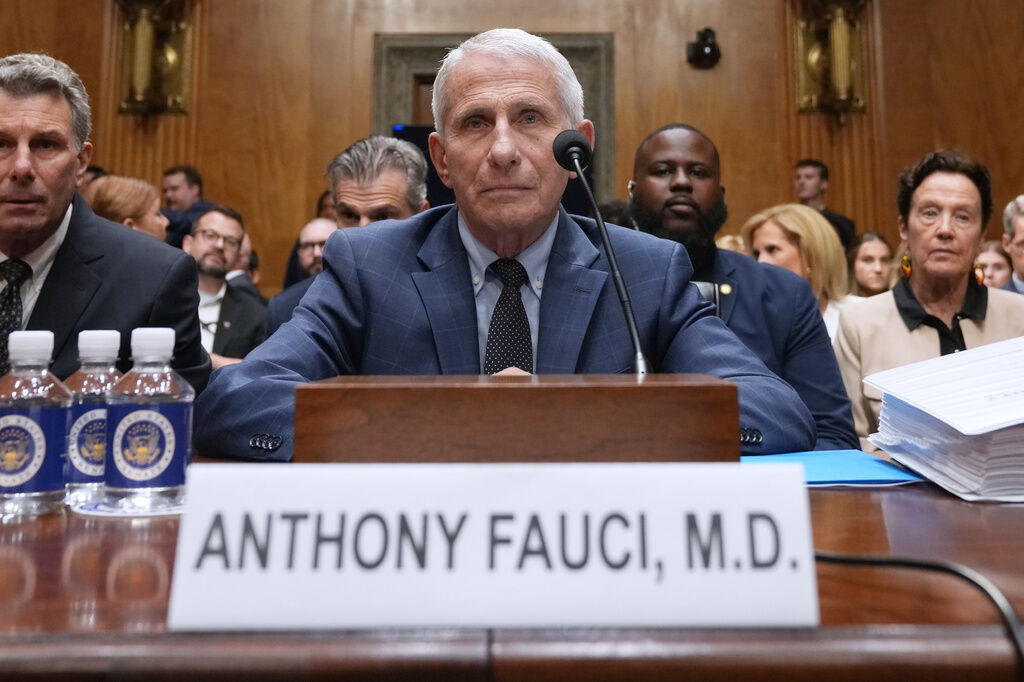
Fauci’s Fifth Amendment answers may test Biden pardon as GOP eyes contempt
Kaelan Deese
kaelan-deese@coloradopolitics.com
Updated 15 hours ago
Dr. Anthony Fauci invoked his Fifth Amendment right against self-incrimination more than 100 times on Wednesday, a move legal experts described as strategically sound despite the politically damaging optics. Sen. Rand Paul (R-KY), chairman of the U.S. Senate Committee on...

Democrats must win 57 out of 77 competitive House seats to take majority: Cook Political Report
Hailey Bullis
hailey-bullis@coloradopolitics.com
Updated 18 hours ago
Democrats’ path to retaking the House in November has significantly slimmed as a result of the mid-decade redistricting war this cycle, a new analysis found. The nonpartisan Cook Political Report found that under the newly drawn maps across 10 states,...

Denver labor acknowledgment proposal faces council committee questions
Deborah Grigsby
deborah.smith@denvergazette.com
Updated 22 hours ago
A proposal to add a labor acknowledgment to Denver City Council proceedings has been delayed by the Finance and Business Committee after members raised questions about its wording, intentions and place in the council’s opening proceedings. The proposal, put forth...
Fauci invokes the Fifth Amendment and declines to testify in GOP-led Senate panel’s COVID-19 hearing
The Associated Press
the-associated-press@coloradopolitics.com
Updated 23 hours ago
WASHINGTON (AP) — Dr. Anthony Fauci on Wednesday invoked the Fifth Amendment and declined to answer questions from senators in a Republican-led committee hearing about his handling of the COVID-19 pandemic. The move injects new drama into the lingering tensions...

Colorado residents rush to buy guns ahead of new restrictions, breaking sales records for several stores
By Debbie Kelley
by-debbie-kelley@coloradopolitics.com
Updated 22 hours ago
Colorado residents are lining up to buy guns ahead of the latest weapons restrictions set to take effect this Saturday. The new law mandates individuals seeking to purchase semiautomatic firearms with detachable magazines to first complete a firearm safety course...

Crime continues to decline in Aurora, police chief says
Kyla Pearce
kyla.pearce@gazette.com
Updated 22 hours ago
Crime in Aurora continued to decline in the first half of 2026, according to Aurora Police Department officials. Crime overall in the city has been on a downward trend since 2024, according to APD. Between Jan. 1 and June 30,...

El Paso County rejects multi-family zoning request near Monument Academy
Savannah Eller
savannah-eller@coloradopolitics.com
Updated 21 hours ago
The El Paso County Board of Commissioners narrowly rejected a developer’s bid to convert land from low- to high-density residential zoning. The request, made by MA Infrastructure, LLC, would have allowed 12 units per acre on half of a 14-acre...

Atop taxes, here’s how much each Colorado resident pays in fees
Marissa Ventrelli
marissa.ventrelli@coloradopolitics.com
Updated 2 days ago
Each Colorado resident paid nearly $5,000 in state-sanctioned fees last year, according to a report by a policy think tank. The report, which analyzed how fees have affected Colorado’s economy, found that fee revenue has more than tripled since 2008...
PREV
PREVIOUS

Redistricting commissions' maps ripped in Arvada
Colorado’s independent redistricting commissioners got an earful Tuesday night in Arvada – from the biggest crowd yet at a public input hearing – about the preliminary draft maps unveiled in June. It was the first public input hearing in a metro area, after the first three, held over the weekend in rural, eastern parts of the state. The […]

Grand Junction home builder sues to stop paid leave program approved by Colorado voters
A Grand Junction home building company is taking a pair of state agencies to court, alleging in a lawsuit filed Tuesday that a ballot measure approved by voters in November that establishes paid family and medical leave in Colorado is unconstitutional. Nearly 58% of Colorado voters last year supported Proposition 118, which authorized up to […]