

WATCH: COLORADO POLITICKING | Breaking down the preliminary maps from the redistricting committee

In this week’s episode, legislative reporter Pat Poblete, chief legislative reporter Marianne Goodland and reporter Ernest Luning break down the latest preliminary legislative redistricting maps that were released Tuesday.
When it comes to the state Senate, Goodland said there isn’t a “strong benefit to either party.”
“No matter how you look at these preliminary maps,” she said, “Democrats don’t look to gain at most maybe one seat, and could lose maybe one or two. Republicans would pretty much maintain the status quo.”
However, she said, no matter how much these maps change, incumbents appear to not be a priority.
“The most interesting race, I think,” Goodland said, “will be in the Senate district in Weld County and portions of Boulder county.”
The current preliminary map would put two senators in the same district, and “that leaves somebody out of the mix,” Goodland said.
Although there isn’t much change for the Senate, Poblete notes that in the House, the preliminary maps are drawing incumbents into the same districts.
“There are some really powerful lawmakers that might be ending up running against each other in primaries come the next election cycle,” he said.
That includes Joint Budget Committee vice chair Julie McCluskie of Dillon, who is now in the same district as Rep. Dylan Roberts, who was a prime sponsor of the Colorado Option legislation.
“The thing that’s interesting about that, beyond the power dynamic, is that Democrats simply don’t have a lot of rural representation,” Poblete said, “and these are two of their more prominent rural lawmakers.”
As far as Republican representatives, on the Eastern Plains, Rep. Rod Pelton and Rep. Richard Holtorf drawn into the same district.
Holtorf, however, told Goodland he thought they would each be able to keep their respective seat, telling her, “We’ll figure out a way to make this work.”
“Because these maps are so preliminary,” Goodland said, “it’s very likely that they’re going to change.”
Luning also emphasized how these maps are only a draft, adding that the commissioners will be spending the next two months collecting public input and will receive final population figures from the census in mid-August.
“A few thousand residents here and there can really change 65 lines around the state,” Luning said.
“But the maps’ overall composition can tell us a whole lot about where Colorado is politically,” he added, “and where the state might be headed in the next decade, which party has the advantage.”
Related reading:
To see previous episodes, click here.


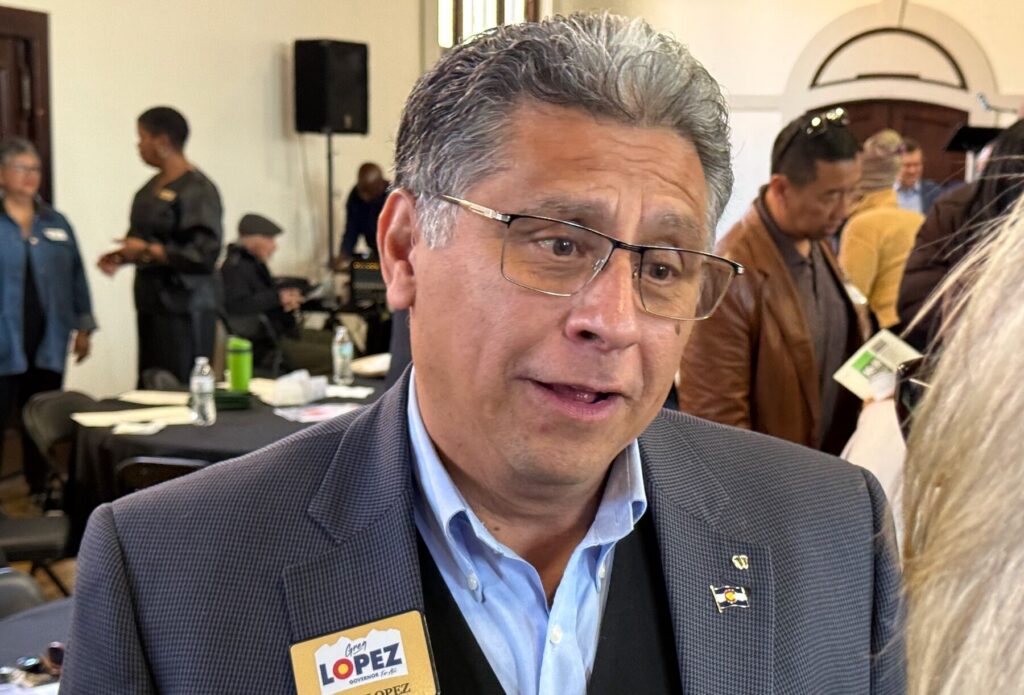
Independent gubernatorial candidate Greg Lopez, a former GOP congressman, qualifies for Colorado ballot
Ernest Luning
ernest.luning@coloradopolitics.com
Updated 13 hours ago
Unaffiliated gubernatorial candidate Greg Lopez, a former Republican congressman from Elizabeth who left the GOP to run as an independent, has qualified for the ballot by submitting enough petition signatures, the Colorado Secretary of State’s Office said Tuesday. He’ll face...
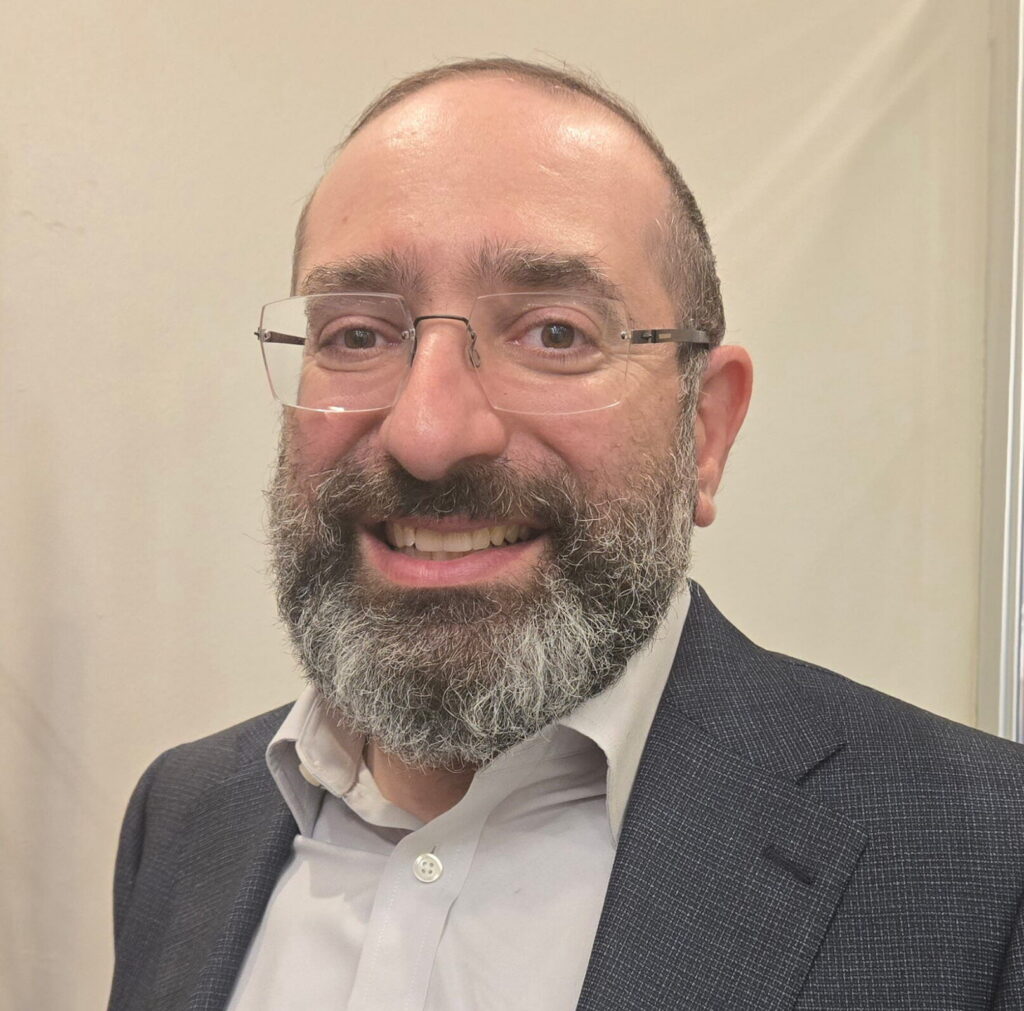
Surprise candidate Shimon Blau cleared to face off against Melat Kiros in November
Ernest Luning
ernest.luning@coloradopolitics.com
Updated 4 days ago
Unaffiliated congressional candidate Shimon Blau, a Denver doctor, has qualified by petition for the general election in Colorado’s 1st District, where Democrat Melat Kiros defeated 15-term U.S. Rep. Diana DeGette in last month’s primary, the Colorado Secretary of State’s Office...
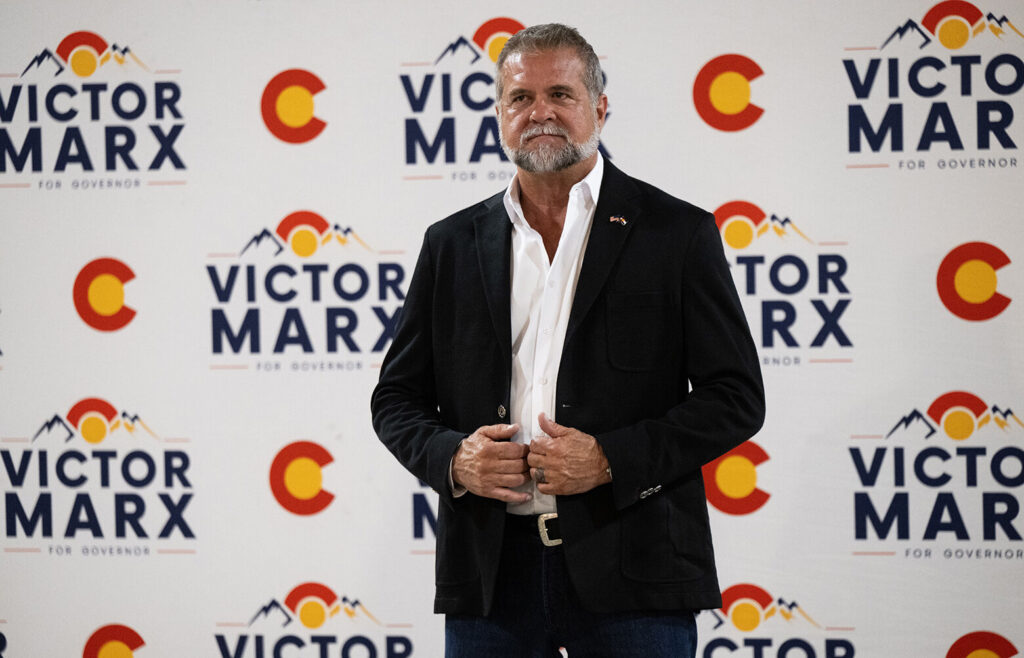
Victor Marx, GOP candidate for governor, faces 100-plus campaign finance complaints
Marianne Goodland
marianne.goodland@coloradopolitics.com
Updated 1 day ago
Victor Marx’s gubernatorial campaign has been hit with more than 140 campaign finance complaints, although most have been consolidated by the state’s election office because they follow similar alleged violations. Marx faces Attorney General Phil Weiser, who won the Democratic...
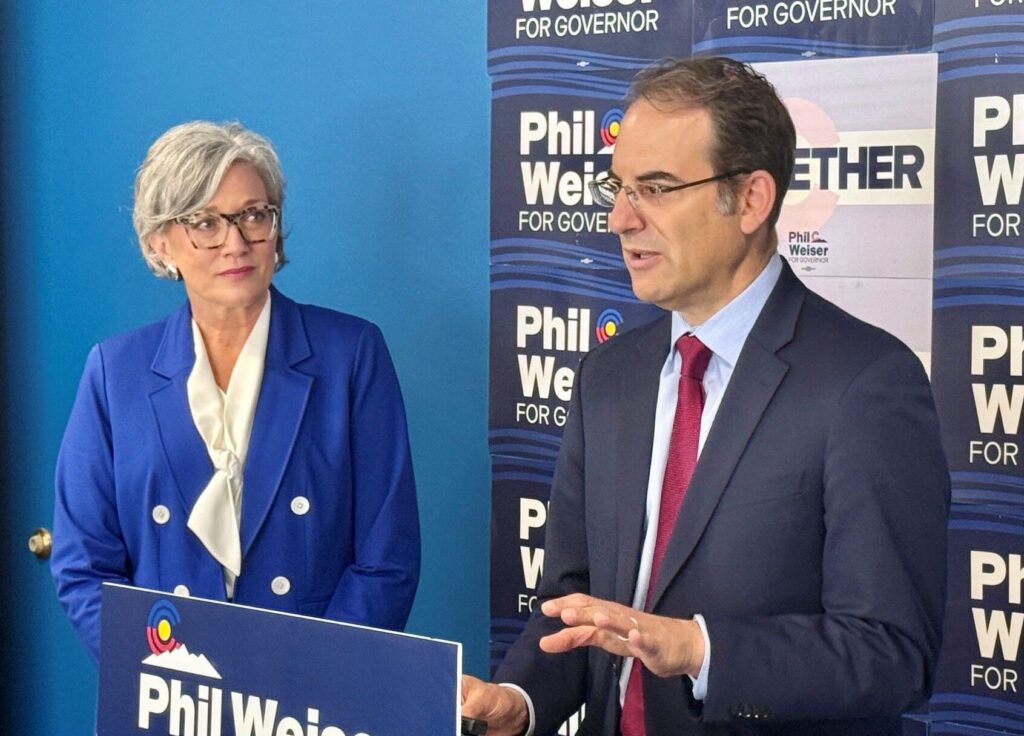
Jefferson County to fill commissioner vacancy after Dahlkemper tapped for lieutenant governor
Matt Kyle
matt.kyle@denvergazette.com
Updated 6 days ago
Democratic gubernatorial nominee Phil Weiser on Wednesday announced that Jefferson County Commissioner Lesley Dahlkemper would be his lieutenant governor, meaning she would be leaving her commissioner seat open should he win the race in November. However, Dahlkemper’s term was already...
Democrat Phil Weiser names Jeffco Commissioner Lesley Dahlkemper as his gubernatorial running mate
Ernest Luning
ernest.luning@coloradopolitics.com
Updated 6 days ago
Colorado Attorney General Phil Weiser, the Democratic nominee for governor, on Wednesday named Jefferson County Commissioner Lesley Dahlkemper to be his lieutenant governor running mate in the general election. Calling her “someone who can be a governing partner,” Weiser said...
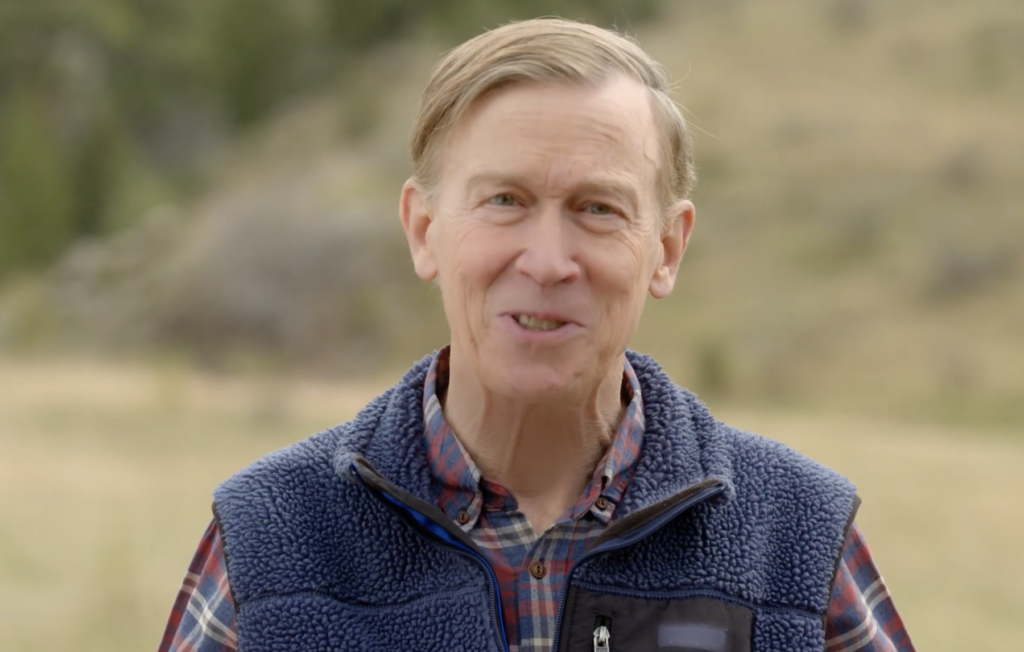
Democrat John Hickenlooper hauls in $1.3 million in 2nd quarter in Colorado’s U.S. Senate race
Ernest Luning
ernest.luning@coloradopolitics.com
Updated 2 weeks ago
U.S. Sen. John Hickenlooper’s reelection campaign raised just over $1.3 million in the year’s second quarter and finished the period with $2 million in the bank, leaving the first-term Democrat with nearly 80 times as much cash on hand as...

Campaign launched to redirect $1 billion in TABOR refunds to education
Marissa Ventrelli
marissa.ventrelli@coloradopolitics.com
Updated 1 week ago
A coalition that includes the state teachers’ union on Tuesday launched a campaign for a ballot proposal that would reduce more than $1 billion in taxpayer refunds and spend the money on education. The measure is among several campaigns taking...
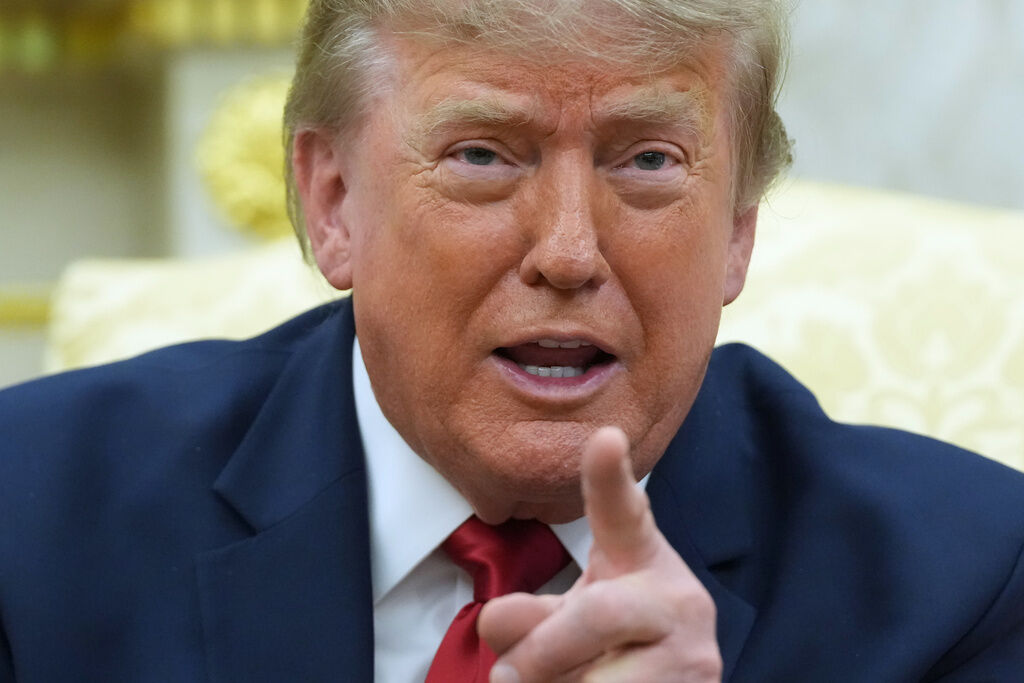
WATCH: Trump speaks on elections in primetime address
The Associated Press
the-associated-press@coloradopolitics.com
Updated 2 weeks ago
WASHINGTON (AP) — President Donald Trump will deliver a primetime address Thursday that he says will include a focus on elections. The speech comes as he’s escalated calls for Republicans to pass tighter federal voting rules for November’s midterm elections....

Signatures submitted to cap Colorado’s income tax rate
Marissa Ventrelli
marissa.ventrelli@coloradopolitics.com
Updated 2 weeks ago
The group behind a ballot measure aiming to cap the state’s income tax at the current rate has submitted signatures from voters to election officials for review, part of the tug and pull in Colorado between opposing political forces fighting...
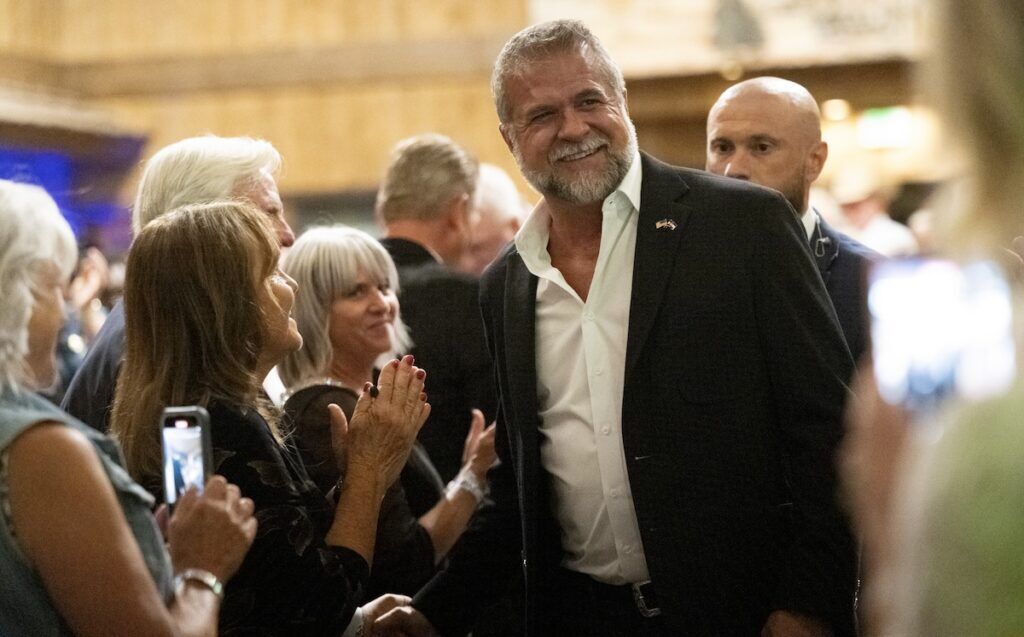
Republican candidates pass on signing Colorado gubernatorial nominee Victor Marx’s ‘unity compact’
Ernest Luning
ernest.luning@coloradopolitics.com
Updated 2 weeks ago
A spokesperson for Republican gubernatorial nominee Victor Marx said his campaign is “extremely encouraged” by responses to a document the campaign circulated late last week, asking fellow GOP nominees how they want to collaborate in the months ahead before Colorado’s...
PREV
PREVIOUS
Biden energy secretary Jennifer Granholm stumps for innovation in Colorado
U.S. Energy Secretary Jennifer Granholm toured the Namaste Solar farm east of Aurora under rainy skies Thursday afternoon to talk about the Biden’s $1.2 trillion infrastructure plan and his goal to achieve greener electricity by 2035. “This is the largest investment in electric vehicle infrastructure in our nation’s history,” she told a gaggle of reporters […]

NONPROFIT REGISTER | Daniels Fund welcomes new Grants Program senior vice president
DANIELS FUND Denver News: Luke Ragland, former president of Ready Colorado, a Denver-based education policy organization, has been named senior vice president of the Daniels Fund Grants Program. “Luke is well-positioned to lead our Grants Program into the future,” said Hanna Skandera, president and chief executive officer of the Daniels Fund. “His vision, grit and […]