

Politicos react to preliminary legislative redistricting maps
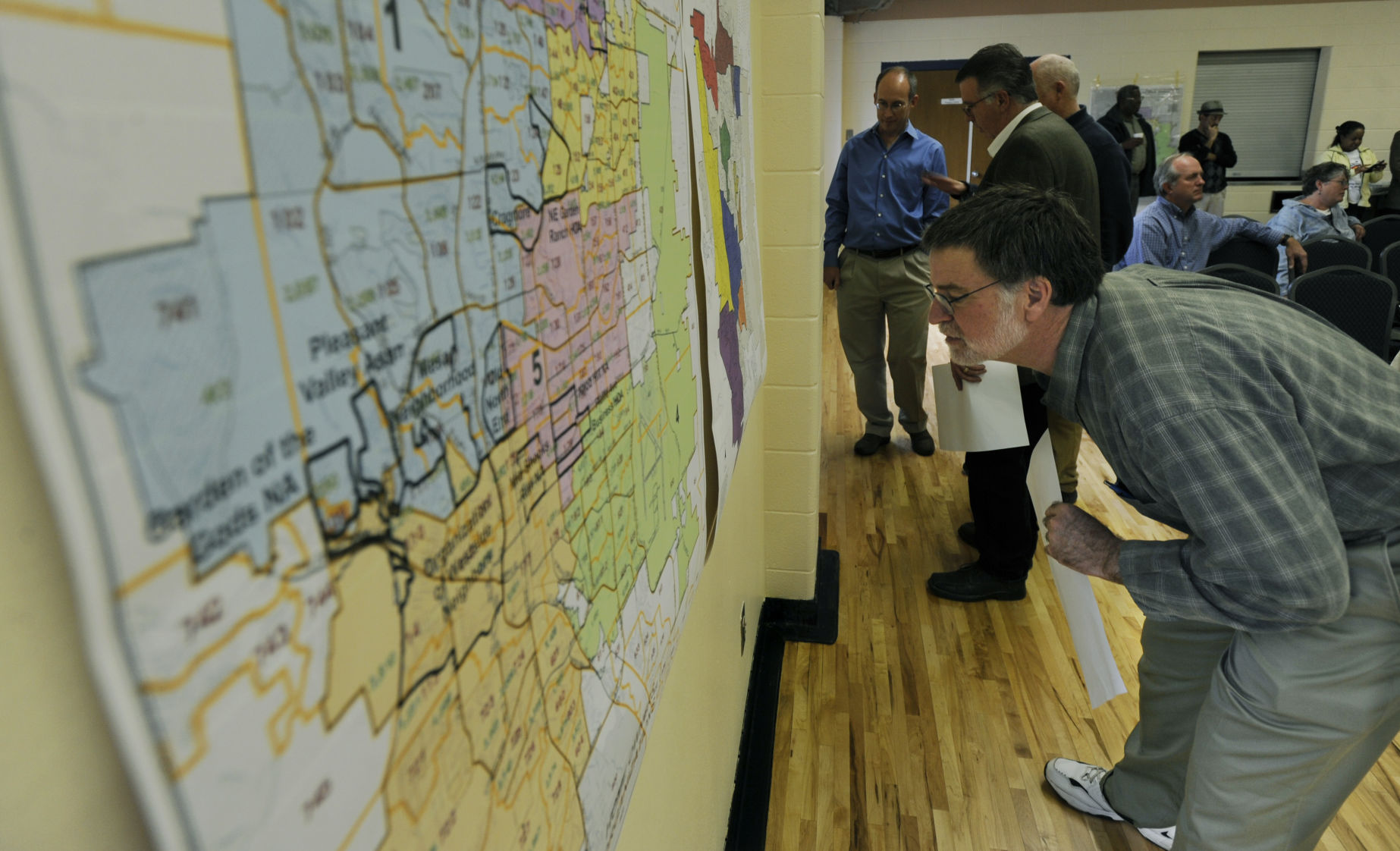
State political leaders and observers weighed in Tuesday on the preliminary maps drawn for the state House and Senate, acknowledging that the maps are certain to change between now and when the commission finalizes them later in the year.
Colorado Republican Party Chairwoman Kristi Burton Brown stressed that these are the initial maps and that there’s a months-long process ahead.
“The preliminary legislative map is just that – preliminary,” she said in a written statement. “This is the start of a long process approved by the VOTERS. Coloradans we talk with are tired of safe seats for both Democrats and Republicans. We know our message will resonate with Coloradans, and we look forward to seeing even more legislative seats becoming competitive as the maps evolve.”
That largely matched with a statement from state Senate GOP spokesman Sage Naumann.
“These maps are preliminary, and as nonpartisan staff has pointed out, may change significantly once census data is received,” he said in a text. “Coloradans – and lawmakers from both parties – wanted an independent redistricting process. We trust that process.”
State House GOP spokeswoman Isabelle Daigle in a statement said her caucus was “glad to see that the process that Coloradans voted on in 2018 is being conducted transparently for us all to witness.”
“We look forward to seeing the Commission’s continued work for the people of Colorado,” she said via text.
Brown’s counterpart at the Colorado Democratic Party, Chair Morgan Carroll, echoed those reactions. “This is the starting point in an important process to ensure every Coloradan has quality representation in their state government. Amendment Z calls for robust public input and engagement, and we encourage all Coloradans to participate in the public meetings over the summer to make their voices heard and inform the final map.”
Ian Silverii, the former executive director of ProgressNow Colorado, ran the Democrats’ House Majority Project early in the last decade. He said that at first glance, the initial maps appeared to have some issues complying with at least some of the constitutional requirements – particularly to create competitive districts where possible.
“If I look at the political makeup of the House map, it looks like there are only three or four competitive districts,” he told Colorado Politics. “That seems contrary to the constitutional mandate to create competitive districts if there are that many safe Republican and safe Democratic districts.”
Silverii also raised concerns about what will happen if Senate incumbents elected in 2020 to four-year terms are drawn into the same districts, which can’t have two incumbents after next year’s election.
Said Silverii: “On the Senate map, it appears the amendment doesn’t contemplate what to do if you have all these midterm incumbents drawn into the same district. The commission needs to figure that out.”
Like other analysts, however, he stressed that the maps released Tuesday are the starting point for what promises to be a lengthy process.
“Just like all the other maps, this one is preliminary,” he said. “The nonpartisan staff had to start somewhere. Fortunately, Amendments Y and Z have a highly involved and long public comment and participation period where, hopefully, communities of interest will be able to come together and make their case for proper representation of communities of color to ensure that their voices are not diluted by this process.”
Rookie Reps. Tracey Bernett, D-Longmont, and Dan Woog, R-Erie, are the sole pair of incumbents in the House who could square off in a general election under the preliminary maps. Bernett said in an interview she had hadn’t yet seen the new maps but was confident more work would be done before legislative districts are finalized.
“It’s a long process and this is just a start,” Bernett said. “I also have a phenomenal track record so far, you know, 10 bills that I got through the legislature … and I am very, very confident and happy with my first legislative session. I think that voters will really, really like what I’ve done so far.”
Ryan Lynch, a veteran campaign manager for Republican legislative candidates, said the new maps would put the GOP in a better position to win control of the House – possibly as soon as next year’s election – but would mean taking the majority in the Senate could be more difficult.
“I think the House map is fair,” he said. “It’s unfortunate multiple incumbents will have to take on each other in primaries, but that is a part of redistricting. It’s clear that they did not factor in incumbency.”
In the House, he said, “It sets up a scenario similar to what we’ve seen in the Senate in the last decade, where it really only comes down to three to five districts that could swing the majority to one party or the other, so you’re going to see considerable resources poured into those three to five races.”
On the Senate side, Lynch said, “From a Republican perspective, it’s a tougher hill to climb to regain the majority. There appear to be seven semi-competitive or competitive seats, and in order to gain the majority, Republicans would need to win six of seven, and that’s going to be a difficult even in the best electoral environment.”
Control of the Colorado Senate has shifted twice since the maps were last redrawn, ahead of the 2012 election, with Democrats holding the gavel in the 2013-14 sessions, Republicans in charge from 2015 to 2018 and Democrats taking back control in 2018 and which they’ve held ever since.
Added Lynch: “This is far from the worst-case scenario for Republicans in the Senate, but it’s also a difficult hill to climb to regain the majority.”
Most House lawmakers from the same party and drawn into the same district and who are up for re-election in 2022 did not respond to or declined requests for comment.
However, Rep. Matt Soper, a Delta Republican, did weigh in on what he didn’t like about Delta and Montrose being drawn into the same district.
Historically, culturally and in terms of compactness, he said the map does not serve the two counties well. Soper said Delta and Montrose have not been in the same House district since the 1960s.
Delta aligns itself far more with Mesa County than with Montrose, he said. That includes jobs – people in Delta will work in Mesa County more than in Montrose, and the hospitals in Mesa and Delta are partnered with each other. The person who represents Delta and rural Mesa counties has the orchards and wineries, but adding in Montrose adds in ranching and skiing, which are not part of Mesa and Delta counties, he said.
Soper also said the Senate district appears gerrymandered, akin to a “flagpole annex” type of district. He pointed out that you cannot drive from one end of the district to the other except via a jeep road and only in the summertime.
“That’s the opposite of what we wanted from the independent commission,” he said. “I’m glad this is just a preliminary map.”

Palmer Lake to discuss Buc-ee’s, recall elections Thursday
Savannah Eller
savannah-eller@coloradopolitics.com
Updated 15 minutes ago
The newly-whole Palmer Lake Board of Trustees will have an opportunity Thursday to discuss the setting for two issues going to town voters in the new year. The first is when and how to field a ballot question on the...
Colorado vacancy panels face challenge: Replacing senator and representative from the same area
Marianne Goodland
marianne.goodland@coloradopolitics.com
Updated 19 hours ago
Two vacancy committees that will convene in the next month or so will have an interesting challenge: Picking a new state senator and state representative who will represent the same geographic area. The vacancy election for Senate District 25, represented...

Colorado Democrat Julie Gonzales launches U.S. Senate primary challenge to incumbent John Hickenlooper
Ernest Luning
ernest.luning@coloradopolitics.com
Updated 2 days ago
Declaring that Colorado “needs a fighter, not a bystander,” state Sen. Julie Gonzales, a Denver Democrat, on Monday launched her long-anticipated primary challenge to U.S. Sen. John Hickenlooper. Pitching her campaign as a departure from “old-playbook politics,” Gonzales said she’s...
Democrat Shannon Bird to step down from Colorado legislature to campaign full-time for Congress
Ernest Luning
ernest.luning@coloradopolitics.com
Updated 2 days ago
State Rep. Shannon Bird, a Westminster Democrat, said Sunday that she plans to resign from the Colorado legislature next month in order to focus on running for the 8th Congressional District seat held by Republican U.S. Rep. Gabe Evans. Bird...
Colorado Supreme Court to hear case on ballot measure disclosure requirements
Marissa Ventrelli
marissa.ventrelli@coloradopolitics.com
Updated 5 days ago
The Colorado Supreme Court has agreed to hear a case challenging whether the state can require ballot measure committees to disclose the names of their registered agents in election communications. The case stems from a complaint filed during the 2020...
Democrat Jena Griswold lands EMILYs List endorsement in Colorado attorney general race
Ernest Luning
ernest.luning@coloradopolitics.com
Updated 5 days ago
EMILYs List, a national organization that works to elect pro-choice, Democratic women, this week endorsed Colorado Secretary of State Jena Griswold’s bid for attorney general in next year’s election. The 41-year-old Griswold, who is term-limited, was the first Democrat elected...
Colorado secretary of state refuses to hand over election records to DOJ
Marissa Ventrelli
marissa.ventrelli@coloradopolitics.com
Updated 6 days ago
Colorado will not comply with the U.S. Department of Justice’s request to share certain voter information, Secretary of State Jena Griswold said on Wednesday. Federal authorities have sought voter data from more than two dozen states, framing it as part...

Charles Johnson retains District 11 school board seat after election recount
Gazette Staff
gazette-staff@gazette.com
Updated 5 days ago
The order of finish for the last of three open seats on the Colorado Springs School District 11 Board of Education remained the same after a recount, according to figures released Thursday from the El Paso County Clerk and Recorder’s...
Income tax overhaul in Colorado clears first hurdle, as revised estimate puts tax hike at $4 billion
Marianne Goodland
marianne.goodland@coloradopolitics.com
Updated 7 days ago
A state panel on Wednesday gave the go-ahead to a ballot measure that seeks to change Colorado’s flat rate of 4.41% to a graduated income tax, beginning in 2027, and raise billions dollars in new revenue. Now the proponents of...
Colorado title board to review graduated income tax proposal for 2026 election
Marianne Goodland
marianne.goodland@coloradopolitics.com
Updated 1 week ago
The Secretary of State’s title board on Wednesday will review another attempt at a graduated income tax ballot measure for the 2026 general election. In October, the title board had rejected two proposals submitted by the Bell Policy Center because...
PREV
PREVIOUS

Denver’s St. Charles Place Park reopens after youth-led renovation
St. Charles Place Park in Denver’s Cole neighborhood reopened Monday after the completion of a renovation project by Five Points Youth Ambassadors and Denver Parks and Recreation. The renovation added three nature play spaces to the park and increased its overall green space. The new design was created by the youth ambassadors, who also led […]
What you need to know about the legislative maps
According to the Colorado Independent Redistricting Commission, these are the requirements for drawing the maps that outline the borders for each state House and Senate district: Have equal population, as required by the U.S. Constitution, with a population deviation of no more than 5 percent between the most populous and the least populous district in […]