

ACLU sues Aurora to allow candidate with felony conviction run for City Council

The ACLU of Colorado filed a lawsuit against the city of Aurora on Thursday in an effort to allow Candice Bailey, a community activist with an over 20-year-old felony conviction, run for City Council this November.
Under Aurora’s city charter, those convicted of a felony cannot hold public office. The lawsuit alleges this rule violates Bailey’s constitutional rights because former felons regain rights of citizenship after completing their sentences and the right to run for office is defined as “fundamental” by the Colorado Supreme Court.
“A city has no legitimate business barring someone from running for office simply because they have a past felony conviction,” said Mark Silverstein, ACLU of Colorado legal director. “The Aurora laws we challenge today represent arbitrary and unjustifiable discrimination.”
The charter’s ban of felons, approved by voters in 1961, goes beyond federal and state law, unless the candidate is convicted of things like violating public trust or bribery, according to ACLU. Most Colorado cities don’t have such bans, including Denver, Boulder, Lakewood, Colorado Springs and Centennial.
Bailey, 43, was convicted of felony second-degree assault when she was 22, and spent three years in prison. Bailey’s group of friends got into an altercation with another group, resulting in Bailey and a man from the other group firing guns at each other. No one was injured and both she and the man were charged.
Since being released from prison, Bailey has become a well-known community leader for racial justice, frequently participating in Black Lives Matter protests and serving on multiple advisory boards for the city, including the police community task force.
“The mistakes of your life shouldn’t stop you from living life to the fullest or being of service,” Bailey said. “This is not just about me, but about making sure that all future candidates with felony convictions won’t face the same barrier I have, and ultimately, for voters to decide who they want to represent their communities.”
Aurora City Council candidates must also be at least 21 years old, a U.S. citizen, a registered voter, have lived in the city for at least one year and cannot hold other elective public office or be a salaried employee of the city – all requirements that Bailey meets.
The ACLU of Colorado has previously been involved in similar cases, including in 2001 when it sent a letter advocating against a new Colorado Springs ordinance that barred people with felony convictions from running for office. The City Council repealed the ordinance.
Silverstein said, because of racial bias in the criminal justice system, candidate limitations like these are especially harmful for people of color and place disproportionate barriers on Black and brown communities.
7 people running to fill temporary Ward 2 vacancy on Aurora City Council
“These provisions also violate the rights of Aurora residents, who should be free to choose the candidates they believe will be their best representatives,” Silverstein said. “These biased barriers deprive the voters of that choice.”
Bailey announced her intention to run for the Aurora City Council in February, saying she wants to use her experience within the judicial system to improve the city. She wants to address issues including police reform, homelessness, gentrification, small business support and transportation funding.
The lawsuit asks that the court rule that the city cannot use its ban against convicted felons to prevent Bailey from running in the City Council election in November. The lawsuit also asks for an expedited hearing and an extension for Bailey to submit her candidate application.
Bailey intents to run for one of the two open at-large City Council seats, which requires candidates to submit a petition with at least 100 signatures by Aug. 24 to be put on the ballot. As of last week, five candidates were filed to run for the at-large seats.
The city has not yet commented on the lawsuit.


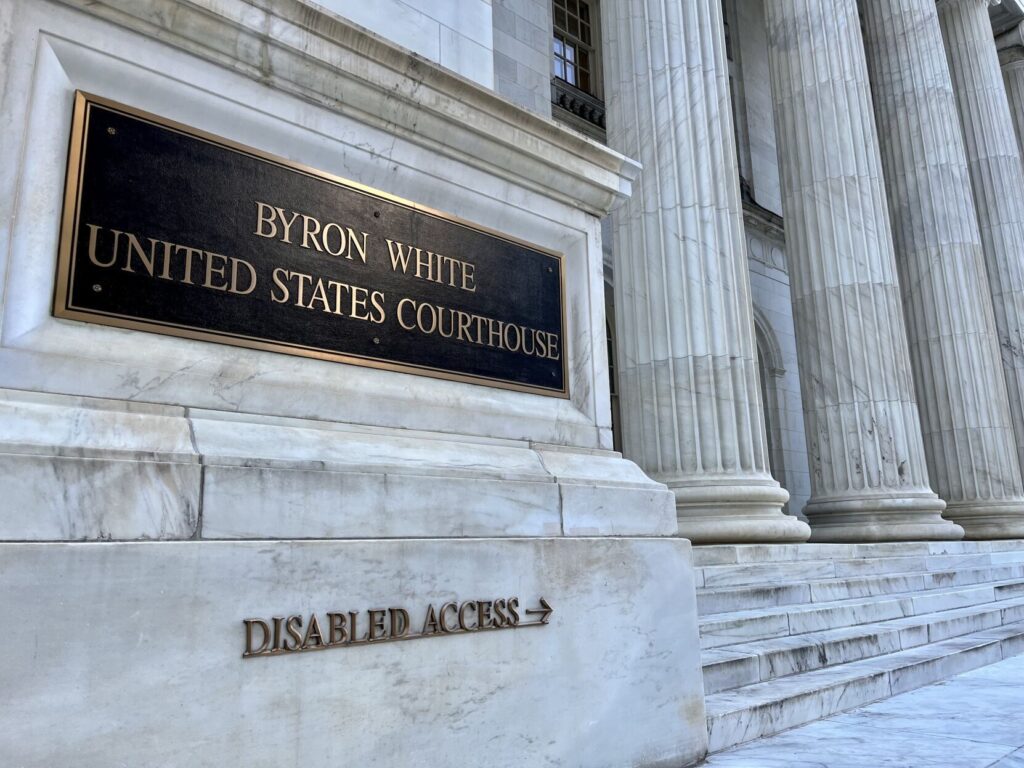
10th Circuit warns lawyers after finding fake case in filing
Michael Karlik
michael.karlik@coloradopolitics.com
Updated 1 hour ago
The Denver-based federal appeals court warned attorneys to be more careful last month after discovering one lawyer cited a fake case in his arguments. In recent months, federal and state judges in Colorado have begun cautioning lawyers explicitly about the...

Colorado legislators drove up cost of Medicaid program
Marissa Ventrelli
marissa.ventrelli@coloradopolitics.com
Updated 2 hours ago
Some of Colorado’s spending woes in Medicaid can be traced to lawmakers who had approved new or expanded programs in the last few years, driving up state costs to the tune of tens of millions of dollars. Just three measures...

Colorado leaders weigh next steps after US Supreme Court rules against state’s ‘conversion therapy’ ban
Marissa Ventrelli
marissa.ventrelli@coloradopolitics.com
Updated 22 minutes ago
Colorado leaders and advocacy groups remain divided after the U.S. Supreme Court on Tuesday ruled against the state’s ban on conversion therapy for minors, ruling 8-1 that the 2019 law violates the First Amendment. While it is a victory for...

Supreme Court rules against Colorado ban on ‘conversion therapy’ for LGBTQ kids
Lindsay Whitehurst
lindsay.whitehurst@associatedpress.com
Updated 3 hours ago
WASHINGTON (AP) — The Supreme Court on Tuesday ruled against a law banning “conversion therapy” for LGBTQ+ kids in Colorado, one of about two dozen states that ban the discredited practice. An 8-1 high court majority sided with a Christian...

A perfect storm: Pine beetles thriving following warm, dry winter in Colorado
O'Dell Isaac
odell.isaac@gazette.com
Updated 54 minutes ago
The warmest winter in Colorado history could lead to record-breaking proliferation of a tiny insect, about the size of a grain of rice, that has killed millions of acres of trees across the Centennial State and contributed to the rapid...

Newly formed PAC promises a stronger voice for southern Colorado businesses
Breeanna Jent
breeanna-jent@coloradopolitics.com
Updated 2 hours ago
A new political action committee has launched in southern Colorado, aiming to strengthen and elevate the voices of local businesses and their regional influence on state-level policy. Over the last two years, the Colorado Legislature has enacted more than 1,000...

10th Circuit rules cognitively impaired man’s risk of lobotomy, mistreatment in Mexico not ‘torture’
Michael Karlik
michael.karlik@coloradopolitics.com
Updated 14 hours ago
The Denver-based federal appeals court concluded last month that a man’s risk of mistreatment or forced lobotomy in his native Mexico did not amount to “torture” that should shield him from deportation. A three-judge panel of the U.S. Court of...
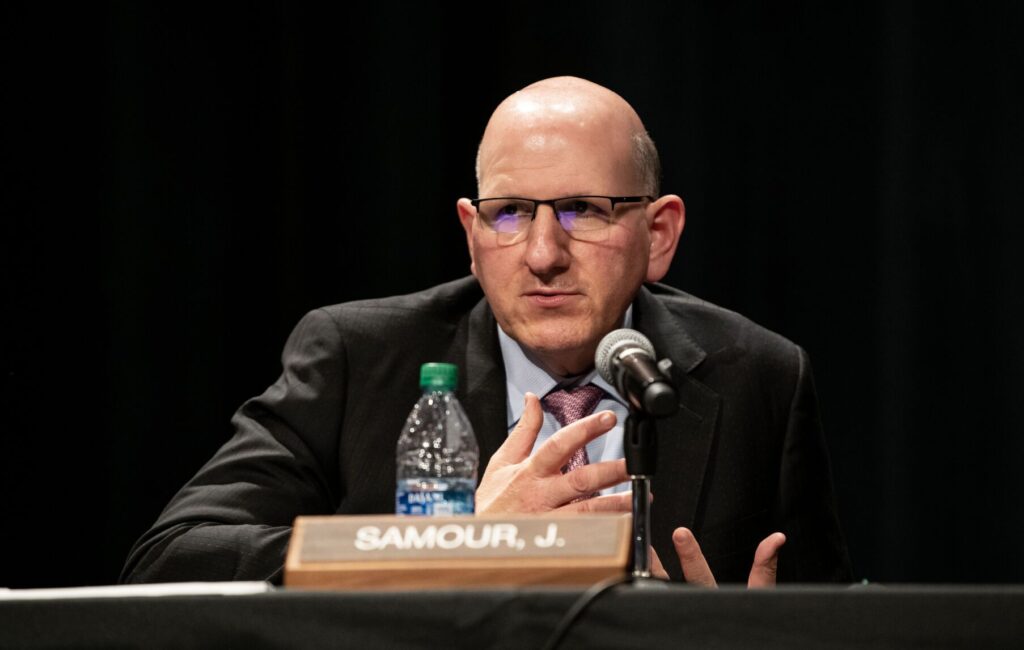
Colorado justices side with news organizations for disclosure of high-level child abuse data
Michael Karlik
michael.karlik@coloradopolitics.com
Updated 19 hours ago
The Colorado Supreme Court ruled on Monday that the state must disclose the number of child abuse reports at individual group living facilities in response to an open records request, as the addresses are already in the public domain. The...

Colorado auto thefts drop 56% from 2021 levels
Scott Weiser
scott.weiser@gazette.com
Updated 3 hours ago
Colorado once ranked as the worst state in the nation for motor vehicle thefts per capita in 2021. The state has since seen a dramatic improvement, with auto thefts dropping 56% from 2021 levels. The state reported 16,291 motor vehicle...
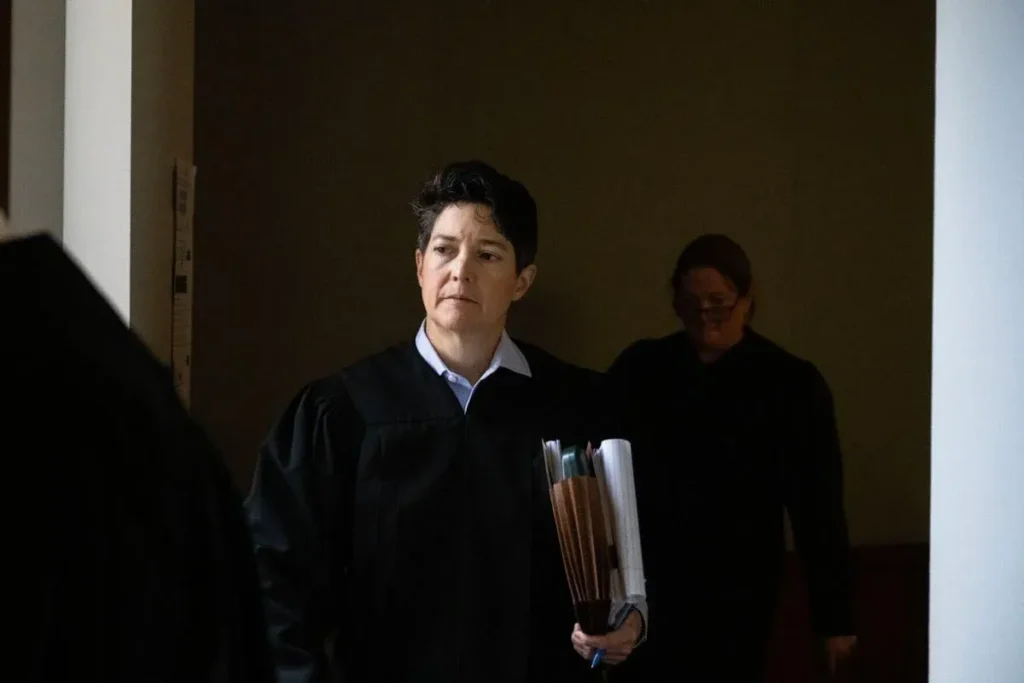
Divided Colorado Supreme Court finds Denver detective did not violate defendant’s Miranda rights
Michael Karlik
michael.karlik@coloradopolitics.com
Updated 14 hours ago
The Colorado Supreme Court determined on Monday that a Denver detective did not improperly resume questioning of a defendant in custody after he invoked his right to counsel. By 4-3, the justices reversed a trial judge’s order that found a...
PREV
PREVIOUS

Incoming DPS superintendent named in lawsuit filed in federal court in New York
Denver Public Schools’ choice for superintendent, Alex Marrero, is among eight people named in a lawsuit filed in federal court. In the lawsuit, a former medical director accuses Marrero and other City School District of New Rochelle leaders of “playing politics over public safety,” while silencing and retaliating against her for raising concerns throughout the […]

NONPROFIT REGISTER | Flatirons Dance, Epic Experience win Arvada Chamber honors
ARVADA CHAMBER OF COMMERCE Denver News: Flatirons Dance and Epic Experience are the recipients of the Arvada Chamber of Commerce Business and Nonprofit of the Year awards and will be honored June 25 at the chamber’s 96th annual dinner. While the recognition event is being held in 2021, the honors represent accomplishments in 2020, according […]