

Conflicting legal opinions address doctor, hospital authority in public option bill

A legal opinion provided to the Colorado Medical Society is unequivocal: forcing doctors and other licensed health care providers (such as hospitals) to accept the Colorado Option plan being proposed in House Bill 1232 is illegal, potentially setting up the groundwork for legal action should the bill be signed into law.
Not so fast, according to a May 6 legal opinion obtained by Healthier Colorado, one of the main proponents of HB 1232.
Colorado Politics obtained the April 22 opinion authored for CMS by Conklin, Cardone & Rutberg, which states that “it is well-established that physicians and other licensed health care providers have an inalienable constitutionally-protected right in the privilege to practice granted by their licensure.”
What that means, based on a 1953 Colorado Supreme Court ruling, is that when the state confers a license on someone to practice a profession, that license becomes “a valuable personal right” which cannot be altered in any way except after due notice and with a fair and impartial hearing before an unbiased tribunal.
In addition, the opinion said, doctors and other licensed providers have the right to carry on a legitimate business as a property right. It cannot be taken away by “an exercise of police power,” a term of art that originally appeared in House Bill 1232 but has since been amended out.
HB 1232 also could interfere with the First Amendment right of association, or as the opinion explains, the right to refuse to associate with whomever one chooses.
The Colorado Medical Practice Act also applies here, the opinion states. The MPA cannot use a physician’s refusal to participate in a health benefit plan as grounds for action by the Colorado Medical Board, the opinion states, because that has nothing to do with protecting the citizens of the state from an unqualified licensee. In addition, the MPA cannot impose “administrative fees” against licensees, something contemplated by House Bill 1232, which sets up a fine of $5,000 for any licensed doctor who refuses to accept the standardized plan set up by the bill.
The opinion says this would amount to disciplinary action, which isn’t authorized by the Colorado Medical Act and which the memo suggests could be a violation of the Colorado and U.S. Constitution.
“Any administrative action or penalty against a licensed physician for failing to participate in a health benefit plan would likely be unlawful, unconstitutional and unenforceable,” the opinion concludes.
Authored by Lowrey, Parady, Lebsack, the May 6 rebuttal claims the CMS opinion is “legally inaccurate and erroneous.” The bill proponents can “proceed with confidence that the CMS memo does not raise any genuine constitutional concern, nor does it identify a viable legal challenge.”
To the claim that the bill would violate the First Amendment right of association, the memo states there has never been a single instance when a court has expanded the right of association to general commercial conduct. Citing a 1989 Supreme Court case, the memo states that the Constitution “does not guarantee a right to choose employees, customers, suppliers or those with whom one engages in simple commercial transactions, without restraint from the State.”
Excluding a particular patient or refusing to engage with a particular insurer does nothing to protect an expressive associational right. That latter right was established under the 1953 case Alabama vs. NAACP, which decided that individual members of the NAACP “had a right to associate together free from undue state interference.” The memo notes previous attempts to assert the claims from the CMS memo on this issue have not been successful.
As to the claim in the CMS opinion that the state has no authority to fine health care providers without due process, the Healthier Colorado opinion states that the bill creates a new category for unprofessional conduct. Finally, the memo states, the claim that the General Assembly has no authority to change the Medical Practices Act is incorrect; the General Assembly “may use its full powers in enacting statutes” and is not bound by the actions of a previous General Assembly.
Promoting access to healthcare by protecting patients from unaffordable medical costs is in line within the state’s “police power” to protect the health, safety and welfare of Coloradans, the memo concluded.
The Colorado Hospital Association said through a spokesperson that “HB 21-1232 is an unprecedented and complex legislative policy. As a matter of course, CHA routinely conducts analysis and review, including legal, on proposed legislation that affects hospitals. We have not received or reviewed the legal opinion currently being considered by CMS. It’s important to remember there are many different perspectives on a policy of this magnitude, and challenges, including legal ones, are typically part of the legislative process.”


Federal judge rejects constitutional claims, ‘expressions of hatred’ by Club Q defendant
Michael Karlik
michael.karlik@coloradopolitics.com
Updated 8 minutes ago
A federal judge rejected a defendant’s claims that he received constitutionally ineffective assistance of counsel while facing federal hate crime and firearms charges for murdering five people at a Colorado Springs LGBTQ nightclub in 2022. Anderson Lee Aldrich is serving...

Divided 10th Circuit upholds Colorado congestion fee on car rentals
Michael Karlik
michael.karlik@coloradopolitics.com
Updated 16 minutes ago
The Denver-based federal appeals court concluded on Monday that a 2024 “congestion impact fee” that lawmakers imposed on short-term vehicle rentals did not conflict with a federal prohibition on certain airport-related charges. Beginning in the 1970s, Congress began limiting the...

Space Force should measure workforce needs as it prepares to double in size, GAO report says
Mary Shinn
mary-shinn@coloradopolitics.com
Updated 2 hours ago
The Space Force needs more people. It’s just not precisely sure how many more. A Government Accountability Office report released earlier this month found that the youngest and smallest military branch does not have a process to consistently or accurately...

Colorado schools receive $24 million to fully implement Healthy School Meals for All
Marissa Ventrelli
marissa.ventrelli@coloradopolitics.com
Updated 4 hours ago
The Colorado Department of Education is providing Colorado schools with nearly $24 million in grant funding to fully implement the Healthy School Meals for All program. Approved by voters in 2022, the Healthy School Meals for All provides free breakfast...
Secret Service agent placed on administrative leave after arrest for near-deadly hazing ritual
Claire Carter
claire.carter@washingtonexaminer.com
Updated 4 hours ago
A Miami Secret Service agent in Florida was placed on administrative leave following his arrest on Sunday in connection with a near-deadly hazing incident at a University of Miami fraternity. Marquez Christopher Pinder, 29, was arrested alongside two other individuals...
Forest fire west of Sedalia prompts evacuations in Douglas County
Nicholas Fogleman
nicholas.fogleman@denvergazette.com
Updated 7 hours ago
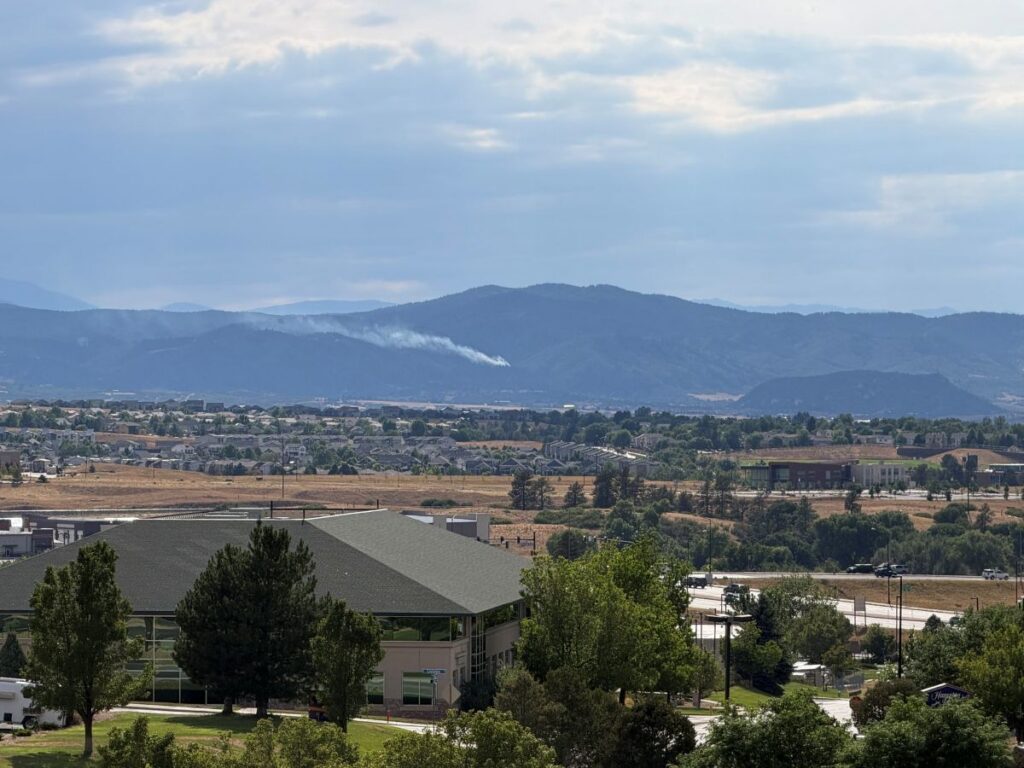
Emergency crews are responding to a forest fire burning west of Sedalia, prompting evacuation orders for nearby residents Sunday afternoon. At about 5 p.m. Sunday, the Douglas County Sheriff’s Office issued an evacuation order for residents within a 2-mile radius...
Airstrikes have paused and talks are pressing forward. But can the US and Iran take the off-ramp?
The Associated Press
the-associated-press@coloradopolitics.com
Updated 6 hours ago
WASHINGTON (AP) — The U.S. military has paused its airstrikes on Iran after nearly two weeks of intensifying bombing, while diplomatic efforts have pushed forward to try to avert a return to all-out war. But it remains to be seen...
Penrose fortune paved the way for Colorado Springs to be a military, space and sports town
Mary Shinn
mary-shinn@coloradopolitics.com
Updated 6 hours ago
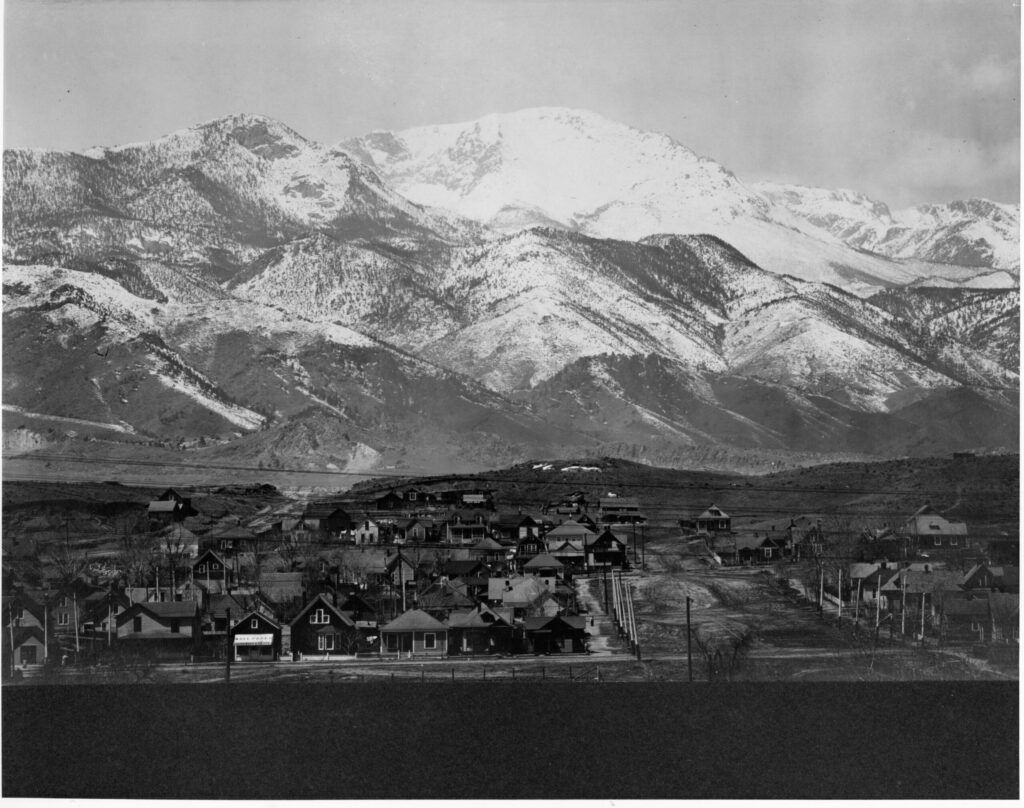
Colorado Springs is always working to catch the next big economic wave. “We’re always trying to figure out what the next thing is going to be,” explained Matt Mayberry, director of the Colorado Springs Pioneers Museum. In the early days,...
Colorado Politics Calendar July 27-Aug. 2
Rachael Wright, Special to Colorado Politics
rachael.wright@coloradopolitics.com
Updated 5 days ago
CoPo’s weekly political calendar will help you find political and public-policy events throughout Colorado. It includes candidate and issue campaign events, public policy meetings, court hearings, state and local party conventions, assemblies, debates, rallies, parades, speaking engagements, traveling dignitary appearances,...

The through line from Donald Trump to Victor Marx | SONDERMANN
By Eric Sondermann
by-eric-sondermann@coloradopolitics.com
Updated 5 days ago
Over 10 years ago, before Donald Trump could ever defeat Hillary Rodham Clinton, he had to first engineer a hostile takeover of the Republican Party. Prior to his descent of that golden escalator, the previous seven Republican presidential nominees had...
PREV
PREVIOUS
Bill to bar those with violent misdemeanors from buying guns clears first committee hurdle
The first of three new gun safety bills, in part a response to the March 22 shooting at the south Boulder King Soopers, was approved on a party-line 7-4 vote by the House Judiciary Committee. But what a difference there was between the angry crowds that filled the Capitol over gun laws in 2013 compared […]

17th Judicial District attorney drops remaining charges for last summer's protest at Aurora police headquarters
The 17th Judicial District Attorney’s Office has dropped remaining charges brought by the previous district attorney against a group of local organizers involved in a protest at an Aurora police headquarters building last summer. DA Brian Mason’s office announced Thursday he has dropped a slate of felony and misdemeanor charges against Lillian House, Joel Northam, […]