

HUDSON | Population shifts defy political rhetoric


Once preliminary census counts were announced last week, shifting seven more congressional seats into Western and Sunbelt states, there was considerable moaning and gnashing of teeth among Democrats while Republicans were gleefully prancing with delight. Neither camp seems to grasp the trivial impact of this shift, which merely expands the 40 seats already lost since 1960 across the Midwest and New England. During wave elections, as many as thirty or forty seats swing back and forth between the parties. Computer modeling enabled Republicans to Gerrymander nearly two dozen seats into the Republican column in 2012, triple the seats that might change in 2022 because of census results.
Coloradans should be pleased to pick up an eighth House seat, but we are nearly certain to elect another Democrat. The same goes for Oregon. Lauren Boebert’s antics, coupled with the 50,000 residents that will be added to her District, could easily produce an 8-2 Democratic majority in our 2022 congressional delegation. Despite Republican claims that disgruntled voters are fleeing high-tax blue states for the cosseting ministrations of red state penury, there is little evidence this is true. Urbanization has been picking up velocity from coast to coast for half a century. New voters in Texas, for example, haven’t moved to Terlingua and Borger. Rather, they are flooding into Houston, Dallas-Fort Worth and San Antonio — all cities with Democratic Mayors. Soon recent arrivals will be voting with their neighbors.
The two new seats in Texas must also incorporate similar newcomers. Texas Republicans should consider themselves fortunate if they capture one of their two new districts and they may well struggle to prevent several of their currently red seats from turning purple. The same is true in Florida. The biggest threat to the existing Democratic House majority will be rampant and untrammeled Gerrymandering. The conservative majority on the Supreme Court has already signaled its intention to dodge questions of fairness or ethicality with the excuse they are prevented from weighing in on strictly political disputes – that election procedures must be left for individual states to resolve. The proposition that a federal Constitution premised on the protection of individual rights must look away from the tawdry business of voter suppression, deliberate packing of minority voters into ethnic and racial zones is as pernicious an affront to democracy as can be conceived.
Colorado, along with a few other states, recognized this morally bankrupt charade for what it is and has adopted citizen redistricting commissions. We will soon be joined by more and more states, as the injustice of restricting access to the ballot box becomes apparent to all but the most fervid of Republican partisans. In fact, there’s a reasonable chance further election interference will rebound against Republicans in 2022. There are many more non-voters to be energized in urban neighborhoods than there are in rural precincts. As Robert Kuttner observed recently in a New York Review of Books essay, “Economic circumstances have turned against ordinary people.” This situation has been ignored for decades by both parties. Trump found surprising support in 2016 by simply acknowledging he was aware Americans were getting screwed by a rigged system.
Trump’s definition of our economic problem as one of too many immigrants competing for American jobs has produced perverse consequences. Resentment of immigration is strongest in those states with the fewest immigrants. After risking their lives to reach America, immigrants naturally move towards those states, mostly blue, that require a $15 an hour minimum wage. Immigrants are not foolish. In self-proclaimed, red state paradises that insist $7.15 an hour is far too generous, Republican politicians blame regional poverty on immigrants who hold down everyone’s wages. Truth be told, they find better jobs in blue communities that appreciate them. Meanwhile, rural animosity towards urban centers whose prosperity subsidizes their meagre services continued to grow. The COVID-19 pandemic has shed light on the fact that too many of our political leaders don’t find it essential to pay essential workers a living wage
If Joe Biden and congressional Democrats can convince even a small fraction of Republicans that they understand prosperity should be shared, all bets for 2022 results must be reconsidered. Fortune magazine bragged recently that the American economy is producing a new billionaire every day, while many on the left are protesting billionaires represent a moral and economic failure. Jeff Bezos and a handful of his fellow tech titans are threatening to become trillionaires. Unlike the tycoons of the gilded age, most of these are neither builders nor manufacturers – instead they harvest our clicks.
It is far too early to project which party might dominate congressional elections next year. The more competitive congressional districts we draw, forcing genuine competition, seems the best chance for preserving a democracy voters can admire. Absent that, census results will prove of little consequence.

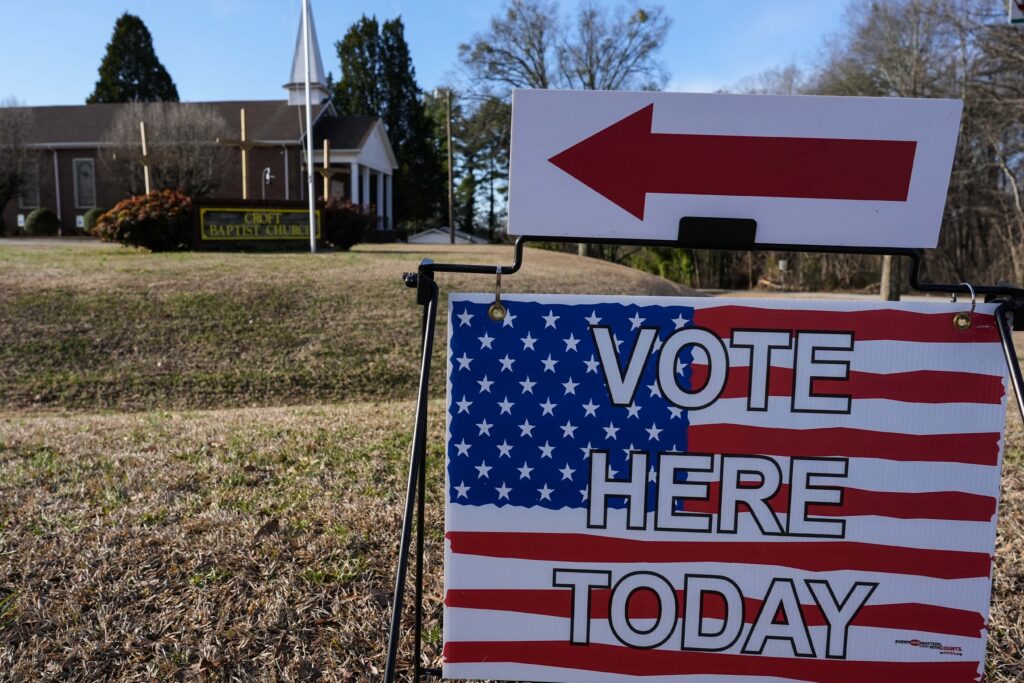
It’s time to let unaffiliated voters caucus | Vince Bzdek
Vince Bzdek
vince.bzdek@gazette.com
Updated 3 hours ago
There’s no getting around it: Colorado’s 3,000 county caucuses, which just wrapped up recently, left half the electorate out in the cold. Since unaffiliated voters now make up 51% of all Colorado voters, a majority of Colorado electors are barred...
A Mile High, again: Capitol M | Week of March 21, 2026
Marianne Goodland
marianne.goodland@coloradopolitics.com
Updated 3 days ago
The lighter side of the Capitol, usually…. Local Journalism Day, except they forgot their very own local journalists. The state Senate on Thursday, March 19, passed a resolution recognizing Local Journalism Day. Everyone voted for it, which is good, because...

The insular bubble of caucuses and assemblies | SONDERMANN
Eric Sondermann
eric-sondermann@coloradopolitics.com
Updated 2 days ago
Nearly 30 years ago, then-Federal Reserve Chairman Alan Greenspan coined the term “irrational exuberance” to describe the overheated stock market. That descriptive phrase could also apply to much of the political realm. The hype in politics often grossly exceeds the...

Set appropriate state guidelines for critical surveillance technology | OPINION
Colorado Politics
colorado-politics@coloradopolitics.com
Updated 2 days ago
I admit it: I’m worried. I’m hearing a lot about surveillance in the public arena. I hear cameras are capturing my car’s license plate wherever I drive, my face as I go in and out of stores and health facilities,...

Puppy trafficking bill promotes inhumane breeding | OPINION
Colorado Politics
colorado-politics@coloradopolitics.com
Updated 2 days ago
By Patti Strand When Justice Thurgood Marshall wrote “The Constitution does not prohibit legislatures from enacting stupid laws,” he wasn’t wrong. He was referring to a political process sometimes ill-equipped to deal with complex issues that require subject-matter knowledge and a...
Penny wise but foolish by pounds | Paula Noonan
Paula Noonan
paula-noonan@coloradopolitics.com
Updated 2 days ago
Leadership of Colorado’s General Assembly introduced the Fiscal Year 2026-2027 Legislative Appropriation bill, HB26-1333, at $75.72 million. That will be the budget to run the state legislature next year. About $74 million comes out of the general fund and the...

Proposed evictions bill fails to improve housing stability while threatening higher rents | OPINION
Colorado Politics
colorado-politics@coloradopolitics.com
Updated 3 days ago
No landlord wants to evict a tenant for non-payment of rent. That is true for large housing providers, small “mom-and-pop” owners and nonprofit housing rental providers alike. Evictions are financially and emotionally costly for everyone involved. But when rent goes unpaid, eviction...

Prevention works — invest in conflict prevention with wolves | FEEDBACK
Colorado Politics
colorado-politics@coloradopolitics.com
Updated 2 days ago
The recent reporting on Colorado’s wolf depredation payouts exceeding $700,000 highlights a critical problem with the current approach to wolf recovery: current mainstream systems focus on compensation and ineffective reactive non-lethals. These systems are not designed to prevent conflict but attempts...
Colorado’s clean-energy future must be affordable for older adults | PODIUM
Colorado Politics
colorado-politics@coloradopolitics.com
Updated 2 days ago
By Jason DeaBueno Last winter, one of the older adults we serve at Silver Key shared something that has stayed with me. She begun turning her heat down at night — not because she wanted to, but because she was...
Why Denver should care about conservation easements — even if you’ve never set foot on a ranch | OPINION
Colorado Politics
colorado-politics@coloradopolitics.com
Updated 3 days ago
By Jason Swann I live in Denver. I drink tap water from my kitchen sink, hike close to home when I can, worry about wildfire smoke every summer, and try, like many families, to keep up with the rising cost...
PREV
PREVIOUS

OPINION | Ideology, reality collide over 'public option'
Simon Lomax At the risk of sounding like a washed-up old reporter, I remember a time when politicians spent more time worrying about winning general elections than winning primaries. I left the newsroom almost 10 years ago, and since then, the ideological demands of party activists and donors have grown so loud that many elected […]

FEEDBACK | Henry doesn't speak for whole county
You have made it appear that all of Adams County agrees with Eva Henry’s opinion (“Building a coalition to take climate action,” April 30). I, for one of many, am not in agreement with her statements. I find climate change has been happening since the beginning of the earth, and little that we do will […]