

Judge nixes wildlife-killing project in Colorado after agency failed to follow law

A federal agency improperly green-lit two proposed research projects to kill wildlife in Colorado by failing to separately study and solicit public comment in an attempt to speed the projects along, a federal judge ruled on Tuesday.
U.S. District Court Senior Judge Marcia S. Krieger sided with a trio of nonprofit groups that sued the government over a Colorado Parks and Wildlife proposal to kill cougars and bears in two study locations. She also found the environmental assessment that formed a basis for the projects’ approval failed to adequately analyze the populations of relevant animals or consider germane research.
“It appears to the Court that the skeletal discussion of effects resulting from the proposed CPW research projects in the [environmental assessment] is the result of an attempt to shoehorn the CPW projects into an EA process that was only fleetingly related to the study objectives,” Krieger wrote in a March 30 order.
Lindsay Larris, wildlife program director at Santa Fe-based WildEarth Guardians, applauded the judge’s reversal of federal approval.
“On behalf of the majority of Coloradans who support coexistence with native carnivores, WildEarth Guardians applauds the court for recognizing the substantial environmental impact that these killing ‘studies’ impose on native wildlife in the state,” she said.
The dispute over CPW’s proposed population control research originated with the federal government’s “predator damage management,” which addresses nuisance predators that cause harm to livestock, domestic animals, people or agriculture. In late 2016, the U.S. Department of Agriculture’s Animal and Plant Health Inspection Service worked with CPW to issue a draft assessment of whether to continue the initiative. Part of the assessment also involved noting any significant environmental effects which, under federal law, would trigger an environmental impact statement.
In January 2017, the federal agency found no such effects existed and elected to continue the predator program.
Around that time, CPW, the state’s wildlife agency, met with APHIS and the U.S. Fish and Wildlife Service, and the parties agreed to include CPW’s own predator control research projects into the assessment to streamline the work. The state’s effort, for which it sought federal funding, entailed killing black bears and cougars in the Piceance Basin of northwestern Colorado — an estimated 10-25 bears each year for three years. The goal was to determine the effect of those predators on the declining mule deer population. A separate project in the Arkansas River valley would reduce the mountain lion population by 50% for a period of time.
Reportedly, the state was eager to get Fish and Wildlife Service approval by the end of 2016 so it could implement the predator control project during the 2017 mule deer birthing season. To reduce the time for approval, the service considered becoming a “cooperating agency” on the APHIS assessment, which would merge the public comment period for the various projects.
However, when the draft assessment became public in October 2016, the Fish and Wildlife Service did not appear as a cooperating agency on the report’s title page.
Three environmental groups — the Center for Biological Diversity, the Humane Society of the United States and WildEarth Guardians — sued the Fish and Wildlife Service after it adopted part of the environmental assessment in order to approve funding for CPW’s project. They argued the service’s approval without a separate environmental assessment or public notice and comment violated the National Environmental Policy Act.
In particular, the groups claimed the Fish and Wildlife Service was not listed as a cooperating agency on the assessment, so it was not allowed to adopt another agency’s findings.
“Where FWS adopts an EA from another federal agency and was not a cooperating agency, FWS must re-circulate the Final EA for public review,” the petitioners wrote.
The federal government countered that the public, including the groups filing the lawsuit, had the opportunity to comment. “CPW hosted public meetings in September and December of 2016. Petitioners participated at both meetings,” wrote the U.S. Attorney’s Office for Colorado in response.
Although regulations put forth in 2020 required that projects be “substantially the same” for the merging of environmental assessments to occur, the government argued those guidelines did not apply to the process under dispute.
Krieger determined she could indeed apply the regulations as they are currently written, and found there is “little argument” that the APHIS’s predator control project was broader than the state’s two research proposals.
“The predator damage management program under consideration is primarily focused on the protection of livestock and agricultural resources against predation,” she wrote. “Thus, 94% of APHIS’ activities are unrelated to the type of wildlife predation addressed by CPW’s research.”
In other words, APHIS’s predator management activities was only slightly related to the CPW proposal. Moreover, in contrast to the CPW projects, not all of the tactics in the predator demand management program were lethal, and many involved working with ranchers to prevent interactions between predator and prey in the first place.
The judge also criticized the environmental assessment’s lack of specific findings for the CPW project, including the rejection of research from ecology expert Bradley Bergstrom, who has called into question lethal efforts to control predators long-term.
“An EA that sought to address the soundness of CPW’s request to conduct long-term predator reduction studies is one that would give greater consideration to the Bergstrom research,” Krieger noted.
A spokesperson for CPW said the research in the Piceance Basin has been completed, and the study results are pending. The upper Arkansas River project is ongoing, but the agency did not yet know what effect the judge’s ruling would have.
In response to questions about how much funding the Fish and Wildlife Service has put toward the projects and their status, the federal agency responded only to say it “is aware of the court’s decision and will be considering next steps.”
The case is Center for Biological Diversity et al. v. Walsh et al.

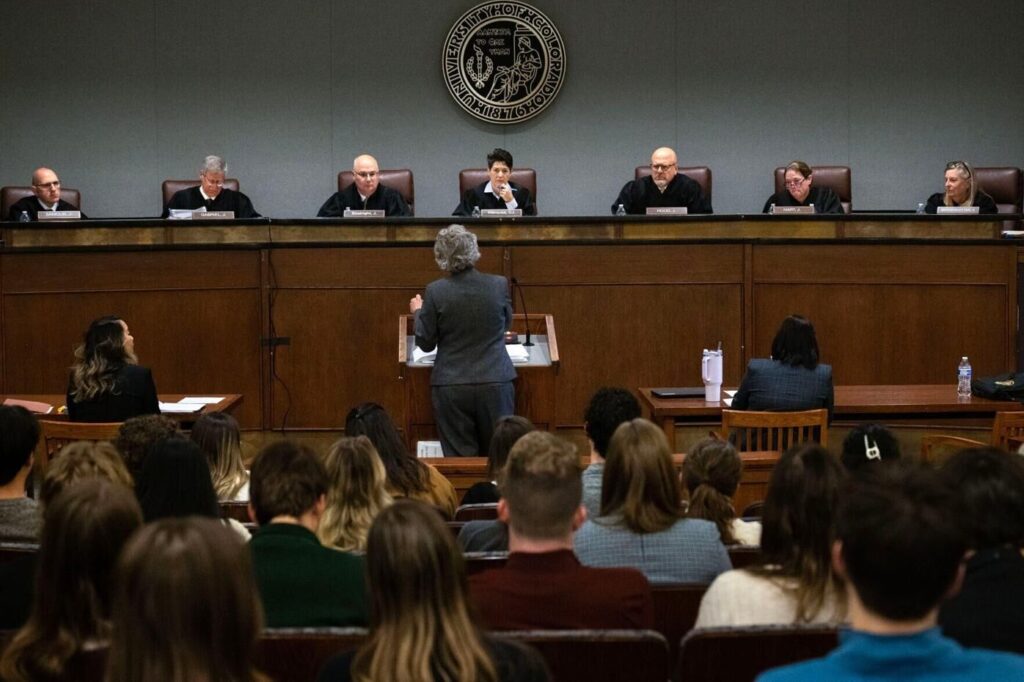
Judicial fees, furniture under scrutiny as Colorado lawmakers consider budget request
Michael Karlik
michael.karlik@coloradopolitics.com
Updated 4 hours ago
Members of the legislature’s Joint Budget Committee expressed concerns last week about aspects of the judiciary’s requested $845 million budget for courts and probation, while also hearing about the Judicial Department’s relatively restrained spending over time. “If you adjust for...

Colorado Supreme Court approves tenant-friendly rule change, broadens professional discipline for sexual misconduct
Michael Karlik
michael.karlik@coloradopolitics.com
Updated 2 hours ago
The Colorado Supreme Court approved a set of rule changes last week that will make it easier for tenants facing eviction to respond to and learn about their landlord’s initial court filing, and for lawyers to be held professionally accountable...

Colorado commission makes new access-to-justice recommendations after renewed listening tour
Michael Karlik
michael.karlik@coloradopolitics.com
Updated 4 hours ago
Adding judges to handle caseloads. Expanding authority for paraprofessionals in civil cases. Allowing self-represented litigants to file electronically. Making the judiciary’s website user-friendly. Those were among the recommendations advanced by the Colorado Access to Justice Commission in a report released Friday,...

‘Deep source of pride’: Federal judge speaks about first year on bench, how he spends his time
Michael Karlik
michael.karlik@coloradopolitics.com
Updated 2 days ago
One of Colorado’s newest federal judges spoke on Thursday about his first year on the bench, his philosophy behind facilitating case settlements and how his background as a public defender informs his current role. “Most of my career, I represented...
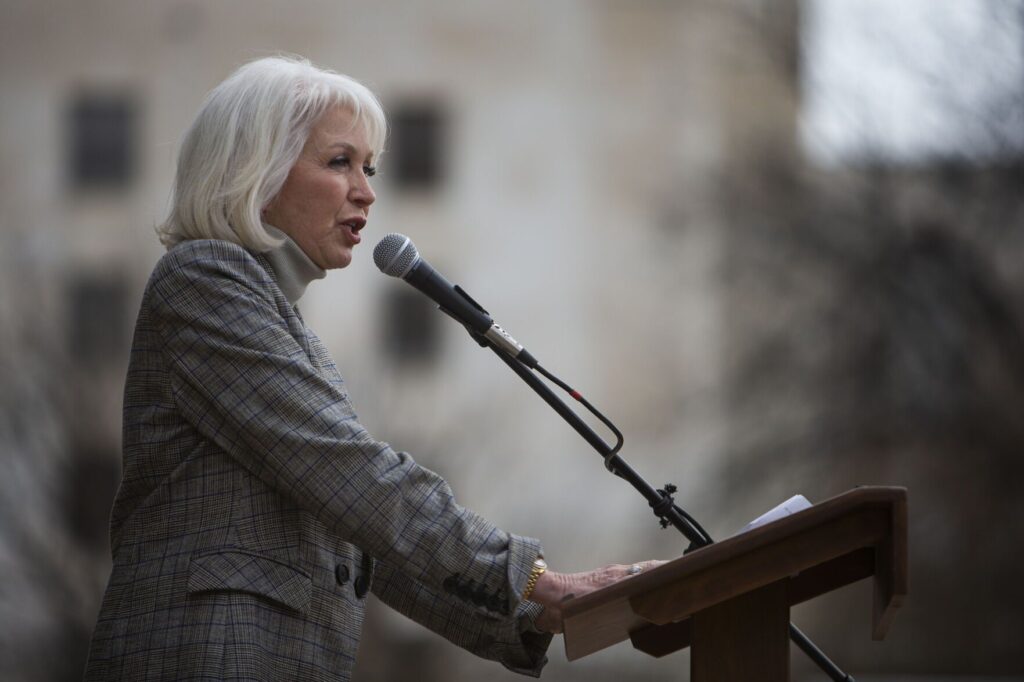
Trump says he has ‘pardoned’ Tina Peters
Wire Services
wire-services@coloradopolitics.com
Updated 4 days ago
President Donald Trump on Thursday said he is “pardoning” Tina Peters, though that won’t free the former Colorado elections administrator as she was convicted under state laws of a security breach of her office’s voting equipment. Trump’s pardon power does...
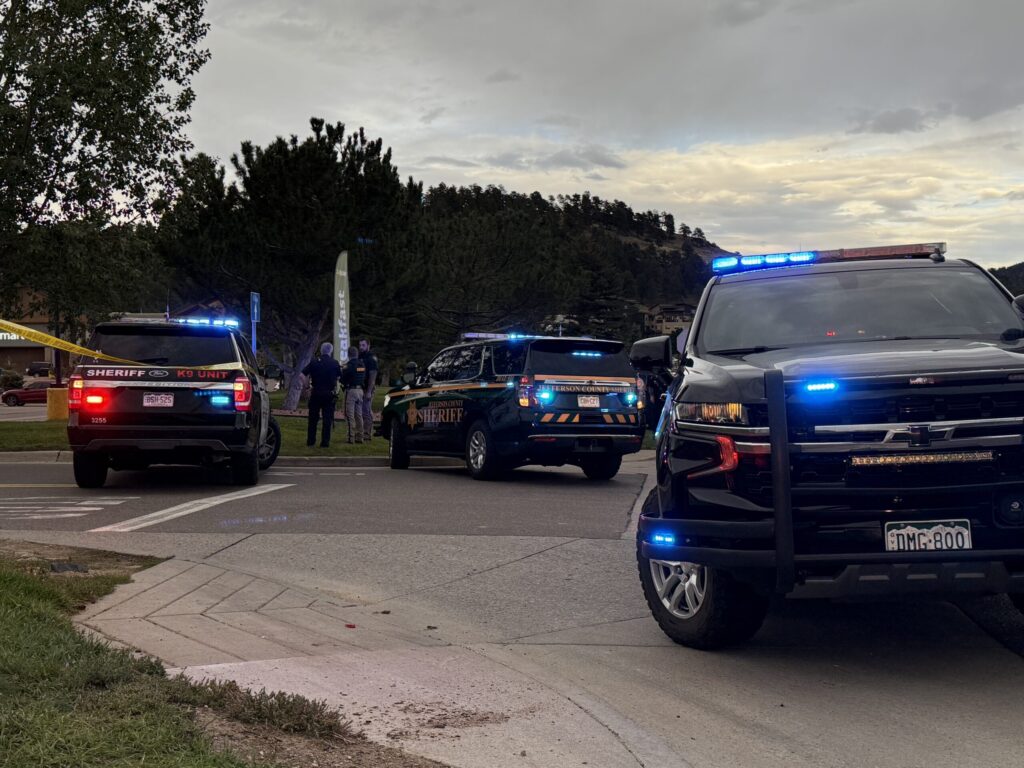
Man set for plea deal in Evergreen shooting
Sage Kelley
sage.kelley@denvergazette.com
Updated 3 days ago
A Lakewood man may be on his way to a plea deal after allegedly ramming police vehicles at the Evergreen Walmart just a day after the Evergreen High School shooting. Tyler Young, 33, waived his right to a preliminary hearing...
Appeals judge believes revised ‘reasonable doubt’ definition is unconstitutional
Michael Karlik
michael.karlik@coloradopolitics.com
Updated 3 days ago
Although Colorado’s second-highest court has issued multiple decisions in recent months upholding a revised definition of “reasonable doubt” from three years ago, an appellate judge became the first on Thursday to argue that a key phrase violates defendants’ constitutional right...
CDOT did not violate constitutional rights of outdoor advertising company, appeals court says
Michael Karlik
michael.karlik@coloradopolitics.com
Updated 4 days ago
Colorado’s second-highest court concluded last month that the Colorado Department of Transportation did not violate the constitutional rights of an outdoor advertising company by denying two permits for billboards in Adams County. StreetMediaGroup, LLC argued CDOT violated its right to...

Family files lawsuit over 2023 Jeffco inmate death
Sage Kelley
sage.kelley@denvergazette.com
Updated 4 days ago
The family of 27-year-old Ashley Jo Raisbeck filed a lawsuit against the Jefferson County Sheriff’s Office nearly two years after the woman died in custody. Jaime Raisbeck, Ashley’s mother, stood outside of the Alfred A. Arraj Courthouse Wednesday morning, a...

Colorado Supreme Court’s opinion output drops by two-thirds amid justice’s absence
Michael Karlik
michael.karlik@coloradopolitics.com
Updated 6 days ago
The Colorado Supreme Court has released significantly fewer new opinions in recent months compared to the previous two years, even as the judicial branch insisted that a member’s open-ended absence is not causing delays. Justice Melissa Hart has been on...
PREV
PREVIOUS

Appeals court reinstates Colorado inmate's claim against nurse for refusing to treat injuries
The Denver-based federal appeals court has reinstated the civil rights claim of an incarcerated man in Colorado who alleged a prison nurse refused to examine his injuries, which later turned out to require medical intervention. The decision of the three-member appellate panel reversed a lower court judge who determined there was no evidence the nurse, […]

Attorney General Phil Weiser leads multi-state effort to cancel student loan debt for ITT Tech students
Attorney General Phil Weiser is asking the U.S. Department of Education to cancel federal student loan debt for thousands of students who attended the since shut-down, for-profit school, ITT Technical Institute. A bipartisan coalition of 24 states and the District of Columbia – led by Weiser and Oregon Attorney General Ellen Rosenblum – filed the […]