

Donovan bill to oversee social media platforms moves forward but in significantly different form

Senate President Pro tem Kerry Donovan, D-Vail, may have run into massive criticism and roadblocks over a bill to regulate social media, but she found a way forward with Senate Bill 132, winning a party-line 3-2 vote Tuesday in the Senate State, Veterans and Military Affairs Committee.
But that meant scrapping the bill and starting over.
As introduced, SB 132 sought to create a Digital Communications Division and Commission in the Department of Regulatory Agencies. That commission would register digital communications platforms and enforce unfair or discriminatory digital communications practices on the platforms. The commission also came with a $2.4 million cost, not a popular idea in a year when lawmakers’ focus is on improving the state’s economy and recovering from the pandemic.
The targets: Social media platforms such as Twitter, Facebook, Instagram, Twitch and YouTube and any others that conduct business in Colorado.
When problems arise, these behemoths tell Congress it’s not their fault and they can’t do anything about it, she explained. “I can’t sit by and let that be an acceptable answer.”
She cited last summer’s Black Lives Matter protests, where social media platforms gathered data and then sold it to police departments. People have been murdered because of rumors on Facebook, she said, and two-thirds of teenagers report being bullied on social media. The companies’ response is that they have no control over what happens on their platforms; that it’s just a location for people to meet, she said.
At the heart of the bill is a desire to create a consumer complaint division, a place for people to go when they have a complaint about social media. Right now, there’s nothing. “You as an individual are not who [the companies] are there for. They are there to sell your actions. They will never be there” to address complaints, she said.
Donovan said the business model of social media companies is designed to keep you on their platform, engaged and clicking, to gather data. “If that’s the business model, then data is the product… . We can’t sit by and say it’ll fix itself, that these guys will do the right thing,” she added.
The bill was hit almost immediately with criticism on social media, which Donovan spoke about on Tuesday. Some of it was pretty vulgar, but she told Colorado Politics after the hearing that the criticism proved her point.
SB 132 was also viewed skeptically by First Amendment advocates, including the Colorado Freedom of Information Coalition. Executive Director Jeff Roberts told Colorado Politics that his board did not take a position on the bill; they had concerns about legislation that imposes governmental sanctions on speech protected by the First Amendment. “This bill talks about practices that promote hate speech and intentional disinformation,” Roberts said, yet none of those terms were defined in the bill as introduced.
“I’m sure there are good intentions,” Roberts said, adding that disinformation is a huge problem, even overwhelming in a lot of ways. It’s a problem that needs to be addressed, but imposing governmental sanctions raises constitutional questions, he said.
Donovan went back to the drawing board and scrapped the original bill, replacing it with a strike-below amendment that turned the whole thing into a study, to be handled by the legislature’s Joint Technology Committee. The committee would examine whether – and how – the General Assembly could address through legislation consumer protection concerns related to social media platforms.
That could include looking at how those platforms address issues such as promoting violence, undermining election integrity, deliberately allowing disinformation or attacking protected groups, as well as marketing policies and data collection without the user’s consent.
The committee would bring in state agencies or other experts to assist, although the Colorado Press Association advocated for an amendment that would also bring in First Amendment advocacy groups or media organizations. That’s an amendment that could show up when the bill is debated in the full Senate.
Social media platforms believe they are above the law, Donovan said, both the laws of Colorado and of the United States. It’s the job of the General Assembly to lead, identify issues that are not working well and figure out how to make them better, she told the committee.
Cory Gaines, who teaches physics at Northeastern Junior College in Sterling, said the bill raised concerns about privacy. “I have little love for social media companies,” he said. “I don’t like how much data they share or mine from me.”
That said, the creation of an unelected commission could result in a takeover of personal choice, he said. He also objected to the lack of definitions in the introduced version of the bill. “That’s not for a government agency to define.”
Donovan also noted that those who designed those platforms are now speaking out against them, and brought in a former Google engineer to make her point.
Joe Toscano recently appeared in the Netflix documentary, “The Social Dilemma,” in which he spoke about his work for a Google subsidiary and the moral issues he faced.
“I believe there is a lot of discussion that needs to go on about freedom of speech and overreach,” he told the committee. However, “we need government to take steps to improve the situation… . We are not the customer [of these platforms], we are the product. Their customers are where the money comes from,” and they care little about the poor treatment of consumers.
“When you have a problem on the internet, where do you go?” Toscano asked. “We need government to step in and start protecting consumers.”
Donovan told Colorado Politics after the hearing that she’s been interested in the issue for the past several years.
“How do we address this pervasive issue of these companies designed and engineered to maintain your attention, even if it results in insidious consequences? It’s my job as an elected official” to think about these issues, she said.
“Regardless of where you live or political party, there’s no one who will champion social media companies right now” or claim that they’re good partners in society, she said. “When you’re the first to step out with an idea, you become a target.”
The strike below (start over) amendment for Senate Bill 132



Democrats must win 57 out of 77 competitive House seats to take majority: Cook Political Report
Hailey Bullis
hailey-bullis@coloradopolitics.com
Updated 1 hour ago
Democrats’ path to retaking the House in November has significantly slimmed as a result of the mid-decade redistricting war this cycle, a new analysis found. The nonpartisan Cook Political Report found that under the newly drawn maps across 10 states,...
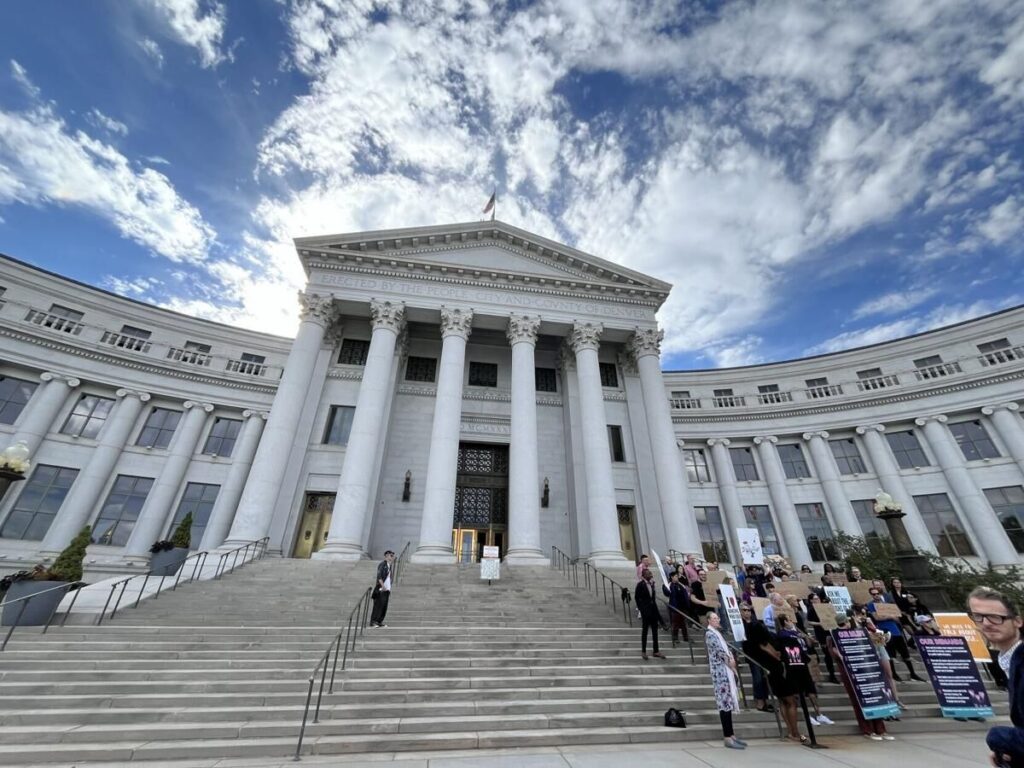
Denver labor acknowledgment proposal faces council committee questions
Deborah Grigsby
deborah.smith@denvergazette.com
Updated 5 hours ago
A proposal to add a labor acknowledgment to Denver City Council proceedings has been delayed by the Finance and Business Committee after members raised questions about its wording, intentions and place in the council’s opening proceedings. The proposal, put forth...
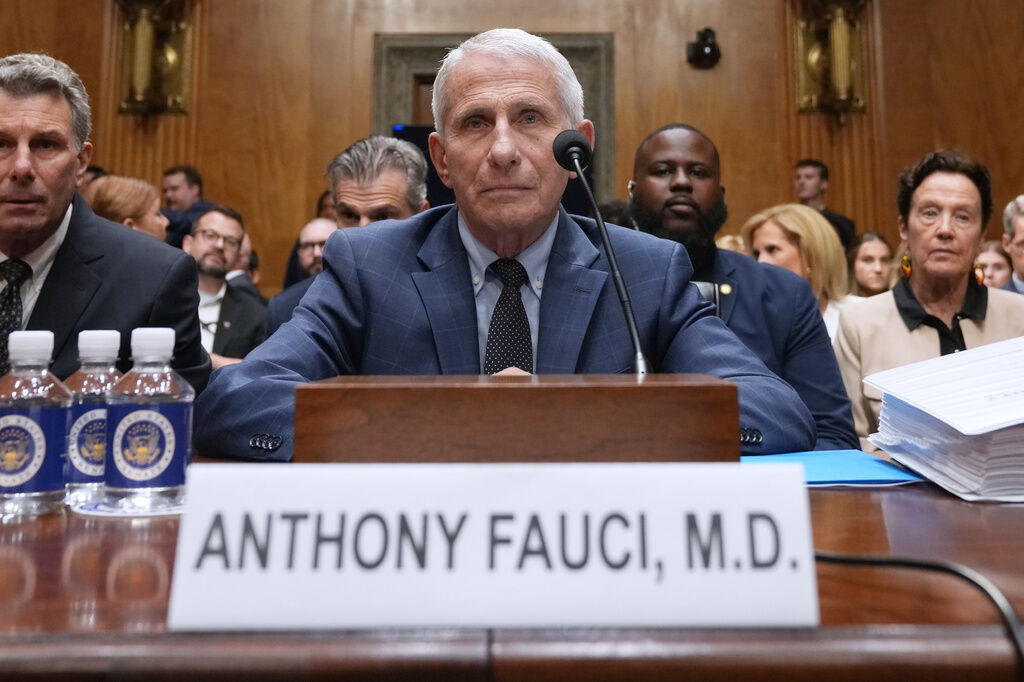
Fauci invokes the Fifth Amendment and declines to testify in GOP-led Senate panel’s COVID-19 hearing
The Associated Press
the-associated-press@coloradopolitics.com
Updated 6 hours ago
WASHINGTON (AP) — Dr. Anthony Fauci on Wednesday invoked the Fifth Amendment and declined to answer questions from senators in a Republican-led committee hearing about his handling of the COVID-19 pandemic. The move injects new drama into the lingering tensions...

Colorado residents rush to buy guns ahead of new restrictions, breaking sales records for several stores
By Debbie Kelley
by-debbie-kelley@coloradopolitics.com
Updated 5 hours ago
Colorado residents are lining up to buy guns ahead of the latest weapons restrictions set to take effect this Saturday. The new law mandates individuals seeking to purchase semiautomatic firearms with detachable magazines to first complete a firearm safety course...

Crime continues to decline in Aurora, police chief says
Kyla Pearce
kyla.pearce@gazette.com
Updated 6 hours ago
Crime in Aurora continued to decline in the first half of 2026, according to Aurora Police Department officials. Crime overall in the city has been on a downward trend since 2024, according to APD. Between Jan. 1 and June 30,...
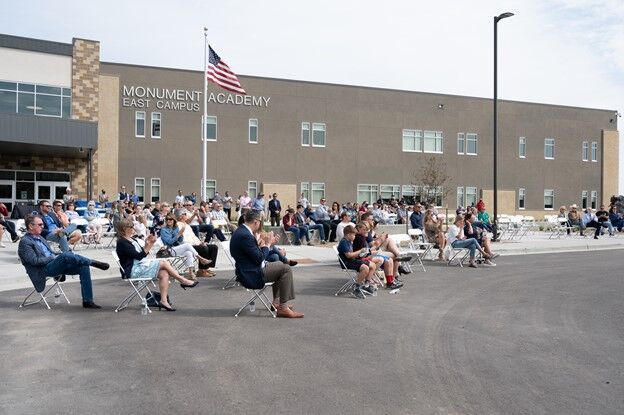
El Paso County rejects multi-family zoning request near Monument Academy
Savannah Eller
savannah-eller@coloradopolitics.com
Updated 5 hours ago
The El Paso County Board of Commissioners narrowly rejected a developer’s bid to convert land from low- to high-density residential zoning. The request, made by MA Infrastructure, LLC, would have allowed 12 units per acre on half of a 14-acre...
Atop taxes, here’s how much each Colorado resident pays in fees
Marissa Ventrelli
marissa.ventrelli@coloradopolitics.com
Updated 21 hours ago
Each Colorado resident paid nearly $5,000 in state-sanctioned fees last year, according to a report by a policy think tank. The report, which analyzed how fees have affected Colorado’s economy, found that fee revenue has more than tripled since 2008...

Colorado National Guard, Swiss Armed Forces celebrate partnership
Marissa Ventrelli
marissa.ventrelli@coloradopolitics.com
Updated 23 hours ago
Colorado’s National Guard marked a year of partnership with the Swiss Armed Forces at the Governor’s Mansion on Monday. “This anniversary marks one strong year of friendship and collaboration between the State of Colorado and Switzerland,” said Gov. Jared Polis....
Judge allows Trump to refile $15 billion lawsuit against the New York Times
Emily Hallas
emily-hallas@coloradopolitics.com
Updated 23 hours ago
A federal judge declined to dismiss President Donald Trump’s multibillion-dollar lawsuit against the New York Times on Monday, giving him roughly four weeks to amend his case after the outlet moved to toss it on First Amendment grounds. District Judge...
Q&A with Jeffco Public Schools’ interim superintendent on budget deficit, federal investigation
Matt Kyle
matt.kyle@denvergazette.com
Updated 6 hours ago
For the upcoming school year, Robert Stein will serve as Jeffco Public Schools’ superintendent. The 66-year-old Denver native has been semi-retired for the last few years. He spent 40 years in education, as both a teacher and administrator. Most recently,...
PREV
PREVIOUS

‘We call it a bubble, and you never expect it to pop’: CU Boulder students rattled by mass shooting in nearby King Soopers
For Anna Haynes, a junior at the University of Colorado Boulder, Monday was looking like another normal, boring day. She thought about her upcoming midterm and settled into her living room with a bagel and a lineup of YouTube videos when she heard a bang. Assuming it was firework or a car backfiring, she ignored […]

Officials: Those struggling with Boulder shooting should seek help
Hundreds of people gathered across Boulder throughout Tuesday to honor and respect the 10 people killed during a mass shooting at a King Soopers on the south side of town Monday. Whether it was in front of the King Soopers at 3600 Table Mesa Drive, or at the Boulder Police Department where fallen Officer Eric […]