

TRAIL MIX | Colorado Dems pick continuity, GOP faces familiar reckoning
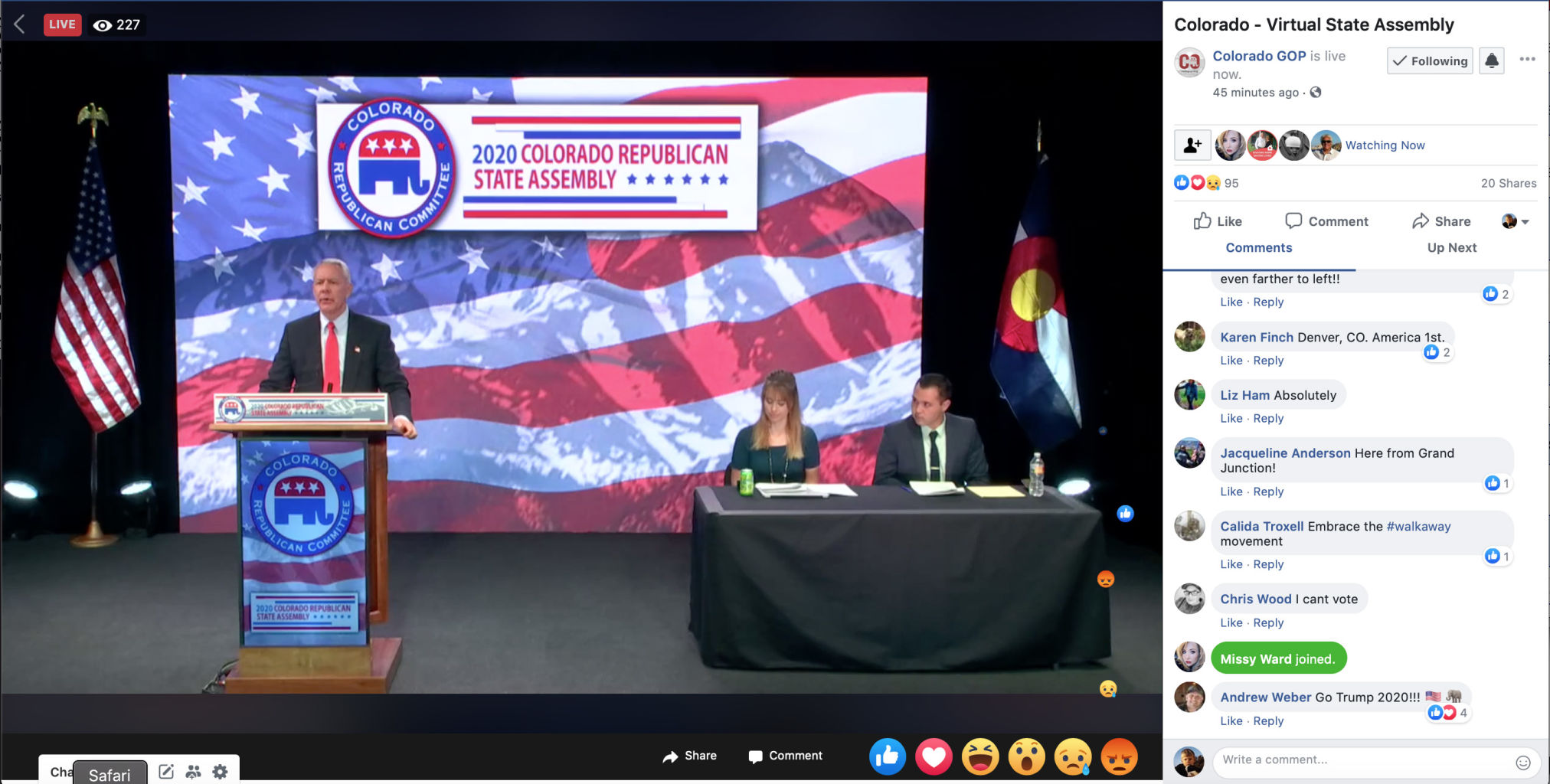
If it’s turning from winter to springtime in an odd-numbered year, it must be time for the most active members of Colorado’s two major political parties to pick party officers and point the Democrats and Republicans toward the next election.
As has become customary in recent cycles, the Democrats are sticking with the ones that brung ’em, poised this year to return the entire slate of officers who ran things for the 2020 election, when the party cemented historic wins achieved in 2018 by taking firm control of state government and winning seats up and down the ballot that hadn’t been held by Democrats in a generation if ever.
And in a situation that has also become familiar, state Republicans are preparing to start fresh with a new lineup, choosing between establishment and grassroots candidates in an attempt to recapture the hold the GOP once had despite an increasingly left-leaning state.
The difference couldn’t be more plain.
Democrats expect to ratify a third term for current state chair Morgan Carroll on Saturday when the party’s state central committee convenes virtually, making the former legislator from Aurora the third state party chair in a row elected to three straight two-year terms.
Carroll, who won her second term unopposed two years ago, follows former congressional nominee Pat Waak, who chaired the state Democrats from 2005 to 2011, and Rick Palacio, a former legislative and congressional aide, elected in 2011, 2013 and 2015.
Underlining the Colorado Democrats’ demonstration of the adage that if it ain’t broke, don’t fix it, every incumbent state officer is running for another term without opposition.
Across the aisle, state Republicans are engaged in what appears to have developed into an eternal battle for stewardship of the party, ready to elect their seventh chair in the nine-cycle stretch since 2005, when the Democrats began their consecutive run of three-term chairs.
The state GOP has had new leadership every two years since 2015, when Republicans denied two-term chair Ryan Call another go at it, marking the first time in state history a GOP chair lost a bid for re-election.
Call was unseated by Steve House, a former gubernatorial candidate and county chair. At the next state reorganization in 2017, after House declined to seek a second term, former county chair Jeff Hayes won the post, and then in 2019, when Hayes hung up his spurs after a single term, the Republicans elected U.S. Rep. Ken Buck, who split his duties between Congress and heading the party.
Following’s Buck’s announcement late last year that he wouldn’t seek a second term as party chief, five candidates have emerged – former Secretary of State Scott Gessler, current state vice chair Kristi Burton Brown, communications consultant Jonathan Lockwood, three-time congressional nominee Casper Stockham and retired businessman and history teacher Rich Mancuso.
By all accounts, the party election, set to be decided March 27 at a hybrid virtual and in-person meeting of the state GOP central committee, has come down to a close race between Gessler and Burton Brown, echoing the contests pitting a more establishment choice vs. the more grassroots candidate, respectively.
Keeping in mind that the distinctions sometimes blur – insisting his roots are in the tea party, Gessler disdains the establishment label – in all but one of five most recent party elections, the establishment contender won.
In 2011, Call prevailed over former state Sen. Ted Harvey and in 2013 when Call fended off a challenge from Mark Baisley, who has since won election to the state House of Representatives. Call lost to House, who had grassroots backing, in 2015, and in 2017 Hayes was elected over former congressional nominee George Athanasopoulos.
Buck, who rose to prominence a decade ago when he won the U.S. Senate nomination on the strength of tea party backing, was seen as the establishment candidate two years ago when he won narrowly over then-state Rep. Susan Beckman.
Dick Wadhams, who preceded Call chairing the state GOP for two terms from 2007 to 2011, overlapping with Waak’s tenure chairing the Democrats, was the last Republican to run unopposed for Colorado state chair. The veteran campaign manager and political consultant was also the first Republican in decades to treat the state chair position as a full-time job, an arrangement that has since become routine, Buck’s moonlighting notwithstanding.
“The model,” he told Colorado Politics, “was a successful, wealthy business leader who would spend a lot of time raising money but would hire a strong executive director.”
The exception occurred just once, in 1965 following the LBJ landslide, when Colorado Republican losses were nearly as pronounced as they have been in the last two cycles.
In the wake of that election, the state’s three leading Republicans, Gov. John Love and U.S. Sen. Gordon Allott and Peter Dominick, decided the state GOP needed to be run more professionally so they approached Love staffer Howard Propst and persuaded him to run the party full-time for a couple of years, Wadhams recalled.
It was a similar proposition that lured Wadhams to the job after state Democrats romped at the polls for the second cycle running in 2006.
Legislators Andy McElhaney and Mike May, the state Senate and House minority leaders, respectively, said Bob Martinez, the incumbent chair, wasn’t seeking another term and urged Wadhams to consider taking the helm because of his campaign experience.
Wadhams said he liked the idea but stressed that he wasn’t wealthy so wanted the position to be full-time, something the politicians thought was a good idea. He ran unopposed and won a second term in 2009 with only nominal opposition.
After first announcing he would seek a third term in 2011, however, Wadhams withdrew, pointing to widening fissures in the party in the early years of the Obama administration.
In a letter explaining his decision, Wadhams wrote that he had grown “tired of those who are obsessed with seeing conspiracies around every corner and who have terribly misguided notions of what the role of the state party is.” Increasingly stringent ideological litmus tests, he added, could cost the party the votes of the state’s swing unaffiliated voters.
Wadhams told Colorado Politics that he was motivated by the political landscape following in the wake of the 2010 election, when the state GOP turned out 106,000 more Republicans than Democrats but tea party nominees Buck and Dan Maes still managed to lose the U.S. Senate and gubernatorial races to Democrats Michael Bennet and John Hickenlooper, respectively.
“By the way,” Wadhams said, “I think the tea party infused our party with new blood, brought a sense of fiscal responsibility. But so many of them were obsessed with conspiracy theories. They were more interested in picking intra-party fights than they were in winning elections.
“It’s even worse today. You have the Trump loyalists – today we are obsessed with election fraud and stolen elections.”
Noting that many of the leading candidates for state party chair have made the issue central to their bids, Wadhams added, “I know I’m in the minority. The vast majority of Republican activists believe the election was stolen. I know that, but I strongly disagree, and it doesn’t serve our party to keep talking about it.”
Wadhams suggested the internal party rifts laid bare in every state GOP chair race since he held the office could be baked in at this point.
“I think we’re going to be having these contests every two years,” he said with a sigh.



USPS ballot rule faces lawsuit from Colorado, other states
Thelma Grimes
thelma.grimes@coloradopolitics.com
Updated 5 hours ago
Colorado, along with 25 other states, filed a lawsuit against the U.S. Postal Service to challenge a new rule that seeks to restrict the mailing of ballots to American citizens in an eligible voters list. Colorado relies heavily on the...
Colorado lawmaker, House leaders named in workplace-retaliation lawsuit
Marianne Goodland
marianne.goodland@coloradopolitics.com
Updated 1 day ago
A former legislative aide has filed a lawsuit alleging she was mistreated, illegally directed to perform campaign work and harmed by a House leadership structure she charged was fragmented, politicized and ineffective at protecting employees. The lawsuit, filed by Jennifer...
Democratic candidate in Colorado’s 4th CD urges long-term water planning
Marianne Goodland
marianne.goodland@coloradopolitics.com
Updated 4 days ago
The Democrat hoping to become the next representative of Colorado’s 4th Congressional District on Thursday made her case on the final day of Colorado Water Congress in Steamboat Springs. Eileen Laubacher, who spent 34 years in the U.S. Navy and...

Democratic gubernatorial candidate Phil Weiser promises to appoint rural outreach director, water adviser
Marianne Goodland
marianne.goodland@coloradopolitics.com
Updated 5 days ago
Democratic gubernatorial candidate and current Attorney General Phil Weiser told the Colorado Water Congress Thursday he intends to appoint a rural outreach director and a water policy adviser should he win the election in November. Weiser’s speech at the Steamboat...
Attorney general candidates present priorities at Colorado Water Congress
Marianne Goodland
marianne.goodland@coloradopolitics.com
Updated 5 days ago
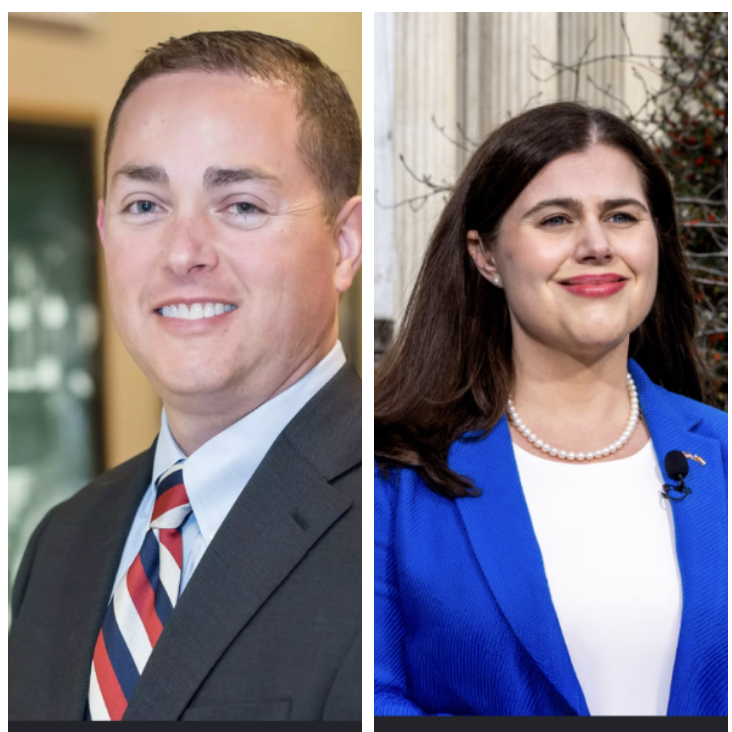
The two major-party candidates for attorney general — Republican Michael Allen, the district attorney for Teller and El Paso counties, and Democratic Secretary of State Jena Griswold — on Thursday outlined their priorities at the Colorado Water Congress. Griswold attended...
Denver named finalist for 2028 Democratic Convention site
Thelma Grimes
thelma.grimes@coloradopolitics.com
Updated 6 days ago
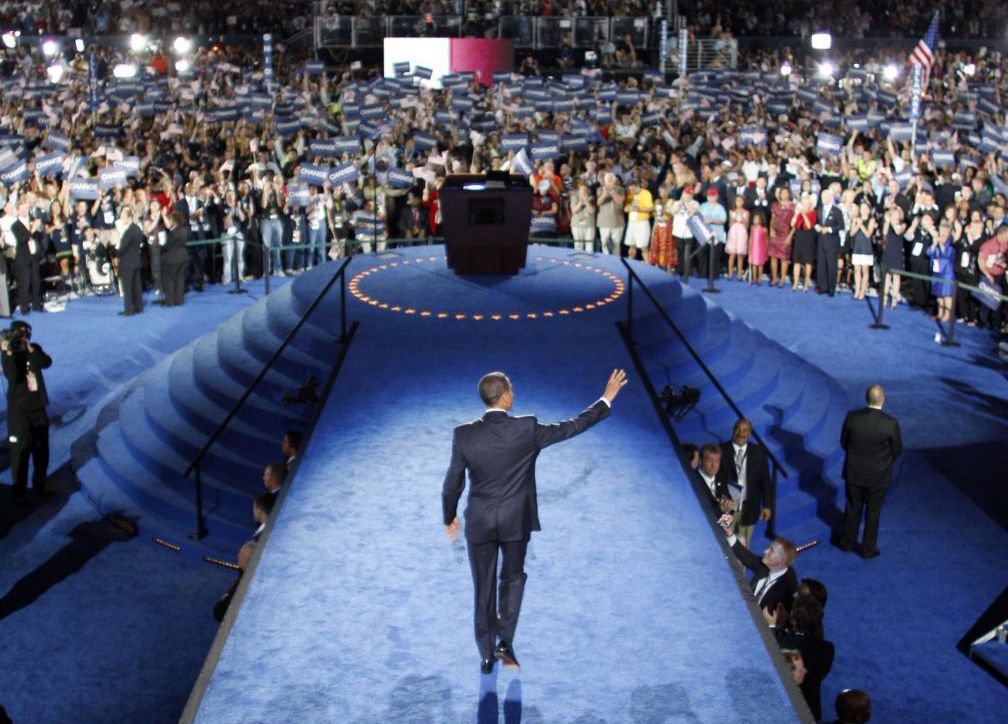
The Mile High City competes with Boston and Philadelphia The list of cities being considered to host the 2028 Democratic National Convention has narrowed even further, with Denver making the cut as one of the final three, along with Boston...
GOP gubernatorial candidate Victor Marx pushes aggressive water-storage expansion at Colorado Water Congress
Marianne Goodland
marianne.goodland@coloradopolitics.com
Updated 7 days ago
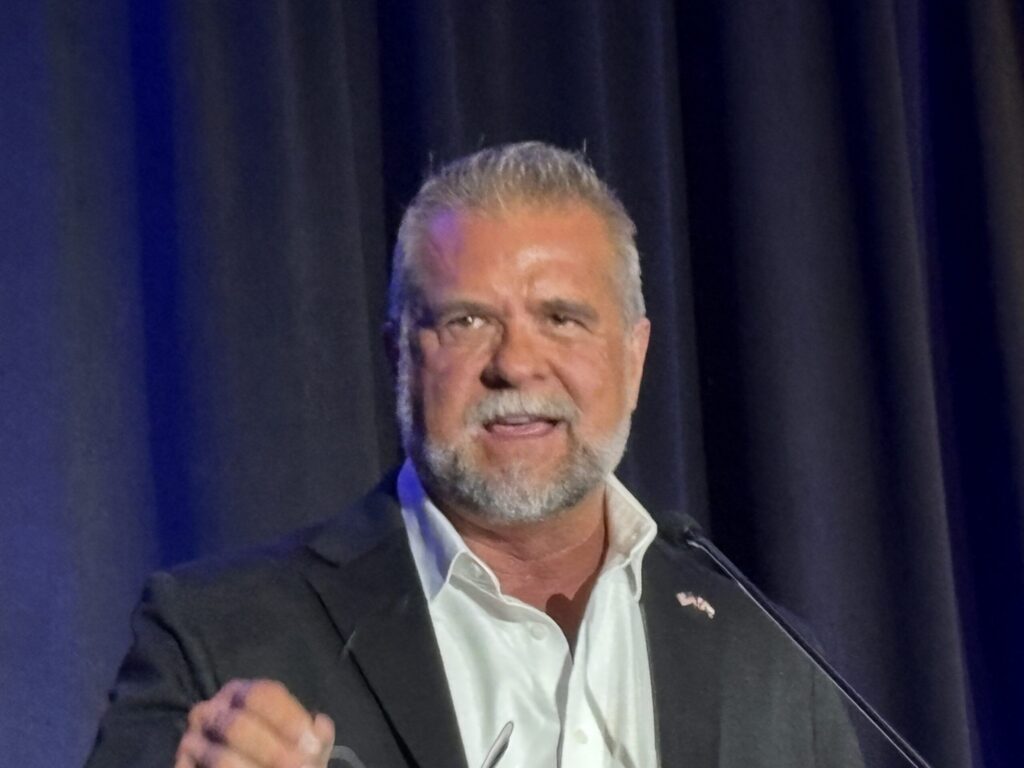
Victor Marx, the Republican nominee for governor, took the spotlight Wednesday during the opening day of the Colorado Water Congress, laying out how he says the state should approach its water future. Marx told the standing-room-only audience in Steamboat Springs...
U.S. Rep. Lauren Boebert stresses storage, forest health and Upper Basin rights at Colorado Water Congress
Marianne Goodland
marianne.goodland@coloradopolitics.com
Updated 6 days ago
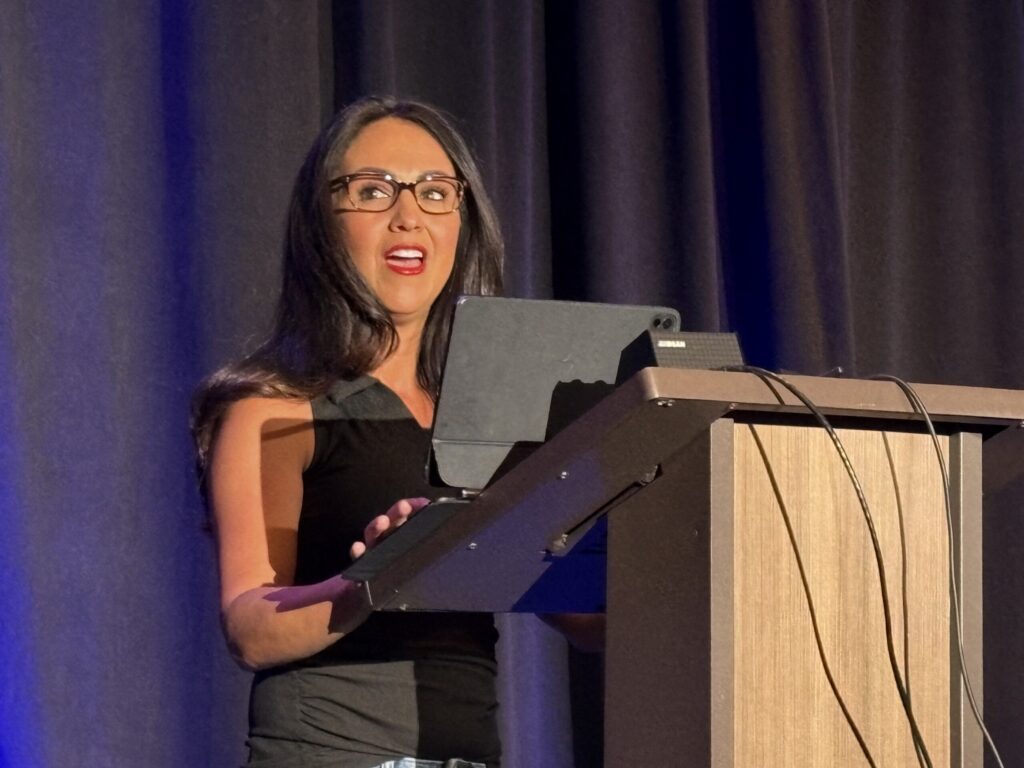
Republican U.S. Rep. Lauren Boebert used her brief Wednesday appearance at Colorado Water Congress to tout her record on delivering water projects for the state and her district. Boebert, who is running for her second term representing the 4th Congressional...
Colorado House Democrats’ caucus finances under scrutiny as ethics case against leader advances
Marianne Goodland
marianne.goodland@coloradopolitics.com
Updated 4 days ago
Democratic lawmakers told a legislative ethics panel that a leader’s management of caucus finances left them with unanswered questions, disputed reimbursements and a breakdown in communication that ultimately triggered a formal complaint. The House Ethics Committee is examining a complaint...
Colorado lieutenant governor candidate Markert says early discipline and key mentors set his course
Marianne Goodland
marianne.goodland@coloradopolitics.com
Updated 1 week ago
Editor’s note: This is the first installment in a three-part series examining Colorado’s candidates for lieutenant governor. In this piece, Colorado Politics speaks with George Markert, the Republican running mate to gubernatorial candidate Victor Marx. Marx is competing against Democrat...
PREV
PREVIOUS

Denver Metro Chamber backs financial literacy standards, opposes insurance bill
The influential Denver Metro Chamber of Commerce made its position known Thursday afternoon on a handful of bills before the legislature that’s currently in session. The chamber supports House Bill 1200 to revise student financial literacy standards for ninth- to 12th grade students. The chamber opposes six bills: House Bill 1167: to prohibit withholding more […]

Murder trial jurors who witnessed murder victim memorial did not violate defendant's rights, judge rules
On their lunch break, potential jurors in a murder trial witnessed a victims’ memorial at Denver’s courthouse – which featured the parents of murdered children and calls to “put murderers away for life.” But doing so did not violate the defendant’s right to an impartial jury, a federal judge ruled on Monday. There was “no […]