

Denver Asian community leaders: Call out slurs

Leaders of Denver’s Asian American and Pacific Islanders community Friday, like so many other Americans this week, condemned racism and violence against people of color – but also delivered a specific call to action.
Stop using terms like “China virus” and “Kung flu.”
“Hate crimes against the Asian community in the past year have increased due to the spread of COVID-19 and the rhetoric of elected officials,” said Harry Budisidharta, executive director of the Asian Pacific Development Center in Denver. “Racist people are emboldened when people casually use terms like ‘China virus’ and ‘Kung flu.’ It dehumanizes people and emboldens racists. Words matter. Words have consequences.”
Budisidharta spoke at a Facebook video press conference hosted by Denver City Councilwoman Jamie Torres, District 3. It was one of many community meetings in Denver, and across the nation, calling for solidarity against racism, bigotry and hatred in light of the Tuesday killings of eight people in Atlanta, including six Asian women.
Town hall provides space to discuss experiences, share solutions to fight anti-Asian hate
Budisidharta specifically called out elected officials who continue to use such terms, though not mentioning any names: “There are still elected officials in Colorado using derogatory terms who refuse to change their ways. I ask them to please stand with us, stop using these terms and issue forceful statements condemning hate crimes.”
He was likely referring to U.S. Rep. Lauren Boebert, representing Colorado’s 3rd Congressional District, who tweeted Tuesday – the day of the Atlanta killings: “Though the media doesn’t want to admit it, we’re coming towards the end of the China Virus being a dominant force in our lives. Be happy!”
Boebert’s office did not immediately return an email from a Denver Gazette reporter seeking comment.
Denver Mayor Michael Hancock echoed the sentiment: “We know what’s happening. These terms are a dog whistle. Being an elected official means we recognize that words matter when you target a vulnerable population.”
He urged Denver residents who are a victim of race-related harassment or violence to report it to the Denver Police Department’s “Bias-Motivated Crimes Hotline” at 720-913-6458 or email biascrimesinformation@denvergov.org.
Journalist and AAPI community activist Gil Asakawa reminded attendees of the “Hop Alley/Chinese Riot” of 1880 – Denver’s first recorded race riot. About 3,000 people descended on what is now Lower Downton where a “Chinese ghetto” existed, killing one man and destroying many businesses.
“Despite 150 claims totaling over $30,000, no Chinese were ever paid for property or business losses, nor did this dark day end Denver’s struggles with the underlying issues of racial prejudice,” according to a plaque marking the occasion on a building at 20th and Blake streets.
Asian Americans grieve, organize in wake of Atlanta attacks
“This history of anti-Asian stereotyping and hatred incidents, crimes and violence, is not new – but it’s taken a really ugly turn in the last four years,” Asakawa said.
Joie Ha, vice chair of the Denver Asian American Pacific Islander Commission, said even though Denver police records only show three reported hate crimes against those of Asian descent, the Stop AAPI Hate group reported 37 in the last year in Denver. Out of a recent poll of 200 in the AAPI community, 100 said they’d been victims of verbal harassment “and other actions,” she said.
“The AAPI community is the largest growing population, up to 4 percent here in Denver,” Ha said. “We’ve been here since the 1880s. We built and raised this city. We even stayed after we were interned (at Camp Amache in southeast Colorado during World War II). We continue to be here because we belong here.”



Judicial performance evaluations released, Montezuma County judge disciplined | COURT CRAWL
Michael Karlik
michael.karlik@coloradopolitics.com
Updated 9 hours ago
Welcome to Court Crawl, Colorado Politics’ roundup of news from the third branch of government. Colorado’s citizen-led judicial performance commissions released their voter narratives for the judges standing for retention in November, plus a disciplinary panel imposed consequences on a...

Colorado House Democrats’ caucus finances under scrutiny as ethics case against leader advances
Marianne Goodland
marianne.goodland@coloradopolitics.com
Updated 9 hours ago
Democratic lawmakers told a legislative ethics panel that a leader’s management of caucus finances left them with unanswered questions, disputed reimbursements and a breakdown in communication that ultimately triggered a formal complaint. The House Ethics Committee is examining a complaint...
Federal judge holds off on dismissing formerly bankrupt medical contractor from Jeffco jail death lawsuit
Michael Karlik
michael.karlik@coloradopolitics.com
Updated 11 hours ago
A federal judge declined on Monday to dismiss the formerly bankrupt medical contractor from a lawsuit over a detainee’s death in Jefferson County jail, but indicated she would do so if the plaintiffs’ attorneys go through the process to ensure...

Here are the 10 oldest members of Congress running for reelection
Lauren Green
lauren-green@coloradopolitics.com
Updated 12 hours ago
Capitol Hill has long been called a “retirement home,” as well over 100 House members and half the Senate are over the age of 65. That reputation doesn’t look due to change anytime soon — there are currently more than...
Fauci ignored reports of COVID vaccine side effects, new documents show
Gabrielle M. Etzel
gabrielle-m-etzel@coloradopolitics.com
Updated 14 hours ago
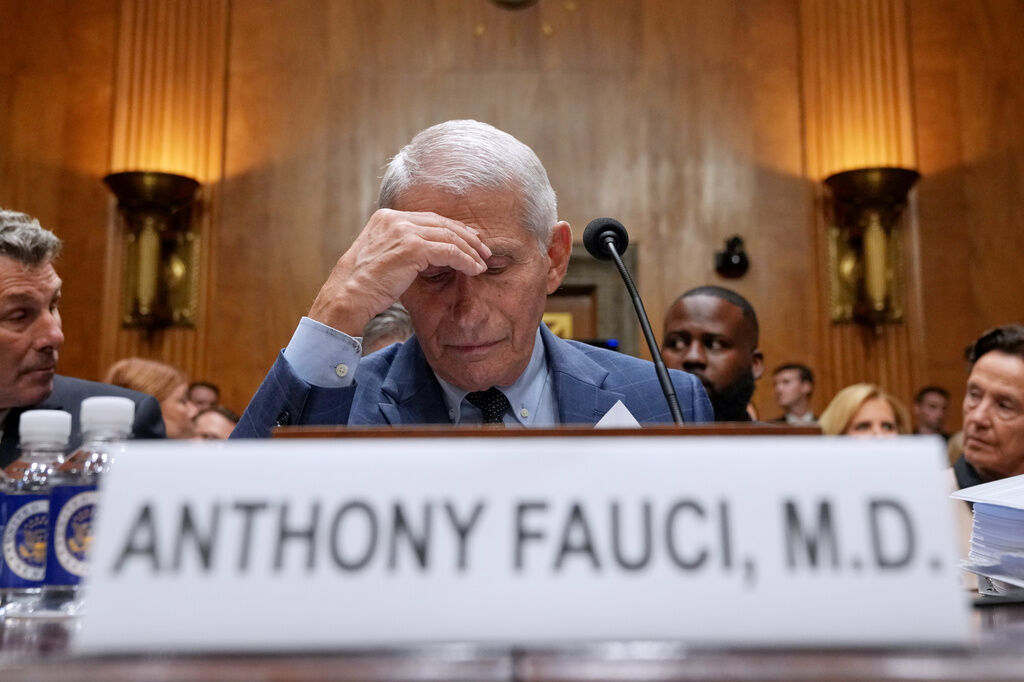
Dr. Anthony Fauci was made aware of possible COVID-19 vaccine complications by other senior-level public health officials in early 2021, according to new emails and text messages released by Senate Republicans on Sunday. Documents released by Sens. Rand Paul (R-KY)...

Majority of Americans say they’re worse off financially since Trump took office again: Poll
Emily Hallas
emily-hallas@coloradopolitics.com
Updated 14 hours ago
The majority of the public believes they are worse off financially than when President Donald Trump won a second term nearly two years ago, according to a new poll that painted an ominous picture of Republicans’ electability in the 2026...

Colorado River crisis: Lake Mead, Lake Powell inch closer to ‘dead pool’
Marianne Goodland
marianne.goodland@coloradopolitics.com
Updated 9 hours ago
In the past 10 days, both Lake Mead on the Arizona-Nevada border and Lake Powell roughly 300 miles northeast on the Utah-Arizona line have recorded their lowest water levels since the reservoirs were first filled. Lake Mead, the nation’s largest...

Colorado lieutenant governor candidate Markert says early discipline and key mentors set his course
Marianne Goodland
marianne.goodland@coloradopolitics.com
Updated 16 hours ago
Editor’s note: This is the first installment in a three-part series examining Colorado’s candidates for lieutenant governor. In this piece, Colorado Politics speaks with George Markert, the Republican running mate to gubernatorial candidate Victor Marx. Marx is competing against Democrat...

The hidden politics of time: How clocks, calendars — and now-contentious time zones — came to be
The Associated Press
the-associated-press@coloradopolitics.com
Updated 18 hours ago
NEW YORK (AP) — It flies. It heals all wounds. It can be of the essence, and it can be money. We thrill in the best of it, lament the worst. We’re warned not to waste it, since we can’t...

1 killed in flash flooding in Beulah: Pueblo County Sheriff’s Office
O'Dell Isaac
odell.isaac@gazette.com
Updated 16 hours ago
One person was killed in Beulah on Sunday after floodwaters swept him downstream, according to a news release from the Pueblo County Sheriff’s Office. The male victim, whose name was not released, was standing near Colorado 78 and Central Avenue...
PREV
PREVIOUS

Latest state revenue forecast shows 'the worst of the recession is behind us'
The all-important March revenue forecast from state economists said Friday that the worst of the recession is over. But the economic recovery has not hit low-wage workers, and job loss in some sectors – hospitality and food service in particular – is still significant. The March forecast is what budget writers on the Joint Budget Committee rely […]

Bennet, Hickenlooper form selection committee for federal court vacancy
U.S. Sens. Michael Bennet and John Hickenlooper have announced an 11-member committee to advise them on filling an upcoming vacancy on Colorado’s seven-member federal trial court. Earlier this month, U.S. District Court Judge R. Brooke Jackson, a nominee of President Barack Obama, declared he would step down as an active judge effective Sept. 30. Senators traditionally […]