

With COVID cases bouncing ‘up and down,’ Denver’s no closer to loosening restrictions
Late last month, Denver briefly flirted with the metrics it needed to loosen up COVID restrictions further. The city hasn’t been that close since.
In order to move into the second-loosest level of restrictions, Denver needs to hold its per 100,000 COVID case count to below 100 cases for seven days. According to a state spokesperson, Denver was one day away from hitting that target in late February, although a Denver spokeswoman said it wasn’t that close.
But even a few days of that level of success was encouraging: It prompted several news stories, and Bob McDonald, the executive director of Denver’s Department of Public Health and Environment, said in late February that he thought Denver would be bumped down.
But Denver has not been able to dip back below the line that it would need to for further loosened restrictions, “which is the only way Denver can get to Level Blue on the dial,” said Heather Burke, spokeswoman for the city.
“There are several reasons why,” she wrote in an email, “including more businesses reopening under the yellow phase of the State’s dial, compliance levels, the number and prevalence of variants within Denver’s community, as well as vaccination rates. COVID case counts will continue to rise and fall for these reasons until a high percentage of the city’s population are vaccinated.”
She said that Denver was never “one day away” from moving into Level Blue.
“We were actually several days away from qualifying” for those lower restrictions, she said.
Had Denver successfully done so, or if it does in the near future, it would’ve allowed for indoor venues to request more capacity increases. In-person K-12 and higher education would’ve been fully cleared, as opposed to merely suggested. The capacity cap for restaurants would’ve been increased, and last-call for alcohol sales would’ve become 2 a.m., instead of the current 1 a.m.
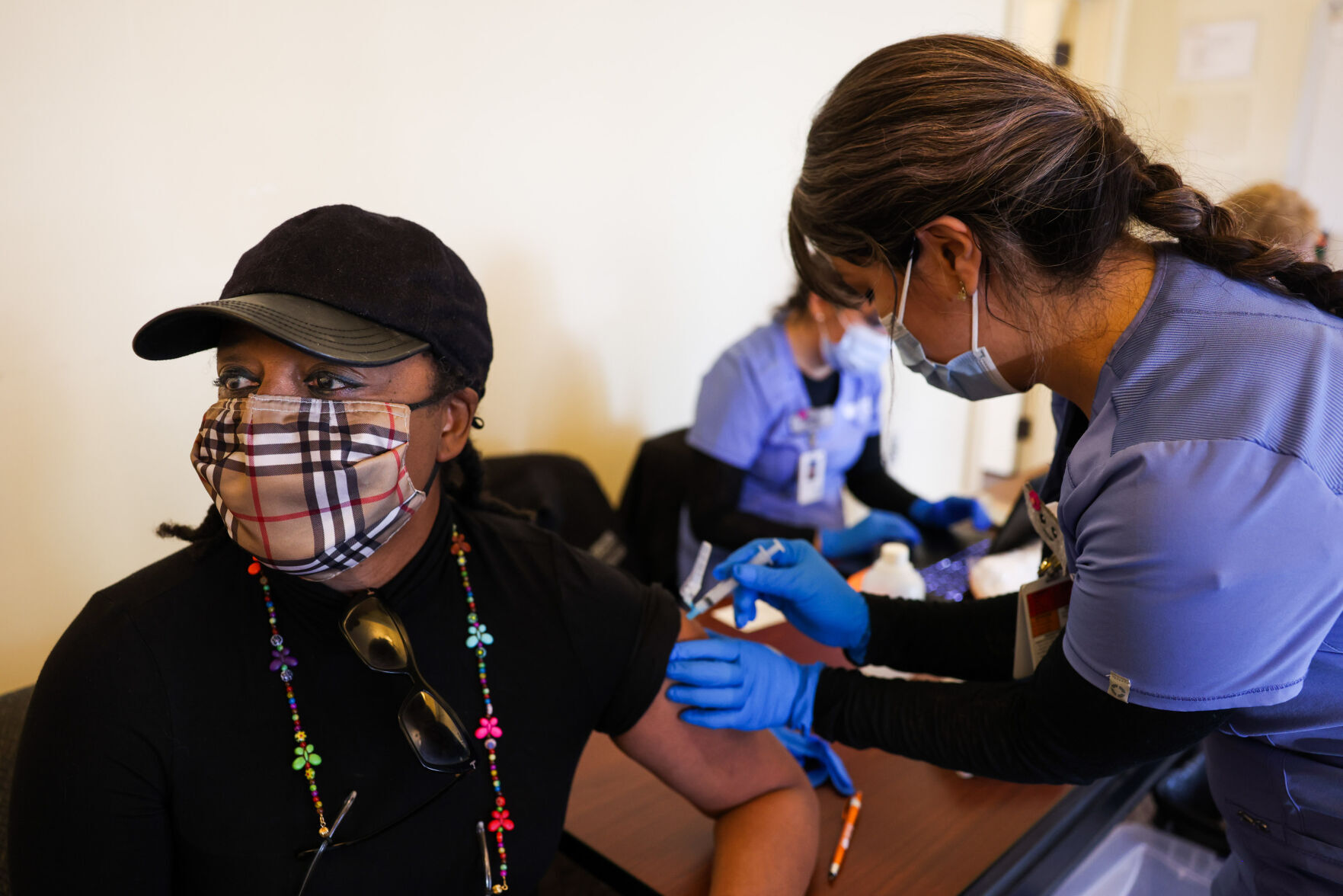
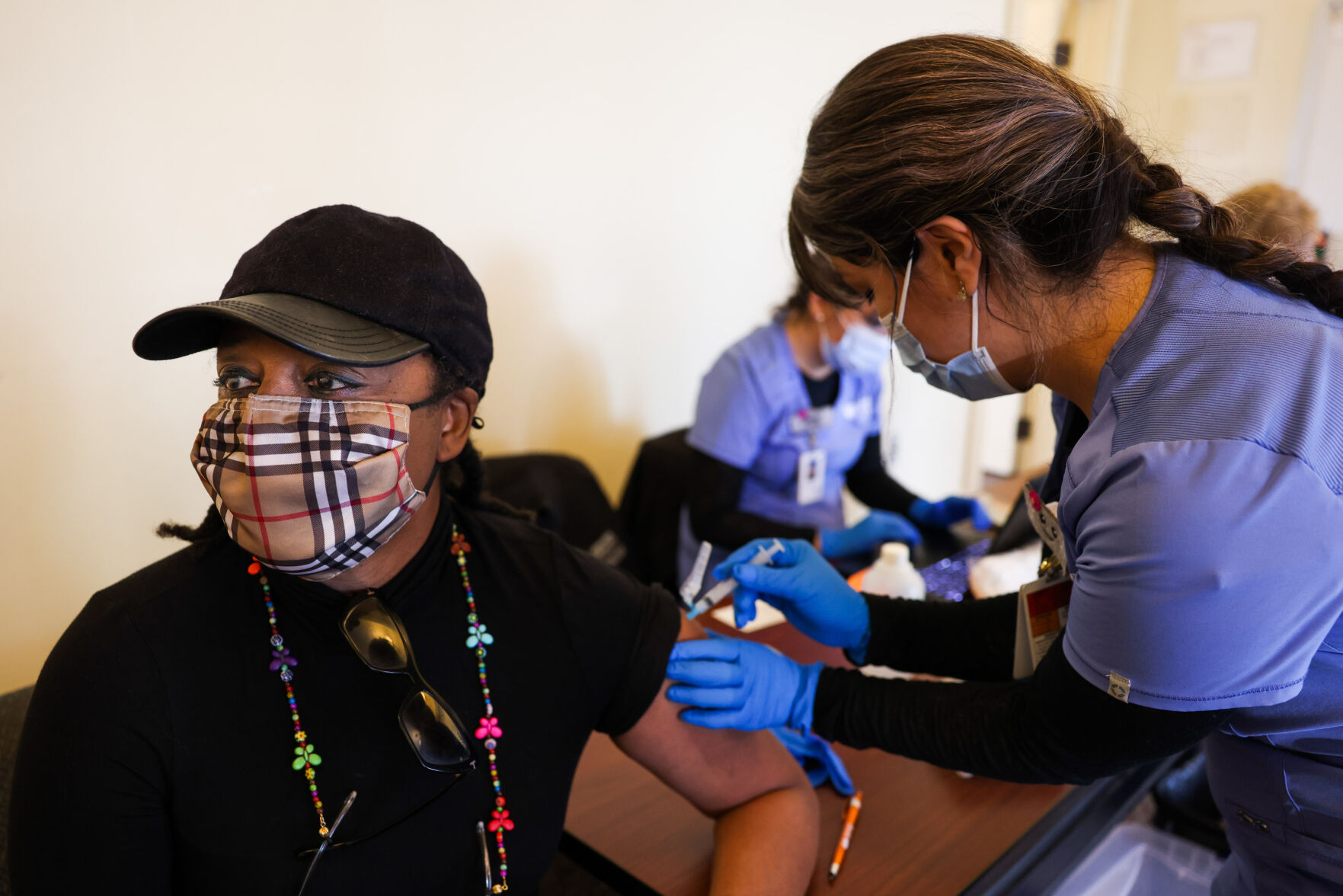
Burke said that nearly a quarter of Denver residents over the age of 15 have been vaccinated, though that’s still below the 70% minimum needed for herd immunity.
As for new COVID strains, which present the threat of increased COVID cases and increased restrictions, Denver’s identified 45 confirmed variant cases since Jan. 29. There are another 65 suspected cases of the United Kingdom variant, which as of now is the most dominant of the new variants in Colorado.
Still, the situation in Denver is significantly improved from mid-November, when the per-100,000 case rate was seven times what it is now. The same is true across the state, where the overall situation has improved (although it’s plateaued recently).
Between improving case counts and more widespread vaccine uptake, Gov. Jared Polis has said the state would begin looking to give more latitude to counties to decide their own COVID restrictions. With the diminishing prospect of hospitals being overrun, he said the state’s role in overall control is diminishing.

New rules for private judges in Colorado include discipline oversight, campaign contributions
David Migoya
david.migoya@gazette.com
Updated 45 minutes ago
The Colorado Supreme Court recently determined the state’s private judges — retired jurists appointed to oversee civil cases that rarely get public scrutiny — can now make political contributions freely and without reserve, overruling a prohibition that had been in...

Colorado bill reshaping RTD board advances
Marissa Ventrelli
marissa.ventrelli@coloradopolitics.com
Updated 57 minutes ago
A proposal to reshape the Regional Transportation District’s leadership easily cleared a committee vote Wednesday, advancing the bill sponsors say is needed to revive a transit system still struggling to regain riders and public trust. Critics have countered that, while...

Colorado Democrat John Hickenlooper pulls in nearly $1.4M in 1st quarter, heads into primary with $4M
Ernest Luning
ernest.luning@coloradopolitics.com
Updated 13 minutes ago
U.S. Sen. John Hickenlooper’s campaign raised nearly $1.4 million in the first quarter of 2026 and plans to report more than $4 million on hand heading into Colorado’s June primary, the first-term Democrat’s campaign said Thursday. That brings Hickenlooper’s total...
Republican Ron Hanks plans ‘grassroots’ primary challenge to US Rep. Jeff Hurd in Colorado’s 3rd CD
Ernest Luning
ernest.luning@coloradopolitics.com
Updated 1 hour ago
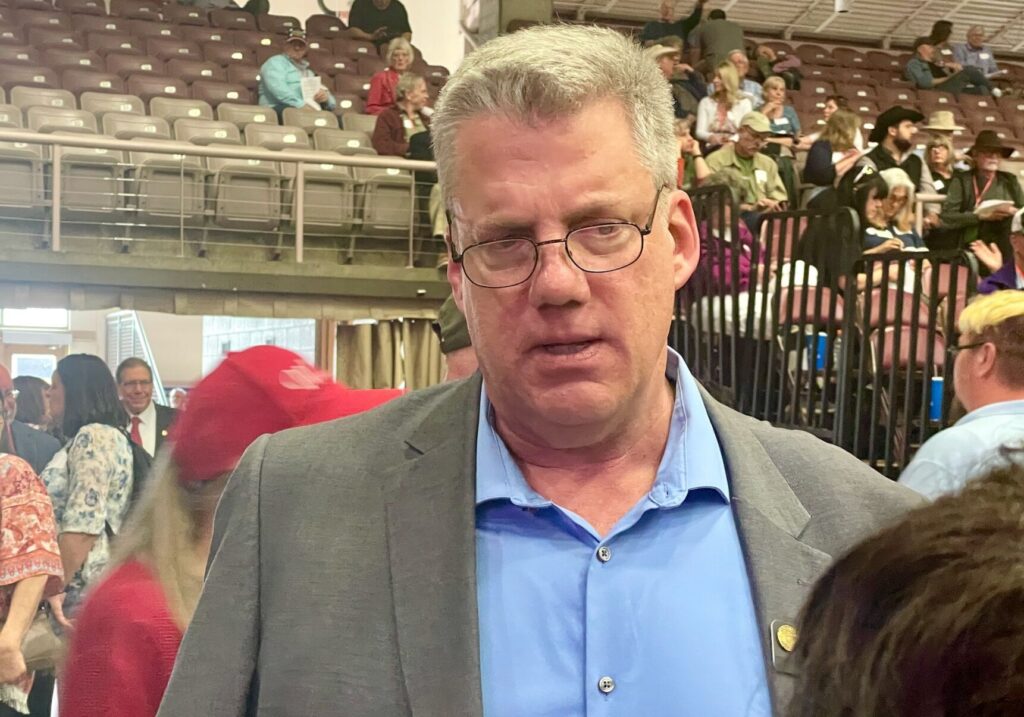
Colorado Republican Ron Hanks, a former state lawmaker, plans to challenge first-term U.S. Rep. Jeff Hurd in the 3rd Congressional District primary by seeking a spot on the June ballot at the GOP’s district assembly in Pueblo on Friday, Colorado...
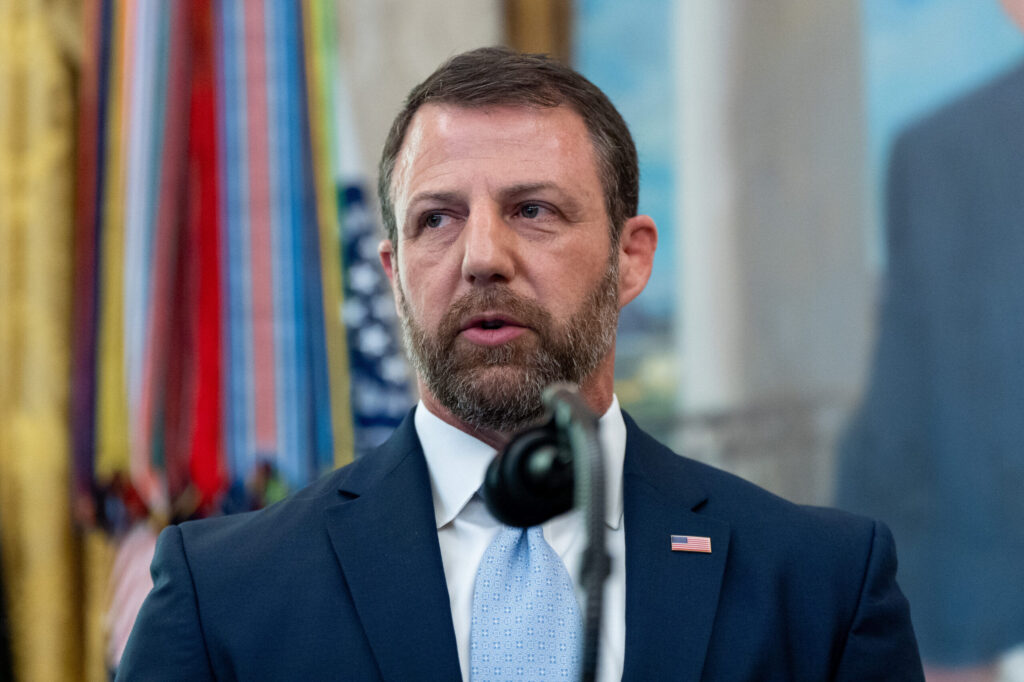
Five ways Mullin is already pushing DHS in a new direction
Anna Giaritelli Washington Examiner
anna-giaritelli-washington-examiner@coloradopolitics.com
Updated 5 hours ago
The Trump administration’s newest Cabinet secretary, Markwayne Mullin, has already begun to implement major changes across the Department of Homeland Security Mullin replaced President Donald Trump’s first DHS secretary, Kristi Noem, and was an unexpected pick to lead the department...
Appeals court finds Prowers County judge incorrectly analyzed firetruck collision lawsuit
Michael Karlik
michael.karlik@coloradopolitics.com
Updated 5 hours ago
Colorado’s second-highest court directed a Prowers County judge last month to take a second look at whether a firetruck operator and the county itself can be held liable for a collision with a motorist. Donald Williamson was driving through a...
Appeals court reverses assault convictions after jury received no definition of ‘harm’
Michael Karlik
michael.karlik@coloradopolitics.com
Updated 6 hours ago
Colorado’s second-highest court reversed an Arapahoe County defendant’s assault convictions last week, concluding the trial judge neglected to define a key, ambiguous term for jurors. Police officers arrested David Cristobal Aragon at a house party for allegedly violating a restraining...
Colorado counties cannot challenge state law restricting immigration contracts, appeals court says
Michael Karlik
michael.karlik@coloradopolitics.com
Updated 2 hours ago
Colorado’s second-highest court ruled on Thursday that counties lack standing to challenge a 2023 state law that restricts their ability to contract with the federal government or private entities for immigration detention. A three-judge Court of Appeals panel agreed with...

Wayne Williams joins city as Colorado Springs Mayor Mobolade’s new chief of staff
Brennen Kauffman
brennen-kauffman@coloradopolitics.com
Updated 4 hours ago
Wayne Williams will be the next chief of staff for Colorado Springs Mayor Yemi Mobolade, turning the two former election opponents into partners in city government. The two officially announced the hire Thursday, citing Williams’ decades of experience with city,...
House GOP stalls Colorado budget debate by forcing full reading of 661-page bill
Marianne Goodland
marianne.goodland@coloradopolitics.com
Updated 1 hour ago
A procedural battle at the Colorado Capitol boiled over on Wednesday night, when a House Republican demanded the 661‑page state budget be read aloud in full — a move that delayed the advance of the proposed $46.8 billion spending plan....
PREV
PREVIOUS

Fidelity Investments dropping payroll, HR services
Fidelity Investments officials confirmed Tuesday it’s halting offering payroll/HR services to employers as part of its workplace investing platform that serves more than 24,000 companies nationwide, including many in Colorado. Fidelity has operations in Greenwood Village, and more than 1,000 Colorado employees. Many Colorado companies offer Fidelity’s workplace benefits, like 401(K) accounts, to employees. “After […]

Larimer County halts new oil and gas applications
Larimer County commissioners Tuesday voted 3-0 to immediately suspend processing of all new oil and gas applications. The moratorium might be lifted after a public hearing scheduled for April 13. Commissioners thought the moratorium necessary “to allow Larimer County reasonable time to revise their oil and gas regulations, for the safety, health and welfare of […]