

As South African COVID variant appears in Colorado, issue of vaccinating inmates rises again
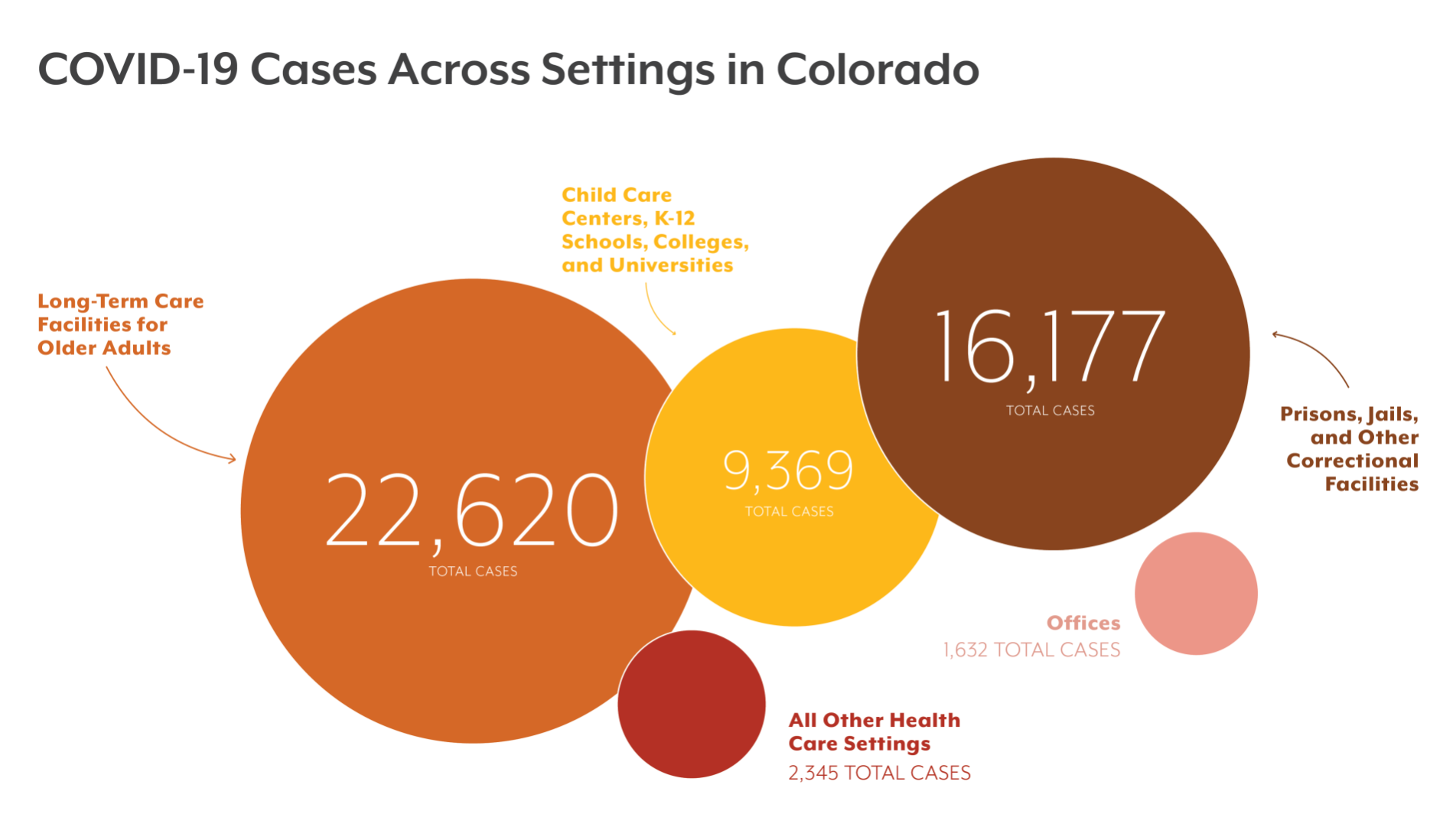
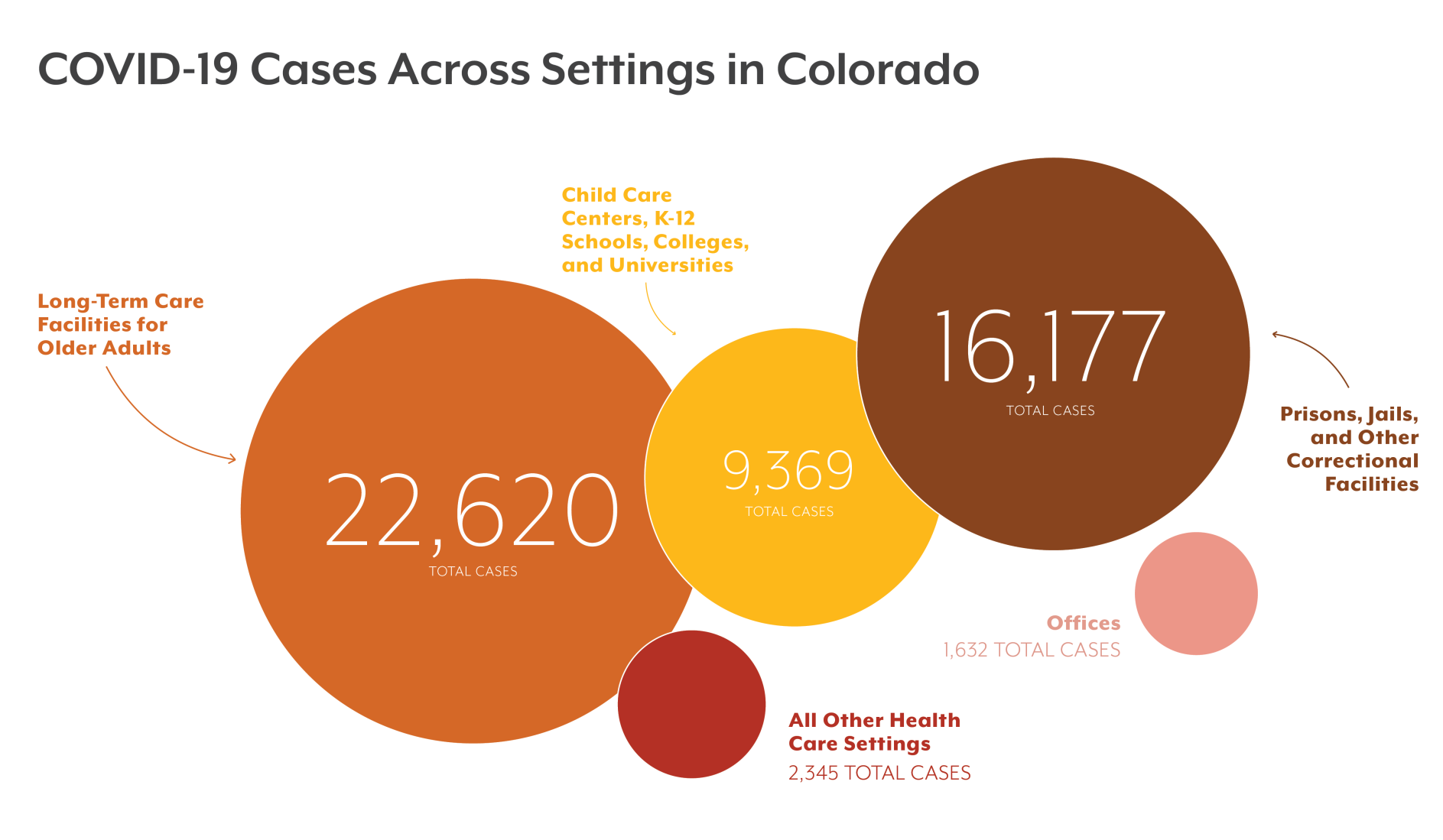
The discovery of three cases of the South African COVID-19 variant at the Buena Vista State Correctional Facility last week may shine a somewhat brighter light on the state’s decision to hold off vaccinating all prison inmates.
According to the Centers for Disease Control and Prevention, inmates should be vaccinated right along with corrections workers to cap community spread.
In a Jan. 11 bulletin, the CDC said “jurisdictions are encouraged to vaccinate staff and incarcerated/detained persons of correctional or detention facilities at the same time because of their shared increased risk of disease.
“Outbreaks in correctional and detention facilities are often difficult to control given the inability to physically distance, limited space for isolation or quarantine, and limited testing and personal protective equipment resources,” the CDC bulletin continued. “Incarcerated or detained persons living in correctional and detention facilities may also be older or have high-risk medical conditions that place them at higher risk of experiencing severe COVID-19. COVID-19 outbreaks in correctional and detention facilities may also lead to community transmission.”
But as of Friday and according to a Department of Corrections news release, only 664 inmates out of nearly 16,000 have been vaccinated. As of Tuesday, out of 6,041 full-time corrections workers, 2,604 had had their first shot, about 43%, according to DOC.
The news release said that to mitigate the current outbreak at Buena Vista, the Colorado Department of Public Health and Environment is hosting a vaccine clinic for staff and inmates, and later in the week, a clinic for family members and close contacts of staff.
In November, Gov. Jared Polis had planned to allow inmates to be vaccinated at the same time as others in “congregate housing,” such as nursing homes, assisted living and other long-term care facilities.
That news did not sit well with Republican George Brauchler, the former district attorney for the 18th Judicial District. In an opinion piece published by The Denver Post, Brauchler said, “Governor Polis and his Colorado Department of Public Health and Environment have declared that they intend to prioritize the health of incarcerated murderers, rapists and child molesters over the lives of law-abiding Coloradans 65 years and older and immunocompromised adults. The decision to prioritize the vaccination of inmates above super at-risk adults is not only contrary to math and decency, it is also contrary to the guidance of the U.S. Centers for Disease Control and Prevention (CDC) and the World Health Organization (WHO). As the son of a 78-year-old father, I ask this: What in the hell is Gov. Polis doing?”
Polis’ reaction was swift. Just three days later, he backed off that plan. Since then, Colorado’s plan for vaccinating inmates is to administer shots only to those prisoners in the age groups currently being vaccinated in the general population. As of this week, that’s those ages 60 and older or those with two or more high-risk medical conditions, which constitutes less than 5% of the total prison population.
Brauchler has since said the governor overreacted.
He said healthy prisoners should be vaccinated ahead of someone like him. “I have the ability to take steps to diminish risk. I recognize and acknowledge that, and it puts them ahead of priority ahead of me. But it doesn’t jump them ahead of other immunocompromised adults or the older population.
“With limited [vaccine] supply, you have to make decisions,” he said. “The decisions we should invest in, is what saves the most lives,” and which comes from science and data.
In Colorado, and based on the most recent outbreak data from the Colorado Department of Public Health and Environment, 8,717 inmates have tested positive for the virus at 16 state prisons, both public and private.
And in confirmation of the CDC’s warning that high levels of inmate infections could spread beyond that population, 1,414 corrections staff have also tested positive. Twenty-eight inmates have died, as well as two staff members.
Question of equity
An analysis of racial and ethnic information reveals that Colorado has a disproportionate rates among its Hispanic and Black inmates. Whereas the state populations are 21.8% and 4.6%, respectively, incarceration and infection rates for both are considerably higher.
Data obtained through an open records request to the Department of Corrections shows that Hispanic inmates, which comprise 31.5% of the prison population and 29% of women inmates, are contracting the virus at a rate about one percent higher.
Black male prisoners are 19% of Colorado’s prison population and 11% for incarcerated women and are contracting the virus at 18% of the prison population.
Infection rates among White inmates are at 45.5% and Native American inmates are at 4%.
Polis spokesman Conor Cahill told Colorado Politics in February that the state has “harmonized its prioritization” with the CDC and its Advisory Committee on Immunization Practices. “As has been said many times, inmate status will not make a difference in terms of the timing of receipt of the vaccine.”
But that ignores both the quality of healthcare in the prison system as well as the poor health status of people of color entering the prison system, making them more likely to contract the virus, according to a December report from Fortune.
State Rep. Leslie Herod, D-Denver, an advocate for criminal justice reform, also believes the state needs to vaccinate its inmates now.
“We should follow CDC guidelines and focus on vaccinating inmates at the same time with corrections officers,” she said. “We are creating unsafe situations, untenable situations not only for inmates but also for those who work in the prison system. When we are keeping people in solitary confinement who do not deserve to be there, when we are putting people in harm’s way by having them bunk next to someone who is coughing and may have COVID, and seeing the death rates we have in our facilities, we must do better. An equitable COVID response includes vaccinating inmates as soon as we can.”
Prison facilities are often overcrowded and poorly ventilated, the Fortune report said. Dormitory-style housing, cafeterias and open-bar cell doors make it nearly impossible to quarantine. Prison populations are sicker, on average, than the general population, and health care behind bars is notoriously substandard. Nationwide, Fortune reported, the mortality rate for COVID-19 among prisoners is 45% higher than the overall population.
Experts caution that unless COVID-19 is brought under control behind bars, the country will not get it under control in the population at large.
“If we are going to end this pandemic – bring down infection rates, bring down death rates, bring down ICU occupancy rates – we have to address infection rates in correctional facilities,” said Emily Wang, professor at Yale School of Medicine and co-author of a recent National Academies of Science Medicine and Engineering report on COVID in prisons.
“Infections and deaths are extraordinarily high. These are wards of the state, and we have to contend with it,” Wang told PBS.
Another study, commissioned by the National Commission on COVID-19 and Criminal Justice, reported that prisoners were nearly four times as likely as the average citizen to contract the coronavirus and – adjusting for age, sex and ethnicity – twice as likely to die from it.
The Oregon example
A month ago, 10 states, including Colorado, had no published plans on vaccinating prison populations.
That number dropped to nine when a federal judge in Oregon ordered the state to “immediately” vaccinate inmates, based on concerns that not vaccinating inmates was a violation of their Eighth Amendment rights against cruel and unusual punishment.
Oregon has so far had about 3,300 inmates that have tested positive for COVID-19, about one-quarter of their inmate population, according to Juan Chavez, the lead attorney for the lawsuit filed by the Oregon Justice Resource Center.
Chavez told Colorado Politics the prisons in his state are old with poor ventilation. “We quickly learned that state prisons and jails would be potential hotbeds for disease if we don’t act to prevent the spread.”
There’s another plus to vaccinating inmates: the impact on public health, Chavez said.
“Disease is not limited to these facilities. There’s a significant number of workers and contractors going in and out of prisons and going into communities, many of which are small rural towns with less healthcare infrastructure,” he said.
That mirrors Colorado’s prison system, too; most prisons are in rural counties with few healthcare facilities.
Marc Silverstein of the Americans for Civil Liberties Colorado followed the news out of Oregon. The ACLU has sued the Polis administration to drive down prison populations, but vaccinations are on the radar, too.
Silverstein said that it appears that the Oregon authorities, with their governor as a defendant, were ignoring the urgency to vaccinate prisoners, exactly the way Polis is ignoring the urgency, he said.
He called it “deliberate indifference” to health and safety that the US and Colorado constitutions forbid. “I think Polis is vulnerable to a similar ruling in Colorado. He doesn’t need to wait for a court to rule. He should do the right thing, follow the reasoning of the Oregon case, and he’ll save lives,” he said.

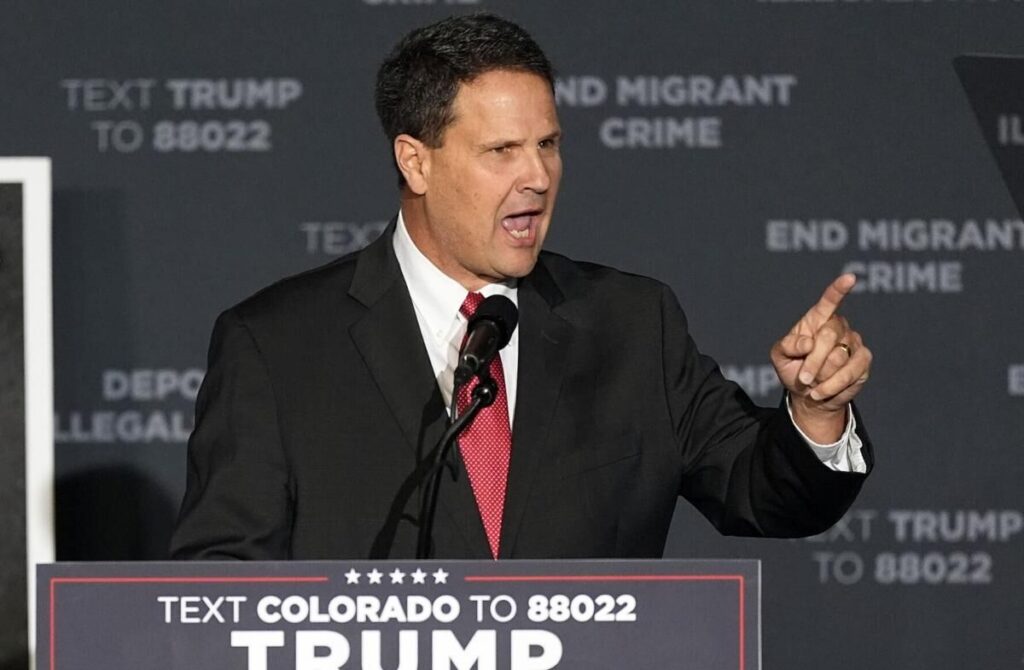
Rep. Jeff Crank thinks Democrats are too focused on Trump, not enough on Colorado Springs
Vince Bzdek
vince.bzdek@gazette.com
Updated 11 hours ago
By Vince Bzdek For Congressman Jeff Crank, who’s unopposed in the Republican primary for the 5th Congressional District but the main target of both candidates in the lively Democratic primary, the big question in the midterms is not who will...

Colorado Politics Calendar June 22-28
Rachael Wright, Special to Colorado Politics
rachael.wright@coloradopolitics.com
Updated 3 days ago
CoPo’s weekly political calendar will help you find political and public-policy events throughout Colorado. It includes candidate and issue campaign events, public policy meetings, court hearings, state and local party conventions, assemblies, debates, rallies, parades, speaking engagements, traveling dignitary appearances,...
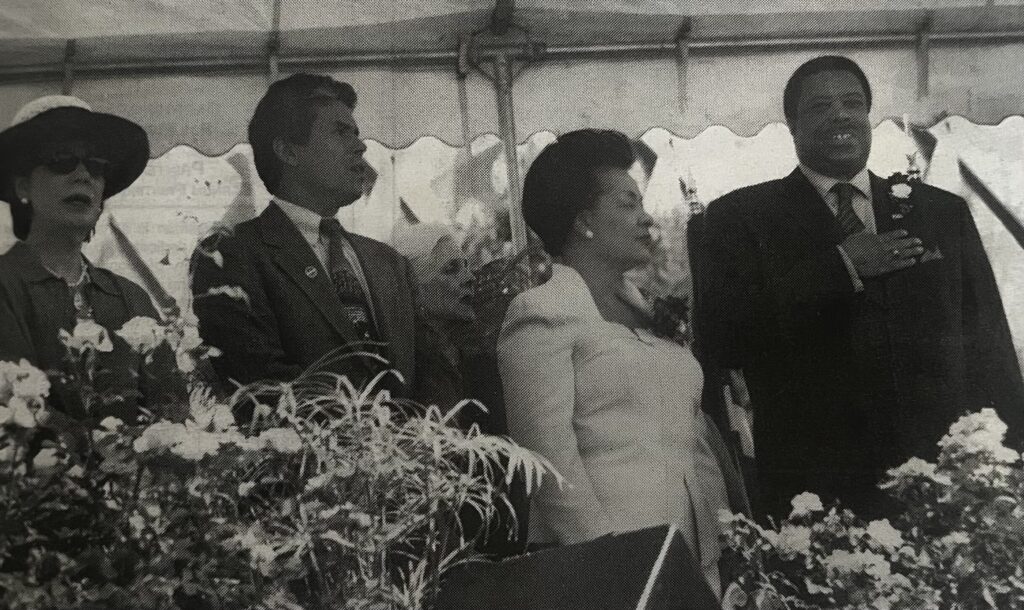
Vice president attends Denver event to support energy freedom; more news from the past | A LOOK BACK
Rachael Wright, Special to Colorado Politics
rachael.wright@coloradopolitics.com
Updated 3 days ago
Forty-Five Years Ago This Week: Vice President George H.W. Bush flew to Denver to address the annual meeting of the American Association of Petroleum Landmen, where he assured the audience that the Reagan administration’s strong belief was that the private...
Does character matter anymore? | SONDERMANN
By Eric Sondermann
by-eric-sondermann@coloradopolitics.com
Updated 3 days ago
The last few weeks have been illuminating in the manner of a headlamp pointing the way to some deep, dark, murky netherworld. Graham Platner, a hero to the populist set on the Democratic side, became his party’s Senate nominee in...

A special edition of Capitol M: In remembrance of the outrageous Lynn Bartels
Marianne Goodland
marianne.goodland@coloradopolitics.com
Updated 15 hours ago
I had Lynn Bartels envy. For almost longer than I can remember. There, I said it. And it’s true. Lynn died Friday, age 69, after a short battle with glioblastoma. I was just heartsick when that news of her diagnosis...

Bernie Sanders endorses DeGette challenger Melat Kiros in Colorado’s 1st CD Democratic primary
Ernest Luning
ernest.luning@coloradopolitics.com
Updated 16 hours ago
U.S. Sen. Bernie Sanders on Friday endorsed congressional candidate Melat Kiros, one of two Democrats challenging 15-term U.S. Rep. Diana DeGette in Colorado’s June primary. Sanders, a Vermont independent who caucuses with the Democrats, called the 29-year-old Kiros “exactly the...
Trump’s 10th Circuit nominee recuses from cases against federal government without explanation
Michael Karlik
michael.karlik@coloradopolitics.com
Updated 18 hours ago
President Donald Trump’s nominee to fill a vacancy on the Denver-based federal appeals court recused himself without a clear explanation from nine cases against the executive branch while he was undergoing vetting by the White House this spring. U.S. District...

Trump’s low approval unchanged as Iran war perceptions continue to plague him
Rena Rowe, Washington Examiner
rena.rowe.washington.examiner@gazetteedit.wpenginepowered.com
Updated 17 hours ago
A new poll shows most Americans disapprove of President Donald Trump’s handling of Iran, with views on the issue closely mirroring his overall job approval rating. Just 37% of U.S. adults approve of the way Trump is handling his presidency,...

Colorado Iranians express disappointment with U.S.-Iran deal
Mark Samuelson Special to The Denver Gazette
mark.samuelson@denvergazette.com
Updated 16 hours ago
Iranians in Colorado worry agreement solidifies the Islamic regime’s power A group of Colorado Iranians expressed disappointment in the agreement reached between the U.S. and the Islamic Republic of Iran, arguing it preserves the government’s hold on power and any...
Adams County murder conviction reversed due to faulty jury instruction
Michael Karlik
michael.karlik@coloradopolitics.com
Updated 21 hours ago
Colorado’s second-highest court overturned an Adams County defendant’s murder conviction last month because the instruction provided to the jury about a trespasser’s right to use self-defense did not accurately reflect Colorado law. A person is justified in using force to...
PREV
PREVIOUS
Biden to sign twin executive orders focused on women's rights
President Biden is highlighting women’s issues, including sexual harassment, as the Democratic Party grapples with misconduct allegations made against New York Gov. Andrew Cuomo. Biden will sign an executive order on Monday, creating a Gender Policy Council, which will spearhead his administration’s gender-based domestic and foreign policy work. He will also sign an executive order […]

Q&A with Steve Zansberg | Defending Colorado's right to know
Colorado doesn’t just have a friend in Steve Zansberg. They have a defender of the public’s right to know and the press’s ability to do its job. Toiling in a law library instead of a newsroom, the former TV journalist is a giant behind the scenes of just about every one of the state’s biggest […]