

Denver looks ahead to release of recommendations by policing reform task force
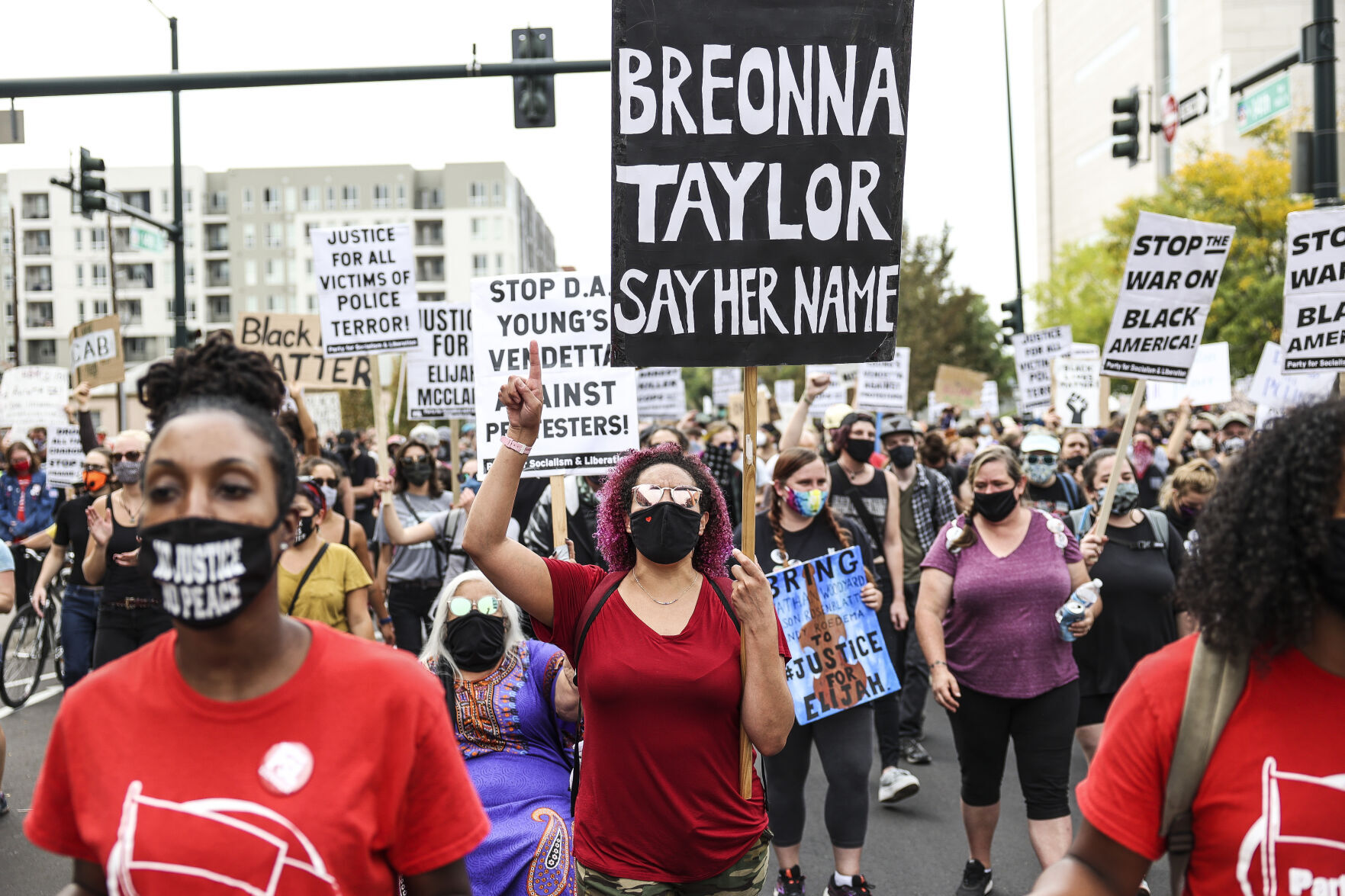
Last June, a Denver task force led and controlled by the community was formed in response to the upswell of protests over police violence.
The goals of the Task Force to Reimagine Policing and Public Safety were to increase oversight and transparency of law enforcement, minimize interactions with police and the court system, and increase the role that people most impacted by law enforcement have in oversight, training and policy creation. The task force plans to finalize its report with an initial set of recommendations at the end of March.
“What we want to do is not just come up with a set of recommendations. We want to actually tell a story about how a community becomes empowered, how a community takes ownership of its public safety, how we minimize police and citizen interaction, and how we keep people out of jail,” said Pastor Robert Davis, the task force’s leader. “And so each one of the recommendations helps us to tell a part of that story.”
The task force has included representation from 43 community organizations and government agencies, including City Council, the district attorney’s office, the state public defender and Denver’s Office of the Independent Monitor.
According to a progress report compiled in February, the task force has been refining a preliminary list of 127 recommendations.
The task force has come up with seven questions to compare each recommendation against:
-
Will this recommendation improve the quality of life for Denver residents?
-
Does this recommendation empower the community?
-
Does this recommendation resource the community to prevent citizens from interacting with law enforcement and the criminal court system?
-
Does this recommendation repurpose the role and function of law enforcement based on the needs of the community?
-
Does this recommendation strengthen community oversight of law enforcement?
-
Does this recommendation create healing from the harms of the current and past forms of policing?
-
Is it winnable?
Davis said the task force also has been determining which agencies would need to be partners for implementing each recommendation, such as City Council, Denver Public Schools, the judiciary and the state.
The task force has not made any of its draft recommendations public.
But District 9 Councilmember Candi CdeBaca, who has participated in task force meetings, said complaints she has heard from constituents about policing tend to be about fundamental details of everyday interactions, such as officers clearly identifying themselves and trouble getting requested records from the department. She said people still also often voice their desire for transformative structural changes, like creating alternatives to police responses in some situations in a way that redefines the roles police play.
“It’s still very consistent with what we were hearing during the protests and during the summer. I think now it’s just actually getting fleshed out,” she said.
CdeBaca said the task force hearing from experts in cities outside Denver – such as on the CAHOOTS program in Eugene, Ore., that sends pairs of medics and crisis workers as responders to some situations instead of police – has helped the task force understand how to translate demands for change into policy recommendations.
“I think it was really inspiring to the group, because the group had very high-level demands of the police, but those presentations helped them figure out at a policy level how detailed and specific we should be getting.“
Denver has piloted a program, called the Support Team Assisted Response, that sends pairs of paramedics and mental health clinicians as responders to nonviolent situations, such as mental health crises, in place of police officers. The program is an example of what Davis says is a necessary link between police funding and rethinking the roles they play in society.
Coming to a clear understanding of what police are expected to do has to happen before having conversations about funding police, he said. Davis said police’s roles have been too vaguely defined, which has led to the expectation for police to play myriad roles in addition to fighting crime.
“If you ask city officials, if you ask police officers, ‘What are you supposed to be doing?’ You’ll get different answers, even from among the top brass,” he said.
“So rather than ‘defund,’ let’s focus on what we’re supposed to be doing. And then once we identify that, let’s give them all the resources they need to do that. We have never, as a society, articulated what it is the police [should be] doing. Not just in Denver, but across the nation.”
When 911 in Denver receives a call, dispatchers make a decision about whether to send out police or STAR. Data collected during the first six months of the program has shown promising results, with none of the situations STAR responded to requiring police officers or leading to arrests.
Davis said he wants to see Denver take more interest in applying the model of STAR to developing alternatives to police responses in other types of situations, such as homelessness and addiction.
District 2 Councilmember Kevin Flynn, who said he attended the task force’s meetings initially but decided he shouldn’t be part of developing recommendations that will then be presented for him to consider, sees programs like STAR freeing up police resources so they can focus on fighting crime as a good thing.
But he has seen officers in his district take genuine interest in outreach to people in crisis, such as helping people who are unhoused find resources to get off the street. So he doesn’t think police’s role in outreach work should be eliminated.
“And so to say the police should have nothing to do with outreach to our homeless population, I think, that’s not something I would that I would put a wall between, because I’ve seen our officers be very compassionate and very treat people with dignity.“
He said from a policy perspective, reforming the culture of policing in Denver should start in officer recruiting and training that focuses on relating to the public and building relationships in communities.
“It takes a while to build a new culture in a force that is 1500 officers, give or take. But it happens,” Flynn said. “This is not the same police department it was in 1962, when 50 of them went to prison for being in a burglary ring together. … This is not the same department.“
But the task force has an elephant in its Zoom meeting room: The absence of representatives from Denver’s Department of Safety and law enforcement. Public Safety Director Murphy Robinson withdrew DOS and law enforcement representation from the task force in January. In claims made to The Denver Gazette and Colorado Politics that Davis has disputed, Robinson said members of his team were asked not to actively participate in meetings and only answer questions. Robinson said that request stifled diversity of thought.
Davis disputed that characterization in January. He said safety officials were only asked to skip one meeting earlier that month so community members could freely share their ideas on policing and public safety and what they believed should be the direction of the task force without concerns about retaliation.
The task force progress report says representatives of the Denver Police Department were “exemplary in their engagement and dedication to our shared goal.” But the report also cites the Department of Safety and law enforcement’s withdrawal from the task force as a challenge for the task force.
Davis told The Denver Gazette in another interview he believes the law enforcement agencies ultimately were uncomfortable with not having control to set the task force’s agenda.
But he said the task force has been structured to be community-controlled because community members just have the power to recommend policy changes, not actually implement them. He said it doesn’t make sense for the bodies with power to implement changes to also make their own recommendations, because they could cherry-pick what they say the community wants.
Reform not as simple as ‘defund the police’
What local leaders think of police reform, defunding


Judicial performance evaluations released, Montezuma County judge disciplined | COURT CRAWL
Michael Karlik
michael.karlik@coloradopolitics.com
Updated 10 hours ago
Welcome to Court Crawl, Colorado Politics’ roundup of news from the third branch of government. Colorado’s citizen-led judicial performance commissions released their voter narratives for the judges standing for retention in November, plus a disciplinary panel imposed consequences on a...
Colorado House Democrats’ caucus finances under scrutiny as ethics case against leader advances
Marianne Goodland
marianne.goodland@coloradopolitics.com
Updated 10 hours ago
Democratic lawmakers told a legislative ethics panel that a leader’s management of caucus finances left them with unanswered questions, disputed reimbursements and a breakdown in communication that ultimately triggered a formal complaint. The House Ethics Committee is examining a complaint...
Federal judge holds off on dismissing formerly bankrupt medical contractor from Jeffco jail death lawsuit
Michael Karlik
michael.karlik@coloradopolitics.com
Updated 12 hours ago
A federal judge declined on Monday to dismiss the formerly bankrupt medical contractor from a lawsuit over a detainee’s death in Jefferson County jail, but indicated she would do so if the plaintiffs’ attorneys go through the process to ensure...
Here are the 10 oldest members of Congress running for reelection
Lauren Green
lauren-green@coloradopolitics.com
Updated 13 hours ago
Capitol Hill has long been called a “retirement home,” as well over 100 House members and half the Senate are over the age of 65. That reputation doesn’t look due to change anytime soon — there are currently more than...
Fauci ignored reports of COVID vaccine side effects, new documents show
Gabrielle M. Etzel
gabrielle-m-etzel@coloradopolitics.com
Updated 14 hours ago
Dr. Anthony Fauci was made aware of possible COVID-19 vaccine complications by other senior-level public health officials in early 2021, according to new emails and text messages released by Senate Republicans on Sunday. Documents released by Sens. Rand Paul (R-KY)...

Majority of Americans say they’re worse off financially since Trump took office again: Poll
Emily Hallas
emily-hallas@coloradopolitics.com
Updated 15 hours ago
The majority of the public believes they are worse off financially than when President Donald Trump won a second term nearly two years ago, according to a new poll that painted an ominous picture of Republicans’ electability in the 2026...

Colorado River crisis: Lake Mead, Lake Powell inch closer to ‘dead pool’
Marianne Goodland
marianne.goodland@coloradopolitics.com
Updated 9 hours ago
In the past 10 days, both Lake Mead on the Arizona-Nevada border and Lake Powell roughly 300 miles northeast on the Utah-Arizona line have recorded their lowest water levels since the reservoirs were first filled. Lake Mead, the nation’s largest...
Colorado lieutenant governor candidate Markert says early discipline and key mentors set his course
Marianne Goodland
marianne.goodland@coloradopolitics.com
Updated 16 hours ago
Editor’s note: This is the first installment in a three-part series examining Colorado’s candidates for lieutenant governor. In this piece, Colorado Politics speaks with George Markert, the Republican running mate to gubernatorial candidate Victor Marx. Marx is competing against Democrat...

The hidden politics of time: How clocks, calendars — and now-contentious time zones — came to be
The Associated Press
the-associated-press@coloradopolitics.com
Updated 19 hours ago
NEW YORK (AP) — It flies. It heals all wounds. It can be of the essence, and it can be money. We thrill in the best of it, lament the worst. We’re warned not to waste it, since we can’t...

1 killed in flash flooding in Beulah: Pueblo County Sheriff’s Office
O'Dell Isaac
odell.isaac@gazette.com
Updated 17 hours ago
One person was killed in Beulah on Sunday after floodwaters swept him downstream, according to a news release from the Pueblo County Sheriff’s Office. The male victim, whose name was not released, was standing near Colorado 78 and Central Avenue...
PREV
PREVIOUS

OUT WEST ROUNDUP | NM Capitol fence to stay through session; Wyoming could hike fuel tax
NEW MEXICO House speaker says fencing still needed at Capitol SANTA FE – Democratic House Speaker Brian Egolf says security fencing that encircles the state Capitol building will remain in place through the end of the current legislative session on March 20 on the advice of state security officials including New Mexico State Police. Egolf […]

With state aid trickling out, Colorado eviction filings jump in wake of moratorium expiration
Eviction filings in Colorado have risen since Jan. 1, an increase lawyers and advocates say was triggered by Gov. Jared Polis’ decision not to renew a state moratorium – and exacerbated by an overwhelmed housing assistance program. Since letting his near-total ban expire Dec. 31, Polis has leaned upon a federal moratorium that advocates say […]