

Supreme Court sides with Weiser, declines to take up Colorado deportation appeal
The U.S. Supreme Court has declined to review a Colorado case that questioned how clearly attorneys must communicate the immigration consequences of a guilty plea to their clients, an issue which Attorney General Phil Weiser had argued the justices need not decide.
On Feb. 22, the Court announced without comment that it would not hear an appeal from Alfredo Juarez, a Mexican national and lawful permanent resident who pleaded guilty to a misdemeanor drug charge in 2012. Juarez learned from attorneys that generally, convictions for misdemeanor drug possession had the same effect as a felony, and he would “probably” be deported.
A trial court judge sentenced Juarez to probation, but following a violation of his conditions, the federal government deported Juarez.
The Colorado Supreme Court decided last year that Juarez’s attorney went to “substantial lengths” to give him correct information. Lawyers are already obligated to give accurate advice to their noncitizen clients when the deportation consequences are clear, pursuant to a 2010 U.S. Supreme Court ruling.
However, Juarez appealed the ruling, asking the justices to clarify whether defense attorneys must convey to their clients when they will face automatic deportation, not simply probable deportation.
Weiser, in urging the Court to turn down the appeal, wrote in December that the advice Juarez received “meaningfully conveyed the risk of deportation.” Weiser also pointed out that Juarez’s guilty plea was already designed to make him less vulnerable to deportation than going to trial.
He had faced a felony charge of cocaine possession and was allowed to plead guilty to the misdemeanor while agreeing to go through a strict addiction treatment regimen.
“What is more, while both a guilty plea and a conviction after trial would make petitioner deportable, by pleading guilty he avoided jail, decreasing the risk that ICE would or could place an immigration hold on him,” the attorney general explained, referring to U.S. Immigration and Customs Enforcement. “As the trial court found, it was petitioner’s repeated probation violations that led to his incarceration and ultimate deportation.”
The case is Juarez v. Colorado.


Federal judge hears arguments about Colorado’s 3-day gun purchase waiting period
Michael Karlik
michael.karlik@coloradopolitics.com
Updated 2 minutes ago
A federal judge heard arguments on Monday about the constitutionality of a 2023 Colorado law that generally imposes a three-day waiting period on firearm purchases after the initiation of a background check. The test that the U.S. Supreme Court created...
Colorado Supreme Court intervenes in Weld County prosecution dismissed due to Missy Woods misconduct
Michael Karlik
michael.karlik@coloradopolitics.com
Updated 4 hours ago
The Colorado Supreme Court ordered a Weld County trial judge last week to respond to the district attorney’s claim that he improperly dismissed a criminal case because of “outrageous” conduct by the Colorado Bureau of Investigation. Daniel Lee Eatinger stood...
Schoolchildren’s presence at child sex-related trial did not harm Arapahoe County defendant, appeals court says
Michael Karlik
michael.karlik@coloradopolitics.com
Updated 2 days ago
Colorado’s second-highest court decided on Thursday that the presence of a group of schoolchildren on the first day of a child sexual exploitation trial did not violate an Arapahoe County defendant’s constitutional right to a fair trial. Prosecutors charged Jerry...
Appeals court cites week-old Colorado law to reinstate child neglect case at child, father’s request
Michael Karlik
michael.karlik@coloradopolitics.com
Updated 2 days ago
Colorado’s second-highest court invoked a new state law for the first time on Thursday and reinstated a child neglect case that both the child and her father wished to reopen. House Bill 1227 took effect on Aug. 12, reversing a...
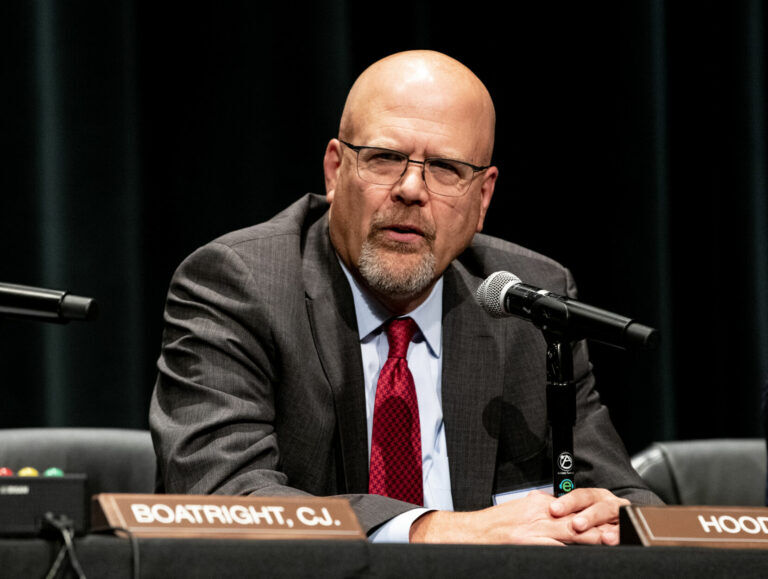
Colorado Supreme Court names William Hood as next chief justice
Michael Karlik
michael.karlik@coloradopolitics.com
Updated 3 days ago
The Colorado Supreme Court has selected Justice William W. Hood III to be the next chief justice, the judicial branch announced on Friday. Hood will succeed Chief Justice Monica M. Márquez, who took over the role in July 2024. “I...

Family of slain Lakewood teacher releases statement as murder suspect makes first court appearance
Matt Kyle
matt.kyle@denvergazette.com
Updated 10 hours ago
Patrick Theodore Barnett, the Lakewood man accused of killing his wife, a Jeffco Public Schools art teacher, made his first court appearance Friday morning as his wife’s family looked on. The status conference hearing was held before District Court Judge...

Appeals court upholds Park County trophy hunting conviction
Michael Karlik
michael.karlik@coloradopolitics.com
Updated 3 days ago
Colorado’s second-highest court clarified on Thursday that a defendant may stand convicted under the state’s trophy hunting laws if he abandons a bear carcass but returns later to remove the meat. Under Colorado law, it is a felony to detach...
Judge grants partial injunction to GEO in fight against state health inspection law
Kyla Pearce
kyla.pearce@gazette.com
Updated 4 days ago
A judge ruled Thursday that The GEO Group does not have to follow parts of a new state law requiring more frequent health and safety inspections at the U.S. Immigration and Customs Enforcement processing center in Aurora. Under the order...

Parker man faces 20 years to life for serial sexual assaults
Nicholas Fogleman
nicholas.fogleman@denvergazette.com
Updated 4 days ago
A 25-year-old Parker man who sexually assaulted three women in 2025 pleaded guilty Wednesday and will serve 20 years to life in prison. Javier Rodriguez-Andrade pleaded guilty to charges stemming from three sexual assaults involving women ages 19 to 24. ...
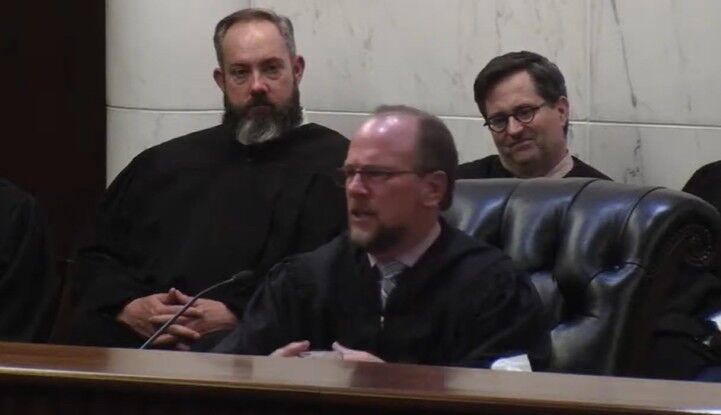
Divided appeals court upholds warrantless DNA collection in Colorado cold case, cautions of government overreach
Michael Karlik
michael.karlik@coloradopolitics.com
Updated 4 days ago
Colorado’s second-highest court upheld the warrantless collection of a suspect’s DNA from a discarded soda can as constitutional on Thursday, while warning about potential abuse of DNA privacy in the absence of further guardrails. By 2-1, a three-judge Court of...
PREV
PREVIOUS

INSIGHTS | Bob Beauprez thinks about mending our broken politics
It’s not that he doesn’t have better things to do. Bob Beauprez has a field full of bison roaming his range in Jackson County, high up in the spotty-cell service country. I was glad, then, to catch up with him recently to get his take on current affairs, especially since Jan. 6, and whether his […]

Trump and Gab CEO accounts compromised during large-scale hack of alternative social media platform
Social media platform Gab, a Twitter alternative known for its far-right demographic, was hacked and two of the people whose accounts were “compromised” include former President Donald Trump and the CEO of the company, Andrew Torba. Distributed Denial of Secrets, a group similar to WikiLeaks, collected more than 70 gigabytes of data from the platform […]