

SLOAN | A ‘just transition’ for windmill workers?

Some unsettling numbers have come out from the U.S. Bureau of Labour Statistics. In their January report, the Bureau reveals that Colorado’s unemployment rate sits at a dismal 8.4%, putting us at fourth worst in the nation.
That’s a disconcerting figure, to be sure, prompting inquiries into what accounts for it. It’s not a geographical phenomenon, certainly; our neighbors Nebraska, Kansas, Utah, and Wyoming are all near the other, more positive, end of that list.
Much, of course, can be attributed to COVID and the government’s response to it, but that doesn’t account fully for the numbers either. A quick glance at the BLS rankings shows, unsurprisingly, that those states with the strictest lockdowns are faring the worst when it comes to unemployment, and a great number of those out of work in our state are people who previously worked in the beleaguered hospitality and entertainment industries – restaurants, bars, theaters, and so on.
Even still, one would expect Colorado to land closer to the middle of the pack if COVID were the sole factor. Colorado’s lockdowns were, and are, harsh, one could argue misguidedly so, but were hardly the strictest in the nation. Colorado’s economy has not, traditionally, been overly dependent on those types of industries, the way, for instance, Hawaii and Nevada, two of three states doing worse than us on the unemployment list (California is the other) normally are.
It’s also not as though we are an historically economically underperforming state either. During the Bill Owens administration Colorado was consistently among the top five states for lowest unemployment rate. Even as recently as 2019, our unemployment rate more or less matched the rest of the country at historic lows.
All of this indicates that we are not recovering as quickly as other states.
It is always useful, when considering the problem of unemployment to remember Say’s Law. Jean-Baptiste Say was the French economist who postulated that a general glut was impossible because the income generated by producing goods equaled the income required to purchase all of those goods. It’s commonly (and somewhat erroneously) reduced to the phrase “production (supply) produces its own demand.” In other words, there can be no overproduction, only misdirected production.
So why do we have unemployment? Well, as generally is the case, something intercedes to mess everything up, and that something is usually government.
The oil and gas industry was for years among the top employers in the state, until some folks in government decided that they didn’t like the oil and gas industry. The flurry of regulations heaped on the industry made it impossible to cope and respond to other external influences. What happened of course was that the industry was effectively legislated out of business.
The plan was for those jobs to be replaced by others in more politically-favored industries like marijuana, whitewater rafting, and building windmills. Only that didn’t happen. In fact, last week one of the state’s largest “green” employers, Vestas, announced it was closing its plant in Brighton which manufactures windmill turbine blades, eliminating some 450 jobs.
A couple years ago, a bill was passed to establish a “Just Transition Fund,” sort of a recognition that in the course of misdirecting the economy, there would be some employment casualties. It was designed to provide a financial cushion for those who were laid off as coal plants were shuttered, and other disruptions were encountered on the road to no-emissions. The question is now floating about, more than half-seriously, of whether or not those freshly unemployed windmill blade makers qualify under the plan? They can’t go down the road and switch over to a job making downhole oil and gas equipment, or sign up as roustabouts. What is the government’s responsibility for workers whose jobs were eliminated when grand designs hit the wall of reality?
In any case, we are left here facing around an 8.5% unemployment rate and the question of what to do about it. Getting back to economic basics seems to be the place to start. Economic growth requires capital, so the logical thing for government to do would be to leave capital alone. That means no more talk about increasing taxes on the enterprising class, no more imposing administrative and financial burdens on small business, no more considerations about increasing the minimum wage (still the quickest way to increase unemployment).
In fact, if government would just take a break for even one year from its interminable pursuit of re-direction, we could put a great deal of that 8.5% back to work, and perhaps Washington D.C. would not feel compelled to spend a few more trillion of our children’s dollars every few months.


Add Lynn Bartels to Colorado’s roll call of legends | Dick Wadhams
Dick Wadhams
dick-wadhams@coloradopolitics.com
Updated 1 day ago
A few weeks after the Rocky Mountain News shut its doors forever in 2009, more than 600 Republicans gathered for the state party’s annual Centennial Dinner. Lamenting the historic significance of the loss of one of Colorado’s great daily newspapers,...

Conservation efforts emphasize the lesser prairie chicken | Rachel Gabel
Rachel Gabel
rachel-gabel@coloradopolitics.com
Updated 1 day ago
Reid DeWalt, deputy director of Colorado Parks and Wildlife, spoke to the Water Resources and Agriculture Review Committee about the Lesser Prairie Chicken and moving conservation forward. He said in 2026, CPW staff counted 77 males on 13 leks, a...

Colorado’s regulations should address policy challenges only as truly needed | Miller Hudson
Miller Hudson
miller-hudson@coloradopolitics.com
Updated 1 day ago
As Colorado approaches its 150th birthday, we should remember its first 100 years were characterized by repeated boom-and-bust economic cycles. Dependence on mineral extraction and agricultural commodity prices was subject to the volatility of these markets. In 1972, as I...

The last, best hope for the Colorado GOP | Kelly Sloan
Kelly Sloan
kelly-sloan@coloradopolitics.com
Updated 1 day ago
If the Colorado Republican Party desires to retain any relevancy, let alone wrest back any of the levers of political control in the state, it needs to elect Barb Kirkmeyer in the June 30 primary. To be sure, Kirkmeyer would...

Understanding Trump’s remarkable political comeback in 2024 | Cronin and Loevy
Tom Cronin Bob Loevy
tom-cronin-bob-loevy@coloradopolitics.com
Updated 1 day ago
President Donald Trump lost the 2020 presidential election. He inspired a riot at the U.S. Capitol to try to overthrow the results of that election. He was impeached by the U.S. House of Representatives and later was indicted for several...

Read Michener’s ‘Centennial’ | Jon Caldara
Jon Caldara
jon-caldara@coloradopolitics.com
Updated 4 days ago
If you’ve been reading my columns, you’ve noticed I’m basically illiterate. I blame my dyslexia and public education, but my Olympic-level laziness could be the driving factor. Anyway, I basically can’t read (and, still, I graduated from CU Boulder, so...

Giving credit to Polis where credit is due | SONDERMANN
Eric Sondermann
eric-sondermann@coloradopolitics.com
Updated 5 days ago
It is an understatement to suggest that Gov. Jared Polis has had a tough couple of months. The bloom was already off the rose and Coloradans were paying far more attention to the choice of his replacement than they were...
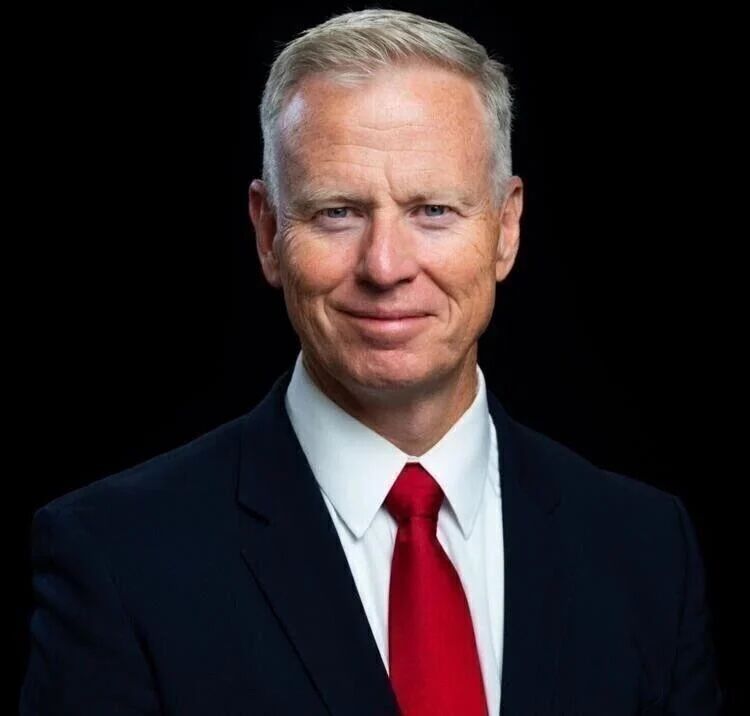
Will one unqualified AG replace another? | George Brauchler
George Brauchler
george-brauchler@gazette.com
Updated 4 days ago
Colorado Democrats are poised to nominate another attorney general candidate with de minimis relevant credentials or experience. Far from disqualifying, Colorado’s recent voting history mirrors that of America in favoring biography over experience, partisanship over policy, and emphasizing what divides...
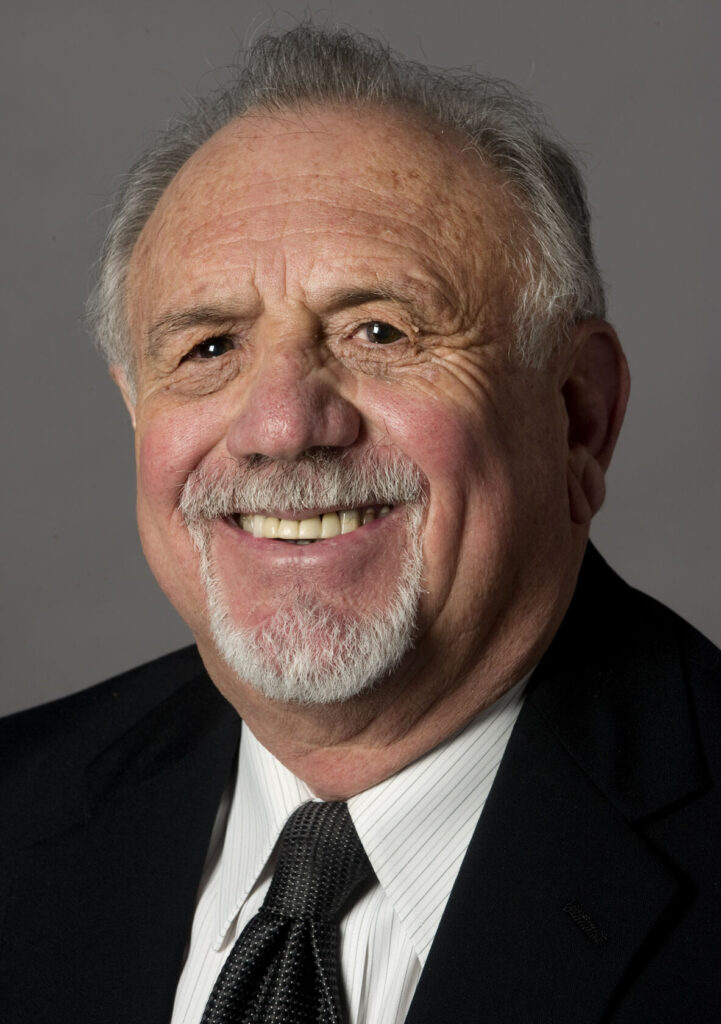
Pueblo’s mayor keeps stirring the pot | Dennis Maes
Dennis Maes
dennis-maes@coloradopolitics.com
Updated 4 days ago
Pueblo Mayor, Heather Graham, has clearly proven to be a disciple of the Donald Trump school of governance. And, like her mentor, she is experiencing the same catastrophic results. The format is to ignore what the electorate approved and expects...
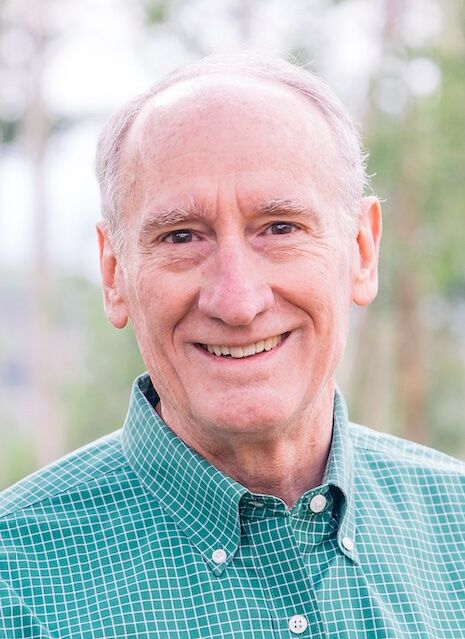
The perils of Colorado’s unregulated abortions | GUEST COLUMN
Colorado Politics
colorado-politics@coloradopolitics.com
Updated 4 days ago
By Tom Perille How did the movement which grew out of a genuine concern for the health and safety of women become the same movement that undermines women’s health and safety today? Despite good intentions, it was a long route...
PREV
PREVIOUS
NOONAN | Teachers between rock and a hard place
Paula Noonan K-12 education in Colorado is a big fat mess. No question. Schools are caught in COVID limbo, with some schools returning to full time, others keeping to a hybrid schedule, and many students continuing online. Teachers are trying to get their vaccinations, which puts to rest complaints from some that they’re resisting returning […]

OPINION | 'Public option' would make 'she-cession' worse
Simon Lomax One of the biggest challenges in politics and public policy is that people spend most of their time working in silos. That is, they work on a narrow range of issues or even just one issue. Reporters have beats. Lawmakers have committee assignments. Subject matter experts usually work in just one discipline. Interest […]