

OUT WEST ROUNDUP | Judge rules coal mine’s climate costs matter; NM could curb gov’s powers

MONTANA
Judge orders US officials to weigh coal mine’s climate costs
BILLINGS – A judge says U.S officials downplayed climate change impacts and other environmental costs from the expansion of a massive coal mine near the Montana-Wyoming border, in a case that could test how far the Biden administration is willing to go to unwind its predecessors’ decisions.
The lawsuit over Montana’s Spring Creek mine hinges in part on an issue central to President Joe Biden’s climate change agenda: Making decisions based on the full costs of fossil fuel extraction, including impacts on a warming planet that are being felt across society.
U.S. District Judge Susan Watters said that under former President Donald Trump, the Interior Department played up the economic benefits of the 2-square-mile expansion of Spring Creek, which opened up development of 85 million tons of coal.
But Watters said in her ruling Feb. 3 that officials failed to fully consider how burning the coal would contribute to climate change, known as the “social cost of carbon,” a concept that places a dollar value on every ton of greenhouse gasses emitted.
Trump in 2017 issued an order for agencies not to use social cost of carbon estimates developed at the end of the Obama administration. Watters said the executive order did not excuse the government from considering those costs if they represent the best science.
The strip mine – Montana’s largest – employs about 250 workers who mined more than 9 million tons of coal in 2020, according to government records.
Watters rejected a request from environmentalists to blocked mining at the site, giving the government until October to do a new analysis of the mine’s climate impacts and other environmental effects.
NEW MEXICO
Lawmakers eye curbing governor’s power in crisis
SANTA FE – Lawmakers from both parties in New Mexico are putting forward bills to curb the governor’s emergency powers during a public health crisis like the coronavirus pandemic.
On Feb. 3, a Senate committee considered a Republican proposal to limit emergency health orders to two weeks and bar unilateral renewals like those used by Democratic Gov. Michelle Lujan Grisham during the pandemic.
Instead, renewals would have to get approval from the Legislature or if it’s not in session, a small group of legislative leaders.
In the House, a bill introduced by Democratic and Republican lawmakers would limit emergency health orders to 90 days. After that, the governor would have to convene a special session and get legislative approval.
The proposals come amid Lujan Grisham’s coronavirus-related emergency health order, which has been renewed multiple times over 11 months with no need for a vote by the House or Senate.
A Lujan Grisham spokeswoman said it’s important governors have “the flexibility and authority” to take immediate action to prevent loss of life in any public health emergency.
Lujan Grisham called two special sessions of the Legislature last year to pass funding bills related to the pandemic, once in June for about a week and again in November for one day.
GOP lawmaker changes affiliation after abortion vote
SANTA FE – A Republican lawmaker in New Mexico who voted in favor of a Democratic-backed abortion bill has left the GOP, officials said.
House Minority Leader Jim Townsend said on Feb. 5 that state Rep. Phelps Anderson of Roswell changed his voter registration to “declined to state” after voting to repeal a 1969 abortion law that bans and criminalizes the procedure.
Anderson, serving his fourth non-consecutive term, sided with seven Democrats in repealing the abortion ban, drawing criticism from his constituents as well as calls for his resignation.
The decision to change his party means Democrats now hold an advantage over Republicans in the House, the Albuquerque Journal reported.
John Block, who founded a conservative news website Piñon Post, said Anderson’s vote is why he was forced out of the Republican Party and called for Anderson’s resignation.
The current New Mexico statute is unenforceable because of Roe v. Wade, the landmark 1973 U.S. Supreme Court ruling. Supporters of the repeal legislation have expressed concern that the high court weaken or overturn the 1973 ruling.
WYOMING
Local courts struggling to keep up thanks to pandemic cuts
Courts in Natrona County are struggling to keep up with a heavy caseload and a backlog of jury trials while pandemic-era budget cuts continue to make adequate staffing impossible.
District Attorney Dan Itzen said his office is now down two staffers – a legal assistant and a receptionist. He also expected to have to cut an attorney when the state slashed budgets in the fall, but luckily avoided that blow.
Itzen’s office processes roughly 3,000 cases every year. Now, he said, the team of 10 attorneys and seven legal assistants is coming in early and working late to stay on top of that caseload.
As of Feb. 3 at the district level, Itzen said that just over 100 backlogged jury trials were waiting for their day in court.
The office has had to solicit help from other agencies, namely the municipal court in Casper, to make sure everything gets done. Casper Police Chief Keith McPheeters said the district attorney’s office sent him a memo in June detailing a list of misdemeanors that should be dealt with on the city level if possible, in an attempt to lighten the circuit and district courts’ loads.
Those include charges for shoplifting, assault, battery, first-time DUI or marijuana possession, drunk pedestrians, property destruction, check fraud, and defrauding an innkeeper, among others.
Usually, Itzen said, it’s up to the officers on the scene of an arrest to decide where to send a particular case. Now, according to McPheeters, if the crime is covered by a part of Casper’s municipal code, it should stay in municipal court.
IDAHO
Bill would require legislative OK to remove Confederate monument
BOISE – The Republican-dominated Idaho Legislature could have the final say before Idahoans can remove a Confederate monument if a newly proposed bill passes.
Republican state Rep. Doug Okuniewicz on Jan. 29 introduced a measure in committee that would require approval from lawmakers via a resolution for anyone who wants to remove a monument or rename something that mentions a figure or event from history.
Okuniewicz said House Bill 65 is intended to protect monuments and prevent local jurisdictions from making what he termed “rash” decisions.
The bill would seize local control from any individual, entity or jurisdiction – such as a school district or city – that wanted to remove a controversial monument or marker, or rename something that was dedicated to a historical figure.
Okuniewicz cited an example in San Francisco, where a school district voted to rename 42 schools that were dedicated and named after people some said were associated with slavery or colonization – Abraham Lincoln and George Washington among them.
Democratic state Rep. John Gannon said the bill could be burdensome on municipalities if a city wants to simply move a monument or needs to rebuild a school.
One of Boise’s largest churches, the Cathedral of the Rockies, removed a stained-glass window featuring Confederate Gen. Robert E. Lee last summer, part of a wave of such action across the country after protests erupted over the death of George Floyd and other African-Americans at the hands of police.
State Rep. Chris Mathias, a Democrat and a U.S. Coast Guard veteran and the only Black Idaho House member, said during the committee meeting that he believes it’s a “good bill,” but pointed out that figures portrayed in some Idaho monuments might not even have local ties, possibly undermining an argument that the bill prevents anyone from “erasing” history.



Colorado Democrat John Hickenlooper lands support from trio of local labor unions
Ernest Luning
ernest.luning@coloradopolitics.com
Updated 11 hours ago
Three local labor unions endorsed U.S. Sen. John Hickenlooper’s bid for reelection this week, calling the Colorado Democrat a proven champion of the state’s workers and their rights. Hickenlooper’s campaign announced endorsements on Tuesday from SMART Sheet Metal Workers Local...
Colorado legislators pass bill to strengthen sex crime victim protections
Jenny Deam
jenny.deam@gazette.com
Updated 10 hours ago
A Colorado bill that supporters say would strengthen victim protections and mandate law enforcement training on how trauma can affect survivors of sex crimes and domestic violence is on its way to Gov. Jared Polis’ desk for signing. Senate Bill...
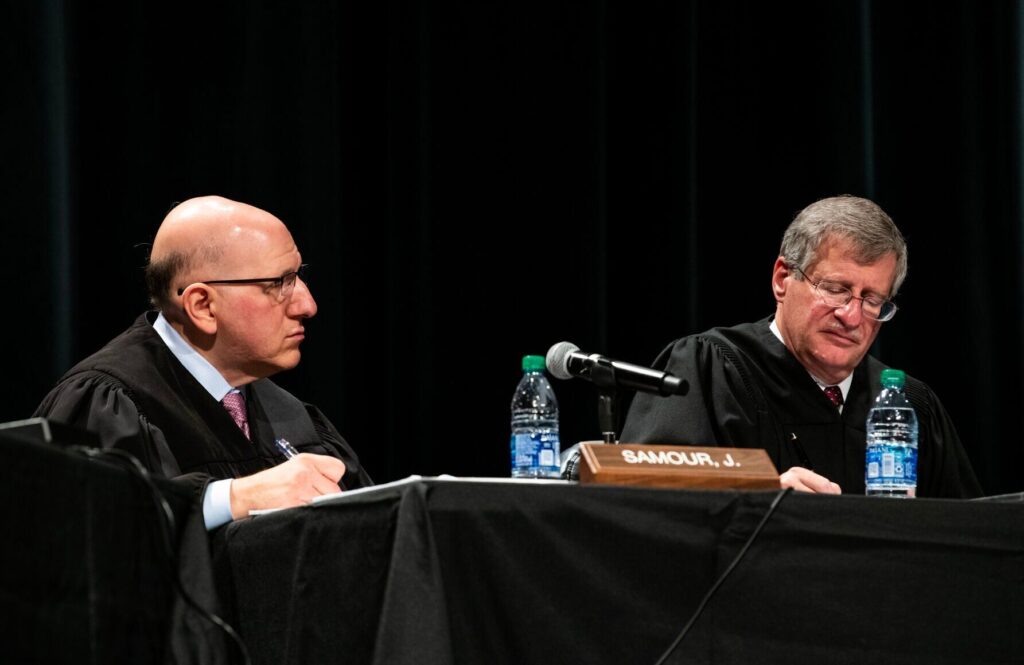
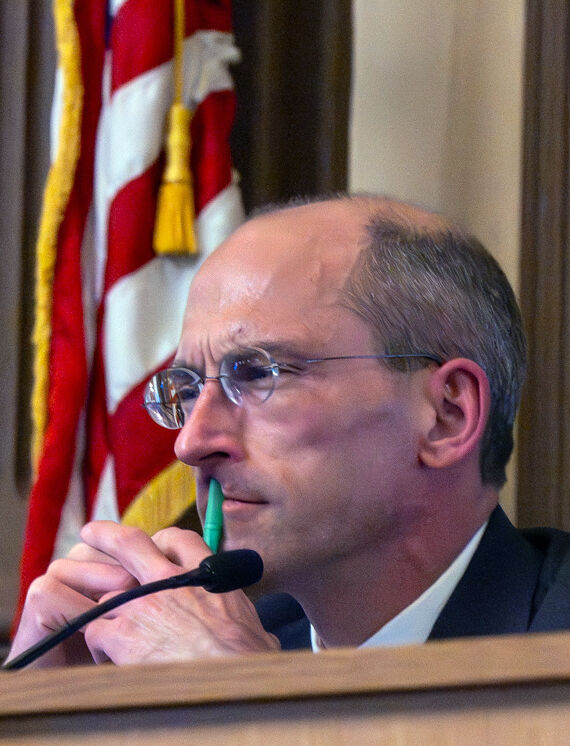
Colorado justices acknowledge judge’s misunderstanding of law in eminent domain case
Michael Karlik
michael.karlik@coloradopolitics.com
Updated 12 hours ago
Members of the Colorado Supreme Court appeared to agree on Tuesday that a Douglas County judge incorrectly believed he lacked the authority to allow a property owner to pursue evidence challenging a government entity’s legal right to take the property...
Colorado legislators pass bill that sponsors say would strengthen sex crime victim protections
Jenny Deam
jenny.deam@gazette.com
Updated 11 hours ago
A Colorado bill that supporters say would strengthen victim protections and mandate law enforcement training on how trauma can affect survivors of sex crimes and domestic violence is on its way to Gov. Jared Polis’ desk for signing. Senate Bill...
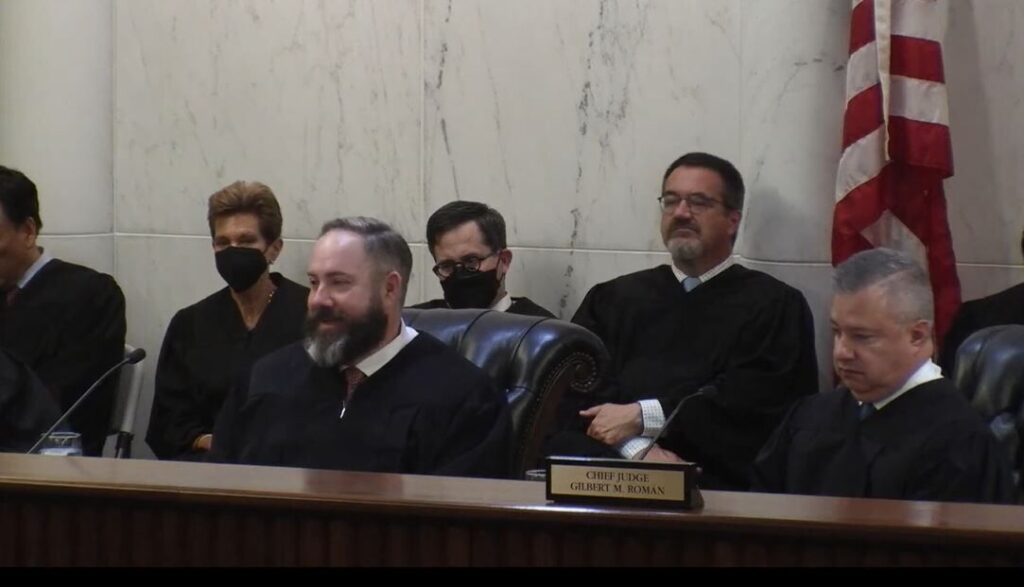
Municipal camping bans do not violate Colorado Constitution, says appeals court
Michael Karlik
michael.karlik@coloradopolitics.com
Updated 17 hours ago
Municipal ordinances that ban people from living on public property do not violate the Colorado Constitution’s prohibition on cruel and unusual punishment, the state’s second-highest court ruled on Thursday. A three-judge Court of Appeals panel agreed that it was appropriate...

Colorado legislature wraps up tough budget year
Thelma Grimes
thelma.grimes@coloradopolitics.com
Updated 1 day ago
Colorado lawmakers are wrapping up their work on Wednesday, closing out a year defined by the lack of fiscal flexibility, woes over Medicaid spending and a staccato of action on a host of issues, ranging from artificial regulation to a...

10th Circuit again dismisses ex-prison employee’s challenge to workplace DEI training
Michael Karlik
michael.karlik@coloradopolitics.com
Updated 1 day ago
The Denver-based federal appeals court dismissed a second lawsuit on Monday brought by a former Colorado Department of Corrections employee who was offended by an equity training module and had alleged it created a hostile work environment. In 2023, U.S....

AI’s rapid growth spurs regulatory reaction in Colorado
Marissa Ventrelli
marissa.ventrelli@coloradopolitics.com
Updated 11 hours ago
The 2026 legislative session was marked by a major push to regulate artificial intelligence, a technology advancing at breakneck speed. Colorado is at the forefront of AI policy, becoming the first state to pursue regulation on “algorithmic discrimination” by passing...

As Colorado’s federal judges churn through immigration petitions, Domenico’s cases sit undecided
Michael Karlik
michael.karlik@coloradopolitics.com
Updated 11 hours ago
Colorado’s U.S. District Court judges have spent months pushing out decisions in hundreds of immigration detention cases and largely siding with detainees, but one judge has barely touched his caseload. Chief Judge Daniel D. Domenico has only issued orders in...

Bill on firearm barrel sales withdrawn after veto threat from Colorado governor
Marissa Ventrelli
marissa.ventrelli@coloradopolitics.com
Updated 1 day ago
A bill that would require firearm barrels to be sold in person by a federally licensed firearms dealer was pulled by its sponsors, who said they were all but told that Gov. Jared Polis would veto the measure. Sponsored by...
PREV
PREVIOUS
SONDERMANN | Impeachment, incitement, insurrection and an icy Saturday
An icy Saturday morning with the television tuned to the final chapter of a Senate impeachment trial can make for clarifying and compelling viewing. The show is now over, and the verdict is in. Donald Trump remains disgraced, but he was acquitted in terms of this process. Booyah for him. Booyah for a Republican Party […]

Jena Griswold joins bipartisan coalition condemning threats against election officials
Colorado Secretary of State Jena Griswold joined the National Association of Secretaries of State in a bipartisan coalition to denounce threats against election officials following the 2020 election. State election officials throughout the country have faced threats of violence since the election, inspired by former President Donald Trump’s repeated claims that the election results were […]