

INSIGHTS | Walking through the stockyard of history at the National Western
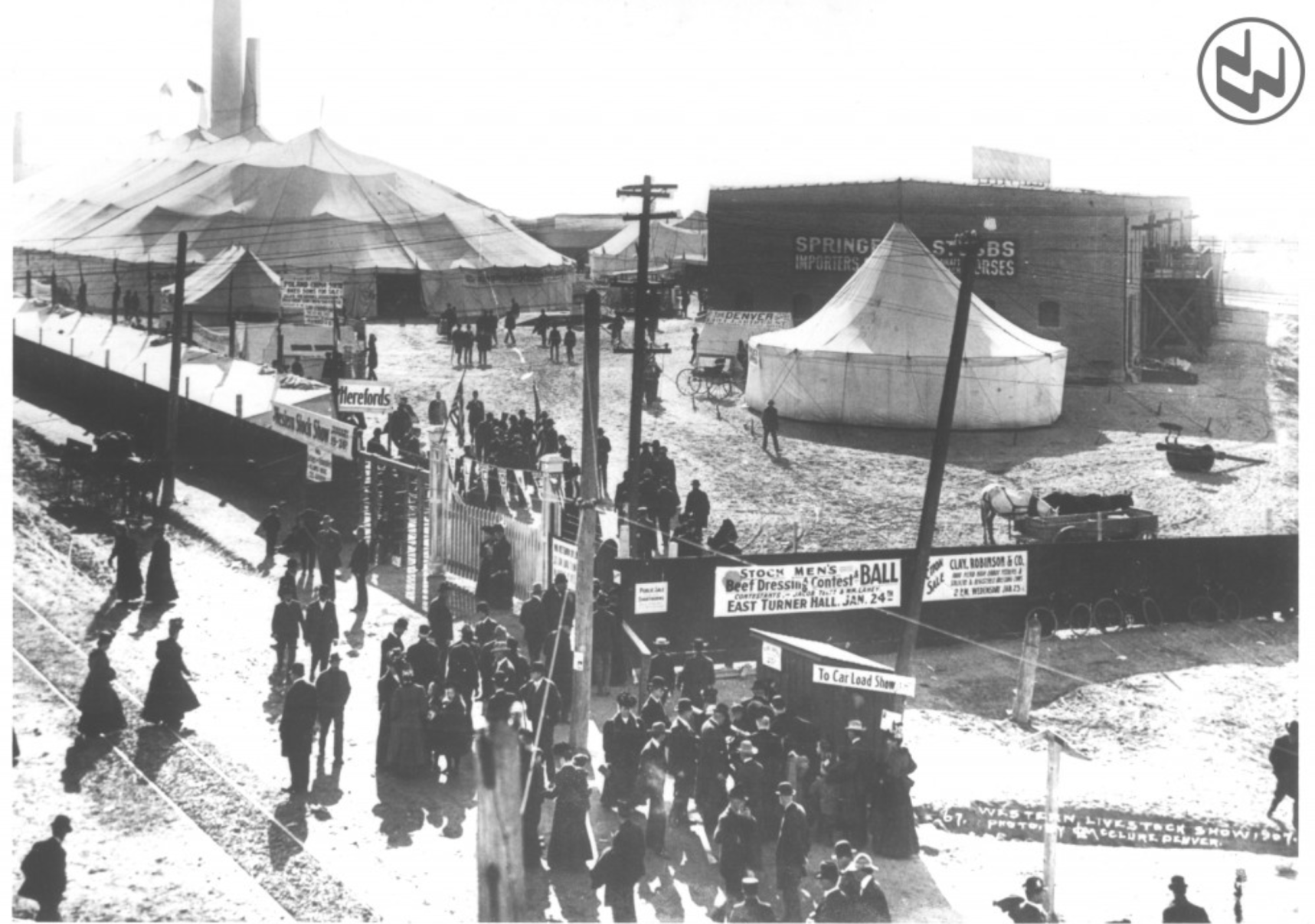
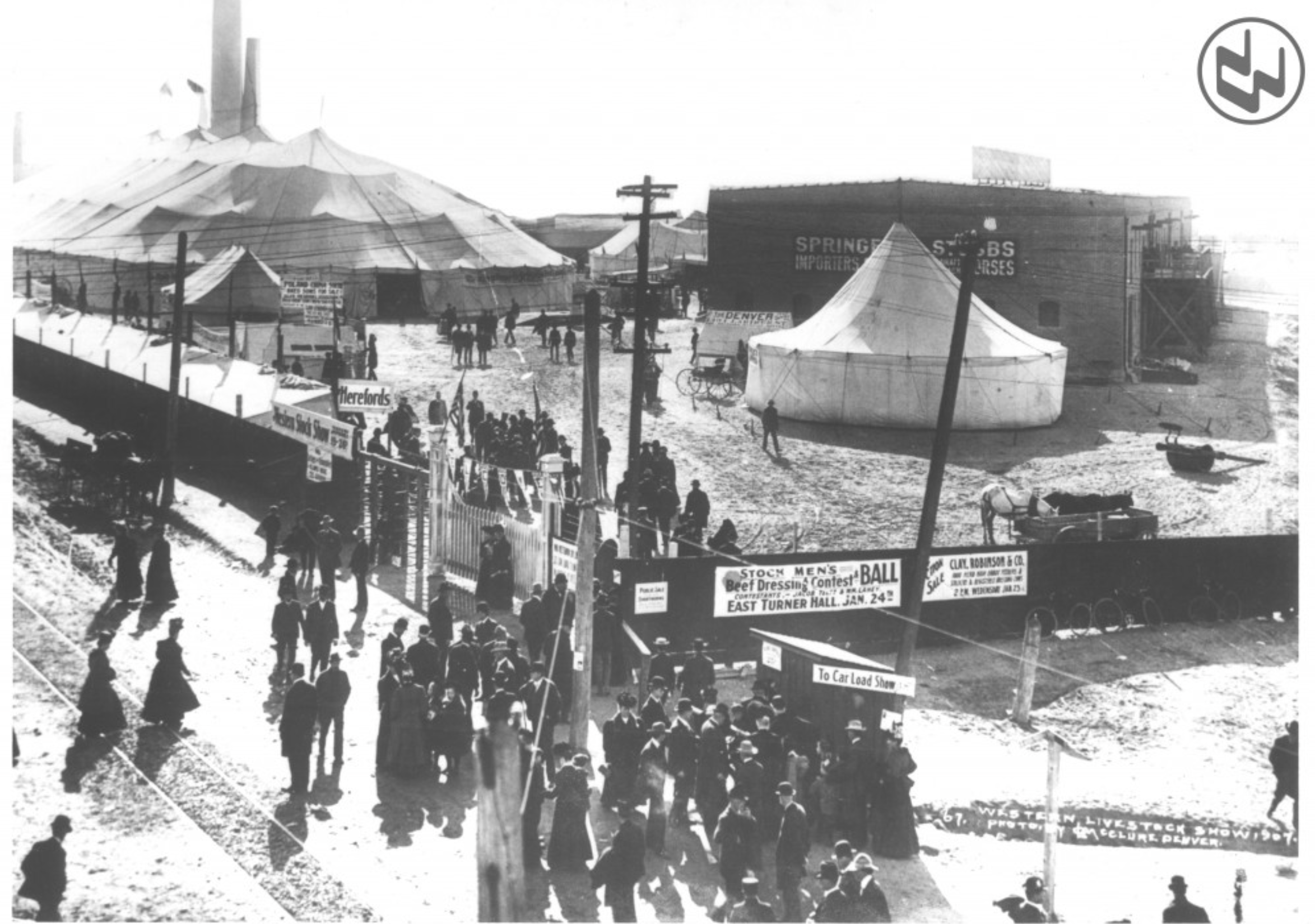
The first flakes of the new year began to fall just as I began to walk around the National Western Center on a Saturday morning, a sparse lot of vehicles parked here and there.
If this 100-acre hillside could talk, I thought, it’d tell stories about a billion or so cow pies that fell on its head, the greenhorns, the stockmen and the cowpunchers it has known.
It could tell about that time I wrote a story about a monkey that rides a dog that herds cattle, the damnedest thing I ever saw. His name was Whiplash, the Cowboy Monkey. Since I was a journalist of some note in this city at the time, I felt entitled to meet the monkey. I talked my way to its handler, but the monkey was resting and wasn’t taking visitors. It was an out-of-town monkey, I told myself.
In two decades, I’ve walked all over this place. There’s hardly an inch of it I’m not familiar with, or where I couldn’t attach a memory.
There’s only been one other time like this since the National Western Stock Show began in 1906, though.
In 1915, the annual spectacle was iced for a virus taking livestock, called hoof and mouth disease, which today is considered a bioterrorism threat.
It broke out in Michigan the summer before, then spread like wildfire to 20 states through the Chicago Stockyards. By the time it faded out that year, 172,000 cows, sheep and pigs were dead, a figure higher than the human population of Wyoming at the time.
Denver was still a dusty capital city trying to figure out its national identity. Leaders knew if they hoped to emulate the great metropolises of the east, they wouldn’t get there on the booms and busts of hardrock mining, or the grifters and madams on Market Street.
A generation before, railroad barons plotting their lines called Denver “too dead to bury.” Once they yielded, the city became a cow town. The stockyards and stables were effectively the city hall and chamber of commerce. Denver has traded more cows out than it might ever recoup in vapes and joints.
Red Rocks Amphitheater opened the same year as the stock show, and so did the Denver Mint, two years into the first term of Mayor Robert Speer, who would later die in the flu pandemic of 1918.
It was a year before the Mammoth Roller Skating Rink opened near East High School on East Colfax Avenue. We know it today as the Fillmore Auditorium, where I’ve seen more shows than I could name.
The stock show grounds divide the Globeville and Elyria-Swansea neighborhoods, always home to North Denver’s working class. The stench of a massive stockyard nearby smelled like money, and once a year the cowboy carnival arrived.
Yet, soon after it began, the National Western became a red-letter social event. People came to town, along with livestock, from all over the West to see and be seen.
I caught up with my good friend Paul Andrews, the show’s president and CEO, the Friday before its normal opening. I know the man pretty well, so I can tell you that putting him on the sideline this time of year is like locking the gate in the bull-riding arena.
The show courses through his DNA.
But let me back up: Before Paul took the reins at the National Western in 2011, he was the executive vice president for Kroenke Sports Enterprises, plying his trade with human athletes.
He grew up in Lakewood and graduated from Alameda High, while he worked like a mule on his grandfather’s 5,500-acre ranch north of Golden, before shipping off to the University of Wyoming.
His grandfather, the late Paul Pattridge, exhibited at the stock show for 44 years. He was inducted into the American Polled Hereford Association Hall of Fame, chaired the Jefferson County 4-H Foundation and served on the stock show’s board of directors.
The show is etched painfully into the family story, as well. Paul Pattridge Jr., the stock show chief’s uncle, was flying from his home in Mississippi to the National Western in 1964 to once again serve as the show’s veterinarian, when the plane went down and he was killed.
If anybody knows about the show’s generational legacy, well, Paul has lived it.
“It’s a long tradition with my family, like a lot of people’s family, that I’m excited to carry on,” he said. “I hope there’s somebody making decisions about new facilities at the stock show in another hundred years.”
The National Western is undergoing a major redevelopment using a tourist tax approved overwhelmingly by city voters in 2015. The progress, like everything else, is on hold while the economy is stalled out.
Someday soon the yards and new events center will open, and when it does you can spot salvaged bricks and wood from the original grounds prominent in the design.
“That fabric is going to be woven into all those new areas,” Paul said, “so we can honor the past and celebrate the future.”
The National Western is part of the fabric of our city, and to live here you need to know that and experience that and, if you can, feel that.
I can’t wait for 2022.


Colorado justices confirm lawyers may ‘borrow’ allegations from elsewhere
Michael Karlik
michael.karlik@coloradopolitics.com
Updated 6 hours ago
The Colorado Supreme Court ruled on Monday that plaintiffs’ lawyers can use allegations made elsewhere to bolster their own clients’ claims, so long as the attorney first performs some degree of investigation into the “borrowed” assertions. Under Colorado’s rules for...
Colorado legislators propose $46.8 billion budget, driven by Medicaid costs
Marianne Goodland
marianne.goodland@coloradopolitics.com
Updated 8 hours ago
The six-member panel of legislators in charge of crafting the state budget has now turned over its plan to the Colorado legislature, proposing to spend $1.5 billion more for the Medicaid program. The increase is driven by Medicaid costs, which...
Governor signs bill expanding who can petition for weapons restrictions
Marissa Ventrelli
marissa.ventrelli@coloradopolitics.com
Updated 9 hours ago
Gov. Jared Polis on Monday signed a bill into law expanding who can ask a judge to temporarily restrict a person’s access to firearms. Established in 2019, 0Colorado’s extreme risk protection law (ERPO) initially allowed a family member or law...
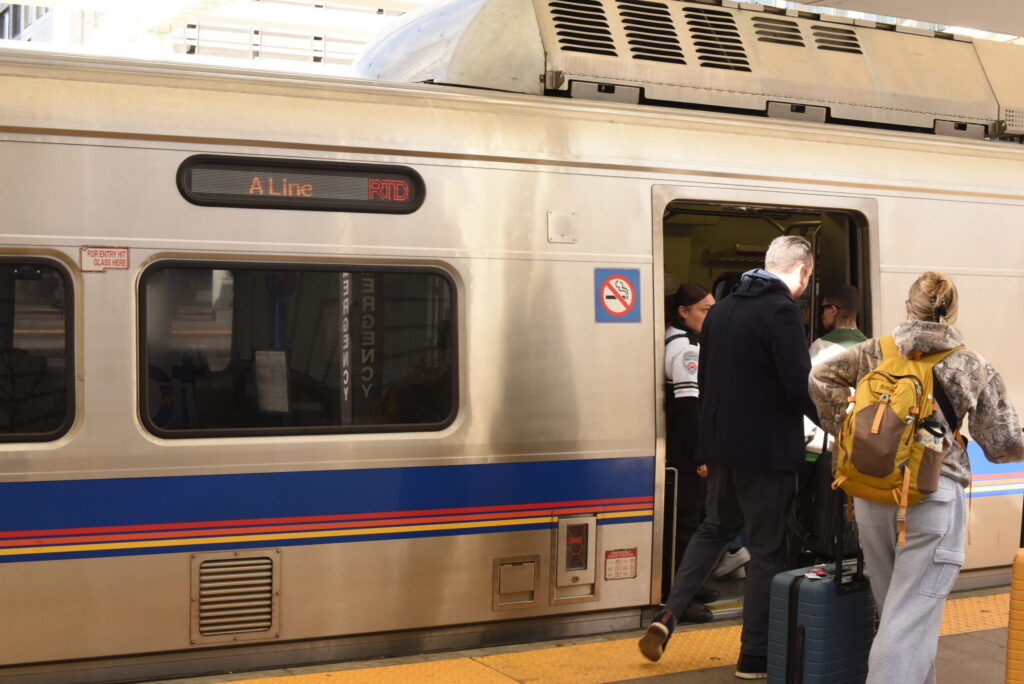
Colorado justices restore RTD subcontractor’s award, reject ‘drastic’ view of public works law
Michael Karlik
michael.karlik@coloradopolitics.com
Updated 11 hours ago
The Colorado Supreme Court on Monday restored a $5.7 million award to a company that helped build a commuter rail line and, in doing so, rejected a view of state law that would nullify a subcontractor’s entitlement to any compensation...
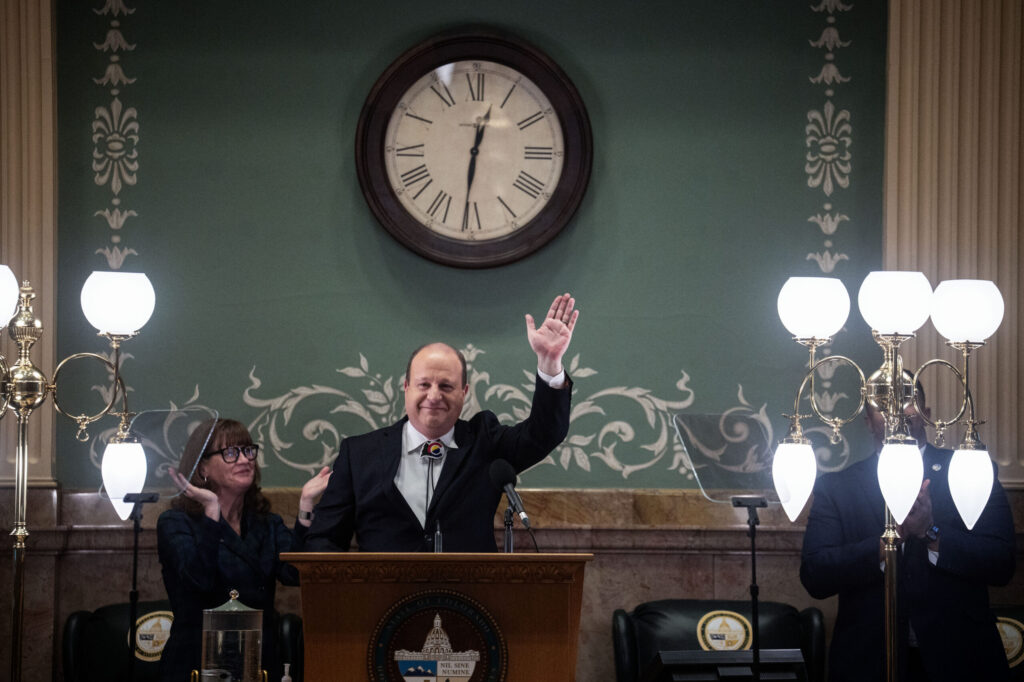
As Colorado passes 6 million residents, housing initiatives take center stage
Marianne Goodland
marianne.goodland@coloradopolitics.com
Updated 10 hours ago
New Census data confirming Colorado’s population has topped six million is fueling renewed debate over Gov. Jared Polis’ housing agenda, as he tied the population increases to home construction. The governor said the counties experiencing the largest increases in new...

Congress urged to open antitrust investigation into Apple and OpenAI over ‘left-leaning bias’
Kaelan Deese, Washington Examiner
kaelan.deese.washington.examiner@gazetteedit.wpenginepowered.com
Updated 12 hours ago
A conservative legal group founded by senior White House adviser Stephen Miller is urging Congress to investigate a partnership between Apple and OpenAI, arguing the companies have effectively locked millions of people into a single, politically biased artificial intelligence system....

Trump threatens jail time over downed US fighter jet ‘leak’
Christian Datoc and Mabinty Quarshie, Washington Examiner
christian.datoc.and.mabinty.quarshie.washington.examiner@gazetteedit.wpenginepowered.com
Updated 12 hours ago
President Donald Trump threatened jail time Monday for the journalist who first reported that an airman was still missing after a fighter jet went down in Iran last week. The high-risk and eventually successful attempt to rescue the weapons officer...
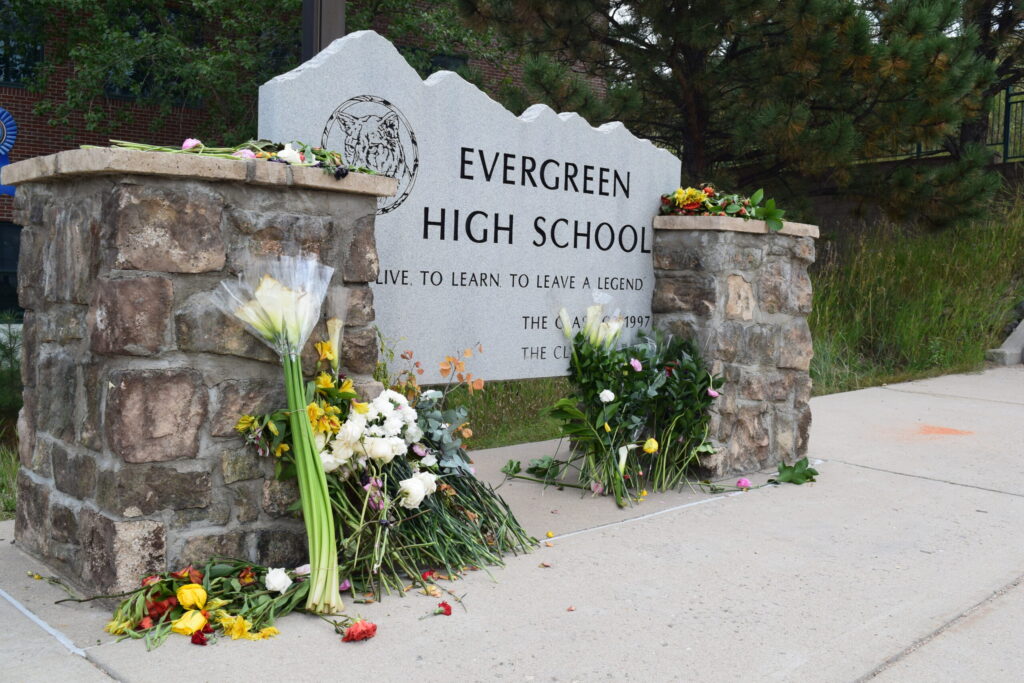
Bill to accelerate police access to online data clears Colorado committee
Marissa Ventrelli
marissa.ventrelli@coloradopolitics.com
Updated 8 hours ago
A proposal to speed up law enforcement’s access to social media data is advancing in the Colorado Legislature, drawing testimony from the residents of Evergreen, where a school shooting took place, and questions from opponents worried about privacy and constitutional...
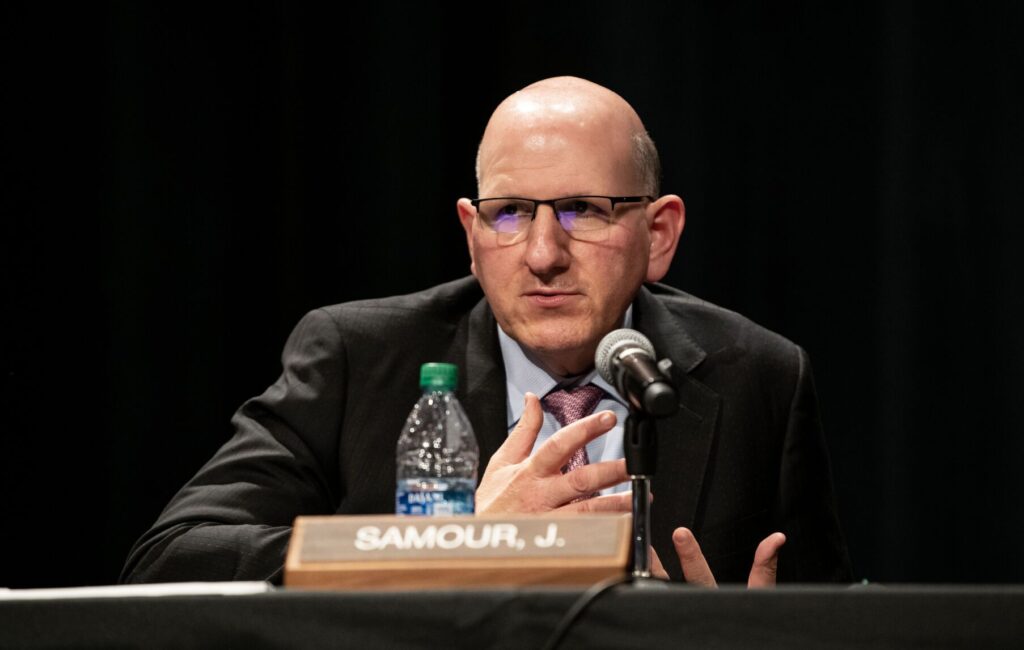
El Paso County defendant’s speedy trial rights violated, Colorado justices find in overturning convictions
Michael Karlik
michael.karlik@coloradopolitics.com
Updated 6 hours ago
The Colorado Supreme Court concluded on Monday that an El Paso County prosecutor made an unjustified decision to file a mid-case appeal, pushing the trial beyond the legal deadline and requiring that the defendant’s convictions be overturned. In Colorado, the...

SCOTUS decides Colorado case, state’s newest justice authors first opinion | COURT CRAWL
Michael Karlik
michael.karlik@coloradopolitics.com
Updated 15 hours ago
Welcome to Court Crawl, Colorado Politics’ roundup of news from the third branch of government. The nation’s highest court decided a First Amendment case out of Colorado, plus the state’s newest justice issued her first opinion since joining the Colorado...
PREV
PREVIOUS
Ethnic disparities emerge in Colorado’s first month of COVID-19 vaccinations
In the first month of administering coronavirus vaccinations to Coloradans, the portion of whites who have received a vaccine is more than triple than that of Hispanics, more than twice that of Blacks and 50% higher than that of Asians. The differences in vaccination rates illustrates another way minorities have been disproportionately affected by the […]
Wilma Webb: We have to stay focused on the dream of Martin Luther King Jr.
Against a backdrop of heightened racial tension, widespread political unrest and a global pandemic that, for the first time in 36 years, is keeping thousands from joining together to celebrate Martin Luther King Jr. in Denver, this year’s holiday looks and feels unlike any other. Still, the reverend’s calls for racial, social and economic justice […]