

Justices question Denver hospital’s desire to suppress public records in patient injury lawsuit

Although the state’s health department released confidential hospital documents inadvertently in response to an open records request, Colorado’s Supreme Court justices appeared hesitant on Wednesday to overturn a Denver judge’s order that prevented the facility from blocking former patients from using them in a lawsuit.
Porter Adventist Hospital in central Denver, which Centura Health operates, is defending against a lawsuit by more than 200 former patients and, in some cases, their surviving spouses, who allege injuries from improperly sterilized surgical equipment. In responding to an open records request in 2018 from the plaintiffs’ attorneys, other law firms and the media, the Colorado Department of Public Health and Environment released hospital documents that Porter Adventist considered confidential because they contained quality management details.
CDPHE and the attorney general’s office conceded this was a mistake, and Porter Adventist asked Denver District Court Judge Morris B. Hoffman for a protective order preventing the plaintiffs from using the released documents in their lawsuit. Hoffman said the hospital had not clearly laid out why it deserved confidentially, or privilege, for each document.
“There are no guidelines for how to handle this type of thing. In my 25 years I’ve never seen CDPHE disclose documents that are inappropriate,” Deanne McClung, an attorney for the hospital at Hall & Evans, told the justices. She would have preferred Hoffman to review the materials behind closed doors before making a confidentiality judgment.
However, the members of the court pressed McClung to explain why Hoffman was wrong to reject the hospital’s request, especially considering Porter Adventist did not provide him with full documentation.
“It’s your burden of proof. Why is it on the district court?” asked Justice Richard L. Gabriel at oral argument.
“What legal obligation did he have to drill down on this with you?” echoed Justice William W. Hood, III. “What should he have done instead?”
“There’s all other kinds of privilege where that’s not the procedure,” said Justice Maria E. Berkenkotter, a former trial court judge who participated in oral argument for the first time this week following her recent appointment.
In 2019, news reports publicized that a state investigation documented 76 instances of contaminated surgical instruments and trays brought into operating rooms throughout 2017 and 2018. The hospital did not track data or change its operations in a timely manner, according to The Denver Post. State documents included descriptions from managers of sterilization backlogs, understaffing and no procedural changes following contamination problems.
“Those public reports, which petitioners now seek to suppress, detail several incidents of bugs, bone, blood and other bioburden on surgical instruments that were supposedly going to be sterile,” said Sean Connelly, an attorney for the plaintiffs, using a medical term for bacterial contamination.
Connelly accused the hospital of actually pursuing a “suppression order” for the facts of the case. David Woodruff, Connelly’s co-counsel, argued that the hospital should have asserted confidentiality when it turned over documents to the health department in the first place, and in any event waited too long after the release to ask the court for intervention.
“They were talking to the attorney general’s office, in my opinion trying to manipulate the attorney general’s office into reaching a conclusion that those documents had been inappropriately disclosed,” Woodruff explained on Wednesday. “However, the attorney general’s office doesn’t have the ability to do that.”
He added that it would be unfair to the plaintiffs who had built their case on the approximately 400 contested documents for the court to deny their use as evidence.
The lawsuit alleges that, among other injuries, one patient died after a 2017 surgery due to an infection. The hospital notified 5,800 patients in 2018 that sterilization issues could have affected them during their surgeries.
The case is Camp et al. v. Adventist Health System Sunbelt Health Corporation et al.


Federal judge partially allows second World Cup trafficking lawsuit to move forward
Michael Karlik
michael.karlik@coloradopolitics.com
Updated 2 hours ago
A federal judge allowed some claims to move forward last month against companies operating out of Colorado that allegedly participated in a human trafficking venture involving Filipino laborers who constructed facilities for the 2022 World Cup in Qatar. There are...

Melania Trump hails first conviction under new law banning AI-generated child sex abuse images
Rena Rowe, Washington Examiner
rena.rowe.washington.examiner@gazetteedit.wpenginepowered.com
Updated 3 hours ago
First lady Melania Trump highlighted on Tuesday the first arrest tied to a law she championed targeting cyberstalking, threats of violence, and non-consensual explicit content generated using artificial intelligence. James Strahler II, 37, of Columbus, Ohio, pleaded guilty Tuesday to...
Federal judge dismisses lawsuit seeking to force Colorado secretary of state to screen out scam filings
Michael Karlik
michael.karlik@coloradopolitics.com
Updated 4 hours ago
A federal judge dismissed a lawsuit last week that sought to require Colorado’s secretary of state to verify corporate filings in the state’s database to reduce the risk of future fraud. Bernard Butts of Florida, who was 83 when he...

Colorado Democrats eye new fee on home insurance companies
Marissa Ventrelli
marissa.ventrelli@coloradopolitics.com
Updated 41 minutes ago
Colorado Democrats are reviving a proposal to levy a new fee on home insurance companies, with the aim of distributing grants to fund “resilient” roofing. Introduced by Sen. Kyle Mullica, D-Thornton, Senate Bill 155 creates a government “enterprise,” which would...

Poll: Colorado voters oppose legalizing prostitution, support suspending wolf reintroduction
Marissa Ventrelli
marissa.ventrelli@coloradopolitics.com
Updated 33 minutes ago
A majority of Colorado residents — 61% — oppose legalizing prostitution in the state, an idea that lawmakers floated earlier in the legislative session before pulling their proposal. Just over half of Democratic respondents said they would support legalization, while...
Federal judge finds no constitutional violation by Huerfano County well inspectors
Michael Karlik
michael.karlik@coloradopolitics.com
Updated 6 hours ago
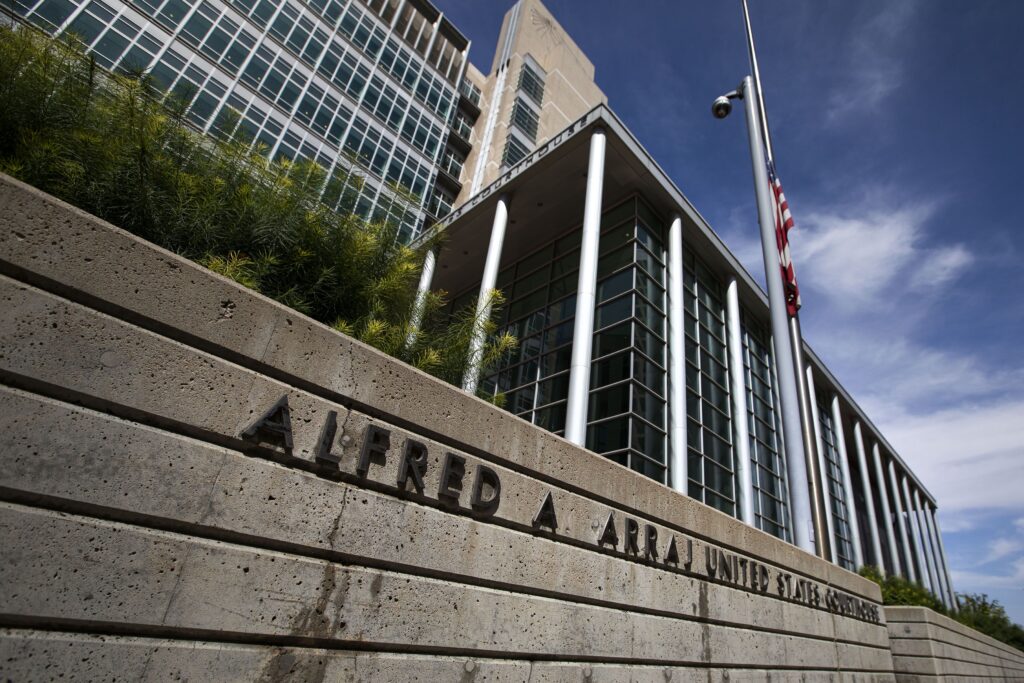
A federal judge concluded last month that two Huerfano County employees did not engage in an unconstitutional search when they approached the plaintiffs’ camper within 40 feet to investigate a potential code violation. In July 2021, the county’s building inspector,...

Colorado House opens debate on $46.8B budget already showing strain
Marianne Goodland
marianne.goodland@coloradopolitics.com
Updated 6 minutes ago
With rising Medicaid costs, no dollars set aside for new legislation and dozens of bills still seeking funding, Colorado lawmakers on Wednesday began debating the proposed $46.8 billion budget that is already proving difficult to keep on track. By the...

Colorado House Democrats focus on rising prison costs amid declining crime rates during budget discussion
Marissa Ventrelli
marissa.ventrelli@coloradopolitics.com
Updated 1 day ago
Colorado’s House Democrats pressed budget writers Tuesday over a nearly $70 million increase for the Department of Corrections, questioning why the state plans to add 941 prison beds and explore new prison capacity at a time when crime rates are...

Federal judge warns of increasingly inadequate immigration bond hearings
Michael Karlik
michael.karlik@coloradopolitics.com
Updated 21 hours ago
A federal judge ordered the immediate release of a man in immigration custody last week and, seemingly for the first time in Colorado, warned that the government is increasingly conducting inadequate bond hearings for detainees. Colorado’s federal trial court is facing...

Inside the GOP caucus: Colorado legislator explains why a bigger budget still means cuts
Marianne Goodland
marianne.goodland@coloradopolitics.com
Updated 23 hours ago
Tasked with explaining a budget driven by rising caseloads, shifting federal dollars and a $1.5 billion shortfall, Joint Budget Committee member Rep. Rick Taggart spent Tuesday’s Republican caucus meeting detailing why the 2026–27 spending plan appears larger on paper, even...
PREV
PREVIOUS

New Colorado unemployment insurance tech is better at flagging fraud
Officials at the Colorado Department of Labor and Employment have been purging fraudulent claim numbers from data reported to the public, which is good news that the new unemployment claims aren’t as high as originally thought. But there’s bad news in the fact thieves are still trying to game the system and have succeeded in […]
Biden unveils $1.9 trillion COVID-19 response plan
President-elect Joe Biden promised those struggling amid the coronavirus pandemic that help was on the way. During a prime-time address on Thursday, Biden will outline his $1.9 trillion “American Rescue Plan,” but his team shared details with reporters beforehand. The proposal comes after Congress agreed to a $900 billion bipartisan COVID-19 deal last December as […]