

Hancock, 35 other American mayors ask Biden administration to give vaccines directly to cities
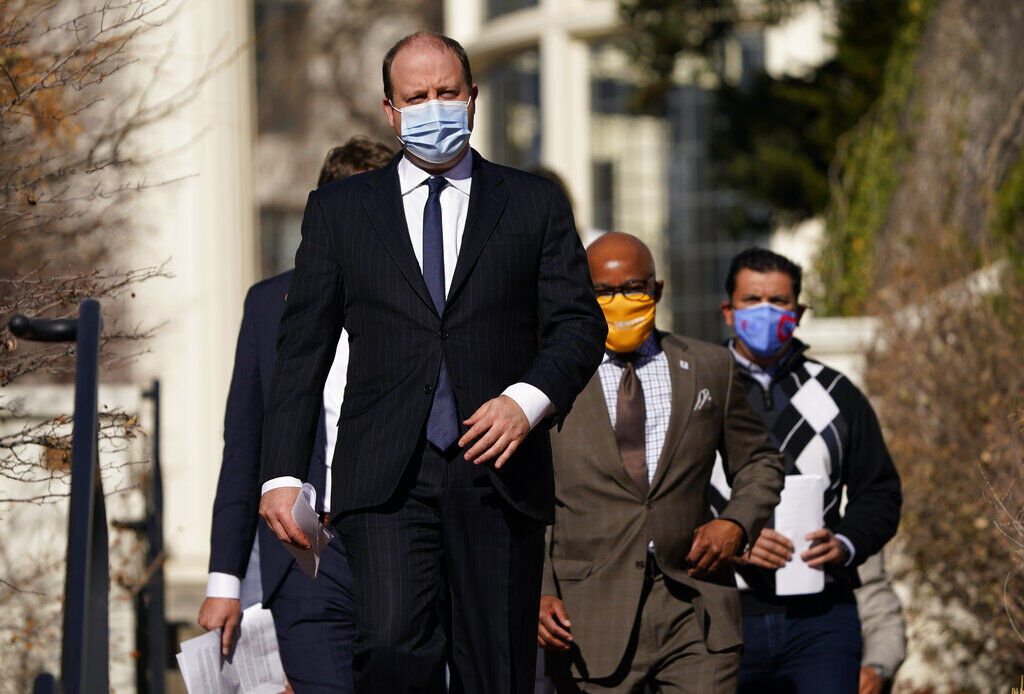
In an effort to better distribute the coronavirus vaccine to under-served communities, Denver Mayor Michael Hancock and counterparts from 35 other cities asked the incoming Biden administration to distribute the vaccine directly to cities, rather than to states.
“We hope to work closely with you to ensure your administration can meet its stated goal of vaccinating 100 million Americans in your first 100 days,” the mayors, included Aurora’s Mike Coffman, wrote. “However, to meet this ambitious and crucially important challenge, cities need direct access to vaccines, funding to support scaling the distribution infrastructure, and funding to support engagement and outreach to disadvantaged communities that are ‘vaccine hesitant.'”
Hancock announced that he’d signed onto the letter at a press conference Thursday afternoon. He and Bob McDonald, the executive director of Denver’s Department of Public Health and Environment, said that they were working on the city’s plan to distribute the vaccine to more members of the general public. They said that effort will use smaller, community-based sites that are more accessible to low-income and under-served communities, which have been uniquely and disproportionately hammered by the pandemic.
Though there will likely be mass-vaccinating sites in Denver, Hancock and McDonald indicated that those sites will be run by institutions like UCHealth, rather than by the city itself. The officials said that though mass-testing sites had been utilized earlier in the pandemic, such locations had barriers to access for those disadvantaged groups.
For one, McDonald said, they can be difficult to access because they require travel out of those communities. For another, they often require registration, a process that isn’t accessible to all.
In their letter, the mayors wrote that they knew their cities the best, and giving them direct access will give them the ability to better reach those specific groups and neighborhoods.
“Even for cities like Chicago that are receiving their own vaccine shipments, the doses received are woefully inadequate and simply will not be enough to reach Brown and Black communities that have been disproportionately impacted by COVID-19,” they wrote.
“While the traditional healthcare network will be the answer to ongoing vaccinations in the long term, by allocating vaccines directly to cities and providing funding to support their efforts, more vaccines can be administered in a more quick and efficient manner.”
Both Denver and state officials have said they’ll have specific plans and efforts devoted to reaching disadvantaged communities and those that are particularly vaccine hesitant, like members of the Black community. Officials have said that outreach will include incorporating community leaders and groups, and earlier this week, Gov. Jared Polis gave a shoutout to a predominantly Black church that had led a vaccination effort.
There’s been frustration, in Denver, at the state level and across the nation, about the sluggish rollout of the vaccine. Polis, Hancock, McDonald and others have all said their biggest limitation to distributing the vaccine is the supply of doses, which is not only limited but often inconsistently distributed.
Biden has promised to accelerate that distribution, hence his goal of 100 million doses in his first 100 days in office. The mayors said that can be better accomplished by incorporating cities more directly, rather than allocating doses to the states, who then distribute them downward.
As of early Wednesday morning, the last time the state updated its vaccine data, more than 209,300 people in Colorado have received their first dose. Nearly 44,000 have received their second dose.
Currently, the state is still near the top of its priority list. Though it’s largely vaccinated its front-line health care workers, it’s just beginning to make inroads into its sizable population of older Coloradans. Thousands of those over 69 years old have been inoculated, but there are 535,000 of them statewide. Polis has said he wants the bulk of that effort done by late February, and he announced earlier this week that those over 64 years old will be next in line.
The state is scheduled to begin its second-tier priorities in the spring. The rest of the general public — those that are younger, healthier and aren’t essential workers — are set to begin receiving their inoculations in the summer.


Colorado justices block injured plaintiff from suing, despite alleged concealment by Manitou Springs
Michael Karlik
michael.karlik@coloradopolitics.com
Updated 8 hours ago
The Colorado Supreme Court ruled on Monday that a woman injured on a Manitou Springs sidewalk could not sue the allegedly responsible entity, the city of Colorado Springs, even though she did not learn until too late of an agreement...
Colorado marijuana regulators pledge crackdown on intoxicating hemp
Christopher Osher
chris.osher@gazette.com
Updated 10 hours ago
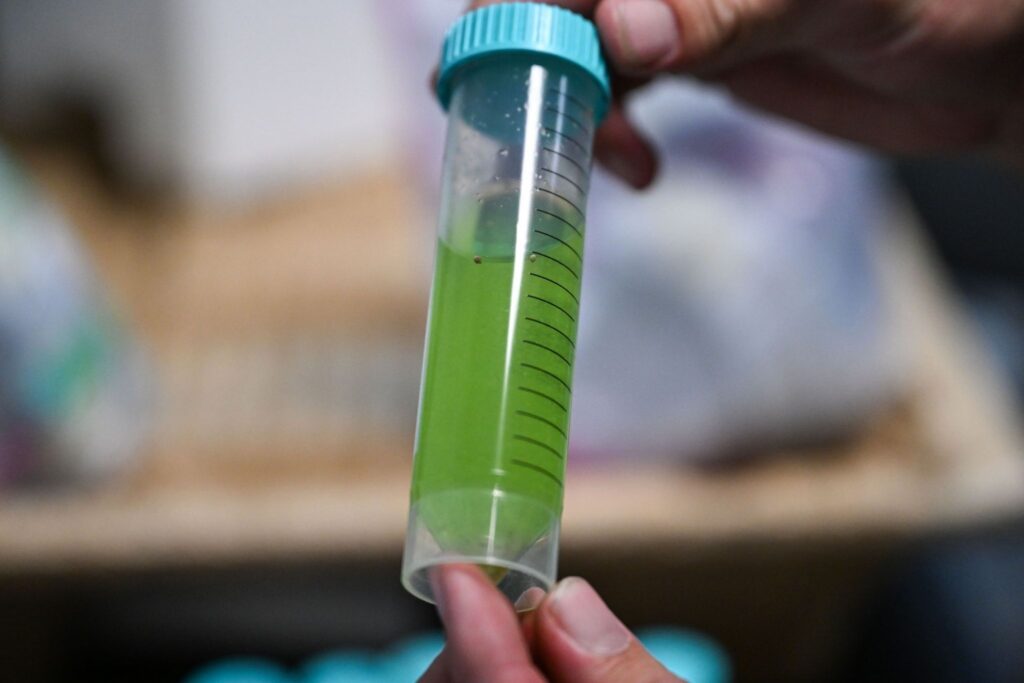
Citing potential tax avoidance, ‘serious risk to public safety,’ Marijuana Enforcement Division warns companies about swapping illegal chemically converted hemp for marijuana This article was produced for ProPublica’s Local Reporting Network in partnership with The Denver Gazette. Colorado regulators announced...
Rep. Eric Swalwell of California says he will resign after sexual misconduct allegations
Kevin Freking
kevin.freking@associatedpress.com
Updated 13 hours ago
WASHINGTON (AP) — Democratic Rep. Eric Swalwell of California announced Monday he will resign from Congress following sexual assault and misconduct allegations that prompted loud bipartisan calls for him to step down. The decision caps a swift political fall for...
Whistleblower contacted Democrats before filing Trump complaint that led to first impeachment, records show
Kaelan Deese, Washington Examiner
kaelan.deese.washington.examiner@gazetteedit.wpenginepowered.com
Updated 15 hours ago
Newly declassified transcripts from the Intelligence Community’s then-inspector general show that the whistleblower whose complaint triggered President Donald Trump’s first impeachment had prior contact with congressional Democrats before filing the allegation, a newly-surfaced and damning detail that was not disclosed...

Spain pushes China to assume global leadership role
Emily Hallas, Washington Examiner
emily.hallas.washington.examiner@gazetteedit.wpenginepowered.com
Updated 15 hours ago
Spanish Prime Minister Pedro Sanchez on Monday pushed China to embrace a larger role on the world stage as Europe increasingly turns to Beijing amid growing tensions with the United States. Sanchez’s speech at Beijing’s Tsinghua University follows recent moves...
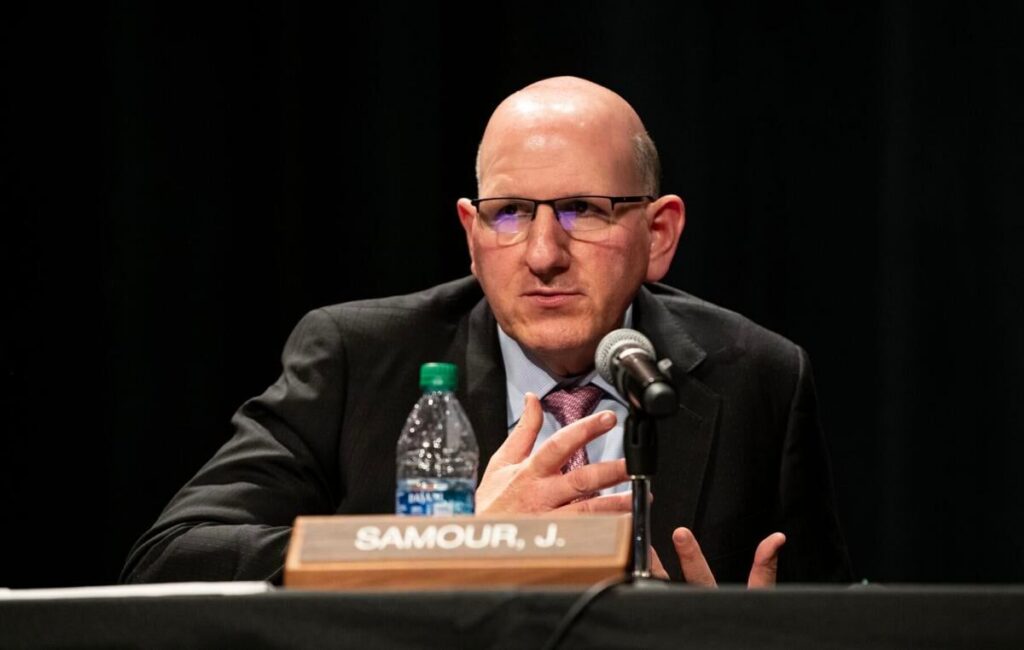
Divided Colorado Supreme Court opens door to experts’ views on children’s truthfulness
Michael Karlik
michael.karlik@coloradopolitics.com
Updated 17 hours ago
The Colorado Supreme Court ruled on Monday that experts may, in certain situations, tell jurors whether child witnesses exhibited signs of being coached by adults, without running afoul of the general prohibition on witnesses testifying about the truthfulness of other...
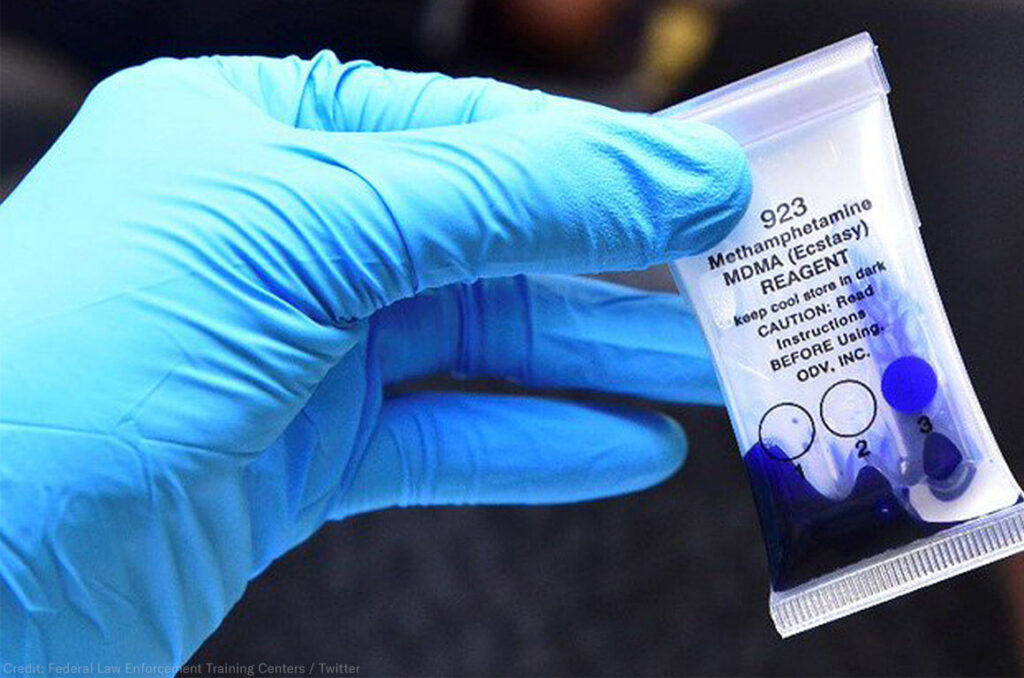
Colorado becomes first state to ban arrests solely based on field drug test results
Marissa Ventrelli
marissa.ventrelli@coloradopolitics.com
Updated 11 hours ago
Colorado has become the first state in the nation to prohibit arrests based solely on colorimetric drug tests, also known as field drug tests. Last legislative session, lawmakers passed a bill establishing a working group to make recommendations regarding the use of colorimetric drug...

State Supreme Court to hold oral arguments, federal judges find fault with bond hearings | COURT CRAWL
Michael Karlik
michael.karlik@coloradopolitics.com
Updated 11 hours ago
Welcome to Court Crawl, Colorado Politics’ roundup of news from the third branch of government. The state Supreme Court will resume hearing oral arguments tomorrow, plus some federal judges are raising the alarm about immigration judges’ handling of bond hearings....

Colorado Senate takes up $46.8 billion budget
Marissa Ventrelli
marissa.ventrelli@coloradopolitics.com
Updated 12 hours ago
The battle over Colorado’s proposed $46.8 billion spending plan for next year shifted to the state Senate, which must decide whether to acquiesce to changes made by the House. The senators could also decide to adopt their own changes, which...
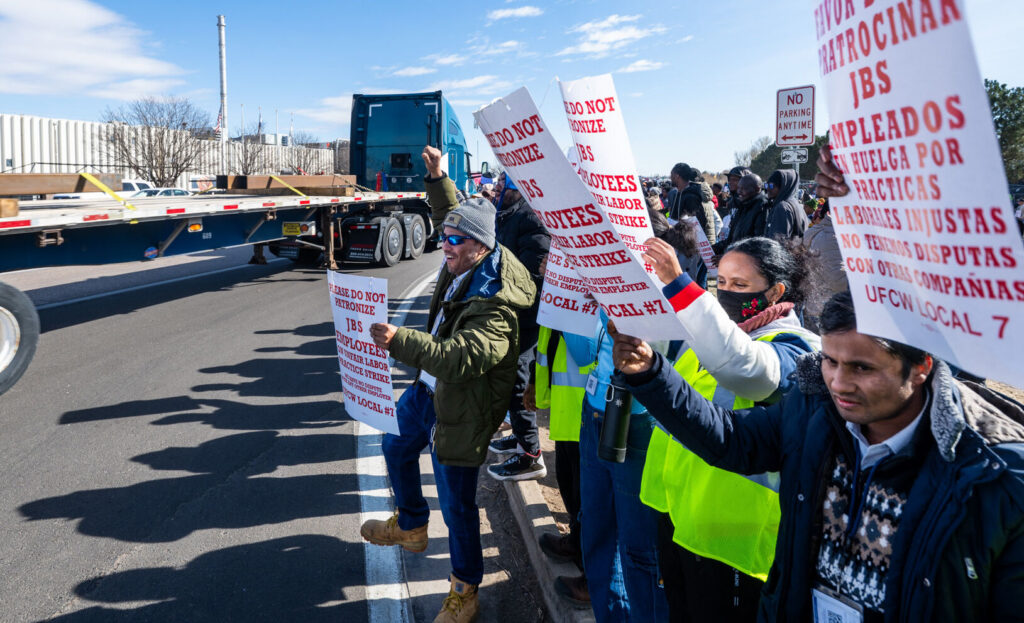
JBS plant employees ratify tentative agreement
Nicholas Fogleman
nicholas.fogleman@denvergazette.com
Updated 19 hours ago
Workers at a JBS beef processing plant in Greeley ratified a tentative agreement Sunday, ending months of negotiations over a new contract. The two-year collective bargaining agreement covers nearly 3,800 workers, according to the United Food Commercial Workers Local 7...
PREV
PREVIOUS

In an era of activist attorneys general, Weiser focused on job in Colorado
For a Democratic attorney general elected in the Trump era, it has been one thing after another. Phil Weiser sued the administration over immigration. And over environmental regulations. And brought an antitrust suit against Google. And he defended Colorado’s election laws, including to the U.S. Supreme Court. And managed a Catholic Church scandal. And is […]

Denver restaurant program gets preliminary approval as coronavirus cases tick upward
Denver has received state approval for a program to allow qualified restaurants to open up more indoor dining, Mayor Michael Hancock said Thursday, though the city must see its coronavirus metrics improve before that program can be utilized. The 5-Star program was launched by the state last month as a way to reward businesses who […]