

Poor planning and bureaucracy slow vaccination of nursing homes

In mid-December, Health and Human Services Secretary Alex Azar suggested that most nursing homes would receive the coronavirus vaccine by Christmas. In fact, most vaccinations of nursing homes and other long-term care facilities didn’t begin until after the holiday.
While Azar’s prediction was surely far too rosy, it highlights a process that has been delayed due to poor planning and bureaucratic red tape.
Most states have joined with the federal Pharmacy Partnership for Long-Term Care Program to distribute the vaccine. Under the program, two large chain pharmacies, CVS and Walgreens, are tasked with getting the vaccines to long-term care facilities.
“It’s taken longer than anybody expected or hoped to get that program really going,” said Josh Michaud, an associate director for Global Health Policy at the Henry J. Kaiser Family Foundation. “In many states, there have been hiccups and roadblocks along the way that have slowed things up compared to vaccinating healthcare workers.”
Michaud said that a lack of coordination among federal and state agencies and private pharmacies led to confusion.
“It’s hard to see how this program works from the outside – it’s rather opaque,” Michaud said. “A lot of nursing homes have had a hard time getting information from state-level officials and Walgreens and CVS. Administrators have often complained about lack of communication on how the process was supposed to roll out.”
Other experts say that the federal government has failed to maximize available resources.
About 40,000 independent pharmacies have entered into agreements with the federal government to distribute vaccines. However, they were not supposed to receive vaccines until the supply increased. That may have been a mistake.
“I think we would have benefited from using those pharmacies to vaccinate long-term care facilities,” Rothholz said. “We had a lot of pharmacies that were already serving nursing homes, and if they were allowed to, they could have helped.”
The state of West Virginia decided to forgo the federal program and instead partnered with many independent pharmacies in the state. As a result, all nursing homes in the state received their first dose by the end of December.
Another factor in slowing the vaccination of long-term care facilities was bureaucratic paperwork.
Residents have to sign informed consent forms to get a vaccine, forms that are often long and cumbersome. It can be a serious inconvenience if the resident is mentally impaired.
“If an individual is experiencing dementia or other problems, then you have to get consent from the family or other person who is in a position to make that decision,” said Michaud. That’s an added delay in some cases.
For the federal government, pharmacists have to enter data on who got vaccinated and on how much vaccine supply they have. Some states have additional paperwork requirements.
Jeff Sprinkel thinks he saw the effect of this firsthand.
Sprinkel is the administrator of the Lake Minnetonka Care Center, a skilled nursing home for people with mental illness in Deephaven, Minnesota. The facility houses 21 residents. While Sprinkel is grateful that his facility has received its first dose of the vaccine, he is concerned about how long it took.


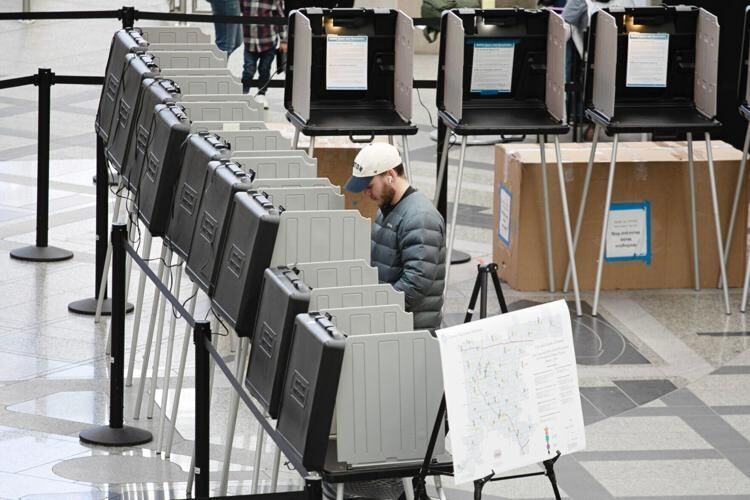
The coming election and mischief in the making | SONDERMANN
Eric Sondermann
eric-sondermann@coloradopolitics.com
Updated 3 days ago
America’s tribalism is such these days that we struggle to even agree on the basic rules. Elections have always been hotly contested. As the saying goes, “Politics ain’t beanbag.” The process has long involved elements of nastiness and underhanded conduct....

Colorado Politics Calendar Aug. 31-Sept. 6
Rachael Wright, Special to Colorado Politics
rachael.wright@coloradopolitics.com
Updated 3 days ago
CoPo’s weekly political calendar will help you find political and public-policy events throughout Colorado. It includes candidate and issue campaign events, public policy meetings, court hearings, state and local party conventions, assemblies, debates, rallies, parades, speaking engagements, traveling dignitary appearances,...

Tancredo in Running for Dept. of Ed. Position | A LOOK BACK
Rachael Wright, Special to Colorado Politics
rachael.wright@coloradopolitics.com
Updated 3 days ago
Forty-five years ago this week: “I know that my name has been placed before the Secretary of Education, and I know that I’m one of three or four being considered for the Department of Education’s Region 8,” said state Rep....
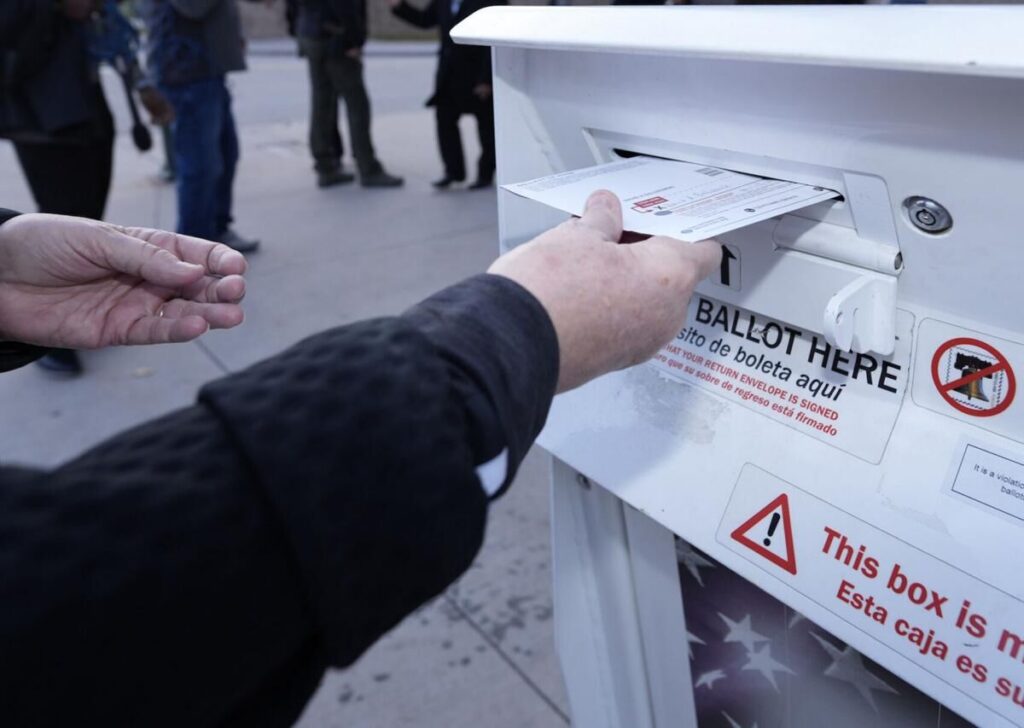
Colorado measure adding ID checks to mail-in voting qualifies for ballot
Marissa Ventrelli
marissa.ventrelli@coloradopolitics.com
Updated 16 hours ago
A ballot initiative that would require voters to include additional information on mail-in ballots has qualified for the November election, according to the Secretary of State’s Office. Backed by El Paso County Treasurer Chuck Broerman and former Deputy Secretary of...
Colorado election website error exposes personal data of confidential voters
Marissa Ventrelli
marissa.ventrelli@coloradopolitics.com
Updated 17 hours ago
A system update accidentally lifted protections on confidential records in Colorado, exposing dozens of voters’ personal information, according to the Secretary of State’s Office. The limit that normally blocks access to confidential voter profiles was inadvertently disabled during an update...

PUC adds weekly comment after killing private talks
Scott Weiser
scott.weiser@gazette.com
Updated 17 hours ago
The Colorado Public Utilities Commission will take public comment at the start of every commissioner’s weekly meeting beginning Sept. 9 as part of its new transparency mandate, the commission announced, expanding a slot previously limited to the second Wednesday of...
10th Circuit overturns framework for sentencing probation violators by 11-1
Michael Karlik
michael.karlik@coloradopolitics.com
Updated 18 hours ago
In a rare decision by all 12 of its full-time judges, the Denver-based federal appeals court ruled in a lopsided vote on Friday that one of its members created a sentencing process for probation violators that was out of step...

Federal judge dismisses excessive force lawsuit against Colorado Springs, officer
Michael Karlik
michael.karlik@coloradopolitics.com
Updated 17 hours ago
A federal judge concluded last week that a Colorado Springs police officer could not be held liable for shooting a suspect three times after the man menaced two victims with a gun and fled the scene. Al’morion Germany was involved...

DeFlock started from one man’s curiosity — now Flock cameras are a midterm issue
Claire Carter
claire.carter@washingtonexaminer.com
Updated 21 hours ago
Will Freeman wasn’t looking to start a national movement when he launched DeFlock after noticing Flock Safety’s automatic license plate readers along the side of the road. The software engineer was driving across the country in 2024 when the cameras...

Aurora student journalist cleared of disciplinary charges after ignoring ‘gag order’
Kyla Pearce
kyla.pearce@gazette.com
Updated 18 hours ago
A Community College of Aurora student who accused the college of putting an “unconstitutional gag order” on his student-run publication was cleared of disciplinary charges against him. CCA student Andrew Green tried to register his independent student publication, called “FoxTalk,”...
PREV
PREVIOUS

Monument Trustees declare COVID-19 restrictions 'unconstitutional'
MONUMENT – Town trustees declared actions taken by Colorado Gov. Jared Polis in response to the COVID-19 pandemic unconstitutional during a special meeting Monday night, asking the governor to reclassify every business as an essential business. “All businesses, places of worship and governmental meetings are essential to the exercise of individuals’ fundamental rights and it is discriminatory […]

Sunnyside Gold Corp. settles without fault in Gold King lawsuit
Sunnyside Gold Corp. reached a no-fault settlement for the 2015 Gold King Mine spill in southwest Colorado, a company spokeswoman told Colorado Politics Wednesday. The company agreed to pay the Navajo Nation $10 million and the state of New Mexico for $11 million in relation to the regulator-caused spill in San Juan County near Durango. […]