

NEED-TO-KNOW INFO | The citizen’s guide to effective legislative participation
You can actively participate in the legislative process by following some basic steps.
Know How the Process Works
For your individual participation to be most effective, a basic understanding of the whole legislative picture is essential. If there is something you do not understand about the process, ask someone who can provide an answer. Go to this link for more from these resources:
- Colorado General Assembly overview page
- How a bill becomes a law: Video and chart
- Learn how to read a bill.
- Watch a committee process video and read about the legislative process.
- Read the page on participating in legislative hearings. (This information may have changed because of COVID-19 restrictions.)
- How to listen to broadcasts of committee hearings to see how they are conducted.
- Read articles on Colorado Politics or LegiSource, An informational and educational resource by the Office of Legislative Legal Services.
Make yourself the expert
Before you address an issue, do some homework. Know the whole issue: who it affects, what others feel about it, how it will influence future trends, and any other information you are able to gather. Thorough research allows you to present your viewpoint with confidence and credibility, and, combined with your personal experience, is the most effective information you can provide.
Network with other citizens
Much of the information you need to be effective in the legislative process can be obtained from other concerned and active citizens. Most interest areas are represented by informal citizen groups, if not formal membership organizations.
Find out whether there are groups that share your concerns and establish a network. A group of concerned citizens can be much more effective working together, rather than as separate individuals trying to accomplish the same goal.
Key points to remember
Regardless of how frequently you contact your legislators, you will be far more effective if you follow these points:
- Be well prepared for your discussions.
- Provide a written statement with all verbal presentations.
- Make letters and e-mail formal, specific and concise.
- Don’t berate or argue with your legislator when you disagree. Simply thank the legislator for the time spent with you and express a desire for further discussion.
Whatever position you represent, remember that participation makes a difference. The legislative process is one way to contribute to the quality of life we experience in our state. Your willingness to be a responsible, involved participant is crucial to the decision-making process.

Colorado board permits state to appeal injunction against arthritis drug price cap
Marissa Ventrelli
marissa.ventrelli@coloradopolitics.com
Updated 3 hours ago
A Colorado board voted Friday to allow the Attorney General’s Office to fight an injunction against a price cap on a drug that treats arthritis. A U.S. district court judge had granted the company Amgen a preliminary injunction, temporarily blocking...

Federal judge rejects constitutional claims, ‘expressions of hatred’ by Club Q defendant
Michael Karlik
michael.karlik@coloradopolitics.com
Updated 3 hours ago
A federal judge rejected a defendant’s claims that he received constitutionally ineffective assistance of counsel while facing federal hate crime and firearms charges for murdering five people at a Colorado Springs LGBTQ nightclub in 2022. Anderson Lee Aldrich is serving...

Divided 10th Circuit upholds Colorado congestion fee on car rentals
Michael Karlik
michael.karlik@coloradopolitics.com
Updated 3 hours ago
The Denver-based federal appeals court concluded on Monday that a 2024 “congestion impact fee” that lawmakers imposed on short-term vehicle rentals did not conflict with a federal prohibition on certain airport-related charges. Beginning in the 1970s, Congress began limiting the...

Space Force should measure workforce needs as it prepares to double in size, GAO report says
Mary Shinn
mary-shinn@coloradopolitics.com
Updated 9 hours ago
The Space Force needs more people. It’s just not precisely sure how many more. A Government Accountability Office report released earlier this month found that the youngest and smallest military branch does not have a process to consistently or accurately...

Colorado schools receive $24 million for free meals program
Marissa Ventrelli
marissa.ventrelli@coloradopolitics.com
Updated 3 hours ago
The Colorado Department of Education is providing Colorado schools with nearly $24 million in grant funding to implement a free lunch program. Approved by voters in 2022, the Healthy School Meals for All provides free breakfast and lunch to all...

Secret Service agent placed on administrative leave after arrest for near-deadly hazing ritual
Claire Carter
claire.carter@washingtonexaminer.com
Updated 11 hours ago
A Miami Secret Service agent in Florida was placed on administrative leave following his arrest on Sunday in connection with a near-deadly hazing incident at a University of Miami fraternity. Marquez Christopher Pinder, 29, was arrested alongside two other individuals...
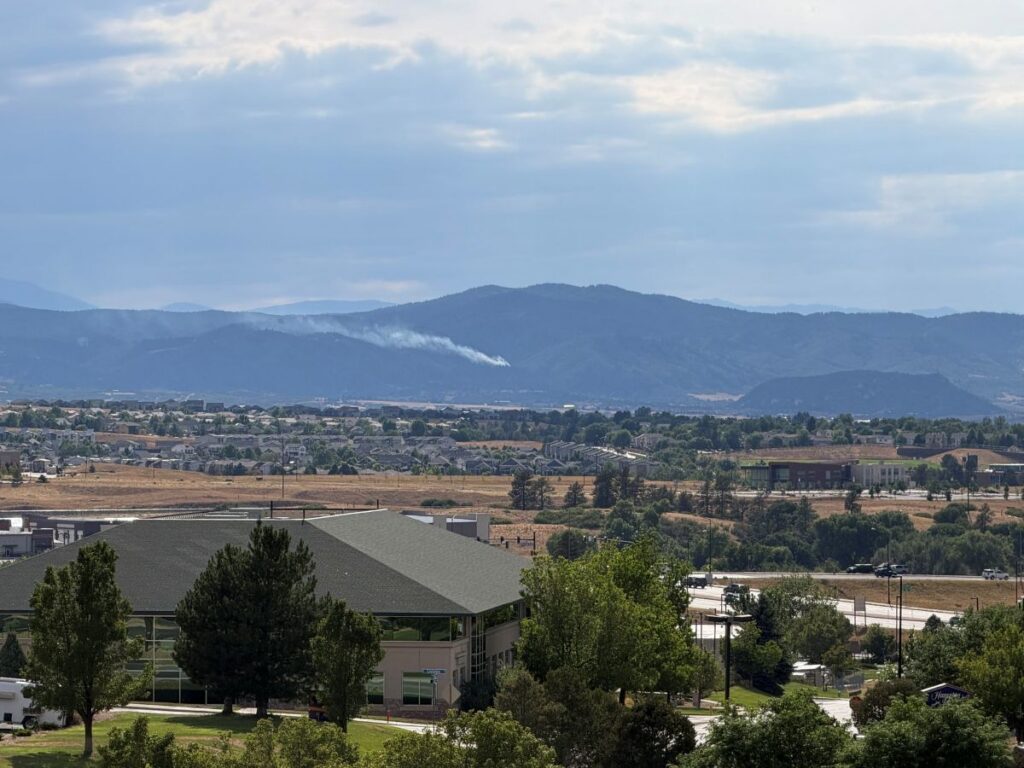
Forest fire west of Sedalia prompts evacuations in Douglas County
Nicholas Fogleman
nicholas.fogleman@denvergazette.com
Updated 13 hours ago
Emergency crews are responding to a forest fire burning west of Sedalia, prompting evacuation orders for nearby residents Sunday afternoon. At about 5 p.m. Sunday, the Douglas County Sheriff’s Office issued an evacuation order for residents within a 2-mile radius...

Airstrikes have paused and talks are pressing forward. But can the US and Iran take the off-ramp?
The Associated Press
the-associated-press@coloradopolitics.com
Updated 13 hours ago
WASHINGTON (AP) — The U.S. military has paused its airstrikes on Iran after nearly two weeks of intensifying bombing, while diplomatic efforts have pushed forward to try to avert a return to all-out war. But it remains to be seen...
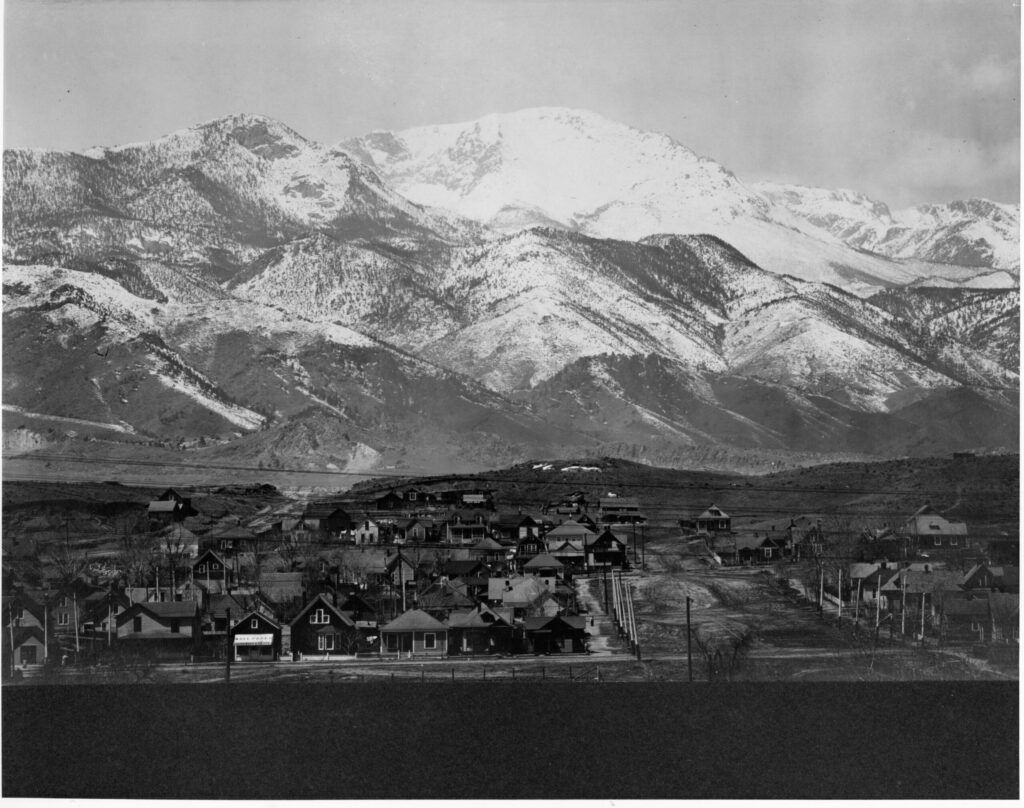
Penrose fortune paved the way for Colorado Springs to be a military, space and sports town
Mary Shinn
mary-shinn@coloradopolitics.com
Updated 13 hours ago
Colorado Springs is always working to catch the next big economic wave. “We’re always trying to figure out what the next thing is going to be,” explained Matt Mayberry, director of the Colorado Springs Pioneers Museum. In the early days,...

Colorado Politics Calendar July 27-Aug. 2
Rachael Wright, Special to Colorado Politics
rachael.wright@coloradopolitics.com
Updated 5 days ago
CoPo’s weekly political calendar will help you find political and public-policy events throughout Colorado. It includes candidate and issue campaign events, public policy meetings, court hearings, state and local party conventions, assemblies, debates, rallies, parades, speaking engagements, traveling dignitary appearances,...
PREV
PREVIOUS

After setting off House metal detector, Lauren Boebert blasts new devices as a 'political stunt'
U.S. Rep. Lauren Boebert, the freshman Republican from Rifle who has declared she intends to carry a handgun at the Capitol, derided newly installed metal detectors outside the House chamber as a “political stunt” after setting one off Tuesday night when she attempted to enter the floor for a debate. “It is a shame that […]

NEED-TO-KNOW INFO | Safety protocols in place for staff, lawmakers, visitors to the statehouse
New safety protocols were established in June 2020 by the Executive Committee of the Legislative Council regarding the reconvening of the General Assembly during the COVID-19 health epidemic. The purpose of these written protocols is to ensure a safe and healthy working environment while the General Assembly is reconvened. Personal Protections Anyone who is at high-risk […]