

BARTELS | Years of experience get set to leave county commissions
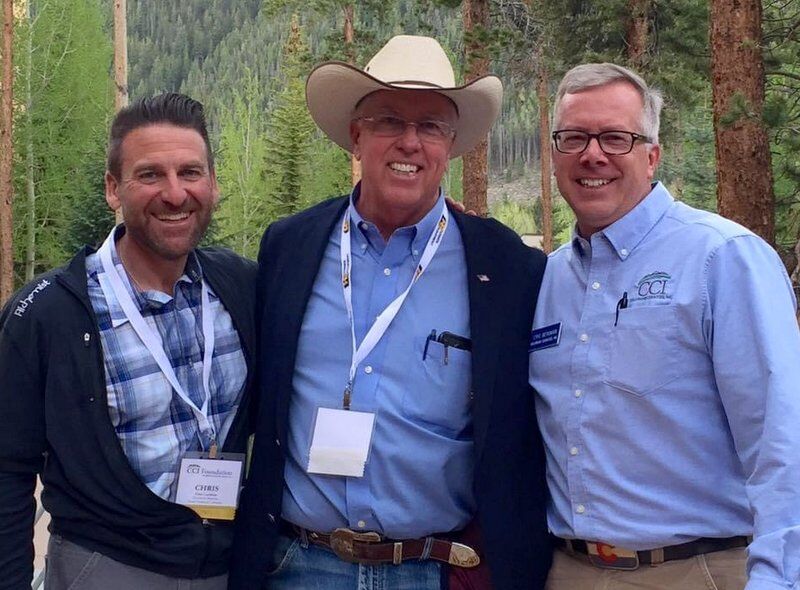
They’ve loved being a county commissioner and made some fantastic friends, but when their terms end in mid-January there are some things they won’t miss.
“I’ve been chewed out more than I’ve been chewed out in my life,” Montezuma County Commissioner Larry Don Suckla said.

“Our skins are not made thick, but they grow thick with the experience of being in elected office,” Mesa County Commissioner Rose Pugliese said.
The two commissioners are among the 58 who will leave office this month, taking with them decades of experience on a vast range of issues, from public lands to child welfare to transportation. They’ve worked closely with their local communities and legislative delegations at the state Capitol.
“We are losing giants,” said John Swartout, the executive director of Colorado Counties Inc.
The majority of commissioners are leaving because of term limits. Some, such as Alamosa County’s Darius Allen, Adams County’s Mary Hodge and Fremont County’s Tim Payne, opted not to run again. And five commissioners were defeated in their elections this year.
Their successors will be sworn in in mid-January, but the pandemic sweeping the world most likely will make the ceremonies virtual. That’s how current county commissioners participated in Colorado Counties’ annual winter conference in December, which normally is an in-person affair.
“It was a very hard year anyway, and then not to get to say good-bye to these people in person was tough,” said CCI’s policy director, Eric Bergman. He admitted he got teary when introducing a video at the conference highlighting the departing commissioners.
Commissioners serve four-year staggered terms – some counties do not have term limits or allow three terms instead of the traditional two terms. Many of the outgoing commissioners were first elected in 2012 and again in 2016.
“They are really close,” Swartout said. “It’s really great when an urban and a rural county commissioner become friends.They learn what it’s like to walk in each other’s shoes. They become each other’s allies at the legislature.”
He pointed to Pueblo County Commissioner Terry Hart, who has spent 40 years in Pueblo County government. Hart worked as an assistant county attorney, county attorney and even a stint as chief of staff in the district attorney’s office before first being elected to the commission in 2012.
“Terry bridged the divide between rural and urban, between Republican and Democrat,” Swartout side. “He is the foremost diplomat and finds the middle ground on everything. Terry is a huge loss.”
Said Hart: “I’m blushing. That’s sweet.”
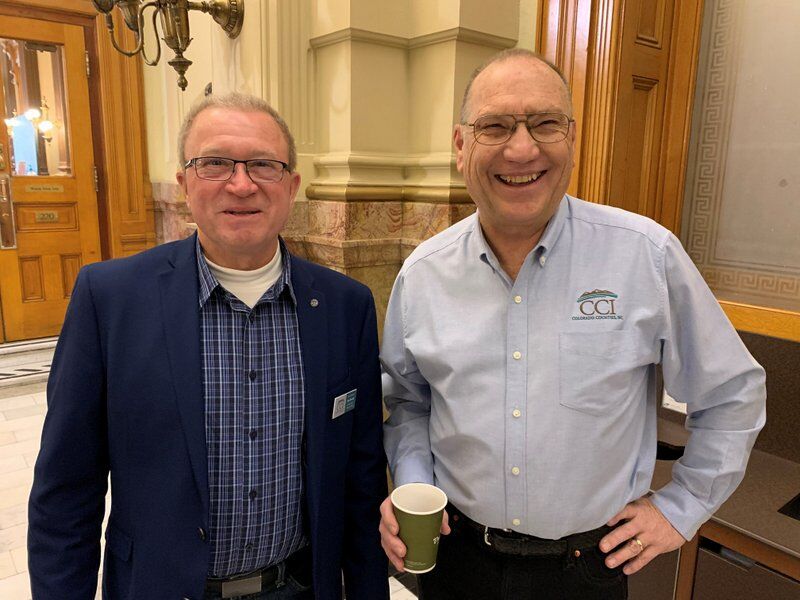
Other departing commissioners include Larimer County’s Steve Johnson; Jefferson County’s Casey Tighe and Libby Szabo; Teller County’s Norm Steen; El Paso County’s Mark Waller; Saguache County’s Jason Anderson; and Morgan County’s Jim Zwetzig, who just completed his term as CCI president.
The new president is Fremont County Commissioner Debbie Bell, a former journalist (yes!).
Within the association, nine steering committees review policy and provide direction in certain subject areas, including public safety and taxation and finance. A number of departing commissioners put in extensive service on the committees, which is another reason the exodus will be so deeply felt.
For example, Fremont County’s Payne served five years as chair of the Land Use & Natural Resources Steering Committee. Fremont doesn’t have term limits, but he opted not to run for a third term.
“Tim Payne is a huge loss,” Swartout said.
Mesa’s Pugliese and Weld County Commissioner Barb Kirkmeyer have focused on child welfare and human services issues during their service.
“Mesa County is such an anomaly,” Pugliese said. “We are the 10th-largest county in the state, but the only large county on the Western Slope so we have rural and urban challenges.”
Small and “super small counties” struggle with the lack of resources, which makes child welfare in those counties difficult, an issue Pugliese said she tried to address during her eight years in office.
“I’m going to miss the people and the collaboration we’ve built with the business community, especially the hospitals during COVID,” she said.
Kirkmeyer served two terms on the Board of Commissioners in the 1990s, then joined Gov. Bill Owens’ administration. Afterward, she ran again for the Weld County commission, and has just a few days left on her third term. She will be sworn in as a state senator this month.
“No one has done more to get funding for children in this state than Barbara Kirkmeyer,” Swartout said.
Another longtime commissioner is Alamosa County’s Darius Allen, who is leaving after serving six terms, or 24 years.
“I’m no quitter!” he joked.
Allen made news in 2007 when he charged at a person speaking at a commissioners meeting. He later pleaded guilty to misdemeanor disorderly conduct.
“It probably wasn’t the wisest thing I’ve done,” Allen said.
But he added he had grown tired of “seeing the gals in the office” get harangued by the public.
When he went to Denver that year on business, his friends took him to a Mexican restaurant, where he was served a large burrito with a file hidden in it. Allen laughed his head off.
Allen, who received CCI’s Distinguished Service Award in 2015, serves as vice chair of the Public Lands Steering Committee.
In addition to serving on CCI’s steering committees, many commissioners also sit on a variety of regional and national boards.
For example, Douglas County Commission Chairman Roger Partridge, who is leaving in January, is the board’s representative on too many groups to list. A sample includes the Castle Rock Economic Development Council; Denver Regional Council of Governments Board of Directors; Denver South Economic Development Partnership Board of Directors; Metro Area County Commissioners; and the E-470 Public Highway Authority.
Montezuma’s Suckla, who is chairman of the Public Lands Steering Committee, credits longtime commissioners such as Allen, Kirkmeyer and Garfield County’s John Martin for helping mold him.
What’s he going to miss the most?
“Changing minds,” he said, without hesitation. “Government officials and appointed people will say, ‘That’s the way it’s always been,’ but you can work to change that decision.”
Yes, Colorado Counties Inc. will definitely have a different look next year with all those new members, but as Suckla likes to say, “I guess if I learned it, someone else will eventually.”

Colorado justices confirm leaving-the-scene prosecutions require no proof of driver’s knowledge
Michael Karlik
michael.karlik@coloradopolitics.com
Updated 2 hours ago
The Colorado Supreme Court confirmed on Tuesday that its 20-year-old decision involving drivers who leave the scene of an accident remains good law and prosecutors do not have to prove that such defendants knew they were involved in an accident....

Road-funding initiative in Colorado qualifies for November ballot
Marissa Ventrelli
marissa.ventrelli@coloradopolitics.com
Updated 5 hours ago
A measure that would dedicate all transportation-related revenue to Colorado’s roads and bridges has officially qualified for the November ballot after it cleared the state’s signature threshold, according to election officials. Backed by the coalition Restore Our Roads, Initiative No....

Judge blocks Colorado’s proposed ban on using SNAP benefits for soda
Marissa Ventrelli
marissa.ventrelli@coloradopolitics.com
Updated 5 hours ago
A federal judge has temporarily blocked Colorado and several other states from enforcing a proposed “Healthy Choice Waiver” that would have barred Supplemental Nutrition Assistance Program (SNAP) recipients from using their benefits to buy soda and other sugary drinks. Under...
Medicaid suspends agency behind ‘The Program,’ citing ‘credible’ fraud allegations
David Migoya
david.migoya@gazette.com
Updated 4 hours ago
The agency overseeing Colorado’s federal Medicaid program has suspended an Aurora home-health agency that is the focus of an investigation into an enterprise that lured dozens of homeless people with promises of free housing and cash and reaped tens of...
Boulder police overreached in interrogating suspect, Colorado Supreme Court finds
Michael Karlik
michael.karlik@coloradopolitics.com
Updated 5 hours ago
Two Boulder detectives violated a man’s constitutional rights by interrogating him at his home using a court order that solely authorized the collection of his DNA evidence, the Colorado Supreme Court concluded on Tuesday. The ruling curtailed the ability of...
Property owners may access evidence before eminent domain decisions, Colorado justices conclude
Michael Karlik
michael.karlik@coloradopolitics.com
Updated 5 hours ago
The Colorado Supreme Court ruled on Tuesday that a Douglas County judge incorrectly believed he lacked the authority to allow a property owner to pursue evidence challenging a government entity’s legal right to take its property through eminent domain. In...
Missy Woods accepts plea deal, avoids trial on 102 felony counts
Jenny Deam
jenny.deam@gazette.com
Updated 6 hours ago
The former top Colorado Bureau of Investigation forensic scientist accused of altering and deleting DNA evidence in scores of criminal cases across the state for years pleaded guilty to four criminal counts Tuesday in Jefferson County. Yvonne “Missy” Woods, 65,...
ICE may deport illegal immigrants without judge approval, appeals court rules
Anna Giaritelli Washington Examiner
anna-giaritelli-washington-examiner@coloradopolitics.com
Updated 9 hours ago
A federal appeals court has ruled in favor of expanding a fast-track deportation process to let the Trump administration expeditiously remove illegal immigrants who are living inside the United States, not just at the southern border. On Tuesday, the U.S....

Dispute over nuclear inspections clouds US-Iran teams’ work to finalize a war-ending deal
Jon Gambrell
jon.gambrell@associatedpress.com
Updated 13 hours ago
ISLAMABAD (AP) — The U.S. and Iran were in dispute Tuesday over whether Tehran had agreed to allow U.N. inspectors to view bombed Iranian nuclear sites, as officials mediated talks on a permanent end to their war and violence broke...
Aurora creates police oversight office in final vote
Kyla Pearce
kyla.pearce@gazette.com
Updated 14 hours ago
The Aurora City Council voted unanimously Monday to create a police oversight office as the city’s consent decree comes to an end. Without discussion, council members approved a final ordinance creating the Office of Public Safety Accountability, prompting city officials...
PREV
PREVIOUS
Denver City Council members have mixed opinions about loosening of COVID-19 rules
Opinions among Denver City Council members vary as leaders wrestle with the reopening of indoor dining and relaxation of capacity restrictions that went into effect Monday. The move comes in response to Gov. Jared Polis’ announcement last week that all Level Red counties across Colorado would be downgraded to orange, the third-highest tier, with certain […]
Former GOP reps Buck, Saine join Weld County commission
Perry Buck and Lori Saine, who both served as Republican members of the Colorado House of Representatives, were sworn in on Monday to their new roles on the Weld County Board of Commissioners. Steve Moreno, first elected to the board in 2014, is the new chair of the commission. Scott James, the District 2 commissioner, […]