

Federal court allows for jury to consider wrongful termination claim for Confederate-themed posts

Although United Airlines reportedly fired a supervisor for her performance, a federal court will allow her to sue the company on the claim that her social media posts featuring Confederate iconography were really the cause.
“Defendant first argues that the record contains no evidence Plaintiff was terminated for her Facebook activity. I disagree,” wrote U.S. Magistrate Judge Michael E. Hegarty in a Dec. 9 order.
Colorado law labels as discrimination an employer’s termination of employees for their activities during non-work hours. In allowing the wrongful termination claim to proceed, Hegarty ruled a jury would decide the extent to which a series of social media posts factored into United Airlines’ action.
Rhonda Patterson-Eachus worked for the company since 1986, and became a supervisor of airport operations a decade later. She received generally positive performance reviews. In August 2017, Patterson-Eachus posted a message of support on her Facebook page for preserving the mascot of her alma mater, Weld Central High.
The “Rebels” character is a soldier with resemblance to a Civil War general (although the school also just uses the initials “WC” in lieu of the logo). In Patterson-Eachus’s post, the soldier was superimposed upon a Confederate flag.
Around this time, a petition appeared online to change the mascot, following the deadly “Unite the Right” rally of white supremacists in Charlottesville, Va. The school superintendent in Weld County said the mascot was a symbol of pride, not racism. Confederate flags used to appear with the mascot, but they no longer did. Still, the Weld school became embroiled in controversy shortly afterward when attendees of a football game with Manual High School in Denver alleged Weld students brandished the Confederate flag.
“To be clear, the Confederate flag plays no role in Weld Central, and neither school condones symbols or acts of racism,” read a joint statement from Sept. 26, 2017 from the school leaders in Weld County and Denver.
Patterson-Eachus subsequently made another post on Facebook, sharing a video of a Black male who said the Confederate flag was more benign than people realized.
Reportedly, her posts offended a Black customer service agent at United with whom Patterson-Eachus was friends online. On Aug. 24, the senior manager of human resources and employee engagement in Denver told Patterson-Eachus to remove the video post.
“Once Rhonda was made aware of the odious affiliation between Confederate symbols with the nation’s past and its legacy of pain on African Americans,” said Dipak P. Patel, an attorney with Ciancio Ciancio Brown, P.C., “she had a change of heart and rescinded her support and removed the postings.”
A subsequent verbal warning from her manager conveyed that Patterson-Eachus’s posts violated the company’s social network and professionalism guidelines. On Aug. 30, a United employee who was a subordinate of Patterson-Eachus’ anonymously complained about both Confederate flag posts.
A United Airlines investigation with more than a dozen customer service agents who worked with Patterson-Eachus revealed them to feel “picked on or harassed,” with multiple allegations of belittlement. Several of them reportedly mentioned how Patterson-Eachus’ Facebook posts triggered trauma related to racism. They said they did not come forward previously for fear of retaliation.
When company representatives met with her on Sept. 27, 2017, Patterson-Eachus was surprised about the offense her coworkers took. Less than a month later, United fired her, explaining the Facebook posts were not the cause, but rather her conduct towards subordinates was. Specifically, the airline cited rules prescribing good judgment, avoiding aggressive behavior and communicating in a businesslike manner.
“Plaintiff’s racially insensitive Facebook postings call into question Plaintiff’s competence to supervise a racially diverse group of customer service agents. No reasonable jury would conclude otherwise,” wrote United in a legal filing.
Patterson-Eachus sued United, alleging age and gender discrimination against her. Hegarty dismissed those claims, finding insufficient evidence to proceed to a jury trial.
However, on her claim that the airline terminated her over the off-duty social media posts, the magistrate judge found clear evidence for the Confederacy-related content playing a role in her firing. The company’s termination letter, for instance, stated that Patterson-Eachus continued to “deny that the racially insensitive Facebook post was inappropriate and that there was anything wrong with posting the racially offensive video on Facebook, where a number of your direct reports could see it.”
The company also argued that it held its supervisory employees to a higher standard because they are meant to set an example. Therefore, Patterson-Eachus’ off-duty conduct would be an exception to Colorado law in this instance.
“The current situation is unlike those cases that have applied this exception,” Hegarty countered. He allowed her wrongful termination claims to continue to trial.
Patel told Colorado Politics he was “confident that a jury will find unlawful United’s reflexive termination of a 31-year employee after she participated in lawful off-duty and political activity.”
Eugene Volokh, a professor of law at the University of California-Los Angeles, wrote in the Texas Review of Law & Politics that approximately half of Americans live in places that protect private speech of employees from retaliation by their employer.
“I am not sure such restrictions on private employers are a good idea. First, employers may have a legitimate interest in not associating themselves with people whose views they despise,” he explained. “Second, employees are hired to advance the employer’s interests, not to undermine it. When an employee’s speech or political activity sufficiently alienates coworkers, customers, or political figures, an employer may reasonably claim a right to sever his connection to the employee.”
However, in August of this year, the federal appeals court based in Ohio reinstated a lawsuit against the city of Cleveland for its firing of an EMS captain. The former employee made incendiary comments on Facebook about the shooting of 12-year-old Tamir Rice, which the appellate judges viewed as protected speech. The ruling only applied to public employers.
The case is Patterson-Eachus v. United Airlines.


Colorado justices block injured plaintiff from suing, despite alleged concealment by Manitou Springs
Michael Karlik
michael.karlik@coloradopolitics.com
Updated 7 hours ago
The Colorado Supreme Court ruled on Monday that a woman injured on a Manitou Springs sidewalk could not sue the allegedly responsible entity, the city of Colorado Springs, even though she did not learn until too late of an agreement...

Colorado marijuana regulators pledge crackdown on intoxicating hemp
Christopher Osher
chris.osher@gazette.com
Updated 9 hours ago
Citing potential tax avoidance, ‘serious risk to public safety,’ Marijuana Enforcement Division warns companies about swapping illegal chemically converted hemp for marijuana This article was produced for ProPublica’s Local Reporting Network in partnership with The Denver Gazette. Colorado regulators announced...
Rep. Eric Swalwell of California says he will resign after sexual misconduct allegations
Kevin Freking
kevin.freking@associatedpress.com
Updated 12 hours ago
WASHINGTON (AP) — Democratic Rep. Eric Swalwell of California announced Monday he will resign from Congress following sexual assault and misconduct allegations that prompted loud bipartisan calls for him to step down. The decision caps a swift political fall for...
Whistleblower contacted Democrats before filing Trump complaint that led to first impeachment, records show
Kaelan Deese, Washington Examiner
kaelan.deese.washington.examiner@gazetteedit.wpenginepowered.com
Updated 14 hours ago
Newly declassified transcripts from the Intelligence Community’s then-inspector general show that the whistleblower whose complaint triggered President Donald Trump’s first impeachment had prior contact with congressional Democrats before filing the allegation, a newly-surfaced and damning detail that was not disclosed...

Spain pushes China to assume global leadership role
Emily Hallas, Washington Examiner
emily.hallas.washington.examiner@gazetteedit.wpenginepowered.com
Updated 15 hours ago
Spanish Prime Minister Pedro Sanchez on Monday pushed China to embrace a larger role on the world stage as Europe increasingly turns to Beijing amid growing tensions with the United States. Sanchez’s speech at Beijing’s Tsinghua University follows recent moves...
Divided Colorado Supreme Court opens door to experts’ views on children’s truthfulness
Michael Karlik
michael.karlik@coloradopolitics.com
Updated 16 hours ago
The Colorado Supreme Court ruled on Monday that experts may, in certain situations, tell jurors whether child witnesses exhibited signs of being coached by adults, without running afoul of the general prohibition on witnesses testifying about the truthfulness of other...
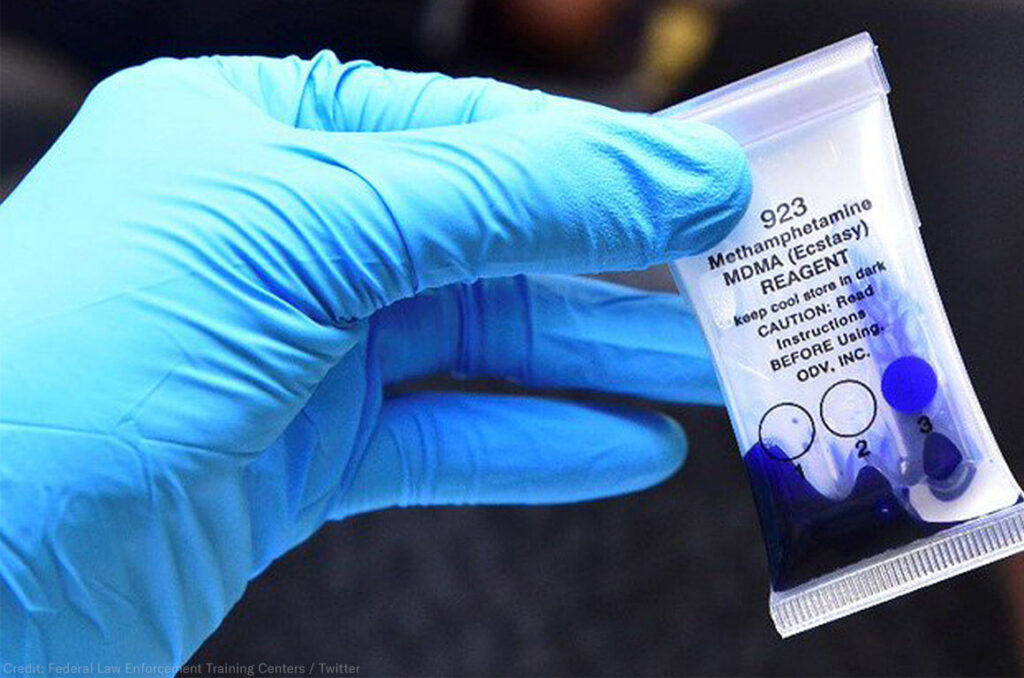
Colorado becomes first state to ban arrests solely based on field drug test results
Marissa Ventrelli
marissa.ventrelli@coloradopolitics.com
Updated 10 hours ago
Colorado has become the first state in the nation to prohibit arrests based solely on colorimetric drug tests, also known as field drug tests. Last legislative session, lawmakers passed a bill establishing a working group to make recommendations regarding the use of colorimetric drug...

State Supreme Court to hold oral arguments, federal judges find fault with bond hearings | COURT CRAWL
Michael Karlik
michael.karlik@coloradopolitics.com
Updated 10 hours ago
Welcome to Court Crawl, Colorado Politics’ roundup of news from the third branch of government. The state Supreme Court will resume hearing oral arguments tomorrow, plus some federal judges are raising the alarm about immigration judges’ handling of bond hearings....

Colorado Senate takes up $46.8 billion budget
Marissa Ventrelli
marissa.ventrelli@coloradopolitics.com
Updated 12 hours ago
The battle over Colorado’s proposed $46.8 billion spending plan for next year shifted to the state Senate, which must decide whether to acquiesce to changes made by the House. The senators could also decide to adopt their own changes, which...
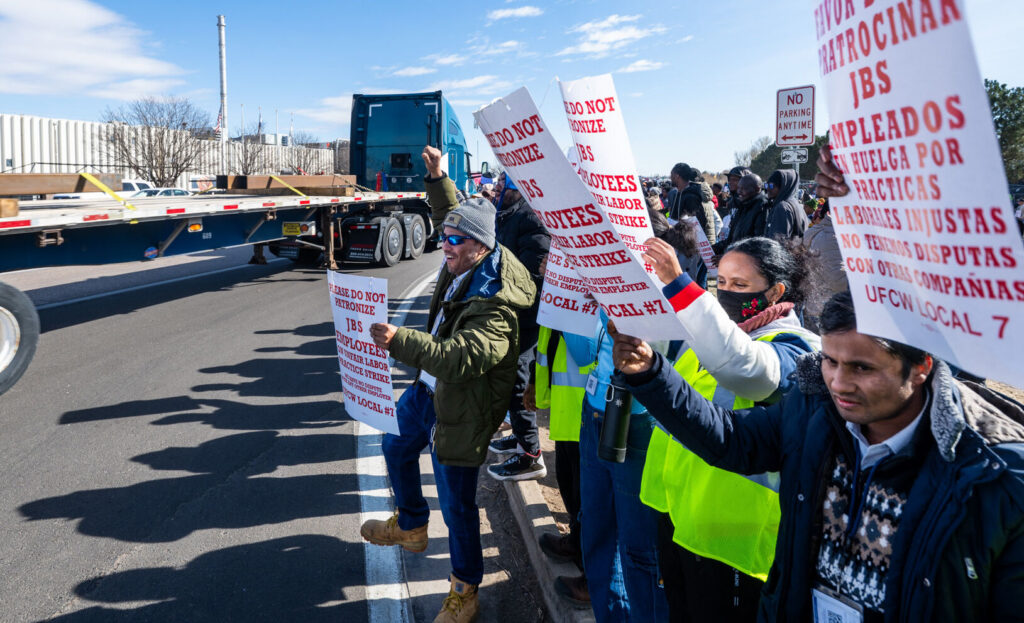
JBS plant employees ratify tentative agreement
Nicholas Fogleman
nicholas.fogleman@denvergazette.com
Updated 18 hours ago
Workers at a JBS beef processing plant in Greeley ratified a tentative agreement Sunday, ending months of negotiations over a new contract. The two-year collective bargaining agreement covers nearly 3,800 workers, according to the United Food Commercial Workers Local 7...
PREV
PREVIOUS

Health officials suspect second case of COVID-19 variant virus in Colorado
Colorado has the first-in-nation case – and may have a second – of the COVID-19 variant virus that has made news in the United Kingdom in recent weeks. According to an announcement from the governor’s office, the confirmed case is a person who caught the virus, a young man in his 20s. The man has no travel […]

Coronavirus in Colorado: The latest numbers
There are now 19,468,771 coronavirus cases in the U.S. and 337,210 deaths, according to Johns Hopkins University. The latest COVID-19 numbers in Colorado (Updated on Dec. 29): – 328,408 cases, including 46,857 in Denver County – 2,118,974 people tested – The number of deaths directly caused by COVID is 3,803, while the number of deaths […]