

Denver’s group living proposal clears first hurdle, advances to the Denver City Council for a vote

After nearly four months of deliberations, the Denver City Council’s Land Use, Transportation and Infrastructure Committee advanced a “softer” proposal on Tuesday that will change the city’s zoning rules to raise the number of people who can share a home.
Over seven presentations between Sept. 1 and Dec. 22, city planners worked with LUTI members to craft legislation that reflects a wide variety of input gathered over roughly three years. The council deliberately slowed down the process in response to fierce opposition from community members, along with the majority of City Council members, who said the plan needed more work.
The goal, planners have said from the beginning, is to increase flexibility and housing options for residents in Denver, the second-most gentrified city in the country; to streamline permitting processes for providers; and to make it easier for those experiencing homelessness, trying to get sober or who have other special needs to live and access services.
“Opening new opportunities for more housing options is key to addressing our city’s housing needs, and that need for those housing options has only grown more urgent in the wake of COVID-19,” Mayor Michael Hancock said in a statement Aug. 19. “It’s more important than ever that we have a zoning code that reflects how people live now, as well as the values of the more equitable city we want to live in.”
Many residents argue, however, that the change could lead to unsafe neighborhoods, overcrowding, noise, inadequate home maintenance, scarce parking, unfamiliar neighbors and negative impacts on property values.
The latest proposal crafted in committee would allow up to five unrelated adults to live together, instead of the two that are currently allowed in a house. Any number of related adults can continue to live together. Another proposed change would prevent halfway houses from being located where only single-family, duplex and row house homes can be constructed.
Other measures include expanding the land area available for community corrections from about 3,200 acres largely in industrial areas and downtown, to nearly 20,000 acres throughout the city, “primarily along commercial corridors, where there is better access to transit and jobs,” according to CPD. The city would also cap the number of smaller facilities serving up to 10 people in a single area “to avoid overburdening neighborhoods.”
Senior city planner Andrew Webb also told committee members that the proposal will improve predictability for providers and neighbors by standardizing permitting processes and regulations, such as spacing between facilities, and requiring community information meetings for larger residential care uses to notify and educate neighbors and foster positive relationships.
The full Denver City Council will hold a public hearing and a final vote on the proposed zoning amendments on Feb. 8, 2021.
Written public comments will be accepted up to and during the final public hearing on February 8. To submit written comments for inclusion in the final staff report, email them to planningservices@denvergov.org. Comments must be received by the Thursday before the public hearing to be included in the staff report. Comments may also be emailed directly to City Council members at dencc@denvergov.org.



While growth slows statewide, small-town populations in Colorado boom
Savannah Eller
savannah-eller@coloradopolitics.com
Updated 1 minute ago
A proposed housing project could more than double the population of Calhan, a town of just 760 on the Eastern Plains outside Colorado Springs. For some small towns on the Front Range, it’s a familiar situation. Colorado’s overall population growth...

Wyoming judge blocks law that bans all but earliest abortions | OUT WEST ROUNDUP
The Associated Press
the-associated-press@coloradopolitics.com
Updated 5 days ago
WYOMING Judge blocks broad abortion ban A Wyoming judge has blocked a new state law that bans abortions beyond the earliest stages of pregnancy while a lawsuit challenging the provision moves ahead. It’s the first court ruling affecting the legal...

Trump order aims to help more people get retirement savings plans in time for new federal match
Collin Binkley
collin.binkley@associatedpress.com
Updated 2 days ago
WASHINGTON • President Donald Trump signed an executive order on Thursday calling for a new government website where people in the United States can find and compare private-sector retirement savings accounts, aiming to help millions of workers whose employers do not offer such...

Colorado Politics Calendar May 4-10
Rachael Wright, Special to Colorado Politics
rachael.wright@coloradopolitics.com
Updated 5 days ago
CoPo’s weekly political calendar will help you find political and public-policy events throughout Colorado. It includes candidate and issue campaign events, public policy meetings, court hearings, state and local party conventions, assemblies, debates, rallies, parades, speaking engagements, traveling dignitary appearances,...

Gov. Lamm scolds own party over losing modernization battle against GOP | A LOOK BACK
Rachael Wright, Special to Colorado Politics
rachael.wright@coloradopolitics.com
Updated 5 days ago
Forty-Five Years Ago This Week: “The Democratic Party lost the battles of ideas and political technology last November,” Gov. Dick Lamm told the Boulder County Democratic Party at the annual Harry S. Truman Memorial Dinner. Lamm argued that the Democratic...

The need for a governor to say “no” to his friends | SONDERMANN
By Eric Sondermann
by-eric-sondermann@coloradopolitics.com
Updated 4 days ago
A wise man once remarked that the real test of a governor is his willingness to turn down and reject the pleadings of political friends and allies. That gentleman knew something of what he spoke. He occupied the corner-office executive...

Dismissal sought in Michael Clark’s second trial
Jenny Deam
jenny-deam@coloradopolitics.com
Updated 1 day ago
The murder conviction of Michael Clark should be dismissed due to a 32-year delay that led to crucial evidence being lost or destroyed, a bungled police investigation and “outrageous conduct” at the state crime lab, according to defense motion filed...

Denver City Council to hear from public on extension for site development plans
Deborah Grigsby
deborah.smith@denvergazette.com
Updated 25 minutes ago
This week, the Denver City Council agenda includes several rezonings and a proposed amendment to the city’s zoning code that would extend deadlines for site development plans approved on or before Dec. 31, 2025. If approved, the “Site Development Plan...
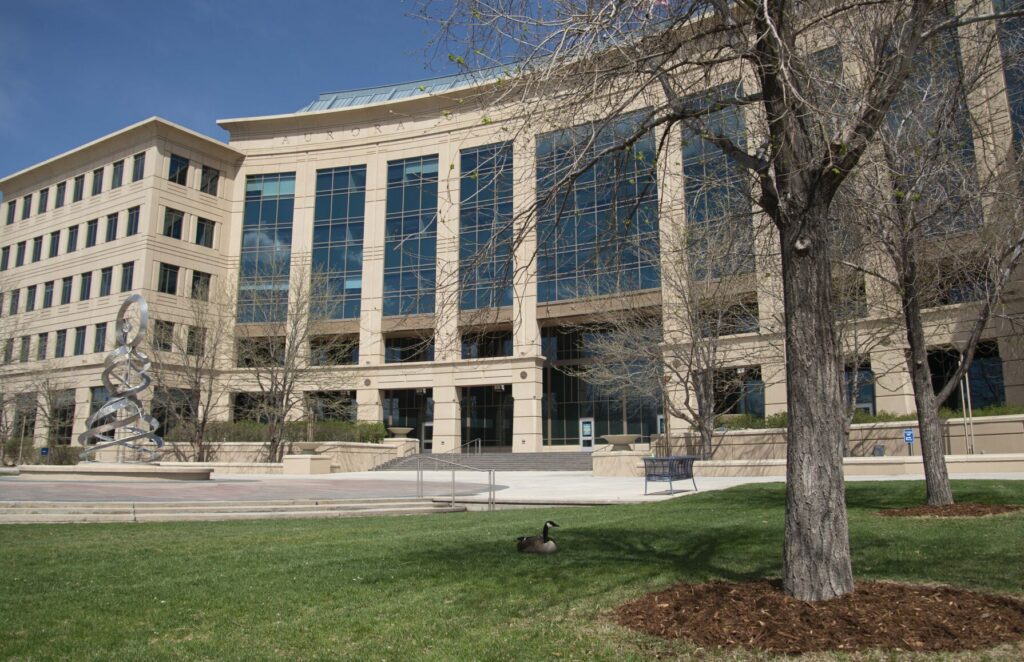
Aurora City Council to vote on police shooting statement
Kyla Pearce
kyla.pearce@gazette.com
Updated 8 minutes ago
At Monday night’s Aurora City Council meeting, councilmembers will officially vote on a resolution stating that the council “stands in mourning” with people who have lost loved ones to officer-involved shootings. The resolution, which passed through study session in late...

Colorado to get $75 million from opioid settlement with Purdue Pharma
Marissa Ventrelli
marissa.ventrelli@coloradopolitics.com
Updated 2 days ago
A $7.4 billion settlement reached with the pharmaceutical company Purdue Pharma and the Sackler family — its owners — is now legally effective a decade after attorneys general from multiple states launched an investigation and seven years after Colorado filed...
PREV
PREVIOUS

Black Democratic lawmakers ask Polis to give inmates more vaccine priority
Nine state lawmakers from the Black Democratic Legislative Caucus have asked Gov. Jared Polis to give increased priority to people in the state’s prison and jails. The legislators wrote that they were “disheartened and alarmed” by the state’s decision to remove incarcerated people from the middle tier of vaccine priority, a move made after Polis […]

An early "Christmas miracle" brings vaccine to those at a long-term care facility in Aurora
On a warm April morning, Mike Menard received the phone call from the Veterans Community Living Center at Fitzsimons, that he and his nine siblings were dreading. His father, 88-year-old Melvin Menard Sr., had tested positive for COVID-19. The news sent the family into a whirlwind of emotions. “I was heartbroken, I thought we’re not […]