

December revenue forecast shows short-term weakness in state economy but better days ahead
The news on the state’s revenue expectations is better than expected, but state economists warned lawmakers Friday that there is still a lot of uncertainty about the impacts of COVID on the economy. Until the vaccine is distributed, job losses and the winter will still be hardest on the lowest income workers in Colorado, economists warned.
The December revenue forecast looked good, on paper. The Joint Budget Committee, joined by more than a dozen other lawmakers, heard that they will have $3.75 billion to spend for the 2021-22 budget, based on the forecast from economists at the Legislative Council.
The economists with the governor’s office of state planning and budgeting were more wary. Their estimate was at around $2.6 billion.
But that’s all one-time funds, meaning spending for new programs is largely out of the picture when the General Assembly returns on Jan. 13 for its 2021 session.
Economists from both entities said the state’s revenue estimates are higher than they were in December, due largely to income tax collections for calendar year 2019 that came in later in 2020 and that have been higher than expected. That’s why it’s one-time money.
“Many households and businesses have recovered to pre-pandemic levels, [but] others continue to get hit extremely hard,” said economist Kate Watkins of the Legislative Council. The first distributions of the COVID-19 vaccine has heightened optimism and is expected to boost economic activity, but not until probably mid to late next year, she said.
As a result, and based on past recessions, labor markets and hiring will lag. “That’s just the way that it tends to be, as hiring a new employee tends to be the last decision that a firm makes, wanting to make sure that they’re in a good financial situation to do so.”
Higher-wage earners have recovered financially faster from the pandemic than those in the lower-income sector, Watkins explained. That’s also led to people in those higher-wage sectors to hang onto savings, waiting for the day when the pandemic has subsided and spending can ramp up again.
About 63% of the jobs lost in the early months of the pandemic have been recovered, but it’s largely in higher-wage jobs, and not in restaurants, bars, event venues and the like, all relatively low-wage jobs, the forecast noted.
The good news is that the economy is recovering faster than projections in the year indicated, but Watkins warned that risks to the forecast include the length of the current surge in COVID-19 cases. That’s put more than half of the state’s counties into “red level” status, which requires indoor dining to cease and which imposes higher capacity restrictions on a variety of retail businesses.
Inflation is also a concern, but mitigated by the continuing decline in oil prices, according to the forecast.
Retail sales painted an interesting picture. While sales in restaurants and bars have been devastated, sales tied to in-home consumption have more than made up for it. That’s largely in grocery and other food sales and in-home entertainment.
Additional risks to the forecast, and what economists are watching for in the first half of 2021: more weakening of the economy due to the surge in COVID-19 cases; a downturn in spending with the end of federal stimulus payments, and long-term damage from the pandemic, which Watkins referred to as “scarring.” One example of scarring, according to Watkins, is a business that takes on additional debt to stay afloat, and then shifts in consumption makes the business unprofitable. The business is then overleveraged without strong sources of income, she explained.
OSPB economists were more cautious. Their forecast said the short-term economic outlook has deteriorated, while the medium/long-term outlook – from the second quarter of 2021 to two to three years down the road – has improved.
That downturn in the short-term outlook is also predicated on the surge in COVID-19 cases, the forecast said. By April through June, 2021, however, vaccine distribution should improve the state’s economic outlook.
Similar to the Legislative Council forecast, OSPB also reported strong household finances and a weak labor market. Both forecasts said that participation in the labor market declined significantly for women, dropping to levels not seen since 1986. That’s due to job losses as well as an inability to find child care, according to the Legislative Council report.
Unemployment will continue to be at high levels into 2021, both forecasts said.
What wasn’t listed as a risk to the forecast: evictions. State and federal eviction moratoriums are scheduled to expire at the end of the month. The OSPB forecast noted the expiration of those moratoriums but didn’t estimate what kind of impact that could have on the recovery. Rent collections have remained stable, the OSPB forecast said, with 94% of renters paying on time through October.
House and Senate Democrats on the JBC said in a statement after the forecast presentations that while the recovery is more positive, the impact on low-wage earners continues to be a concern.
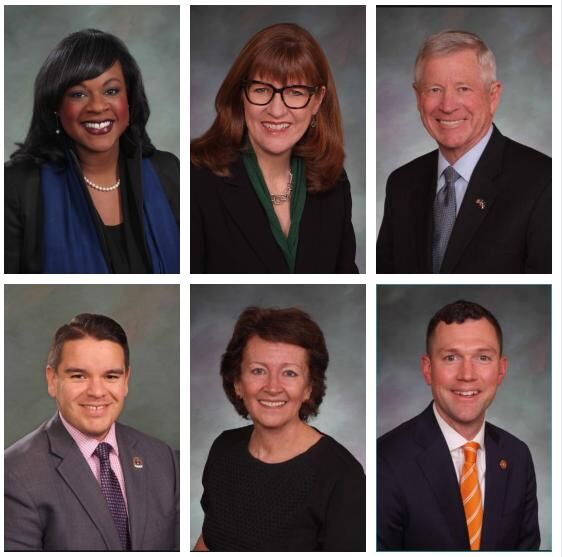
That means the JBC and the legislature will need to ensure those vulnerable communities have the support and resources they need to “equally recover” from the pandemic, according to JBC Chair Sen. Dominick Moreno of Commerce City.
Vice-Chair Rep. Julie McCluskie of Dillon echoed those concerns. While the forecast shows the economy bouncing back, low-wage workers, small businesses, restaurants and schools “desperately need more federal assistance to get through the months ahead.”
A statement from Gov. Jared Polis called the forecasts “surprisingly good and welcome economic news for Colorado, given that the entire world is in the grip of a deadly virus and the United States is experiencing an all-time high in hospitalizations and deaths. But this positive data must not detract from the real-life struggles that many small businesses and families are still facing here in Colorado.” Polis also called on Washington to take action to assist Coloradans still struggling financially in the pandemic.

Trump order aims to help more people get retirement savings plans in time for new federal match
Collin Binkley
collin.binkley@associatedpress.com
Updated 8 hours ago
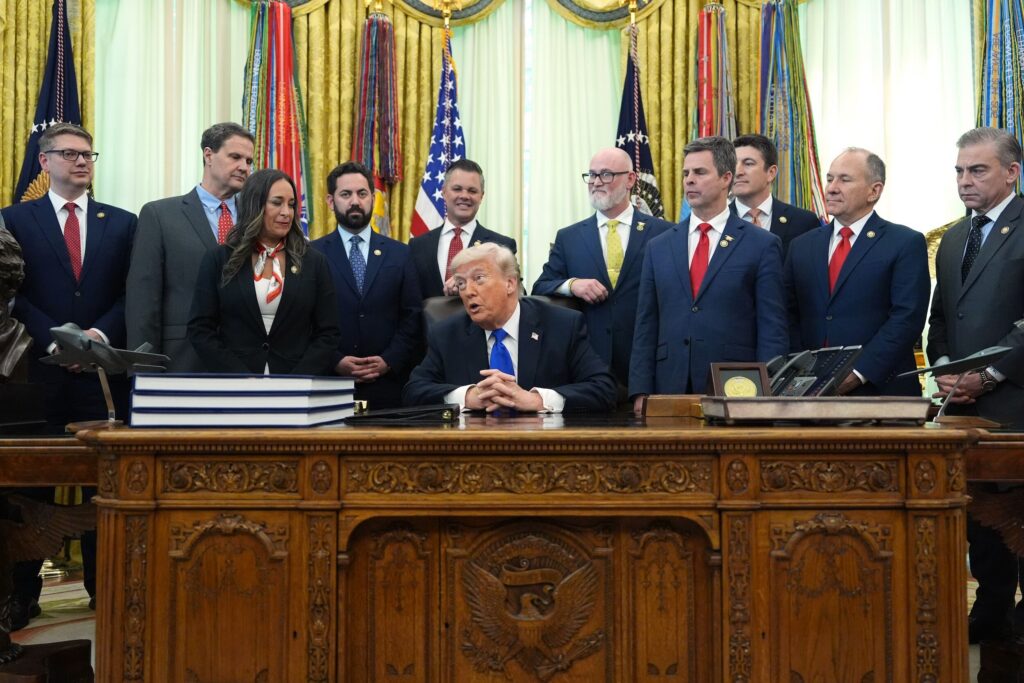
WASHINGTON • President Donald Trump signed an executive order on Thursday calling for a new government website where people in the United States can find and compare private-sector retirement savings accounts, aiming to help millions of workers whose employers do not offer such...

Colorado Politics Calendar May 4-10
Rachael Wright, Special to Colorado Politics
rachael.wright@coloradopolitics.com
Updated 3 days ago
CoPo’s weekly political calendar will help you find political and public-policy events throughout Colorado. It includes candidate and issue campaign events, public policy meetings, court hearings, state and local party conventions, assemblies, debates, rallies, parades, speaking engagements, traveling dignitary appearances,...
Gov. Lamm scolds own party over losing modernization battle against GOP | A LOOK BACK
Rachael Wright, Special to Colorado Politics
rachael.wright@coloradopolitics.com
Updated 3 days ago
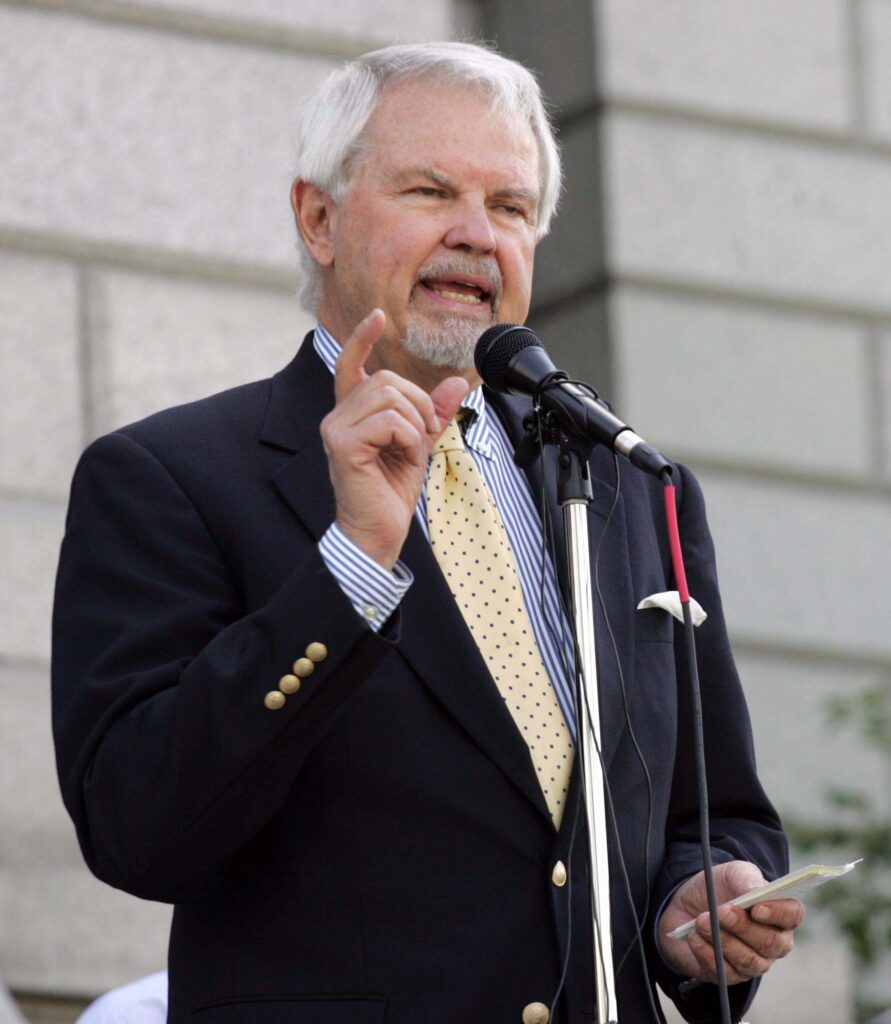
Forty-Five Years Ago This Week: “The Democratic Party lost the battles of ideas and political technology last November,” Gov. Dick Lamm told the Boulder County Democratic Party at the annual Harry S. Truman Memorial Dinner. Lamm argued that the Democratic...
The need for a governor to say “no” to his friends | SONDERMANN
By Eric Sondermann
by-eric-sondermann@coloradopolitics.com
Updated 3 days ago
A wise man once remarked that the real test of a governor is his willingness to turn down and reject the pleadings of political friends and allies. That gentleman knew something of what he spoke. He occupied the corner-office executive...

Dismissal sought in Michael Clark’s second trial
Jenny Deam
jenny-deam@coloradopolitics.com
Updated 16 hours ago
The murder conviction of Michael Clark should be dismissed due to a 32-year delay that led to crucial evidence being lost or destroyed, a bungled police investigation and “outrageous conduct” at the state crime lab, according to defense motion filed...

Colorado to get $75 million from opioid settlement with Purdue Pharma
Marissa Ventrelli
marissa.ventrelli@coloradopolitics.com
Updated 7 hours ago
A $7.4 billion settlement reached with the pharmaceutical company Purdue Pharma and the Sackler family — its owners — is now legally effective a decade after attorneys general from multiple states launched an investigation and seven years after Colorado filed...

Committee approves reworked version of previously vetoed rideshare bill
Marissa Ventrelli
marissa.ventrelli@coloradopolitics.com
Updated 1 day ago
Members of the Colorado House Business Affairs and Labor Committee voted across party lines to pass a modified version of a bill establishing regulations on rideshare companies. Last year, Reps. Jenny Willford, D-Northglenn, and Meg Froelich, D-Englewood, introduced House Bill...
Fight over credit card ‘swipe fees’ attracts nearly 200 lobbyists in Colorado
Marianne Goodland
marianne.goodland@coloradopolitics.com
Updated 1 day ago
One of the most expensive fights of the 2026 session got a little closer to being over on Friday, when the Colorado Senate took a second final vote on the proposal to eliminate “swipe fees” on sales taxes. It’s not...

Veto likely as union-backed bill heads to Colorado governor’s desk — again
Marissa Ventrelli
marissa.ventrelli@coloradopolitics.com
Updated 1 day ago
For the second year in a row, a bill that would make it easier for labor organizations to impose fees on all workers, regardless of union membership, is headed for Gov. Jared Polis’ desk. The governor, who vetoed the legislation...

Aurora mental health nonprofit cuts 100-plus jobs after Colorado agency reduces reimbursement rate
Marianne Goodland
marianne.goodland@coloradopolitics.com
Updated 2 days ago
A nonprofit that provides services through 11 mental health centers in Aurora announced Thursday that it is eliminating 111 jobs effective June 30, the result of federal and state budget reductions. Aurora Mental Health & Recovery said the positions being...
PREV
PREVIOUS

Mayor Hancock taps Murphy Robinson as deputy mayor in 2021
Denver Mayor Michael Hancock’s office announced Friday that Murphy Robinson will be the city’s deputy mayor in 2021. Robinson, a Denver native who Hancock appointed in May to lead the city’s safety department, will wear his dual title beginning Jan. 1. Robinson served as deputy mayor in 2019 for roughly eight months before transitioning to […]

K-12 school enrollment falls more than 22K students for 2020-21
Enrollment in Colorado’s public schools has declined overall by 2.6%, or about 22,280 students, according to a forecast presented Friday to the Joint Budget Committee by Legislative Council economists. The biggest drops were recorded in the communities in Colorado’s central mountain region, at about 4.6%. Colorado Springs had the smallest decline, at 1.3%. However, full-time […]