

Title Board rejects petitions proposal, finding an attempt to change constitution via statute
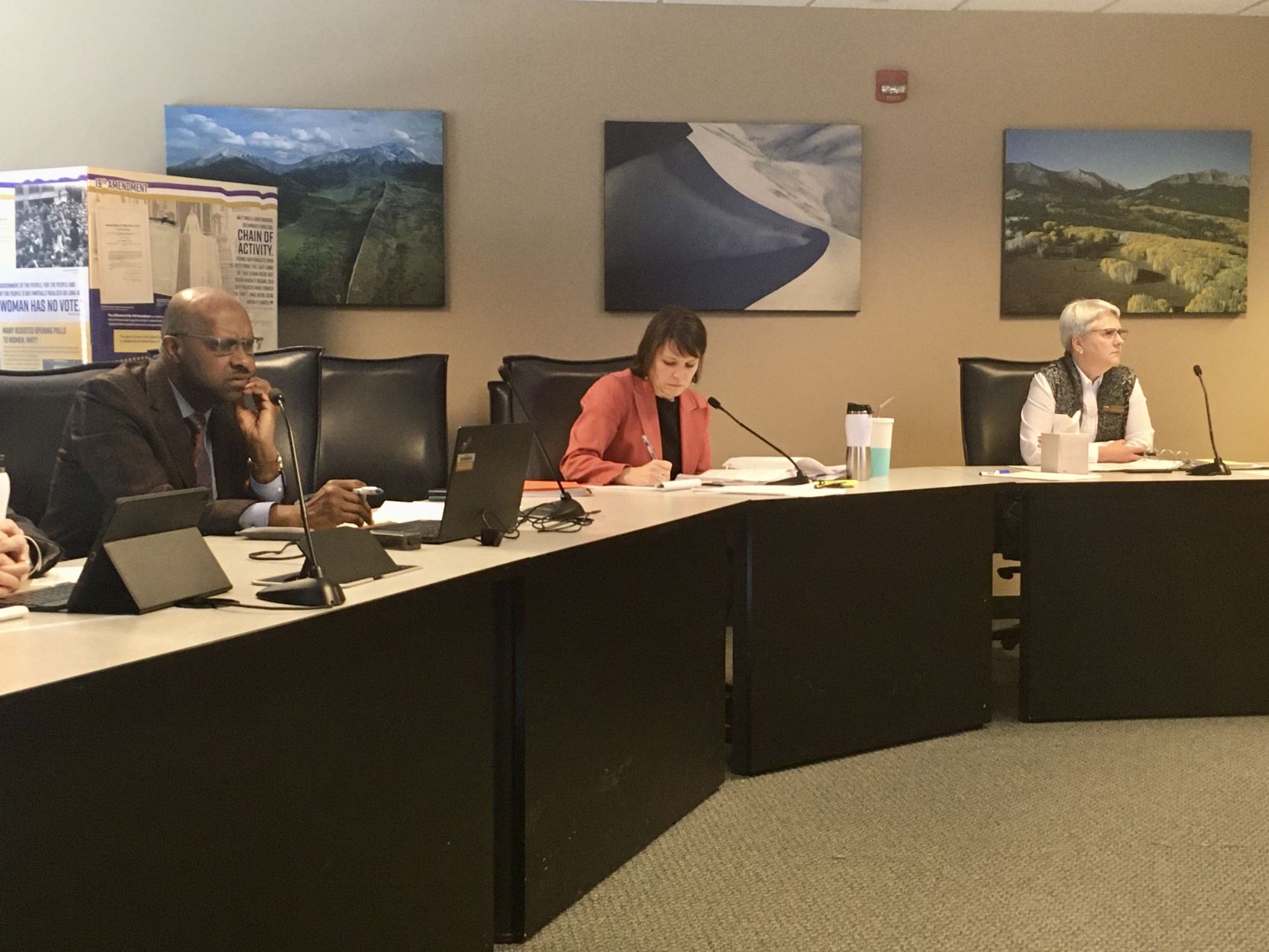
The Title Board rejected on Wednesday a proposed ballot initiative to drastically revamp the direct democracy process in Colorado, concluding the proposal was an attempt to repeal sections of the state constitution without actually being a constitutional amendment.
“You simply cannot amend the Colorado constitution by enacting a statute,” said Jason Gelender, a board member representing the Office of Legislative Legal Services. “It would be like if the General Assembly tried to do what the measure seems to try to do, saying ‘we’re going to repeal TABOR,'” referring to the Taxpayer Bill of Rights.
Initiative #6, from designated representatives Donald L. “Chip” Craeger III of Denver and John Ebel of Lone Tree, mirrored three other proposals the Title Board considered within the past year. Nicknamed the “Petition Rights Amendment,” the measure would expand the right of ballot initiative to most units of government, change the process by which initiative titles are set and appealed, and alter the number of signatures required to place an initiative on the statewide ballot.
Other changes would restrict the legislature’s ability to exempt bills from referendum and impose a $3,000 fine to people who impair the work of signature gatherers.
However, Initiative #6 deviated in two respects from past versions of the Petition Rights Amendment: first, it was a statutory change, not a constitutional amendment. Second, it now included a provision that “Anyone has standing to sue for any issue.”
Because the initiative struck several sections from the state’s constitution that govern the ballot initiative process, board members were skeptical of the maneuver.
“To me, when I see an initiative that only adds a new section of Colorado Revised Statutes and attempts to nonetheless repeal certain constitution provisions, it’s either doing one of two things,” explained Gelender. “One, it’s creating a second subject by having a new means of amending the constitution by statute. Or two, it’s simply not effective because you can’t amend the constitution that way.”
The proponents claimed in turn that Amendment B, which voters approved this year to repeal the Gallagher Amendment, operated similarly. Gelender explained that Amendment B was a constitutional amendment.
“It is a different thing and I feel very confident that this has not been done before,” he added.
The board signaled to the proponents that their single subject concerns would be allayed by the deletion of the sentences repealing parts of the constitution and the sentence giving anyone standing to sue. They did not, however, provide a definitive answer about whether such changes were minor enough to allow a direct reconsideration at the board’s next meeting.
By a vote of three to zero, board members found they lacked jurisdiction to set a title as Initiative #6 was written, due to single subject concerns. Had the board found otherwise, it would have set a title that would appear before voters on the ballot, and allow proponents to proceed with gathering signatures.
Remote access
The board concluded its meeting by revising and adopting new meeting procedures. Members discussed in detail whether to include a policy of promoting remote participation beyond the pandemic.
“From an equity lens, I actually think we should be more flexible,” said board Chair Theresa Conley, representing Secretary of State Jena Griswold. “This is a very narrow opportunity for the public to actually change and impact the title.”
Board Clerk Steven Ward warned about the implications of such a move, worrying about the feasibility of running a teleconference or webinar simultaneously to every in-person meeting.
“There are billions of people on the Internet, and this policy opens the door to all of them to come appear at a Title Board hearing,” he said.
David Powell, representing Attorney General Phil Weiser, sided with Ward.
“I think a lot of people are going to say, hey, I want to participate remotely and it’s going to be an avalanche of requests,” he explained. “If we leave it in there, we’re creating an expectation.”
Conley pushed back, noting the hardship of a person from far outside the Denver area to appear before the Title Board and offer comments. She added that offering written comments in advance was not an exact substitute, given the fluid nature of the title-setting process.
Toni Larson, with the League of Women Voters of Colorado, commented during the meeting that she supported Conley’s position.
Board members and Ward agreed to find a way to increase meeting access, while striking the policy encouraging remote participation.



Denver to mull $6.9M East Colfax BRT extension, police union deal
Deborah Grigsby
deborah.smith@denvergazette.com
Updated 24 hours ago
Denver’s councilmembers will consider several items during Monday’s regular meeting, but the most notable is a resolution to overhaul contract review rules, requiring draft agreements to be shared with the Council before being heard at committee meetings. Council Resolution 26-0329...

Colorado justices confirm lawyers may ‘borrow’ allegations from elsewhere
Michael Karlik
michael.karlik@coloradopolitics.com
Updated 12 hours ago
The Colorado Supreme Court ruled on Monday that plaintiffs’ lawyers can use allegations made elsewhere to bolster their own clients’ claims, so long as the attorney first performs some degree of investigation into the “borrowed” assertions. Under Colorado’s rules for...

Colorado legislators propose $46.8 billion budget, driven by Medicaid costs
Marianne Goodland
marianne.goodland@coloradopolitics.com
Updated 15 hours ago
The six-member panel of legislators in charge of crafting the state budget has now turned over its plan to the Colorado legislature, proposing to spend $1.5 billion more for the Medicaid program. The increase is driven by Medicaid costs, which...

Governor signs bill expanding who can petition for weapons restrictions
Marissa Ventrelli
marissa.ventrelli@coloradopolitics.com
Updated 15 hours ago
Gov. Jared Polis on Monday signed a bill into law expanding who can ask a judge to temporarily restrict a person’s access to firearms. Established in 2019, 0Colorado’s extreme risk protection law (ERPO) initially allowed a family member or law...

Colorado justices restore RTD subcontractor’s award, reject ‘drastic’ view of public works law
Michael Karlik
michael.karlik@coloradopolitics.com
Updated 17 hours ago
The Colorado Supreme Court on Monday restored a $5.7 million award to a company that helped build a commuter rail line and, in doing so, rejected a view of state law that would nullify a subcontractor’s entitlement to any compensation...
As Colorado passes 6 million residents, housing initiatives take center stage
Marianne Goodland
marianne.goodland@coloradopolitics.com
Updated 16 hours ago
New Census data confirming Colorado’s population has topped six million is fueling renewed debate over Gov. Jared Polis’ housing agenda, as he tied the population increases to home construction. The governor said the counties experiencing the largest increases in new...

Congress urged to open antitrust investigation into Apple and OpenAI over ‘left-leaning bias’
Kaelan Deese, Washington Examiner
kaelan.deese.washington.examiner@gazetteedit.wpenginepowered.com
Updated 18 hours ago
A conservative legal group founded by senior White House adviser Stephen Miller is urging Congress to investigate a partnership between Apple and OpenAI, arguing the companies have effectively locked millions of people into a single, politically biased artificial intelligence system....

Trump threatens jail time over downed US fighter jet ‘leak’
Christian Datoc and Mabinty Quarshie, Washington Examiner
christian.datoc.and.mabinty.quarshie.washington.examiner@gazetteedit.wpenginepowered.com
Updated 18 hours ago
President Donald Trump threatened jail time Monday for the journalist who first reported that an airman was still missing after a fighter jet went down in Iran last week. The high-risk and eventually successful attempt to rescue the weapons officer...

Bill to accelerate police access to online data clears Colorado committee
Marissa Ventrelli
marissa.ventrelli@coloradopolitics.com
Updated 14 hours ago
A proposal to speed up law enforcement’s access to social media data is advancing in the Colorado Legislature, drawing testimony from the residents of Evergreen, where a school shooting took place, and questions from opponents worried about privacy and constitutional...
El Paso County defendant’s speedy trial rights violated, Colorado justices find in overturning convictions
Michael Karlik
michael.karlik@coloradopolitics.com
Updated 12 hours ago
The Colorado Supreme Court concluded on Monday that an El Paso County prosecutor made an unjustified decision to file a mid-case appeal, pushing the trial beyond the legal deadline and requiring that the defendant’s convictions be overturned. In Colorado, the...
PREV
PREVIOUS
Colorado pandemic unemployment claims highest since program’s first week
Initial claims for pandemic unemployment in Colorado are reaching new heights this month, according to data released Thursday by the Department of Labor and Employment. There were 20,621 pandemic unemployment claims made during the week ending Dec. 12, an increase of nearly 3,000 from the previous week and the second-highest number of weekly initial claims […]

Denver's second sanctioned homeless camp is now open and at full capacity
Two days ahead of schedule, Denver’s second sanctioned homeless camp quietly opened Tuesday evening in Uptown and within minutes reached full capacity. The camp is made up of 30 different red and black Eskimo QuickFish and neon yellow, gray and black Cabela’s ice fishing tents all placed in an enclosed area adjacent to the Denver […]