

US Supreme Court orders relief from capacity limits for Weld church, to minimal effect
A majority of the U.S. Supreme Court has overturned a federal judge in Colorado who denied an exemption from COVID-19 capacity limitations for a church in Weld County.
Harvest High Plains Church in Ault sought to hold in-person services with more than 50 attendees. They alleged the state had allowed racial justice protests to occur over the summer “while continuing to impose draconian restrictions on religious gatherings.”
U.S. District Judge Raymond P. Moore denied the church a preliminary injunction to exempt them from restrictions on Aug. 10, relying at the time on a similar scenario in which the Supreme Court denied relief to a Southern California Pentecostal church.
Chief Justice John G. Roberts wrote in that instance that the decisions of state officials during the pandemic “should not be subject to second-guessing by an ‘unelected federal judiciary.'”
Correspondingly, Moore cited clear differences between outdoor protests and indoor religious services, declining to exempt Harvest High Plains Church from health orders “merely because the state addressed an unprecedented and potentially explosive situation” – the protests – “with a modicum of restraint.”
The state pointed out that it had modified its public health orders in response to evolving needs, and that houses of worship “may host gatherings of 50% of the posted occupancy limit, up to 50 people, where physical distancing of 6 feet is observed – the very same relief Plaintiffs sought in their original complaint.”
However, since that time, the Supreme Court had a personnel change, with conservative Justice Amy Coney Barrett quickly added to the bench in October following the death of the more liberal Justice Ruth Bader Ginsburg. Following that ideological shift, the court’s majority decided to block capacity limitations for faith houses in New York with a decision in Roman Catholic Diocese of Brooklyn v. Cuomo.
“Even in a pandemic, the constitution cannot be put away and forgotten,” the opinion noted.
Similarly, the court’s unsigned opinion issued on Tuesday in the Colorado case directed Moore to reevaluate his denial of relief in light of the New York decision. Justices Elena Kagan, Stephen G. Breyer and Sonia Sotomayor dissented.
“Colorado has lifted all those limits,” Kagan wrote. “Absent our issuing different guidance, there is no reason to think Colorado will reverse course – and so no reason to think Harvest Church will again face capacity limits.”
She added that when the issue at the root of a plaintiff’s lawsuit does not have a reasonable chance of recurring, “a case is well and truly over.”
Conor Cahill, a spokesperson for Gov. Jared Polis, said that the ruling would have little impact on the state given the change Kagan cited. “Gov. Polis has prioritized freedom of assembly and freedom of worship, and this decision is already consistent with the current health guidance for houses of worship,” Cahill explained.
The attorney for Harvest High Plains Church, Barry K. Arrington, told The Denver Post it was not a certainty that capacity limits via health orders would never present another problem for his client.
“The state has in the past amended this thing willy-nilly, and there is nothing to stop them from amending it tomorrow,” he said.
In October, a federal judge in Colorado allowed two Denver-area churches to skirt capacity and mask-wearing limitations under certain circumstances, prompting three Christian bishops to publicly criticize such exemptions to health orders.
“Be assured that we will continue to expect all of our churches to prioritize care for our neighbors, following the guidelines your administration sets for the safe and responsible practice of faith communities during this public health crisis,” the bishops wrote to Polis.
Mark Hotaling, the pastor for Harvest High Plains Church, did not immediately respond to a request for comment. On July 17, the church’s Facebook page appeared comfortable with limitations on capacity.
“With the new Public Health Order from the State, our new operating capacity is 73 (50% of our normal capacity). This is great news!” the Facebook post reads. “So there’s plenty of room for us to have close to a normal size service while still maintaining social distancing.”
Nine days later, Arrington filed a brief in federal district court asking the judge to allow “a gathering of 150 worshipers who commit to social distancing regulations.”
The case is High Plaints Harvest Church v. Polis.


A tale of two debates | Vince Bzdek
Vince Bzdek
vince.bzdek@gazette.com
Updated 15 hours ago
Ballots go out Monday as the June 30 state primary elections bear down on us. As a result, it is suddenly the season of proliferating political debates, and there have been some doozies already. I had the chance to see two very...

Colorado Politics Calendar June 8-14
Rachael Wright, Special to Colorado Politics
rachael.wright@coloradopolitics.com
Updated 4 days ago
CoPo’s weekly political calendar helps you find political and public policy events throughout Colorado. It includes candidate and issue campaign events, public policy meetings, court hearings, state and local party conventions, assemblies, debates, rallies, parades, speaking engagements, traveling dignitary appearances,...
Decker Warns Democrats Hold Outsized Power in 18–17 Senate Split | A LOOK BACK
Rachael Wright, Special to Colorado Politics
rachael.wright@coloradopolitics.com
Updated 4 days ago
Twenty-Five Years Ago This Week: “The Colorado state Senate and the U.S. Senate are quite similar at this point,” wrote state Rep. Richard Decker, R-Fountain. “The 18-17 divide in Colorado doesn’t look significant numerically, but it grants Democrats a huge...

The “launchpad generation” and the three A’s | SONDERMANN
Thelma Grimes
thelma.grimes@coloradopolitics.com
Updated 3 days ago
Wisdom often arrives when you least expect it. This tidbit came from an ordinary lunch, part personal catch-up, part chat about the sad state of our politics and education policy. My lunch partner was a senior executive at CareerWise, the...
Six incumbents face challengers in primary
Marissa Ventrelli
marissa.ventrelli@coloradopolitics.com
Updated 17 hours ago
With Colorado’s primary election just weeks away, voters will see plenty of new names on their ballots when they’re sent out next week. There will be some old names, too, as several incumbents are running opposed. Six lawmakers — one...

Colorado, Nevada water negotiators split on federal 10-year river management plan
Marianne Goodland
marianne.goodland@coloradopolitics.com
Updated 18 hours ago
Two of the seven Colorado River negotiators weighed in Friday on a decade-long management framework unveiled a day earlier by the federal government. With the seven states along the Colorado River failing to reach an agreement, the U.S. Bureau of...

With no 7-state deal, federal agency turns to 10-year Colorado River strategy
Marianne Goodland
marianne.goodland@coloradopolitics.com
Updated 18 hours ago
The U.S. Department of the Interior is moving forward with a 10-year framework for managing the Colorado River after 2026, outlining a plan to issue new operating guidelines every two years as the seven basin states remain unable to reach...
After prison release, Tina Peters faces tight parole limits, ongoing legal troubles
Marianne Goodland
marianne.goodland@coloradopolitics.com
Updated 1 day ago
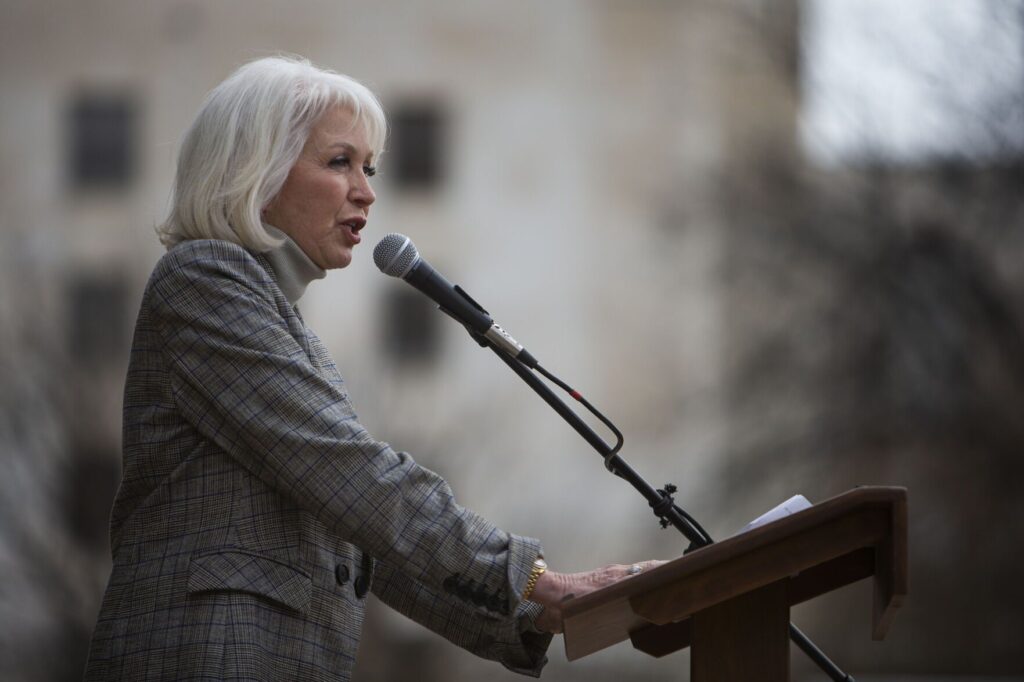
Released from prison this week, former Mesa County Clerk Tina Peters now begins a parole term that outlines strict limits on her movements and conduct, while separate ethics and campaign‑finance cases continue to move forward. Peters’ parole, as first reported...

‘The program’: Caretakers got millions, some homeless were evicted
David Migoya
david.migoya@gazette.com
Updated 7 hours ago
Editor’s Note: This article is part of a Colorado Watch series that looked into how homeless people were offered housing and “donations” from a church in return for becoming clients of a home health care agency that billed Medicaid millions. Read the other...

‘The program’: Using the homeless to reap Medicaid millions is not new
David Migoya
david.migoya@gazette.com
Updated 2 days ago
Editor’s Note: This article is part of a Colorado Watch series that looked into how homeless people were offered housing and “donations” from a church in return for becoming clients of a home health care agency that billed Medicaid millions. Read the other...
PREV
PREVIOUS

Enrollment in Colorado's public schools drops for first time in more than 30 years
Nearly 30,000 fewer students enrolled in Colorado’s public school system this year compared to 2019, the first year-over-year decline since the end of President Ronald Reagan’s administration. The drop represents a 3.3% decrease in enrollment for a school system of more than 883,000 students. The state Department of Education said in the announcement that the […]

Colorado GOP says Joe Biden has the votes to be 'recognized' as next president
The Colorado Republican Party acknowledged Tuesday that Democrat Joe Biden is the president-elect, saying the former vice president received enough electoral votes the day after state electors cast ballots and six weeks after the election. U.S. Rep. Ken Buck, the Windsor Republican who doubles as chairman of the state GOP, also said in a statement […]