

Denver police chief attributes issues with protest response to lack of planning time
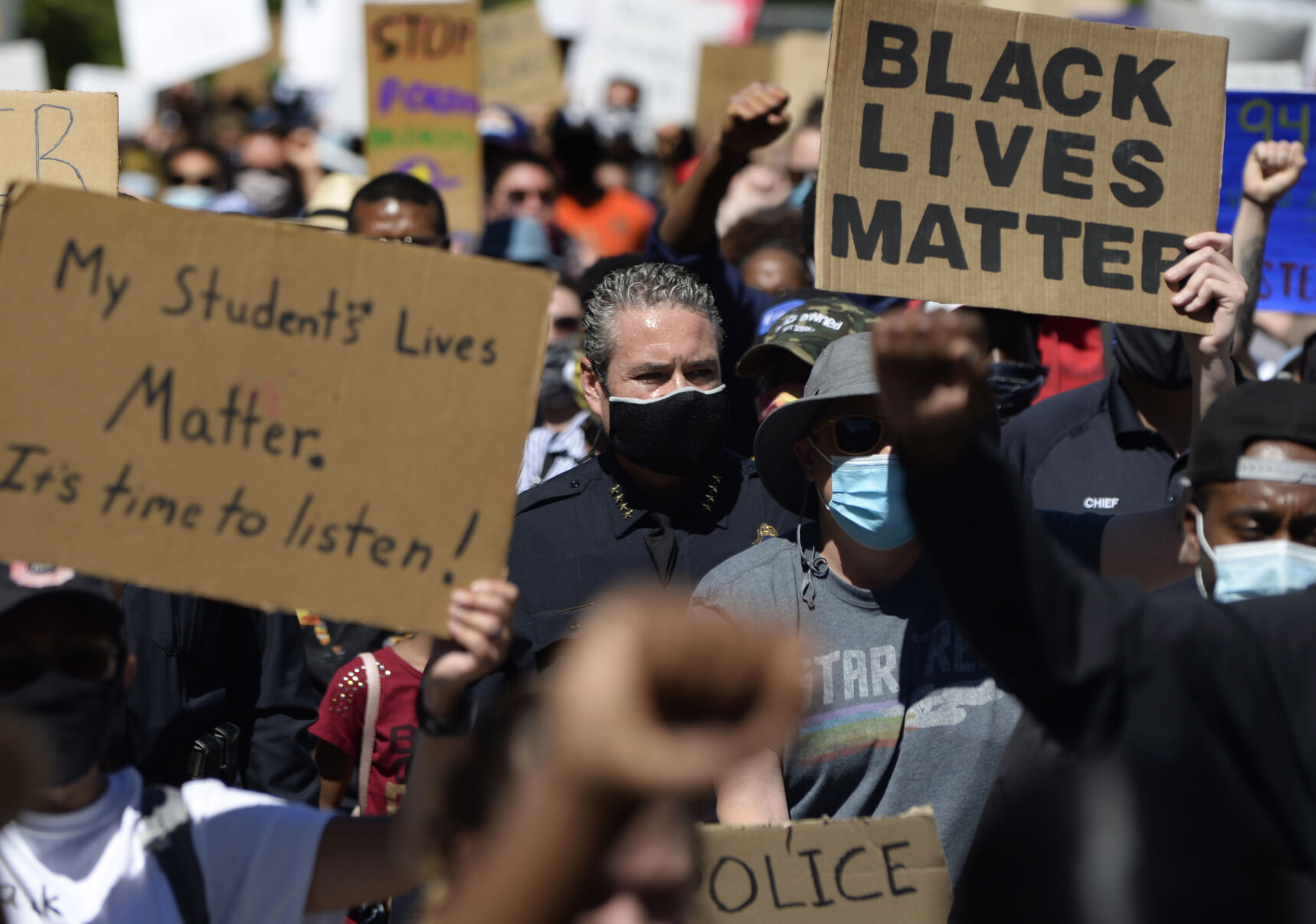
The Denver Police Department struck a cooperative tone Tuesday after the Office of the Independent Monitor released a much-anticipated report on DPD’s response to protests in May and June sparked by the death of George Floyd in Minneapolis.
In a news release, the department expressed outright agreement with most of the 16 recommendations made in the report and noted that the spontaneity of the protests caught them somewhat off guard.
The report finds gaps in the DPD’s existing policies for record keeping, crowd control and use of force during demonstrations and other crowd-control situations. Among its findings, the report says police used less-lethal projectiles in ways that did not comply with department policies, often created use-of-force reports days after incidents, did not create officer rosters of those assigned to the first four days of protests and did not have body-worn camera footage.
Police Chief Paul Pazen and Safety Director Murphy Robinson have previously said they supported the OIM’s investigation, and in a news conference Tuesday, Pazen said the department’s goal was to integrate the report’s recommendations.
“We want to learn from this, and ensure that any of the gaps or the shortfalls don’t occur in the future,” Pazen said. “We need to make sure that our responses are in line with our values as a city, and this is a step in that right direction.”
Recommendations made by the report cover development of more clearly defined policies for protest responses, such as requiring rosters of officers assigned to protests and requiring all officers regardless of rank to wear body cameras in the field while working demonstrations.
The news release lays out plans to make most of its planned policy changes according to the report’s recommendations by Jan. 31, 2021.
The department plans to begin steps toward developing mutual aid agreements with other jurisdictions by Feb. 2021 that address providing support in crowd-control situations, according to the release.
The release says the department began making some changes before the release of the OIM report, such implementing same-day incident reporting. In a November interview with The Denver Gazette, Pazen said the DPD has also added a question to use-of-force reports for providing information about de-escalation tactics an officer used in a situation.
Report critical of Denver police response during George Floyd protests
During the news conference, Pazen returned several times to the protests’ spontaneity, implying the lack of time for the police department to plan its responses contributed to issues found by the OIM.
Pazen said the DPD’s absence of officer rosters between May 28 and May 31 is an oversight that happened in the protests’ chaos.
“The simple answer is that this caught us off guard just like it caught many cities across the country off guard,” Pazen said. “We have a long successful history of being able to manage First Amendment activities; get people safely from point A to point B. The level of violence that we saw here really changed that dynamic, and our team was out there for 12, 14 hours and beyond. It’s an oversight it’s an oversight that won’t happen in the future.”
Pazen attributed instances of missing body-worn camera recordings mainly to difficulties attaching cameras to protective gear, a snag he said has since been addressed with a checklist for supervisors to use to make sure officers attach body-worn cameras to their uniforms before to being deployed for protest responses.
Denver City Councilman Paul Kashmann, who represents District 6 and chairs the Safety, Housing, Education and Homelessness Committee, compared Denver getting caught unprepared by the scope of the protests to getting knocked down by a surprise wave while playing in the ocean.
“You’d let one hit you and knock you down, and one you’d dive under, and all of a sudden you’d turn around and here’s a great big wave that you’re just not prepared for, and it just slams you to the ground,” he said. “With all due respect to the chief and the people who do their best on a day-to-day basis, this is an extreme situation that we weren’t prepared for. And in a city like Denver, we need to be prepared for these types of situations.”
Kashmann said the report’s findings about the DPD’s gaps in clear controls and policies for use of less-lethal weapons trouble him in particular. The report found use by officers who were not trained and certified, as well as instances of officers receiving in-the-moment training for their use.
“That type of stuff, I think, carries with it a greater weight of urgency to be dealt with,” he said. “But the more mundane things like paper trails and other such policies have equal importance in situations like this.”
In the news conference, Pazen demurred on giving specific details about how officers were trained on the ground for crowd control during the protests. He said officers last received “refresher” training on use of less-lethal weapons early in 2020.
“We didn’t have the time to prepare, and we need to take this report seriously,” Pazen said.
“…We need to make sure that we elevate that training to include ensuring that we have enough certified, trained officers with the tools that they will be deploying” to prepare for future events of the summer’s magnitude that happen spontaneously.
The ACLU of Colorado in June filed a lawsuit against the City and County of Denver on behalf of Black Lives Matter 5280 and other protesters for officers’ use of tear gas and less-lethal weapons against peaceful protesters. Mark Silverstein, the ACLU’s legal director, said the OIM’s report confirms the organization’s allegations that systemic top-down policy failures in the DPD led to how officers responded to the protests.
Silverstein said the OIM’s report is useful for the ACLU’s lawsuit in providing a list of documents and videos that the police department has already produced in response to requests.
“There can be no excuse for any failure to deliver them to the plaintiffs’ lawyers, so we will be reviewing this report for … discovery issues,” he said.
He said the department’s missing officer rosters speak to a significant reason why the ACLU’s lawsuit has been brought against Denver instead of individual officers.
The missing rosters are “equivalent to the city basically allowing officers to tear off their name tags — which of course is another issue,” Silverstein said. “Internal controls are essential to have a police force that’s complying with the law. When you don’t have those internal controls, you have a substantial risk that the subordinates, the police officers, will be out of control.”
Independent monitor Nick Mitchell will officially present his findings to the Denver City Council’s safety committee Wednesday morning. At 6 p.m., the Citizen Oversight Board will host a two-hour virtual public forum about the report, including a question-and-answer session.
The complete report is available at https://www.denvergov.org/content/dam/denvergov/Portals/374/documents/2020GFPReport_OIM.pdf

Colorado taxpayers would lose thousands in TABOR refunds under Democrats’ proposed ballot measure
Marianne Goodland
marianne.goodland@coloradopolitics.com
Updated 5 hours ago
A nonpartisan analysis of a proposed ballot measure that seeks to increase public education spending by tapping Taxpayer’s Bill of Rights refunds shows that about 75% of what would otherwise go to Colorado residents wouldn’t actually go to K-12 schools....

Appeals court reverses conviction after judge blocked questioning about witness’s criminal charges
Michael Karlik
michael.karlik@coloradopolitics.com
Updated 9 hours ago
An Arapahoe County judge violated a defendant’s constitutional right to confront the witnesses against him by blocking the defense from asking a witness about her own pending criminal charges in the same jurisdiction, Colorado’s second-highest court ruled last week. Prosecutors...
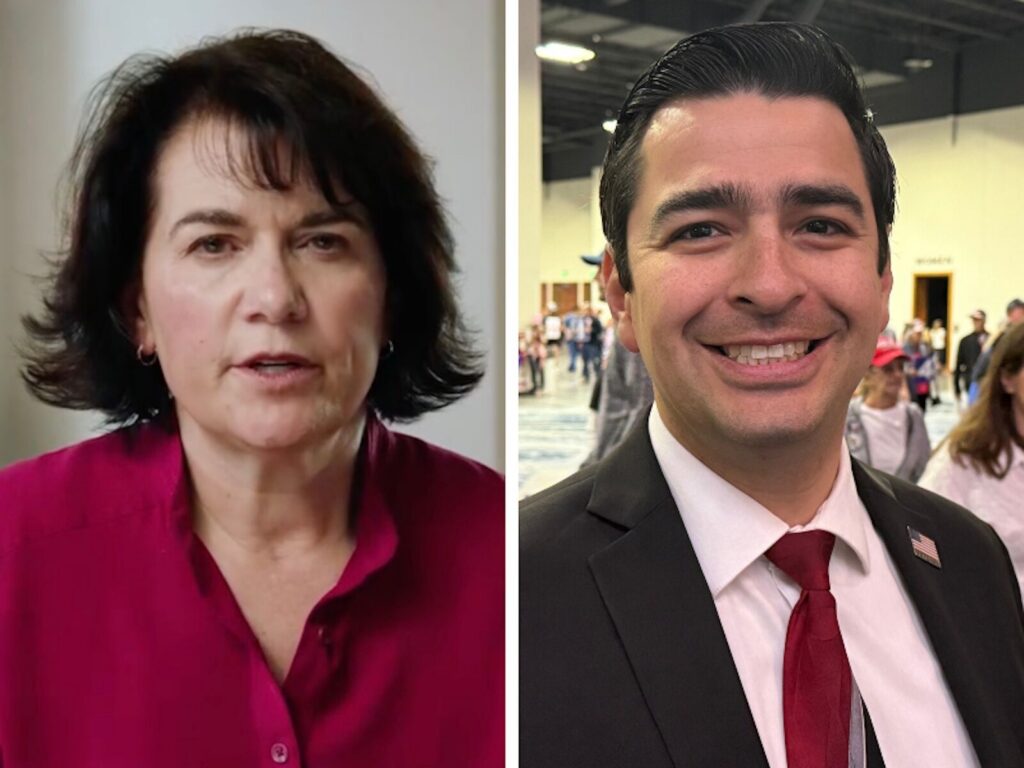
Boebert challenger Eileen Laubacher, Republican Gabe Evans lead Colorado’s quarterly House fundraising
Ernest Luning
ernest.luning@coloradopolitics.com
Updated 7 hours ago
The Democrat challenging U.S. Rep. Lauren Boebert in Colorado’s most solidly Republican congressional district again posted the state’s biggest fundraising numbers for the most recent quarter, while Republican U.S. Rep. Gabe Evans, who is defending the state’s lone toss-up seat,...

Federal shift on medical cannabis draws praise and concern in Colorado
Marianne Goodland
marianne.goodland@coloradopolitics.com
Updated 7 hours ago
Colorado’s response to the federal reclassification of medical cannabis ranged from industry leaders celebrating the development to youth advocacy groups warning that the change heightens the need for stronger protections for children. The U.S. Justice Department and the Drug Enforcement...

10th Circuit orders second look at challenge to Colorado ‘ghost gun’ law
Michael Karlik
michael.karlik@coloradopolitics.com
Updated 11 hours ago
The Denver-based federal appeals court issued a mixed decision on Thursday, finding that a group of plaintiffs could not challenge certain aspects of Colorado’s “ghost gun” prohibition, could challenge others, and ordered further analysis of the law’s constitutionality. To address the...
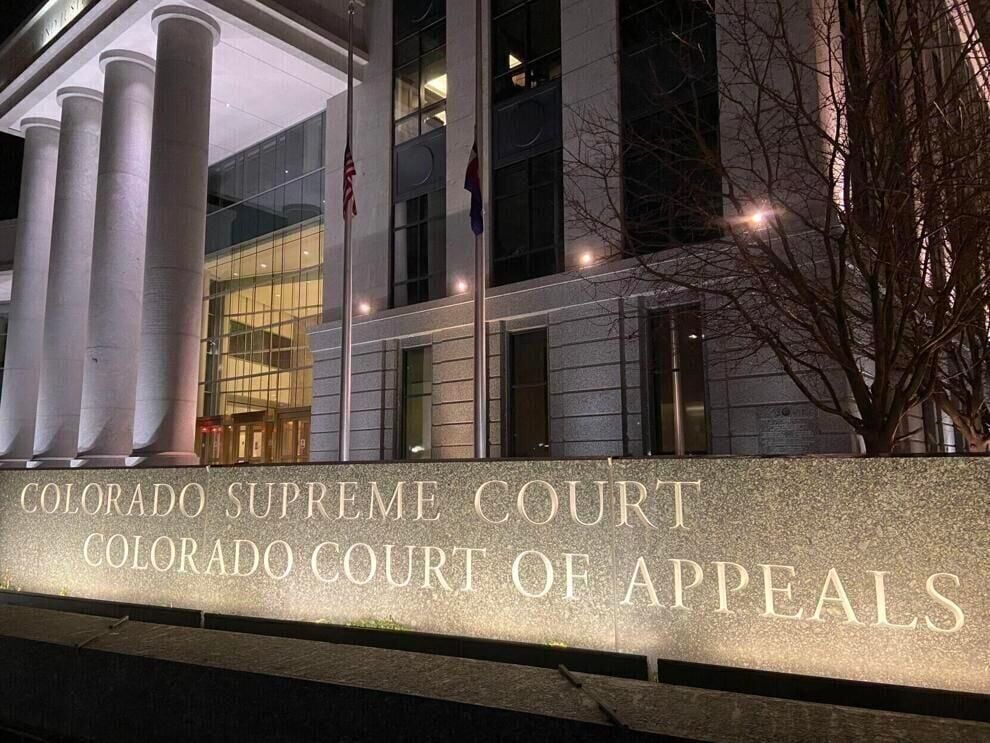
Divided appeals court reverses assault conviction over insufficient guidance about paramedics’ authority
Michael Karlik
michael.karlik@coloradopolitics.com
Updated 12 hours ago
Colorado’s second-highest court reversed a defendant’s conviction last week for assaulting a paramedic, concluding that a Denver judge needed to give jurors additional information about the duties that paramedics are legally authorized to carry out. Two paramedics were attempting to...
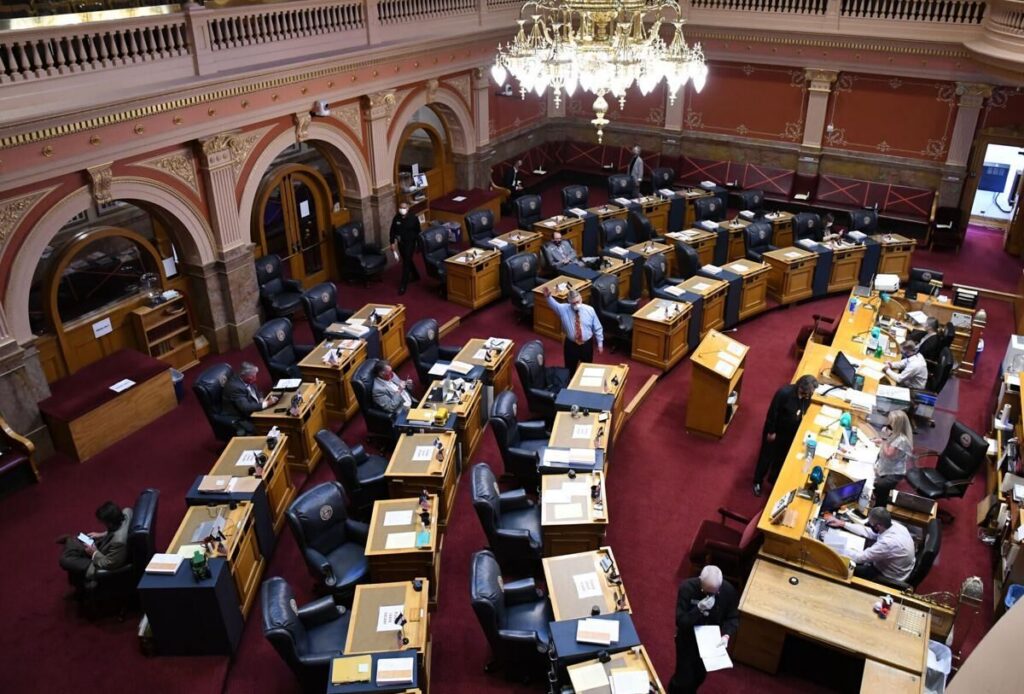
Bill prohibiting Colorado legislators from holding multiple elected offices heads to governor’s desk
Marissa Ventrelli
marissa.ventrelli@coloradopolitics.com
Updated 11 hours ago
A bill that would prohibit members of the General Assembly from holding multiple offices narrowly passed through the House on Wednesday, clearing its path to the governor’s desk. Senate Bill 059, sponsored by Democratic Sens. Matt Ball, D-Denver, and Lisa...
Colorado data‑privacy bill fails after sponsors shift it to a ballot measure
Marissa Ventrelli
marissa.ventrelli@coloradopolitics.com
Updated 13 hours ago
A Colorado bill aimed at restricting law enforcement and private companies from purchasing personal data without a warrant failed to advance Wednesday after a 6–5 vote in the House Judiciary Committee. The proposal, originally titled the “Fourth Amendment Is Not...
Lawmakers introduce bipartisan ‘Hot Rotisserie Chicken Act’ to put the poultry on food stamps
Molly Parks, Washington Examiner
molly.parks.washington.examiner@gazetteedit.wpenginepowered.com
Updated 11 hours ago
In today’s hyper-partisan Congress, there is at least one thing that can quickly bring Democrats and Republicans to the same table: rotisserie chicken. A bipartisan group of senators introduced the “Hot Rotisserie Chicken Act” this week, a bill that would...

Todd Blanche orders federal reclassification of medical marijuana as less dangerous
Molly Parks, Washington Examiner
molly.parks.washington.examiner@gazetteedit.wpenginepowered.com
Updated 11 hours ago
Acting Attorney General Todd Blanche signed an order on Thursday officially reclassifying state-licensed medical marijuana from a Schedule I to a less-regulated Schedule III drug, following President Donald Trump’s order to do so in December. The rescheduling move will relax...
PREV
PREVIOUS

On Aurora’s heels, Denver takes steps to legalize marijuana delivery
Denver is moving ahead on the most comprehensive changes to marijuana regulation in the city since recreational sales were legalized in 2014, according to the department that regulates the city’s cannabis. Following on the heels of Aurora, whose city council is taking up a similar measure, Denver is weighing three proposals that would legalize cannabis […]

Denver City Council amends firefighter union contract, deferring raises until end of 2021
The Denver City Council agreed to amend the Denver Fire Department union’s collective bargaining agreement to put off salary increases until the end of next year, as well as scale back certain benefit programs, in order to save roughly $7.3 million to offset major revenue losses the city faces from the pandemic. The agreement with […]