

Q&A with Sonia Riggs | Advocacy, education on the menu
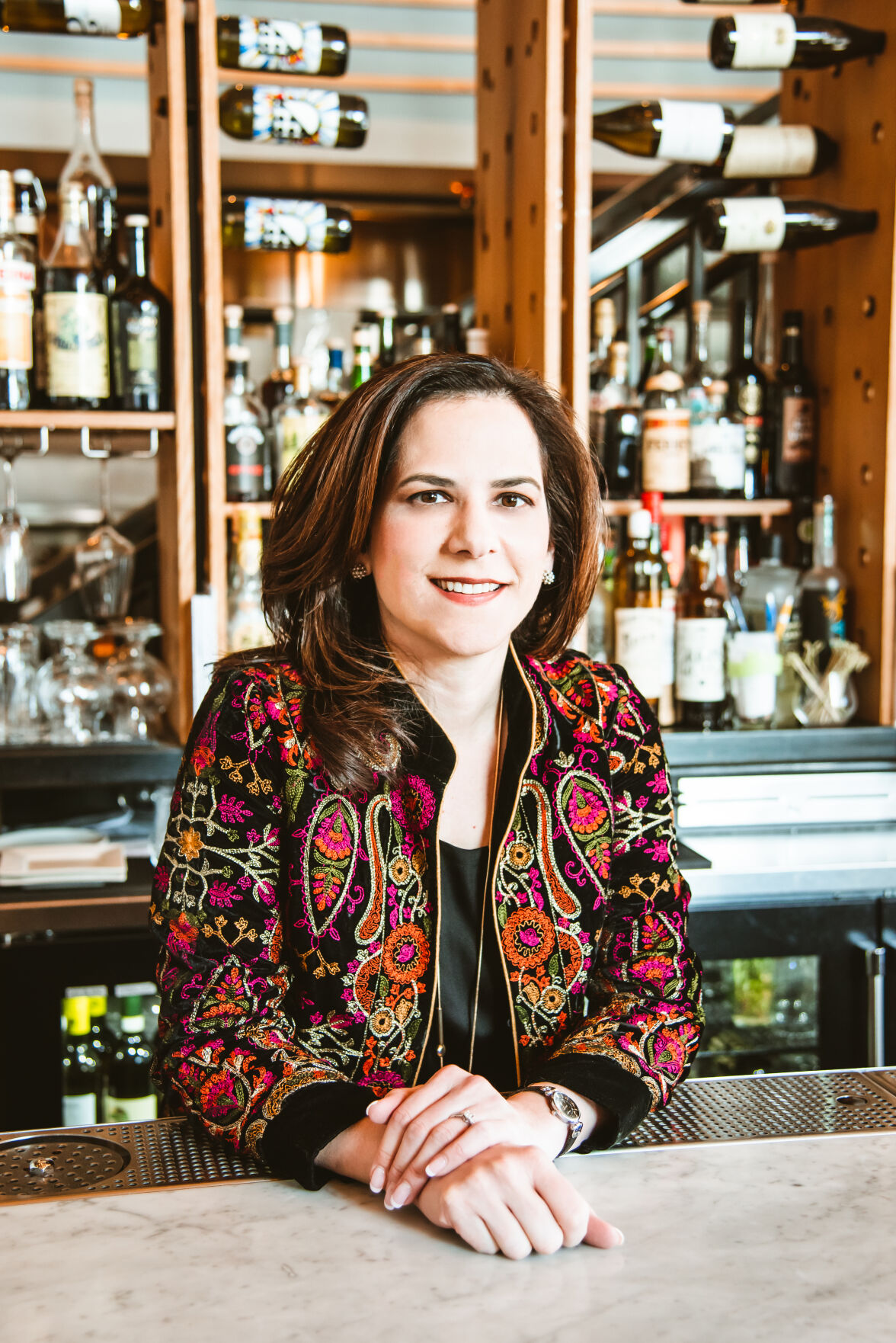
FAST FACTS
- Sonia Riggs has served as president and CEO of the Colorado Restaurant Association since October 2014.
- She was previously the CEO of Colorado’s chapter of the American Institute of Architects.
- Her first restaurant job was at Chart House, a seafood restaurant in Golden.
- She holds a bachelor’s degree in business from the University of Colorado Boulder.
- Riggs was raised in Brighton.
Colorado Politics: It’s no secret that this year has been excruciating for the restaurant industry due to COVID-19. As the city wades deeper into its third and largest wave of the coronavirus pandemic, coupled with winter and sweeping closures of indoor dining, can you talk about some of the challenges Colorado’s restaurants are facing and how these latest developments might impact the industry?
Sonia Riggs: This new wave of restrictions is absolutely devastating for restaurants.
Revenues were already down an average of 40%, and we think based on staffing levels that the industry had shed nearly 70,000 jobs. Add these indoor shutdowns on top of it, and we’re going to see both of those numbers skyrocket.
CP: Through your eyes, have COVID-19 restrictions unfairly targeted restaurants and bars?
Riggs: Yes, I think at this point, restrictions are unfairly targeting restaurants and bars. The state’s public data does not show that restaurants are a major culprit in the spread of COVID in this wave – yet they’re continuing to bear the brunt of these restrictions.
We know the state and local governments are in a tough place, because it seems that most spread is happening in private gatherings, and those are much harder to regulate. But the indoor dining shutdown that’s gone into effect in more than 20 counties threatens to close 24% of the restaurants in those counties within a month, and 60% within three months. That’s going to be hugely problematic for our local economies – consider how many layoffs will happen as a result.
CP: How do you think this crisis has shaped your leadership style and the work of the Colorado Restaurant Association this year and, perhaps, beyond?
Riggs: It’s showed me over and over again how much you can accomplish when you have the right team.
When the crisis started, I immediately pivoted the CRA’s team to focus full-time on advocacy, communication, resources and personal outreach, and we expanded the CRA’s work to encompass all Colorado restaurants, not just members. This pivot allowed the CRA to quickly secure critical regulatory victories at all levels of government.
For example, we successfully lobbied the state to have restaurants classified as essential businesses so that they could remain open in some capacity during the shutdown. We obtained an executive order and then passed a bill to allow restaurants to sell alcohol to-go. For delivery, we worked closely with both of Colorado’s U.S. senators to make restaurant-friendly changes to the Paycheck Protection Program. We advised cities as they streamlined processes to expand patios, and we partnered with Gov. Jared Polis and the state on a winter patio design workshop and grant program.
The CRA amassed resources to help restaurants survive the crisis and established a virtual resource center that has proved invaluable to restaurateurs as they’ve navigated the fallout of the shutdown, securing PPP and Economic Injury Disaster Loan funding, and learning how to comply with new regulations. A robust webinar series featuring elected officials, lawyers, accountants, and more supported these resources, and was recognized by the Council of State Restaurant Associations as one of the best in the country. These resources and advocacy work formed the basis of daily emails that were widely viewed by the industry as the foremost source of coronavirus information for restaurants. We’ve had several staffers dedicated to fielding restaurateurs’ specific questions, of which the CRA has received tens of thousands. Our foundation took on providing hospitality employees with resources, including a grant program for restaurant employees who had been laid off, furloughed, or diagnosed with COVID.
In a sense, we’re doing what we’ve always done – advocating, providing operational resources, fielding member questions, and communicating developments and compliance updates that are relevant to our industry. But the pandemic clarified exactly what restaurants find valuable about our work, and that will influence our organization’s focus as we come out of this.
CP: Despite all the challenges, can you talk about some of your proudest accomplishments in 2020?
Riggs: I’m proud of our team. We’ve worked day and night to tackle the challenges of this crisis from multiple angles, and we continue to chip away at obstacles that threaten the survival of this industry. We’re not out of the woods – in fact, we’re entering one of the grimmest periods of this crisis to date – but I’m hopeful that we’ll continue to make progress and help Colorado restaurants get closer and closer to the other side of this catastrophe.
I’m proud of the relationships we’ve built and deepened across the state – we’ve worked as true partners with city and state officials on everything from establishing innovative programs to giving feedback on the nuts and bolts of public health orders. And of course, I’m proud of the restaurants we get to represent every day, who continue to walk through fire to show up for and serve their communities.
CP: It may be too soon to ask, but have there been any lessons you’ve learned navigating this nightmarish year? Have you uncovered any silver linings through this experience?
Riggs: We’re still very much in survival mode, so I’m not sure I’ve really had time to digest the lessons yet, nor focus on the silver linings.
However, we’ve learned how critical communication is in a time of crisis, and how important it is to get it right. We don’t send information out until we’ve verified it, and we’ve been able to lean on our relationships to make sure we get accurate information out to our members.
Relatedly, I’ve really learned how important it is to nurture relationships – being able to pick up the phone and call the right person has made all the difference, and it’s also brought to light changes that they’ve needed to make to ensure orders or regulations work better for this industry.
I’ve learned our organization needs to be able to pivot on a moment’s notice to do what restaurants need to survive – in this crisis, every minute has been critical, and being able to adapt has helped us succeed.
CP: Why are restaurants important to communities, and what is needed to ensure their survival?
Riggs: Our lives unfold in restaurants. We tend to celebrate life’s biggest milestones at restaurants: proposals, anniversaries, big promotions. But we also head to restaurants for the smaller moments: meeting a friend, taking out a client, avoiding our kitchen, or spending time decompressing from a difficult day. We also tend to gather in restaurants to grieve together in the wake of collective trauma – which may be one reason we all miss dining so acutely during this pandemic.
Put another way, restaurants are what make our communities feel like our communities. Consider how different your life or neighborhood would look if your favorite restaurants all closed!
Restaurants have consistently said they need two things to survive: cash relief and more capacity. And with capacity restrictions tightening across Colorado, cash becomes all the more important. Restaurants need support wherever they can get it – which is why we’re encouraging the public to dine out, take out, order delivery, buy provisions and alcohol to-go, purchase gift cards, and more.
We continue to advocate at the state and local levels for whatever cash they can provide, and for creative solutions like outdoor dining to beef up capacity. But the truth is, ensuring restaurants’ survival is going to require meaningful cash relief from the federal government – without that, we are going to see a lot of closures.

Colorado Supreme Court rebuffs DA’s office over evidentiary appeal
Michael Karlik
michael.karlik@coloradopolitics.com
Updated 1 hour ago
The Colorado Supreme Court rebuffed a district attorney’s office on Monday for immediately pursuing an appeal of a trial judge’s evidentiary decision that the court had no authority to hear. State law authorizes prosecutors to file a mid-case, or “interlocutory,”...

Crank challenger Jessica Killin named to House Democrats’ ‘Red to Blue’ program in Colorado’s 5th CD
Ernest Luning
ernest.luning@coloradopolitics.com
Updated 3 hours ago
The House Democrats’ campaign arm on Monday added Jessica Killin to its nationwide “Red to Blue” program in Colorado’s Republican-leaning 5th Congressional District, calling the first-time candidate a “top-tier” challenger in a seat the party is aiming to flip in...

Colorado lawmakers advance rewrite of 2024 law to regulate artificial intelligence
Marianne Goodland
marianne.goodland@coloradopolitics.com
Updated 4 hours ago
With just nine days left in the 2026 legislative session, a revised proposal to amend the 2024 artificial‑intelligence law is finally advancing — even though it’s not the bill Senate Majority Leader Robert Rodriguez had hoped for. Senate Bill 189,...

Road-funding amendment divides Colorado over $539M general fund shift
Scott Weiser
scott.weiser@gazette.com
Updated 10 hours ago
A battle is brewing over funding for Colorado’s roads after a citizen initiative has been cleared to gather signatures to put it on the ballot for voters to decide. Supporters of the proposed constitutional amendment that would change existing law...
Colorado justices recognize limited right to evidence in postconviction challenges
Michael Karlik
michael.karlik@coloradopolitics.com
Updated 6 hours ago
The Colorado Supreme Court ruled on Monday that defendants challenging their convictions may, in certain circumstances, be entitled to receive the information the prosecution already handed over for trial at no cost. The justices rejected the argument that defendants seeking...
Colorado legislature enters final 10 days with hundreds of bills still unresolved
Marianne Goodland
marianne.goodland@coloradopolitics.com
Updated 1 hour ago
With just 10 days left in the 2026 session, Colorado lawmakers are staring down the final stretch of a crowded agenda, with 228 bills still unresolved and several major measures that have yet to even be introduced. Monday’s report from...

Colorado ethics committee flags irregularities in Democratic caucus spending
Marianne Goodland
marianne.goodland@coloradopolitics.com
Updated 5 hours ago
The House ethics committee said Monday that reviewing the financial records connected to an ethics complaint against Aurora Democrat Rep. Mandy Lindsay is proving more complex than usual. The committee is examining a complaint from Rep. Bob Marshall, D‑Highlands Ranch,...

DeSantis signs new Florida congressional map that could net the GOP four seats into law
Molly Parks, Washington Examiner
molly.parks.washington.examiner@gazetteedit.wpenginepowered.com
Updated 8 hours ago
Gov. Ron DeSantis (R-FL) has signed Florida’s new congressional map into law that could net Republicans four new seats in the state’s congressional delegation. “Signed, Sealed, and Delivered,” DeSantis wrote on X with the new congressional map underneath. DeSantis championed...
Colorado approves $13 million for 48 water projects amid statewide drought
Marissa Ventrelli
marissa.ventrelli@coloradopolitics.com
Updated 10 hours ago
The Colorado Water Conservation Board recently approved an additional $13 million in funding for 48 projects through its Water Plan Grant and Water Supply Reserve Fund Programs for drought and wildfire-impacted communities. To date, the board has allocated more than...
Colorado approves $13 million for 48 water projects amid statewide drought
Marissa Ventrelli
marissa.ventrelli@coloradopolitics.com
Updated 10 hours ago
The Colorado Water Conservation Board recently approved an additional $13 million in funding for 48 projects through its Water Plan Grant and Water Supply Reserve Fund Programs for drought and wildfire-impacted communities. To date, the board has allocated more than...
PREV
PREVIOUS

Senate President Leroy Garcia's opening remarks, 1st extraordinary session, General Assembly
Opening remarks by Senate President Leroy Garcia, D-Pueblo, at the 1st extraordinary session of the 72nd General Assembly: Good morning and welcome back to the Senate, where we have been called to serve the people of Colorado during this extraordinary and turbulent time. 2020 has been a year of harrowing heartbreak and transformational civil unrest. […]

Colorado, Metro Denver HBAs shift to new shared management plan, remain separate entities
The Colorado Association of Home Builders and the Home Builders Association of Metro Denver announced Monday that the two groups will move into a shared management agreement beginning in December, although both will remain separate entities with individual boards and executive committees. Both HBAs will be lead by the state group’s CEO, Ted Leighty, who […]