

POINT | COVID doesn’t trump freedom of worship

In general, churches, synagogues, mosques, and other religious communities should be exempt from government COVID restrictions – but not from implementing their own common sense health measures. With COVID infections on the rise and vaccines still unavailable, the temptation to give government power to regulate religious assemblies is great. Before taking that leap, consider seven principles.
1. We ought not mandate a cure that is worse than the disease. These are hard times: schools closed to in-person learning, children home alone, businesses failing, hospitals swamped, and elders dying alone. Communal worship, pastoral care, and the grace that flows from these ministrations are essential, necessary to our people.
2. The most distinctive thing about the American experiment is its protection of religious liberty, found in the First Amendment of the Constitution. Worship is at the heart of what the First Amendment protects. It is one thing to regulate a church youth group’s car wash on Saturday and quite another to bar a Muslim from Friday prayer or a Catholic from Sunday Mass.
3. Government’s constitutional powers do not grow in an emergency. As Justice Jackson wrote, the founders “knew what emergencies were, knew the pressures they engender for authoritative action, knew, too, how they afford a ready pretext for usurpation.” There is no emergency clause in the Constitution that expands the power of government while shrinking the rights of believers and their faith communities.
4. The government cannot invoke the health risks of the pandemic to justify targeting a particular religious group. Thus, New York Gov. Andrew Cuomo’s repeated threats of enforcement actions against Orthodox Jews is one of the reasons the Supreme Court granted them injunctive relief the day before Thanksgiving.
5. COVID regulations cannot discriminate against churches, synagogues, and mosques. The Nov. 25, U.S. Supreme Court Catholic Diocese of Brooklyn decision is instructive. It granted the Diocese and its parishes a Free Exercise exemption from a 10- or 25-person occupancy limit because New York made acupuncture facilities, campgrounds, garages, and chemical manufacturing plants subject to less onerous restrictions. Meanwhile, Colorado’s federal court did not grant a religious exemption for churches when they were subject to an even-handed mask mandate.
6. The U.S. Supreme Court has long recognized that religious societies are sovereign over core ecclesiastical matters. Thus, however important the legal value against racial and sexual discrimination, the Nation of Islam can insist on ministers who are Black. Christian, Jewish, and Muslim groups can, or cannot, limit ordination to men. Similarly, government cannot dictate how worship is conducted. This is why the El Paso County June 15 public health order stating that “[a]nyone preparing communion elements shall do so wearing a cloth face covering and sterile gloves” cannot survive constitutional challenge.
7. The freedom of the church does not excuse it from using common sense. Any pastor who refuses all health rules during this pandemic risks injuring the flock under his or her care and bringing scandal to the church. Church folk have common sense. They should use it and set an example for others. No one has said it better that the Sixth Circuit last May: “The Governor [of Kentucky in pronouncing COVID regulations] has offered no good reason for refusing to trust the congregants who promise to use care in worship in just the same way it trusts accountants, lawyers, and laundromat workers to do the same. Come to think of it, aren’t the two groups of people often the same people – going to work on one day and going to worship on another? How can the same person be trusted to comply with social-distancing and other health guidelines in secular settings but not be trusted to do the same in religious settings?”
L. Martin Nussbaum is an attorney and a partner at Nussbaum Speir Gleason in Colorado Springs. He advocates for religious institutions nationwide.

Clock is ticking on Colorado’s new AI rules | PODIUM
Colorado Politics
colorado-politics@coloradopolitics.com
Updated 4 hours ago
By Aashis Luitel On Jan. 1, organizations using covered automated systems must begin complying with Senate Bill 26-189, Colorado’s new Automated Decision-Making Technology Act. They can identify those systems and start building the processes the statute clearly requires. What they...
Meghan Shay on recovery, responsibility and second chances | The OpEdge Podcast
Tony Olivero
tony.olivero@gazette.com
Updated 15 hours ago
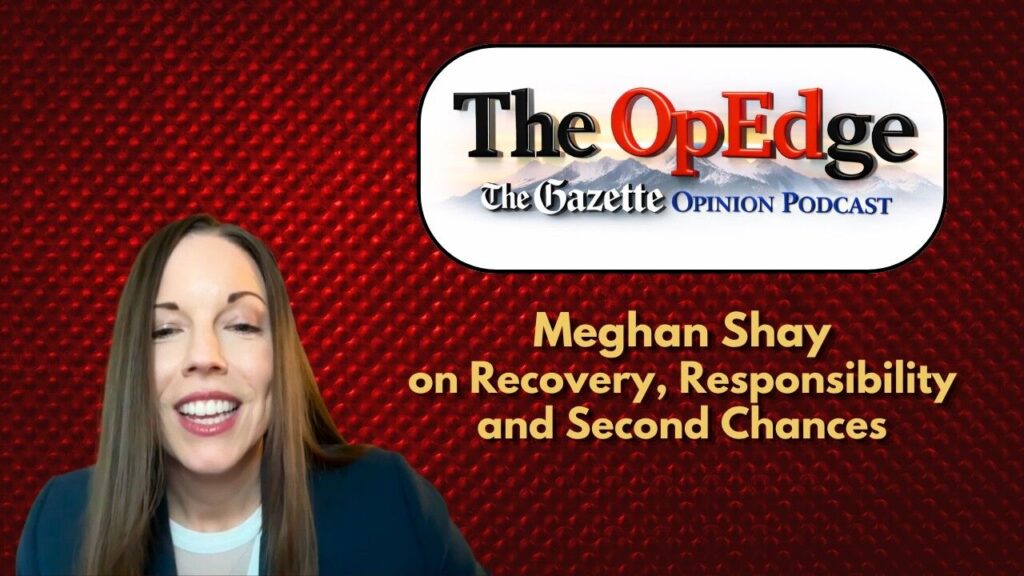
Step Denver and Step Springs CEO Meghan Shay joins The OpEdge to explore addiction recovery, homelessness, and the role of accountability in lasting change. Shay tells host and investigative columnist Jimmy Sengenberger why she believes recovery is built on personal...
The outrages mount | Hal Bidlack
Hal Bidlack
hal-bidlack@coloradopolitics.com
Updated 18 hours ago
My kindly and forgiving editors understand that, from time to time, I can’t help myself from leaping atop my rickety soapbox to vent. And, like many other political commentators have already done, I could easily fill this entire missive with...
Rural Colorado deserves a tax holiday | GUEST COLUMN
Eric Mulder
jstooksberry@gmail.com
Updated 1 day ago
Spend enough time in Colorado’s Eastern Plains, the San Luis Valley, or the Western Slope, and you’ll see boarded-up storefronts, schools consolidating classrooms, and small rural communities stretching every dollar to keep basic services afloat. Once the backbone of Colorado’s...

Weiser’s leadership crucial for rural win-win | Rachel Gabel
Rachel Gabel
rachel-gabel@coloradopolitics.com
Updated 5 days ago
Attorney General Phil Weiser is going to win the gubernatorial election. That said, Colorado agriculture and rural communities have a 30-year track record of finding the win-win be it for species or industries or habitat. Former Governor Roy Romer possessed...
A Colorado history lesson for Victor Marx | Dick Wadhams
Dick Wadhams
dick-wadhams@coloradopolitics.com
Updated 4 days ago
Victor Marx, who narrowly won the Republican nomination for governor by one half 1% after boasting of a massive 44-point lead, is just as misguided on Colorado political history. During the primary, Marx made a clumsy attempt to denigrate his...
‘Be prepared to march in the streets’ | Miller Hudson
Miller Hudson
miller-hudson@coloradopolitics.com
Updated 4 days ago
It was early in 1974 when I first met Tim Wirth as he announced his candidacy for Congress, challenging Republican incumbent Don Brotzman. Although I had only resided in Colorado two years, I was drafted to serve as a Democratic...

‘CoCo’ would take taxpayers for a ride | Jon Caldara
Jon Caldara
jon-caldara@coloradopolitics.com
Updated 2 days ago
Colorado wants taxpayers to spend another $4.73 billion on passenger rail. Don’t worry. They have a plan. Which is a little like your brother-in-law announcing he’s launching another exciting restaurant venture after his last three restaurants ended in bankruptcy. Please....
The through line from Donald Trump to Victor Marx | SONDERMANN
By Eric Sondermann
by-eric-sondermann@coloradopolitics.com
Updated 7 days ago
Over 10 years ago, before Donald Trump could ever defeat Hillary Rodham Clinton, he had to first engineer a hostile takeover of the Republican Party. Prior to his descent of that golden escalator, the previous seven Republican presidential nominees had...
Primary voters rejected big money in politics | Paula Noonan
Paula Noonan
paula-noonan@coloradopolitics.com
Updated 4 days ago
While we’re in an election campaign lull between now and Labor Day, we have time to consider the impact of $102 million in campaign contributions in the primary. In the general election, more money will fill candidate campaign coffers, and...
PREV
PREVIOUS

COUNTERPOINT | If one of us suffers, all suffer
Karen Oliveto As I watch COVID-19 cases and deaths skyrocket across our state and country, I am haunted by the words of the apostle Paul: If one member suffers, all suffer together (I Corinthians 12: 26). Also read: POINT | COVID doesn’t trump freedom of worship If I, as a follower of Jesus Christ and […]
BIDLACK | Supreme Court picks come home to roost
Hal Bidlack As I type these words it is Thanksgiving morning and the Macy’s parade is playing in the background. As you read these words, it is Black Friday or later, and so I hope you had as nice a holiday as these odd times allowed and that you are getting really good deals on holiday gifts, […]