

HUDSON | A bipartisan bid to bust big-tech


When Jeff Bezos was selected Time magazine’s Person of the Year in 1999 there was muted grousing about the fact his on-line bookshop, while already branching into other products, had failed to turn a profit during Amazon’s first five years. It’s apparent in hindsight the journalists at Time perceived the market opportunity financial analysts were missing. Amazon was only getting started.
Since the COVID-19 outbreak in March of this year, Bezos has raked in an extra $90 billion above projected earnings with no slowdown in sight. This windfall will presumably go untaxed along with previous earnings. Nonetheless, Amazon remains broadly popular because of its convenience, extensive choice and swift home delivery of pretty much everything needed during lock downs. The man has met the moment – Amazon’s housebound (captive) customers frequently have nowhere else to shop.
There’s an old joke among small manufacturers about winning a place on Wal-Mart’s shelves: “There’s good news and bad news. The good news is that Wal-Mart will carry our stuff. The bad news is that Wal Mart will be our largest customer.” In order to meet their motto promising the lowest price, Wal-Mart ruthlessly squeezes its supplier margins down so they barely break even. This practice gutted main streets of their retailers in rural towns across Colorado and the rest of the country during the ’90s.
Amazon and its cousins at Apple, Google and Microsoft have done Wal-Mart one better. Positioned to scoop up data regarding sales volume from platform vendors, they can and do identify popular or trending products, then jump in and compete with knock-off imitations they give preferential positioning. If this all sounds sleazy and despicable, you’re right. It may prove criminal. The European Union has been far quicker to regulate tech sector behavior, recently slamming Amazon with a penalty for tens of billions of euros.
The theft of intellectual property subsidizes Amazon’s pricing dominance and proves destructive for many small businesses and third-party-vendors. Family and custom producers, many of whom are located here in Colorado, cannot hope to innovate and expand while resisting predatory assaults. A recent 2020 Congressional report investigating these monopolistic practices provides a clear picture of how Amazon repeatedly stunts the growth of its vendors and consequently “enables it to self-preference and disadvantage competitors.”
Fortunately, there are signs of life on both sides of the aisle in the Colorado legislature, suggesting a bipartisan deal could be struck to protect consumers. Recently elected state Rep. Naquetta Ricks of Aurora, president and co-founder of the Colorado African- American Chamber of Commerce, explained, “Allowing Amazon to become even larger, while (our) small businesses are forced to close their doors for good, does nothing but hurt our economy and workers’ ability to receive a living wage and keep food on the table.” Conservative Republican state Rep. Dave Williams expressed similar sentiments in a thoughtful opinion piece published in the Washington Examiner.
Ricks, Williams and many of their colleagues are also deeply concerned for the well-being of thousands of Coloradans who have been employed or were recently hired at Amazon’s distribution centers. In a brazen move this past May, Amazon canceled hazard pay for its essential workers and eliminated its unlimited time off policy for those with at-risk family members. Today their employees continue to work through a rampant COVID-19 spread despite Amazon earning record profits. The Colorado legislature often hesitates to regulate industry, but it also has the precedent of being one of the first states to create a Railroad Commission which lives on today as the state’s Public Utilities Commission.
Ten years ago, I visited my son, who was living in Los Angeles at the time, and found myself gridlocked behind a truck with a bumper sticker suggesting, “For a list of the many ways technology has improved your life, please punch 3.” Technology has a nasty way of outpacing our capacity to control it. The internet has crushed newspapers, badly wounded the music industry and tossed up toll booths for advertisers who bury us under clickbait on social media — not to mention egregious invasions of our privacy and torrents of fake news reports.
A targeted and bipartisan response will be required to rein in these monopolies at both the state and federal level. The good news is that Congress appears ready to do just that. Although the motives may differ on each side of the aisle, Joe Neguse and Ken Buck have expressed shared concerns about the harm Amazon poses to Colorado’s small businesses. Both are members of the Antitrust, Commercial and Administrative Law Subcommittee of the Judiciary Committee where they can work in tandem to spur action.
It’s become clear that the “too big to fail” mantra regarding banks that emerged during the great recession should be paired today with “too big to tolerate” for the digital marketplace.

It’s time to let unaffiliated voters caucus
Vince Bzdek
vince.bzdek@gazette.com
Updated 14 hours ago
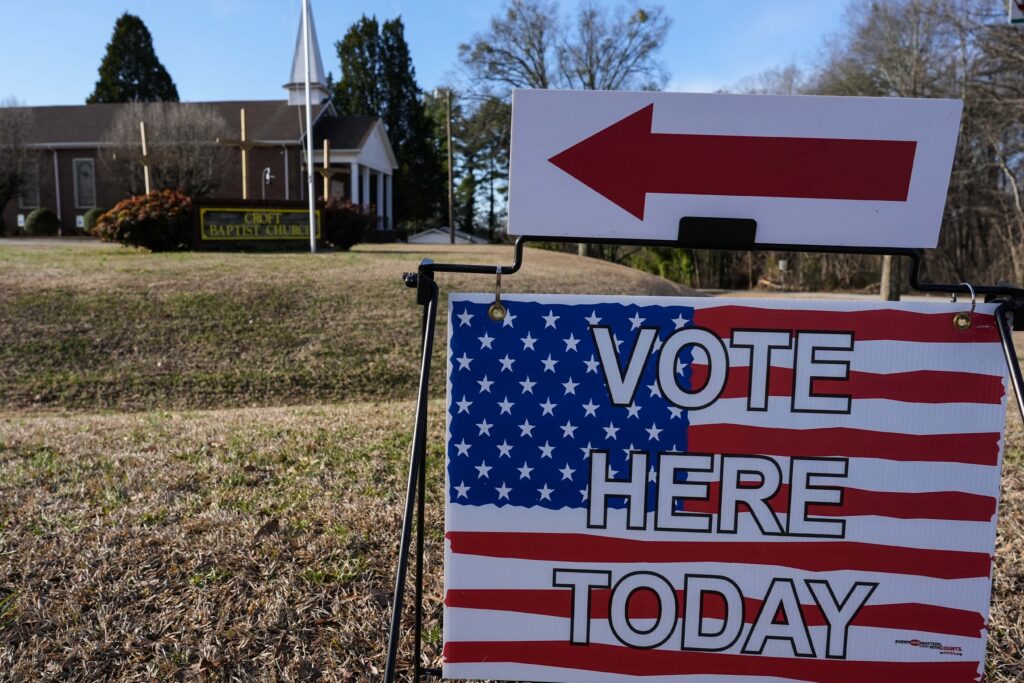
There’s no getting around it: Colorado’s 3,000 county caucuses, which just wrapped up recently, left half the electorate out in the cold. Since unaffiliated voters now make up 51% of all Colorado voters, a majority of Colorado electors are barred...
A Mile High, again: Capitol M | Week of March 21, 2026
Marianne Goodland
marianne.goodland@coloradopolitics.com
Updated 3 days ago
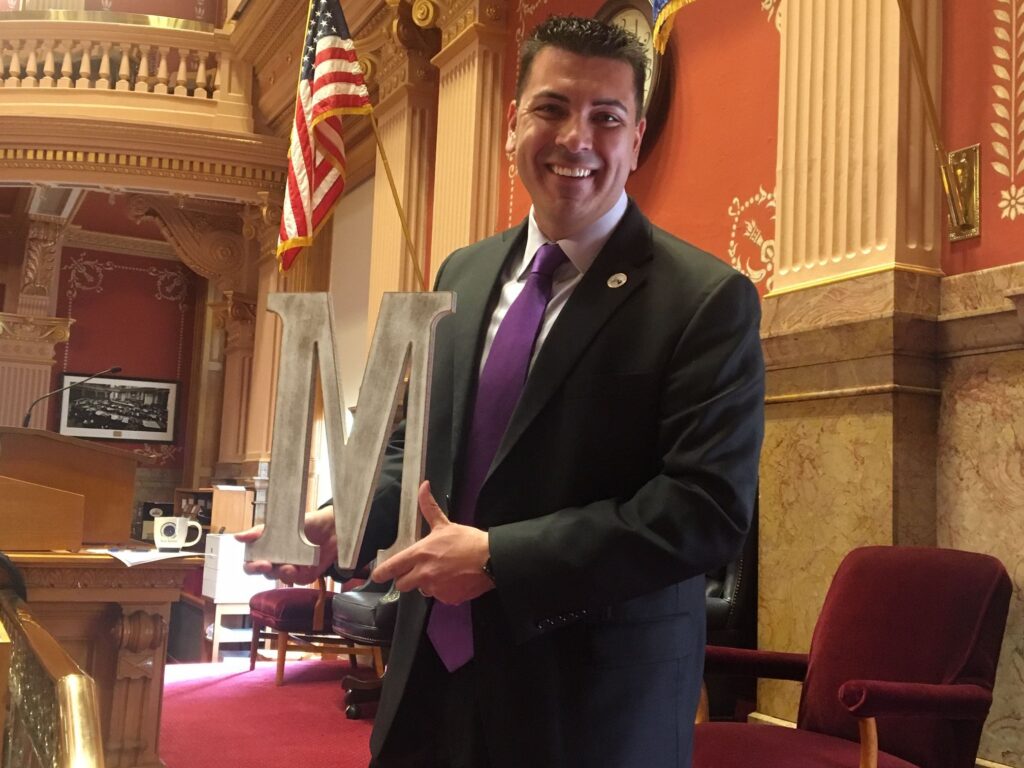
The lighter side of the Capitol, usually…. Local Journalism Day, except they forgot their very own local journalists. The state Senate on Thursday, March 19, passed a resolution recognizing Local Journalism Day. Everyone voted for it, which is good, because...

The insular bubble of caucuses and assemblies | SONDERMANN
Eric Sondermann
eric-sondermann@coloradopolitics.com
Updated 2 days ago
Nearly 30 years ago, then-Federal Reserve Chairman Alan Greenspan coined the term “irrational exuberance” to describe the overheated stock market. That descriptive phrase could also apply to much of the political realm. The hype in politics often grossly exceeds the...

Set appropriate state guidelines for critical surveillance technology | OPINION
Colorado Politics
colorado-politics@coloradopolitics.com
Updated 1 day ago
I admit it: I’m worried. I’m hearing a lot about surveillance in the public arena. I hear cameras are capturing my car’s license plate wherever I drive, my face as I go in and out of stores and health facilities,...

Puppy trafficking bill promotes inhumane breeding | OPINION
Colorado Politics
colorado-politics@coloradopolitics.com
Updated 1 day ago
By Patti Strand When Justice Thurgood Marshall wrote “The Constitution does not prohibit legislatures from enacting stupid laws,” he wasn’t wrong. He was referring to a political process sometimes ill-equipped to deal with complex issues that require subject-matter knowledge and a...

Penny wise but foolish by pounds | Paula Noonan
Paula Noonan
paula-noonan@coloradopolitics.com
Updated 2 days ago
Leadership of Colorado’s General Assembly introduced the Fiscal Year 2026-2027 Legislative Appropriation bill, HB26-1333, at $75.72 million. That will be the budget to run the state legislature next year. About $74 million comes out of the general fund and the...

Proposed evictions bill fails to improve housing stability while threatening higher rents | OPINION
Colorado Politics
colorado-politics@coloradopolitics.com
Updated 2 days ago
No landlord wants to evict a tenant for non-payment of rent. That is true for large housing providers, small “mom-and-pop” owners and nonprofit housing rental providers alike. Evictions are financially and emotionally costly for everyone involved. But when rent goes unpaid, eviction...

Prevention works — invest in conflict prevention with wolves | FEEDBACK
Colorado Politics
colorado-politics@coloradopolitics.com
Updated 2 days ago
The recent reporting on Colorado’s wolf depredation payouts exceeding $700,000 highlights a critical problem with the current approach to wolf recovery: current mainstream systems focus on compensation and ineffective reactive non-lethals. These systems are not designed to prevent conflict but attempts...

Colorado’s clean-energy future must be affordable for older adults | PODIUM
Colorado Politics
colorado-politics@coloradopolitics.com
Updated 2 days ago
By Jason DeaBueno Last winter, one of the older adults we serve at Silver Key shared something that has stayed with me. She begun turning her heat down at night — not because she wanted to, but because she was...

Why Denver should care about conservation easements — even if you’ve never set foot on a ranch | OPINION
Colorado Politics
colorado-politics@coloradopolitics.com
Updated 3 days ago
By Jason Swann I live in Denver. I drink tap water from my kitchen sink, hike close to home when I can, worry about wildfire smoke every summer, and try, like many families, to keep up with the rising cost...
PREV
PREVIOUS

POINT | Mail balloting still a flawed process
Jeff Hunt Nearly all Americans have concerns with America’s current forms of voting. For decades, liberals have claimed that voters are disenfranchised. The ACLU has a website dedicated to voting problems in the 2020 election. The ACLU claims politicians are trying “to manipulate political outcomes.” Sounds like conservatives concerned with the presidential election. I’m not […]

BIDLACK | 'Out West,' there's lots of news
Hal Bidlack When I first sat down to write this column, I thought I would offer a few thoughts, inspired by the president, on how I have now decided that I actually won my 2008 congressional race, even though the other guy got a lot more “votes” than I did. As it turns out, he only won […]