

Who are the 3 Colorado Supreme Court finalists?
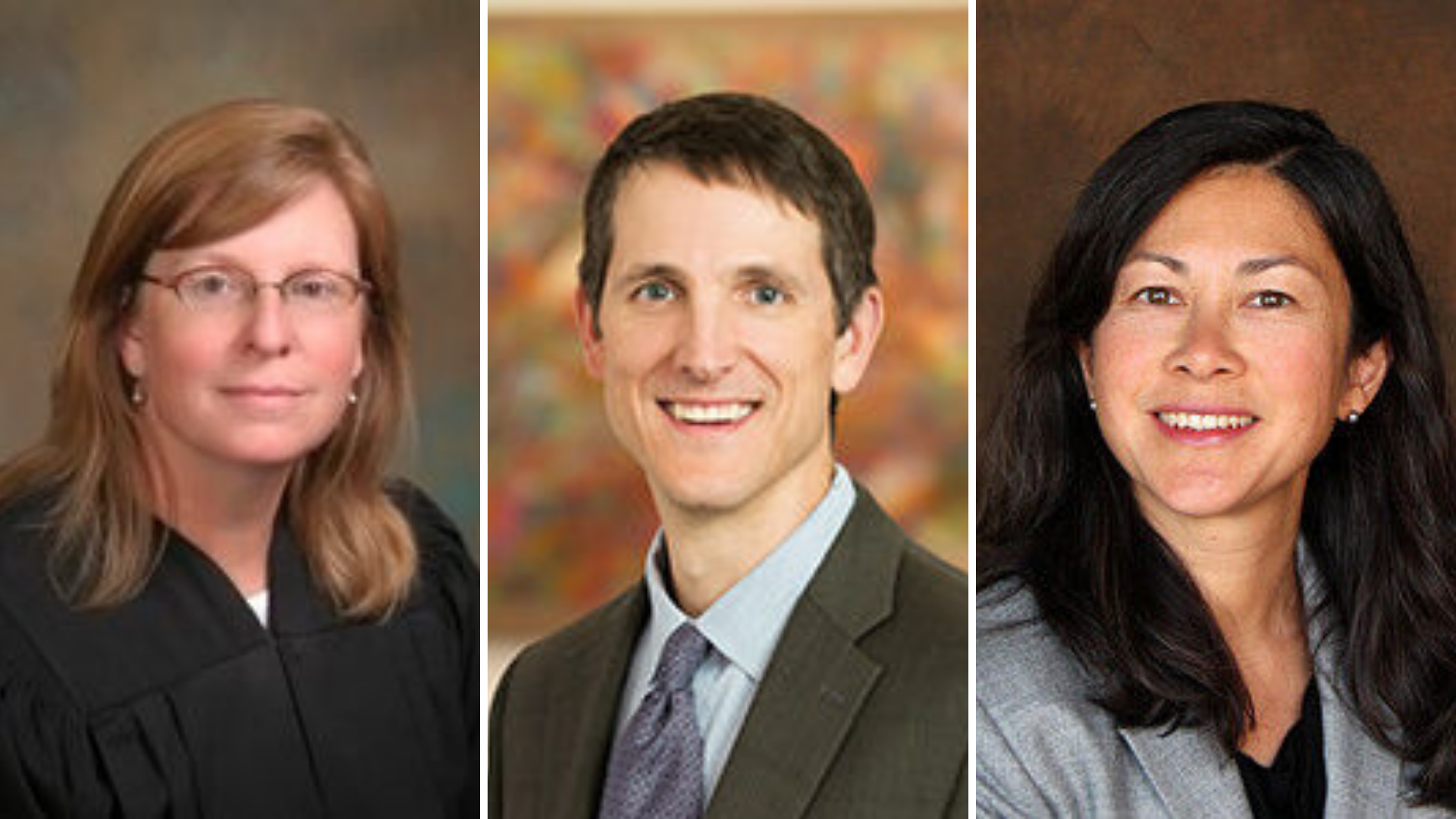
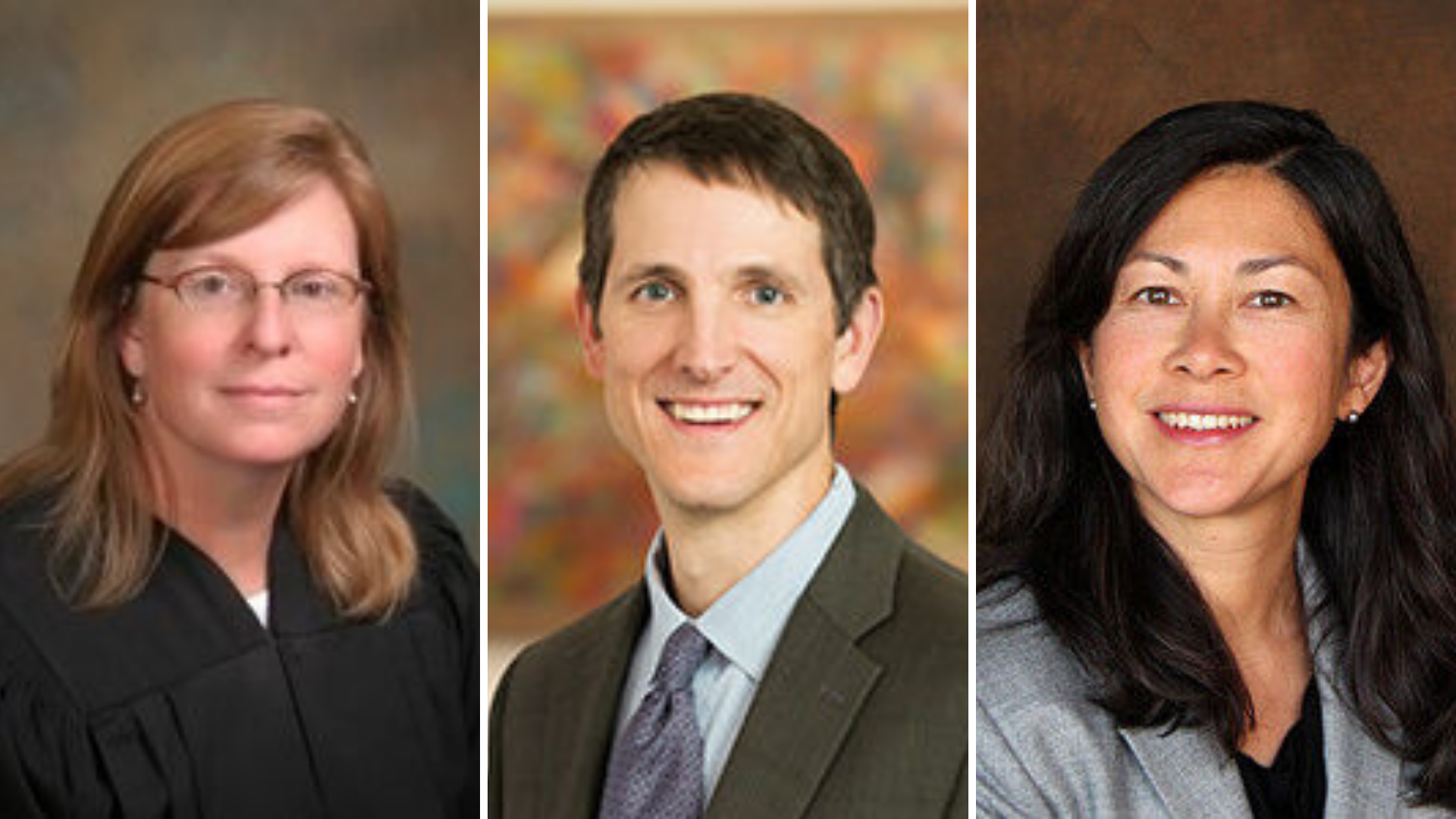
The three finalists for the impending vacancy on the Colorado Supreme Court are attorneys Andrea Wang and Timothy R. Macdonald, and retired Boulder County District Judge Maria E. Berkenkotter.
“All three are well respected,” said Christopher M. Jackson, an attorney at Holland & Hart, after the Judicial Department announced the candidates on Friday. Pursuant to Colorado’s system of judicial nominations, a 15-member commission solicited applications and interviewed candidates, narrowing the list to three.
Gov. Jared Polis will have 15 days to appoint one of the finalists. The incoming member will replace Chief Justice Nathan B. Coats, who took office in 2000. Coats will reach the mandatory retirement age of 72 in January. Justice Brian D. Boatright will succeed him in the chief’s role.
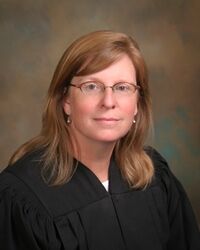
Maria E. Berkenkotter
Berkenkotter graduated with a law degree from the University of Denver in 1987. After clerking for a state Supreme Court justice, she joined the Colorado Attorney General’s Office in 1990, running the Antitrust, Consumer Protection and Tobacco Litigation Unit.
In 2018, Berkenkotter was also a finalist for the seat that ultimately went to Justice Carlos A. Samour, Jr. She served as a district judge in Boulder County from 2006 to 2017, and became chief judge in 2013.
Judicial performance commissions gave Berkenkotter unanimously favorable recommendations for retention in 2008 and 2014.
“Comments from both attorneys and non-attorneys indicate that Judge Berkenkotter is perceived to be hard-working, organized, and fair,” the commission wrote in its 2014 narrative to voters, complimenting her on her demeanor. “The Commission feels that we are fortunate to have such a skilled, hard-working, and compassionate Chief Judge in the Twentieth Judicial District.”
Since January 2018, Berkenkotter has served as an arbiter with Judicial Arbiter Group in Denver, where she provides mediation services in civil, probate and domestic relations matters.
David Lane, an attorney at Killmer, Lane & Newman, LLP, recalled working with Berkenkotter in a mediation between his client, Overland High School teacher Jay Bennish, and the Cherry Creek School District, following allegations of racist behavior from Bennish.
“Part of the meditation experience is understanding how this stuff plays out in front of a jury,” he said. “We had extensive conversations about how these witnesses were going to be seen by juries and what pieces of evidence would or would not be admissible at trial. So clearly she understood very well the rules of evidence.”
In her application to the nominating commission, Berkenkotter also wrote that she coaches judges on their performance, equalized dockets and judges’ workloads during her time as Boulder County’s chief judge, and presided over more than 110 civil and criminal jury trials.
One such high-profile case resulted in the conviction of Dynel Lane for the grisly crime of “fetal abduction,” after she cut the baby from her victim’s womb and claimed it to be her own. Berkenkotter said she offered jurors one-on-one counseling after the verdict and meetings with trauma therapists.
She included as her writing sample a 2016 order sealing the court file for a 16-year-old charged with murdering a 71-year-old victim, despite The Daily Camera‘s argument that the move was unconstitutional.
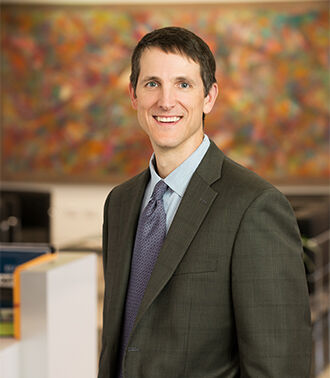
Timothy R. Macdonald
Macdonald graduated from the University of Michigan Law School in 1996, also receiving a master’s degree in public policy from the institution. He is a civil litigator at the international law firm of Arnold & Porter Kaye Scholer LLP, and is the managing partner of the Denver office.
In his application, Macdonald indicated he is a “generalist,” who has handled cases in administrative, natural resources and constitutional law, among other areas. Macdonald pointed in particular to his experience in tribal law, having spent 20 years representing the Hopi Tribe, including a set of disputes about access to religious sites that are now on Navajo land. He has served on the company’s ethics and policy committees, and was a clerk in the U.S. Court of Appeals for the Fifth Circuit.
“I also represented an individual in a petition under the Hague Convention on International Child Abduction in an action seeking the return of her children to her home country,” Macdonald wrote.
Among his past cases litigated, Macdonald cited a challenge to the state’s “negative factor,” designed in the wake of the 2008 recession to enable school funding decreases in light of the constitutional requirement mandating minimum funding levels. Macdonald currently represents Boulder in a challenge to the city’s ordinance banning large-capacity magazines and “assault weapons.”
“I co-founded the Legal Night at Mi Casa Resources Center for Women in 2006,” Macdonald wrote. “I have advised on issues ranging from housing, evictions, consumer fraud, health care debts, discrimination, immigration, personal bankruptcy, and many others.”
Connie Talmage, executive director of the Colorado Lawyers Committee and a friend of Macdonald’s, said he is “very, very wise. Not just smart, but very wise. Tim has a wisdom that causes people who are even more experienced than he is to listen to what he has to say.”
She pointed to his his significant pro bono experience, including his work this summer attempting to release medically at-risk detainees from the U.S. Immigration and Customs Enforcement facility in Aurora.
His writing sample was a legal brief arguing on behalf of the Sacramento Municipal Utility District that the federal government breached its contract to dispose of spent nuclear fuel. The lawsuit resulted in a federal court awarding more than $53 million to the district.
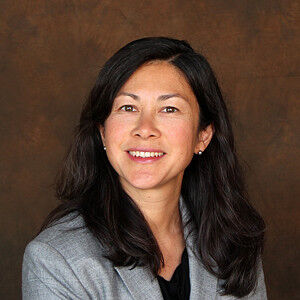
Andrea Wang
Wang received a law degree from the University of Colorado in 2001, and has practiced largely as a civil litigator ever since. She serves as an Assistant United States Attorney, where she handles cases involving companies who have attempted to defraud the government, disputes over federal lands and penalties against opioid providers.
Prior to her work in the government, Wang was a litigator at Davis Graham & Stubbs, LLP for 14 years. She chaired the diversity and inclusion committee, aimed at supporting and advancing attorneys who were women and people of color.
“I was a volunteer attorney for the Rocky Mountain Survivor Center, which provided services to torture survivors,” Wang wrote in her application. “I also served as a volunteer attorney representing teenage girls in ‘judicial bypass’ proceedings. These are court proceedings through which a judge determines whether a minor is sufficiently mature to make her own healthcare decisions, and whether advising her parents of her healthcare decision would be in the best interest of the minor.”
Wang spent one year as a clerk for former state Chief Justice Mary Mullarkey. Mullarkey remembered Wang’s work on the complex and long-running Taylor Ranch case, involving landowners’ claims to access a 77,000-acre tract in the San Luis Valley dating to Mexican ownership of the territory.
Mullarkey, who authored the opinion granting grazing, firewood and timber access, deemed Wang’s involvement on the case “superb. She’s just a very thoughtful person and her writing style is good. I found her really helpful when we would be discussing this case as we were working our way through it.”
Wang also served as president of the Asian Pacific American Bar Association between 2014 and 2015.
She was the attorney on a case settled late last year in which a Grand Junction weapons manufacturer paid $1 million following a whistle blower’s claim that the company fraudulently concealed defects in grenade launchers. Wang previously represented the United States government in a case involving an oil company that failed to pay royalties on a federal lease, resulting in a $300,000 settlement.
For her writing sample, she submitted a motion for summary judgment defending the Bureau of Alcohol, Tobacco, Firearms and Explosives’ decision to revoke the license of an Aurora gun dealer for sales that violated the law.
Video interviews of nominees took place on Nov. 5-6. The Judicial Department would not provide the total number of applicants or their names in response to an inquiry.
Speculating on the ideal traits for a state Supreme Court justice, Lane indicated that intellect and writing ability were priorities. Mullarkey noted that a justice will be working with six peers continuously, which is an unfamiliar dynamic to some applicants.
“One of the things that sometimes happens with district judges is they’re not used to working in a collegial manner,” she said, stressing she was not referring to Berkenkotter in particular and believed her to have an excellent reputation. “When you’re a trial court judge, you don’t have to consult with anybody else.”
The governor’s office is accepting comments on the three nominees at gov_judicialappointments@state.co.us.


Victor Marx holds a steady lead over Barbara Kirkmeyer in Colorado Republican governor contest
Thelma Grimes
thelma.grimes@coloradopolitics.com
Updated 2 hours ago
Victor Marx overtook state Sen. Barbara Kirkmeyer in the Republican primary for governor on Wednesday evening, seizing a narrow lead after trailing her since polls closed. Kirkmeyer, one of three candidates, opened the night with a clear advantage, at one...

Democrats confront shift as socialist-aligned candidates win races in Colorado
Thelma Grimes
thelma.grimes@coloradopolitics.com
Updated 2 hours ago
Democratic socialists’ recent electoral gains — punctuated by Melat Kiros’ victory on Tuesday over U.S. Rep. Diana DeGette, the dean of Colorado’s congressional delegation — are the result of a movement that has been taking shape in metro Denver for...
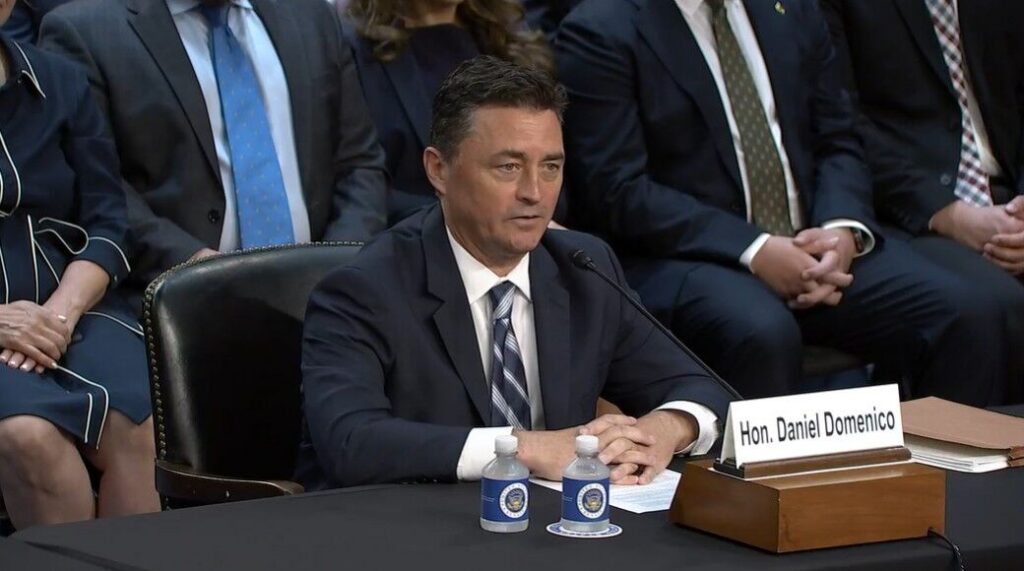
Trump’s judicial nominee orders bond in wave of cases after 10th Circuit rejects government’s position
Michael Karlik
michael.karlik@coloradopolitics.com
Updated 16 hours ago
Within 24 hours of the Denver-based federal appeals court rejecting the government’s expansive view of its immigration detention authority, the lone judge in Colorado to embrace that view ordered bond hearings for detainees in at least 20 cases. U.S. District...
Cherry Creek spent $65K on investigation, but invoices remain secret, records show
Nico Brambila
nico.brambila@denvergazette.com
Updated 18 hours ago
After previously refusing to disclose the cost associated with the investigation into the former superintendent and his wife, the former human resources chief, Cherry Creek School District officials partially released records showing the cost to taxpayers: $65,054.85. The Denver Gazette...
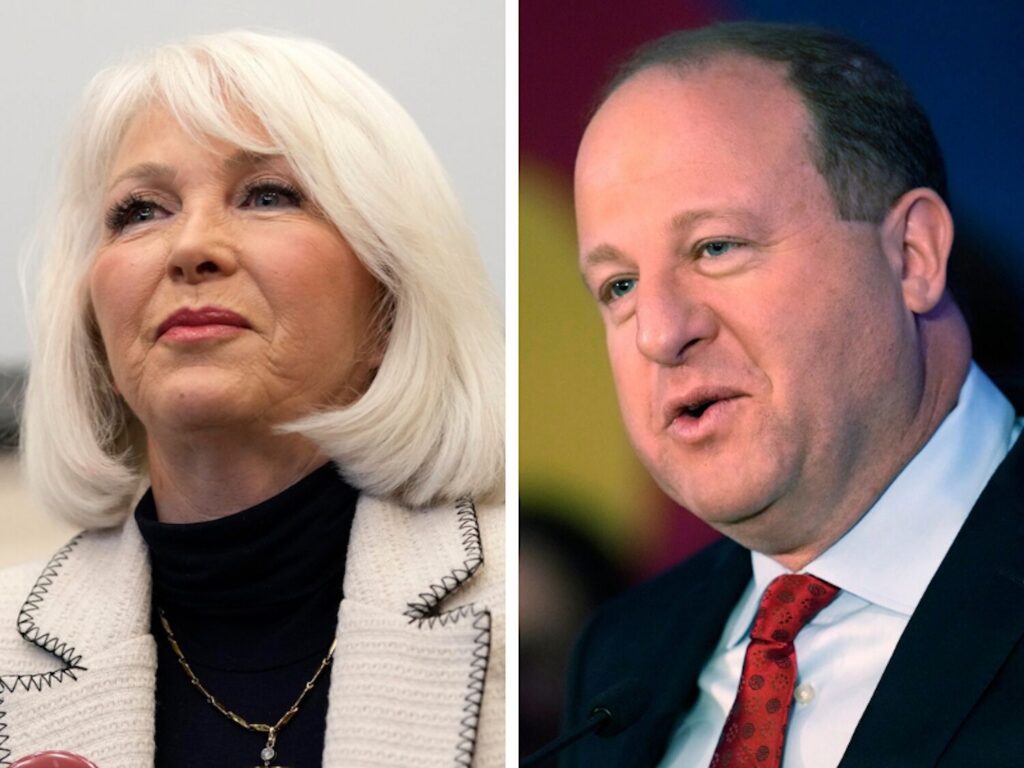
Colorado governor fires clemency board members who opposed Tina Peters commutation
Marissa Ventrelli
marissa.ventrelli@coloradopolitics.com
Updated 19 hours ago
Gov. Jared Polis has fired two members of his clemency board who opposed his commutation of Tina Peters’ sentence, according to Colorado Politics news partner 9News. In firing Azra Taslimi and Hannah Seigel Proff, Gov. Jared Polis said they had...

Democrats supercharge court fight after campaign finance ruling
James A. Downs
james.a..downs@washingtonexaminer.com
Updated 20 hours ago
Democrats are hoping to dampen the GOP’s midterm cash advantage after Republicans scored a major win allowing unlimited coordination between political parties and candidates. Republican campaign arms say they can access discounted TV ad rates after the Supreme Court lifted...

10th Circuit agrees Colorado satisfied jury award after intercepting money for restitution
Michael Karlik
michael.karlik@coloradopolitics.com
Updated 17 hours ago
The Denver-based federal appeals court agreed last week that Colorado satisfied its obligations by not paying a man directly for violating his rights, but rather crediting the jury’s multimillion-dollar award toward the crime victim restitution he still owed in his...
Colorado justices ponder whether insurer should save company from asbestos suits
Michael Karlik
michael.karlik@coloradopolitics.com
Updated 23 hours ago
Some members of the Colorado Supreme Court appeared skeptical last week that an insurance policy that reaches beyond the limits and coverage of a company’s other policies must “step down into the shoes” of those policies after they become insolvent....

Colorado business confidence improves but still pessimistic
Bernadette Berdychowski
bernadette.berdychowski@denvergazette.com
Updated 20 hours ago
Halfway into the year, business confidence across Colorado has improved but is still negative, a new report found. The Leeds Business Confidence Index, a measurement of how business leaders across Colorado feel about the future of the national and state...

How Melat Kiros pulled Democratic Party left in upset win over Diana DeGette
Ernest Luning
ernest.luning@coloradopolitics.com
Updated 1 day ago
“It’s time for change,” Democratic congressional candidate Melat Kiros, a political newcomer and self-described democratic socialist, said in her campaign’s TV ad. On Tuesday night, primary voters in Denver agreed, giving the nomination to the 29-year-old, while at the same...
PREV
PREVIOUS

Child abuse reports picking back up after steep drop-off in spring
Reports of potential child abuse have ticked upward this fall as school has returned, officials said, reversing a steep drop-off from the spring. “I was concerned. I think that everyone was,” said Maggie Roughton, a social worker with Denver’s Department of Health Services. “Our community, us. When the calls drop, it doesn’t mean that things […]

Gov. Jared Polis: Vaccine on the way but don't let up your guard against COVID-19
Gov. Jared Polis Monday cheered the news that Pfizer says its early tests show that their coronavirus vaccine is 90% effective, a “gold standard” that could mean the first doses are in Colorado before year’s end. The governor also announced he is extending the statewide mask mandate for another 30 days, and directing state employees, […]