

Gap in jail video leads judge to greenlight excessive force claim against Boulder deputy

Because it was unclear whether a Boulder County Sheriff’s deputy used excessive force on a generally hostile inmate during a brief period when the inmate posed no threat, a federal judge has allowed the detainee’s claim to proceed to trial.
Andrew L. Johnson was a pretrial detainee at the Boulder County Jail on Oct. 20, 2017 when he became belligerent with one of the jail employees. Johnson was completing paperwork and had requested, among other items, a grievance form. He asserted his constitutional right to the form after the deputy asked why Johnson wanted one.
The deputy then ordered Johnson into lockdown, but he refused.
Johnson “raised his voice, puffed out his chest,” and demanded another grievance form for a second deputy who reiterated the lockdown order, according to U.S. Magistrate Judge Kristen L. Mix. She reviewed video footage from the jail that corroborated in part the narrative of events.
Although Johnson eventually went to his cell, he ignored further instructions, leading personnel to institute a two-day segregation as a consequence. Johnson continued to resist orders throughout the morning, culminating in him placing his foot to block the closure of his cell door.
According to the video, multiple jail employees were unable to de-escalate the standoff, leading Sgt. Timothy J. Kellison to push Johnson into his cell. When Johnson kicked the door, Kellison pointed his taser at Johnson, ordering him to place his hands behind him and handcuffing Johnson.
While deputies moved Johnson to a restraint chair on a different floor, he physically resisted and hurled slurs and abusive language at personnel. He spent nearly five hours restrained, with medical staff checking repeatedly to ensure he was unharmed.
Mix determined Johnson had not presented a credible claim that his placement in segregation or the restraint chair was unlawful. Nor did he articulate a claim for excessive force against anyone at the jail but Kellison.
In evaluating the actions of Kellison, she noted she was required to view facts from the officer’s perspective and to keep in mind that law enforcement must make split-second decisions.
There was no evidence of injury from the encounter in Johnson’s cell, and therefore no issue of excessive force. However, even though the defense argued and Mix agreed there was no video documentation of force in Johnson’s transfer to the restraint chair, the video did not depict “what happened at the bottom of the stairs, where Defendant Kellison’s actions (whatever they were) took place.”
While multiple sheriff’s employees testified to Johnson’s belligerence, Johnson alleged that he fell down the stairs where, at the bottom, Kellison applied “deadly force” using a chokehold. Kellison did admit to applying pressure on Johnson to “cause pain and gain compliance.” Johnson, representing himself, called attention to the court that Kellison “intentionally” inflicted pain on him.
David Hughes, deputy Boulder County attorney, argued in the county’s motion to dismiss the claims that “[n]o Tenth Circuit or Supreme Court case clearly establishes that this alleged use of force is unreasonable under these specific circumstances.”
Nevertheless, Mix concluded that the “facts are scant as to whether Plaintiff, a handcuffed detainee, was actively resisting to the point that Defendant Kellison’s actions were objectively reasonable under the circumstances at the time the relevant force was applied at the bottom of the stairs.”
She issued a recommendation on Sept. 25 to deny Kellison qualified immunity, which is a mechanism to shield government employees from liability claims except in cases of clearly established constitutional violations. The magistrate judge noted that a reasonable jury might determine Johnson was not resisting at the time Kellison applied force, which prior court decisions have deemed unlawful.
On Monday, U.S. District Judge Raymond P. Moore adopted Mix’s recommendation, agreeing that questions existed about whether Johnson was actively resisting, was a threat, and required the degree of force used in the stairwell. As such, Moore permitted the claim against Kellison to continue to trial.
The case is Johnson v. Kellison et al.



This is how much Colorado will receive from massive Meta child safety settlement
Thelma Grimes
thelma.grimes@coloradopolitics.com
Updated 21 minutes ago
As part of a sweeping multistate agreement, Meta Platforms, Inc. — the parent company of Facebook and Instagram—has agreed to pay more than $17 billion and adopt extensive child-safety reforms. Colorado Attorney General Phil Weiser on Wednesday called the deal...
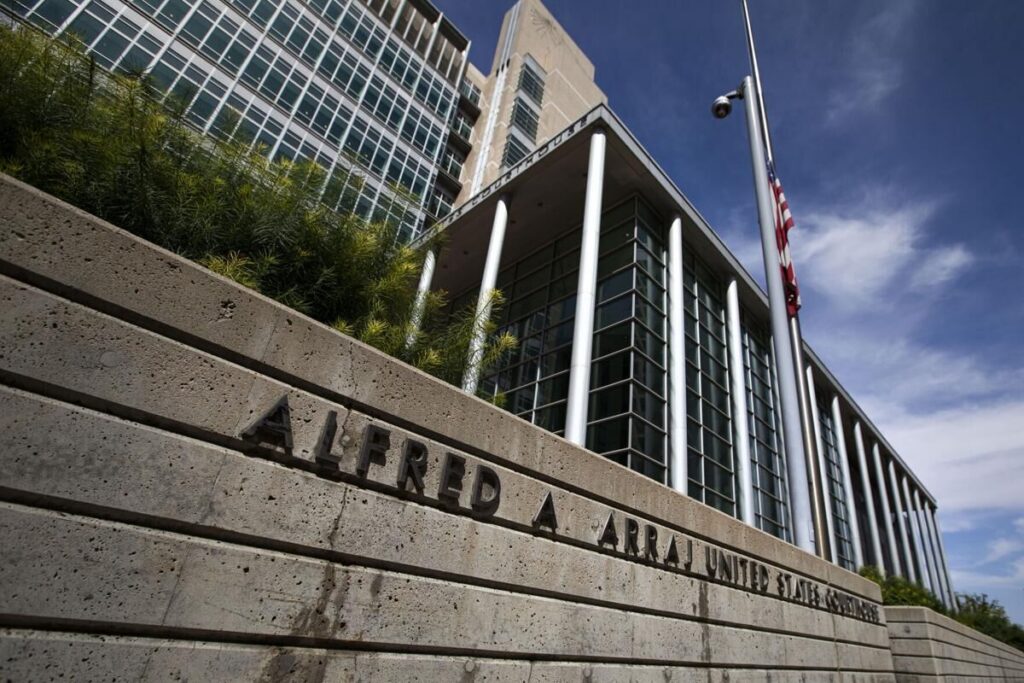
‘Understand people for who they are’: 2 federal judges talk about compassion in courtroom
Michael Karlik
michael.karlik@coloradopolitics.com
Updated 1 hour ago
Before taking the bench in 2022, U.S. District Court Judge Charlotte N. Sweeney was an employment discrimination attorney. While the cases could be emotionally charged, they were different from the criminal proceedings she is now handling. “It wasn’t necessarily affecting...

Trump lowers flags to half-staff for Dolly Parton: ‘The World loves you’
Naomi Lim
naomi-lim@coloradopolitics.com
Updated 21 hours ago
President Donald Trump is honoring the life of country music legend and philanthropist Dolly Parton by ordering federal buildings across the country to lower flags to half-staff for a week. “Very sad to report that Dolly Parton, one of the...
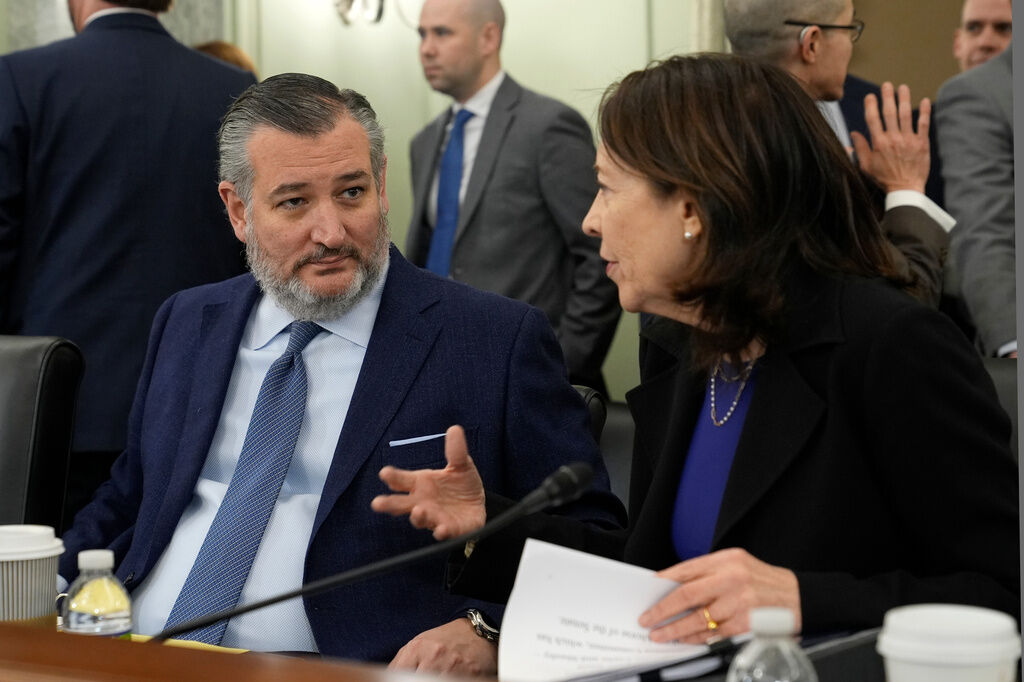
Ted Cruz suggests GOP realignment coming after Trump leaves office
Emily Hallas
emily-hallas@coloradopolitics.com
Updated 21 hours ago
Sen. Ted Cruz (R-TX) on Monday suggested the Republican Party could embrace a directional shift after President Donald Trump leaves office, a transition that promises to leave a gaping hole in the GOP. Cruz is known as a critical ally...
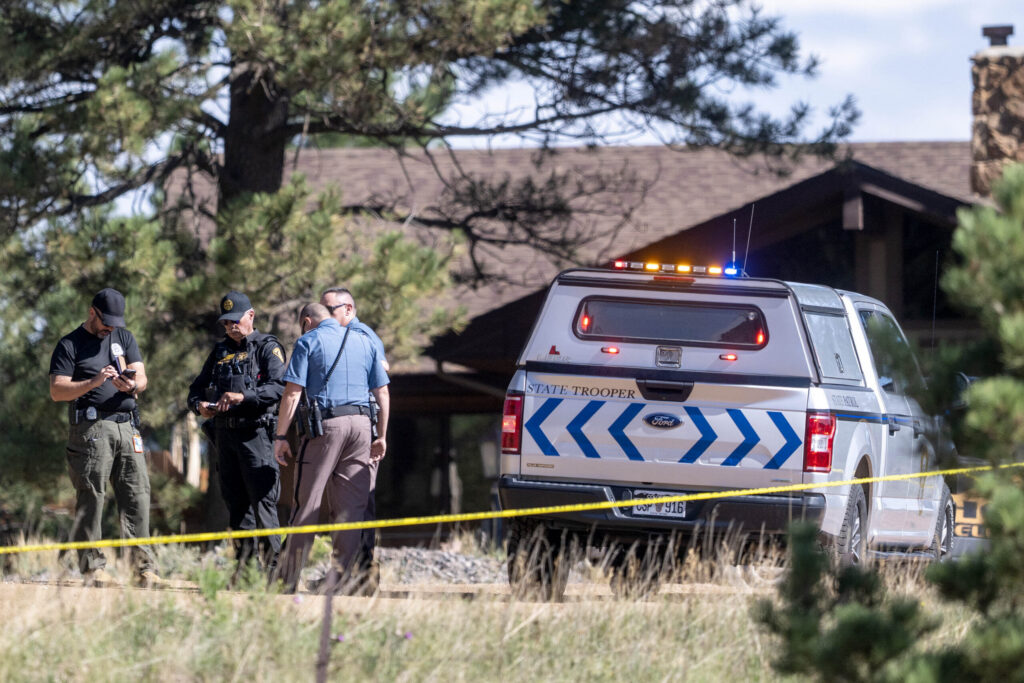
2 Colorado State troopers shot near Woodland Park; suspect killed
DEBBIE KELLEY
debbie-kelley@coloradopolitics.com
Updated 21 hours ago
Two Colorado State Patrol troopers were hospitalized, and a suspect is dead after a shooting during a traffic stop Tuesday. The initial incident happened at about 7:15 a.m., when a resident reported suspicious activity in the area near milepost 286...

Aurora moves forward with data center regulations
Kyla Pearce
kyla.pearce@gazette.com
Updated 21 hours ago
The Aurora City Council approved moving forward with two new regulations on data centers and directed staff to come back at the next study session with others. At a council meeting in early August, council members directed city management to...

Aurora City Council considers stricter food truck regulations
Kyla Pearce
kyla.pearce@gazette.com
Updated 21 hours ago
The Aurora City Council is considering passing laws to limit the number of food trucks on properties in the city and how and when they operate. Councilmember Angela Lawson, who sponsored the ordinance, said she understands the importance of food...

Denver murder conviction reversed for incomplete self-defense instruction
Michael Karlik
michael.karlik@coloradopolitics.com
Updated 19 hours ago
Colorado’s second-highest court reversed a defendant’s murder conviction last week because a Denver judge gave an incomplete instruction to the jury about the man’s right to self-defense. Donald R. Gonzales and Gary McLaughlin met up in a Capitol Hill parking...
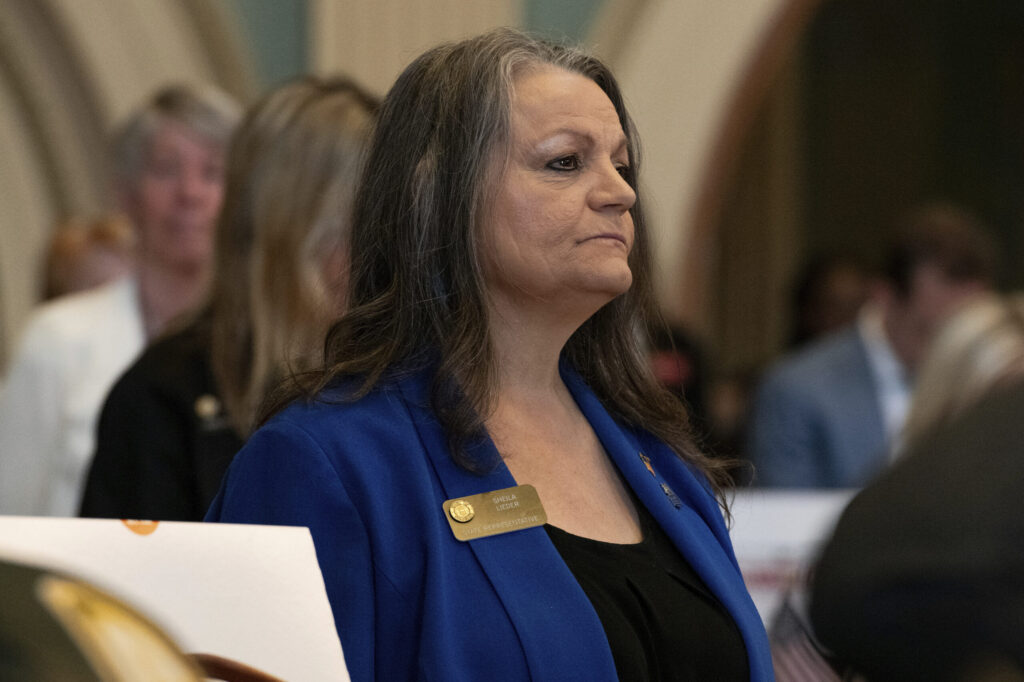
Colorado lawmaker, House leaders named in workplace-retaliation lawsuit
Marianne Goodland
marianne.goodland@coloradopolitics.com
Updated 21 hours ago
A former legislative aide has filed a lawsuit alleging she was mistreated, illegally directed to perform campaign work and harmed by a House leadership structure she charged was fragmented, politicized and ineffective at protecting employees. The lawsuit, filed by Jennifer...

Secret Service confirms awareness of Iranian state media video threatening Barron Trump’s life
The Associated Press
the-associated-press@coloradopolitics.com
Updated 1 day ago
WASHINGTON (AP) — The U.S. Secret Service has confirmed it is aware that Iranian state media has aired a video that appears to threaten the life of Barron Trump, President Donald Trump’s youngest son. “The U.S. Secret Service is aware...
PREV
PREVIOUS

Neal-Graves hired as permanent state CIO and IT office head
Gov. Jared Polis has officially hired Anthony Neal-Graves to be the state’s chief information officer and Office of Information Technology executive director, two months after he took over on an interim basis. “Tony’s collaborative approach to serving both state agencies and all Coloradans will ensure that we continue to efficiently deliver and expand virtual access […]

Long-term I-70 ramp closure to begin Monday in Denver
The Steele Street on-ramp to westbound Interstate 70 will close Monday morning, lasting through summer 2021 as part of the Colorado Department of Transportation’s Central 70 Project. The full closure will begin Monday at 5:30 a.m. As a detour, drivers traveling south on Steele Street/Vasquez Boulevard should go east on 48th Avenue to southbound Colorado […]