

Colorado Court of Appeals: the state ethics commission is not subject to the open meetings or open records laws
A ruling by the Colorado Court of Appeals last week gave the Colorado Independent Ethics Commission the decision it has sought for years: that it is no longer subject to the state’s open records or open meetings laws.
The decision comes from the commission’s longest-unresolved ethics complaint, filed Feb. 3, 2016, against Mayor Mike Dunafon of Glendale. The complaint, filed by the owner of a Persian rug store in Glendale, alleged Dunafon cast the deciding vote on a development plan for a site owned by his wife, who owns Shotgun Willie’s.
A second complaint was filed in 2017 by the same individual over Dunafon’s vote to approve a liquor license renewal for Shotgun Willie’s, and it also asked the ethics commission to assert its jurisdiction over Glendale. The ethics commission spent the next two years trying to figure out if it had jurisdiction over Glendale, given that the city has its own ethics code, and, under Amendment 41, is allowed to deal with its own ethics issues.
The commission decided in July 2018 to assert jurisdiction because the Glendale code did not contain a gift ban — although that had nothing to do with the Dunafon complaint — and that Glendale’s ethics tribunal is not sufficiently independent to make decisions on ethics complaints. Glendale’s ethics tribunal is the city council on which Dunafon served.
In December 2016, the ethics commission approved a position statement that clarified it could assert jurisdiction over a home-rule city when the city’s ethics laws lack the gift ban.
Dunafon sued the ethics commission over the jurisdiction issue, and in January 2019, a Denver District Court judge ruled in his favor, dismissing both ethics complaints and issuing an injunction against the commission, which is under appeal.
Dunafon sued over the 2016 complaint as well, attempting to obtain executive session recordings that discussed his case, as well as written records. A Denver District Court judge ruled that the court lacked “subject matter jurisdiction” over the ethics commission because it is not an agency or “institution” subject to the open records law, that the commission is not a “state public body” subject to the open meetings law. The appeals court last week agreed.
The ethics commission has been sued twice over its insistence that it isn’t subject to the open meetings and open records laws, lawsuits that it lost both times.
Part of the commission’s logic about not being subject to CORA or the open meetings law is because it is housed in the judicial branch of state government, which is generally not subject to those laws.
However, in a 2015 rule-making statement on access to administrative records, the Colorado Supreme Court disagreed, stating that the Judicial Branch “does not include the Judicial Discipline Commission, Independent Ethics Commission or the Independent Office of the Child Protection Ombudsman,” making those bodies subject to the open government laws.
In 2018, the commission decided to write its own rules on access to commission documents, which drew a flurry of complaints from Colorado Common Cause, the Colorado Press Association and the Colorado Broadcasters Association, as well as editorials criticizing the commission for its lack of transparency.
“There is absolutely no reason that the IEC should not be subject to the FULL Colorado Open Records Act,” the three organizations wrote. “Absent a court decision expressly finding that the IEC is not an entity covered by CORA, we believe the IEC is subject to CORA.”
So what’s different now? A 2019 Colorado Supreme Court ruling involving the Colorado Department of Public Health and Environment that has given the commission leverage on the open records issue.
In 2019, a group of doctors, identified as “John Does 1-9” in court filings, sued the CDPHE regarding patient certification for medical marijuana use. At issue was a CDPHE referral policy that the plaintiffs claimed was void because it was developed in violation of the state’s open meetings law. On Nov. 12, 2019, the Colorado Supreme Court said otherwise, ruling that an entire state agency could not be a “state public body” under the open meetings law.
The Doe case got the immediate attention of the ethics body. Commissioner Yeulin Willett, a former state lawmaker, raised the possibility in a December 2019 meeting that the ethics commission could be viewed as an “entire state agency” and hence not subject to the open records law.
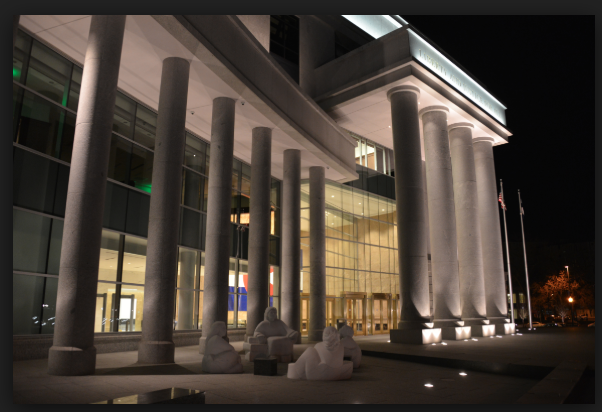
The ethics commission is part of Amendment 41, the state’s ethics law. It began meeting in 2007 and almost from the beginning has asserted that it is not subject to state transparency laws. The commission is taxpayer funded; its attorney is a member of the Attorney General’s office; it is housed in a taxpayer-funded building — the Ralph Carr judicial building — and it provides ethics training at no cost to local and state government employees.
Jeff Roberts of the Colorado Freedom of Information Coalition told Colorado Politics on Tuesday that ruling makes clear that the five-member body “is a unique commission that gets to set its own rules for how it operates as it relates to open government and its own transparency.”
Writing for the CFOIC blog, Roberts pointed out that the ruling now leaves unclear on how someone could challenge a denial of commission records or access to a closed IEC meeting.
Josh Weiss, an attorney with Brownstein Hyatt Farber Scheck, which represents Dunafon, told Roberts that if the “IEC decided tomorrow to stop holding public meetings, it’s not clear who could challenge that or whether the IEC would actually be violating any rules given that they appear to operate in a special space where they make their own rules but aren’t really subject to much review.”
Roberts also noted in his blog that during oral arguments with the appeals court, Assistant Attorney General Gina Cannan, who represents the commission, said that even though the open records and open meetings law doesn’t apply to the commission “that doesn’t mean we are in no man’s land. The (state) constitution constrains and governs the IEC and informs this court … and the constitution expressly provides that certain matters are to be public and certain matters are to be kept confidential.”
Weiss said Tuesday the ruling raises a lot of questions. “Does the IEC have to comply with any open meetings law? Is the state ethics body the only one immune from open records law? And how does someone now obtain records from the commission?”
He said they are evaluating their options, including whether to appeal to the Colorado Supreme Court. “It’s a disappointing precedent,” Weiss said Tuesday.
In 2015, the Center for Public Integrity gave Colorado an “F” for its ethics enforcement agency (the commission), ranking it 44th nationwide. In the report, the Center said the “ethics commission, staffed with a single professional, is understaffed, under-funded, and lacks independence: it relies on the attorney general’s office for legal counsel — even though that office is also subject to the commission’s oversight. On the enforcement side in the Centennial State, it is citizens who must prosecute complaints against public officials whom they believe have acted improperly. Citizens must also pay their own way through the court system to prove public wrongdoing while public officials accused of malfeasance can rely on public money for their defense.”
Since 2015, none of that has changed.
Colorado Politics Must-Reads:

Colorado Politics Calendar June 29-July 5
Rachael Wright, Special to Colorado Politics
rachael.wright@coloradopolitics.com
Updated 3 days ago
CoPo’s weekly political calendar will help you find political and public-policy events throughout Colorado. It includes candidate and issue campaign events, public policy meetings, court hearings, state and local party conventions, assemblies, debates, rallies, parades, speaking engagements, traveling dignitary appearances,...
Gov. Lamm’s GOP challenger gives insights into his campaign | A LOOK BACK
Rachael Wright, Special to Colorado Politics
rachael.wright@coloradopolitics.com
Updated 3 days ago
Forty-five years ago this week: “I see Gov. (Richard) Lamm is fairly popular in general,” said gubernatorial candidate and state Sen. Bill Hughes, R-Colorado Springs. “ … And he’ll be hard to beat.” Hughes was on a whirlwind campaign trail...
Giving credit to Polis where credit is due | SONDERMANN
Eric Sondermann
eric-sondermann@coloradopolitics.com
Updated 3 days ago
It is an understatement to suggest that Gov. Jared Polis has had a tough couple of months. The bloom was already off the rose and Coloradans were paying far more attention to the choice of his replacement than they were...
Bennet, Hickenlooper to vote against Trump’s 10th Circuit nominee from Colorado
Michael Karlik
michael.karlik@coloradopolitics.com
Updated 5 hours ago
Colorado’s two Democratic senators will not vote to confirm President Donald Trump’s nominee to a vacancy on the Denver-based federal appeals court. Trump has selected U.S. District Court Chief Judge Daniel D. Domenico, who he appointed as a federal trial...
Who’s spending in Colorado to get your vote?
Marianne Goodland
marianne.goodland@coloradopolitics.com
Updated 5 hours ago
Groups that raise unlimited amounts of money have spent about $20 million in May and June to try and influence Colorado voters’ choices in the upcoming June 30 primaries. By law, these groups cannot coordinate with the candidates they support....
U.S. government declines to oppose multiple challenges to immigration detention in Colorado
Michael Karlik
michael.karlik@coloradopolitics.com
Updated 20 hours ago
Multiple federal judges in Colorado granted petitions from people challenging the lawfulness of their immigration detention this week after the government took the unusual step of declining to submit arguments in opposition. Colorado’s federal trial court is facing a flood of...
Tina Peters tells supporters to ‘stand up and fight back’ at Castle Rock event
Marissa Ventrelli
marissa.ventrelli@coloradopolitics.com
Updated 20 hours ago
Tina Peters, the former Mesa County clerk recently released from prison, warned supporters that what happened to her could happen to them, too, if they did not “stand up and fight back” at an event at the Douglas County Fairgrounds....

Iran strikes cargo ship in Strait of Hormuz, endangering Trump’s peace
Christian Datoc
christian-datoc@coloradopolitics.com
Updated 1 day ago
Iran attacked a cargo ship traveling through the Strait of Hormuz on Thursday, possibly upending President Donald Trump‘s diplomatic end to the war with Iran. A U.S. official confirmed to the Washington Examiner that the Islamic Revolutionary Guard Corps “struck...
Senate GOP tries to mend fences with Trump after heated lunch
David Sivak
david-sivak@coloradopolitics.com
Updated 1 day ago
Senate Republicans are trying to turn the page on a heated lunch with President Donald Trump that brought weeks of tensions to a new high-water mark. In a symbolic gesture, Senate Republicans took another vote on the Iran war Wednesday...
Colorado justices discuss solution to confusion from prior criminal ruling
Michael Karlik
michael.karlik@coloradopolitics.com
Updated 18 hours ago
The Colorado Supreme Court pondered the fallout on Tuesday from its nearly six-year-old decision interpreting the state’s impaired driving laws, with the justices now addressing how defendants affected by the legal change must seek postconviction relief. In contrast to other...
PREV
PREVIOUS

Colorado health care poll finds high cost, high concern for families
A lot of Colorado families are staying away from doctors during the pandemic for fear of the cost, according to a report released Tuesday morning by the Consumer Colorado Health Initiative and West Health Institute. The report says 1.7 million Coloradans report that they or their family members put off treatment fin the last year […]

Colorado poll: 65% of Facebook users see online misinformation, 43% admit reposting it
The online pressure group Avaaz has a new poll that suggests 65% of registered voters in nine states, including Colorado, said they had seen political disinformation in their Facebook feeds. SurveyUSA did the poll of 1,000 registered voters in Colorado between Oct. 14-19 using a representative cross-section o on gender, age, race, education and home-ownership. […]