

State ethics commission dismisses complaints against former state Rep. Joe Salazar
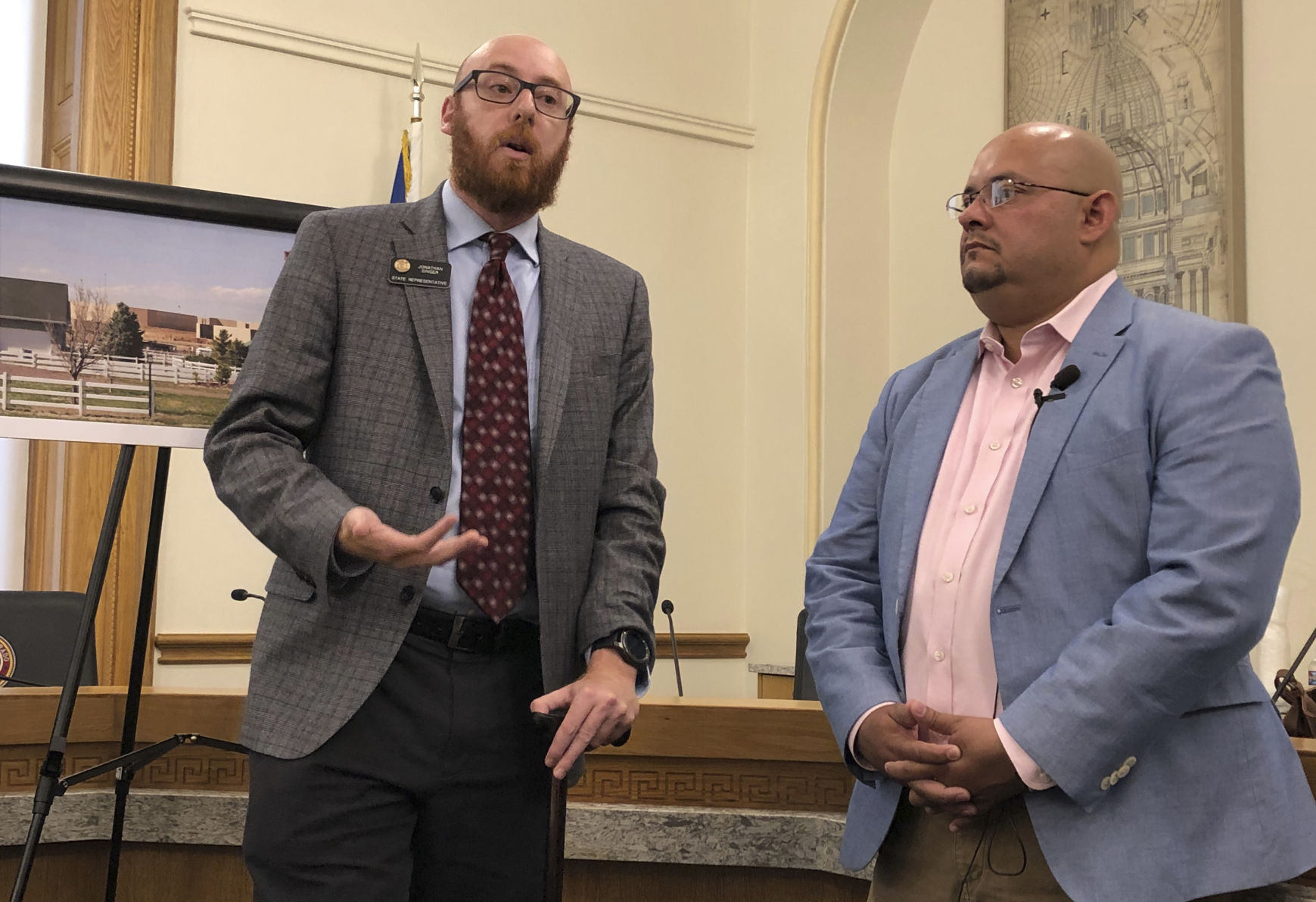
An ethics complaint filed against former state Rep. Joe Salazar, alleging he had illegally performed the duties of a lobbyist, has been unanimously dismissed by the Colorado Independent Ethics Commission.
The complaint was filed Dec. 11 by the Public Trust Institute. It claimed Salazar conducted lobbying activities less than two months after he left the General Assembly, a violation of Amendment 41. Salazar served three terms representing House District 31, choosing to run for Attorney General in 2018 instead of trying for a fourth term. He now runs Colorado Rising, an environmental action group.
Among Amendment 41 provisions is one that bars former state lawmakers from lobbying for two years after they leave elected office. The term “lobbying” is defined in state law as “communicating directly, or soliciting others to communicate, with a covered official for the purpose of aiding in or influencing” the consideration of any bill pending in the Colorado General Assembly.
According to the complaint, Salazar was paid to lobby by Colorado Rising, although the complaint didn’t provide any evidence to back up that claim. Salazar is not registered as a lobbyist and Colorado Rising does not employ anyone as a lobbyist, the complaint said.
On Jan. 4, 2019, the complaint said, Salazar announced Colorado Rising’s intent to “directly influence state legislation and policy,” stating “The Governor’s Office doesn’t belong to one individual no matter how much he paid for it. It doesn’t belong to him. It belongs to the people of the state of Colorado. And Colorado Rising is here to give them that reminder on a daily basis if we need to.”
That announcement took place the day after Salazar’s term as a House member ended.
On March 4, 2019, Salazar engaged in direct lobbying, the complaint claimed, in a press conference at the state Capitol, where he asked that lobbying was to ask people to “contact specifically named state legislators to influence the passage of Senate Bill 19-181.”
Salazar held another press conference on Aug. 14, 2019, in a House hearing room to announce “new legal actions that the group has taken in response to the passing of SB-181.” The complaint noted that committee rooms “can only be reserved by current members” of the legislature. The committee room in question was reserved by Rep. Jonathan Singer, D-Longmont, the complaint said.
“It appears that not only did Mr. Salazar engage in lobbying, but he coordinated his lobby efforts with Representative Singer, using public facilities available only to current members of the General Assembly.”
However, at that time the bill had already been signed into law (that happened the previous April) and the General Assembly was not in session.
A third allegation was that Salazar lobbied members of the General Assembly in August regarding immigration legislation.
A similar complaint was filed the same day with the Secretary of State’s office. That complaint was dismissed in July.
In the July 14 motion to dismiss, Theresa Conley, legal & internal operations manager in the Elections Division for the Secretary of State, wrote that the Jan. 4, 2019 press conference, the Aug. 8 email correspondence and the Aug. 14, 2019, press conference did not violate the state’s lobbying laws because “the underlying conduct did not meet the definition of lobbying.”
The Secretary of State dismissed the complaint on Aug. 3.
“First, neither Respondent nor Colorado Rising made specific asks to the entering legislators about a specific or pending matter,” Conley wrote about the Jan. 4 press conference. “Instead, Respondent and Colorado Rising announce they plan to hold the Governor and legislators accountable and to ensure they protect the interest of the people and not oil and gas lobbyists. Second, the event was held the morning of opening day at the legislature, before the session had officially opened and before any legislation had been introduced.”
Salazar told Colorado Politics that state law requires that when identical complaints are filed with multiple state agencies, once one agency has dismissed a complaint the other agency must also dismiss. The ethics commission reviewed the complaint in their September meeting but took no action.
Tuesday, the commission reviewed a request from Salazar’s attorney, Martha Tierney, to dismiss the complaint. Tierney noted that they had filed a request for dismissal on Aug. 17 but the complainant, represented by Suzanne Staiert, did not respond to that motion.
“It’s highly unusual to allow another bite at the apple,” Tierney said.
Staiert told the commissioners she didn’t respond because the investigation by the IEC had not been completed, and that the investigative report, once completed, did not accurately report some of the facts.
Tierney said the complaint doesn’t allege a violation of Amendment 41. She also noted that the Secretary of State’s office had dismissed the complaint, which included the same four set of facts contained in the complaint in front of the ethics commission. The ethics commission cannot take a position that would be in conflict with the Secretary of State’s decision, which has not been appealed, Tierney noted.
Staiert agreed to dismiss three of the four complaints, leaving the March 4, 2019, press conference as the only one at issue. Conley, in the motion to dismiss to the Secretary of State, characterized the March 4, 2019 event as lobbying, but not directed at lawmakers.
Instead, Colorado Rising was asking its members to contact lawmakers regarding SB 19-181. That act falls under an exception to lobbying rules that do not require reporting or registration, Conley wrote.
Conley also pointed out that while she was deputy Secretary of State, Staiert dismissed a complaint against the American Lands Council that hinged on a similar set of circumstances.
Conley wrote that ALC sent a detailed email correspondence that “listed the committee members and their email addresses” asking the recipients to “consider attending the hearing to show your support for the bill” or to “please send these Committee members an email letting them know that you support [the bill]” that was sent the day before the bill was scheduled for a committee hearing. In that instance, the prior Deputy Secretary, now Complainant here, found the email was a clear example of grassroots lobbying that was sufficiently minimal.”
Staiert said there are two different legal standards at play: the Secretary of State’s rules on registering as a lobbyist and Amendment 41’s provision setting a two-year ban on lobbying by state lawmakers. The commission has no obligation to accept the findings of the Secretary of State, Staiert told the commission.
“Legislators are held to a higher standard” when it comes to grassroots lobbying, which was the subject of the March 4 press conference.
Grassroots lobbying is defined by the Secretary of State as efforts to influence members of a group, not lawmakers. Staiert pointed out that Salazar commented during the press conference, which was streamed on Facebook, on a list of lawmakers who needed “extra pressure” to support SB 19-181.
Commissioner Bill Leone noted that the rules of the Secretary of State have a lot more detail with regard to the definition of lobbying that Amendment 41’s provision does not. The section of Amendment 41 at issue doesn’t even use the word “lobbying,” instead stating only a prohibition on “a statewide elected officeholder or member of the general assembly from personally representing another person or entity for compensation before any other such officeholder or member for a period of two years following departure from office.”
The amendment also states that “further restrictions” on public officers, members of the legislatures or elected officials with local governments “may be established by law,” although those further restrictions have never been developed either by the commission or by state law.
The amendment sets a standard that trumps the rules of the Secretary of State, Leone said. “We don’t deal with this provision very often and are trying to give it life in this case,” he said.
The March 4 event is exactly what the voters intended to prohibit, Staiert told the commission, and it’s within the commission’s power to do that.
Leone questioned Staiert on whether Salazar’s involvement with Colorado Rising was as a “hired gun” or because it is part of his duties as director of the organization.
“This was a very targeted attempt to influence the former body in which he served,” Staiert replied. Those who reach out to legislators could say they were prompted by Salazar, which is trading on a relationship with those elected officials.
Commission Chair Liz Krupa pointed out, however, that this assumes facts not in evidence. Salazar never told people to say he had asked them to contact lawmakers. “There’s no evidence he did that,” Krupa said.
Leone, the hearing officer, said he disagreed with Tierney’s assertion that they lacked jurisdiction or are bound by the Secretary of State’s decision. He also disagreed with Staiert’s claim that any member of the General Assembly who leaves office violates ethics law when they express views on public policy. But he also noted that the commission has “struggled with how to draw a line under the amendment for permissible activities by the General Assembly once they leave office.”
The facts of this case indicate there has been no violation, Leone said. Salazar has a number of duties as executive director of Colorado Rising, some administrative, others advocacy and some legal, in his role as an attorney. Commission Chair Liz Krupa agreed, stating that Salazar was hired by Colorado Rising as an attorney, and attorneys always advocate for their clients.

DOJ publishes more Epstein documents mentioning Trump after initial omission
Rena Rowe, Washington Examiner
rena.rowe.washington.examiner@gazetteedit.wpenginepowered.com
Updated 7 hours ago
The Justice Department released additional Epstein files on Thursday, including uncorroborated accusations from a woman claiming she was sexually assaulted by President Donald Trump. Last week, Rep. Robert Garcia (D-CA), the top Democrat on the House Oversight and Government Reform...
Federal judge dismisses developer’s challenge to Denver affordable housing ordinances
Michael Karlik
michael.karlik@coloradopolitics.com
Updated 2 hours ago
A federal judge dismissed a homebuilder’s constitutional challenge on Tuesday to a pair of Denver ordinances that impose obligations on developers related to the affordable housing demands created by new construction. Two related companies, redT Homes and redT Capital Partners,...
Another TABOR fight: Democrats plan to redirect refunds to Colorado residents
Marianne Goodland
marianne.goodland@coloradopolitics.com
Updated 36 minutes ago
Colorado voters could decide this fall whether billions of dollars that would otherwise be returned as refunds under the Taxpayer’s Bill of Rights should instead go to public schools under a ballot measure unveiled Thursday by Democrats. Supporters say the...
Analysis: Colorado legislators introduce 18 energy bills amid debate over emissions goals
Scott Weiser
scott.weiser@gazette.com
Updated 7 hours ago
Colorado legislators have introduced 18 energy-related bills so far in the 2026 session, with Democrats sponsoring 14 and Republicans four, highlighting the sharp partisan split over how aggressively the state should pursue its greenhouse gas reduction goals while protecting affordability...

Colorado House committee advances bills regulating AI in therapy, insurance decisions
Marissa Ventrelli
marissa.ventrelli@coloradopolitics.com
Updated 8 hours ago
Colorado lawmakers are moving to place guardrails on the growing use of artificial intelligence in mental health care and insurance decisions. The House Health and Human Services Committee on Thursday approved two bills that would limit how therapists and insurers...
Colorado Democrats, Republicans fight over ballot fiscal information
Marissa Ventrelli
marissa.ventrelli@coloradopolitics.com
Updated 5 hours ago
Republicans and Democrats clashed anew over legislation that would require identifying which programs would see a funding reduction if a ballot measure passed, with the former saying it’s yet another way for the government to control the campaign narrative and...

10th Circuit distances itself from prior decision making it easier to toss prisoner lawsuits
Michael Karlik
michael.karlik@coloradopolitics.com
Updated 11 hours ago
The Denver-based federal appeals court distanced itself on Wednesday from its own recent decision that made it easier for prison officials to end civil lawsuits by transferring incarcerated plaintiffs between facilities. A three-judge panel of the U.S. Court of Appeals...

Legal war over Trump tariffs still raging despite Supreme Court ruling
Jack Birle, Washington Examiner
jack.birle.washington.examiner@gazetteedit.wpenginepowered.com
Updated 11 hours ago
The war in the courts over tariff refunds took a key step forward this week as President Donald Trump’s newly implemented tariffs are facing a new legal challenge, less than a month after the Supreme Court struck down Trump’s sweeping...

Democrat Dwayne Romero jumps in primary to challenge Republican Jeff Hurd in Colorado’s 3rd CD
Ernest Luning
ernest.luning@coloradopolitics.com
Updated 13 hours ago
The Democrat who has been running for nearly a year to unseat Republican U.S. Rep. Jeff Hurd in Colorado’s 3rd Congressional District got some company in the primary this week. Dwayne Romero, a Snowmass Village business owner and decorated Army...

Proposed changes to wildfire code would add protections to eastern edge of Colorado Springs
Brennen Kauffman
brennen-kauffman@coloradopolitics.com
Updated 14 hours ago
New construction rules may be coming to the higher-risk wildfire areas around Colorado Springs, including the grassland on the city’s eastern side. Colorado Springs Fire Marshal Kris Cooper presented an early draft of the proposed changes to the city’s wildfire...
PREV
PREVIOUS
State Rep. Leslie Herod speaks nationally on Colorado's police reforms
State Rep. Leslie Herod of Denver led a national conversation on what states can accomplish in criminal justice reform Tuesday morning. She is the co-chair of the new Millennial Action Project Criminal Justice Reform Advisory Council along with Republican state Rep. Tanner Magee, a Republican from Louisiana, a national collaborative to help younger lawmakers across […]

State releases COVID-19 guidance for ski areas and resorts
COVID-19 guidance for ski areas and resorts was released Monday regarding social distancing, mask wearing and group sizes. The guidelines, drawn from existing COVID-19 industry regulations, were set by the Colorado Department of Public Health and Environment. “Ski areas are a vital driver of the Colorado economy,” CDPHE said in a statement. “During the COVID-19 pandemic, […]