

Wolves pose little threat to animals, people

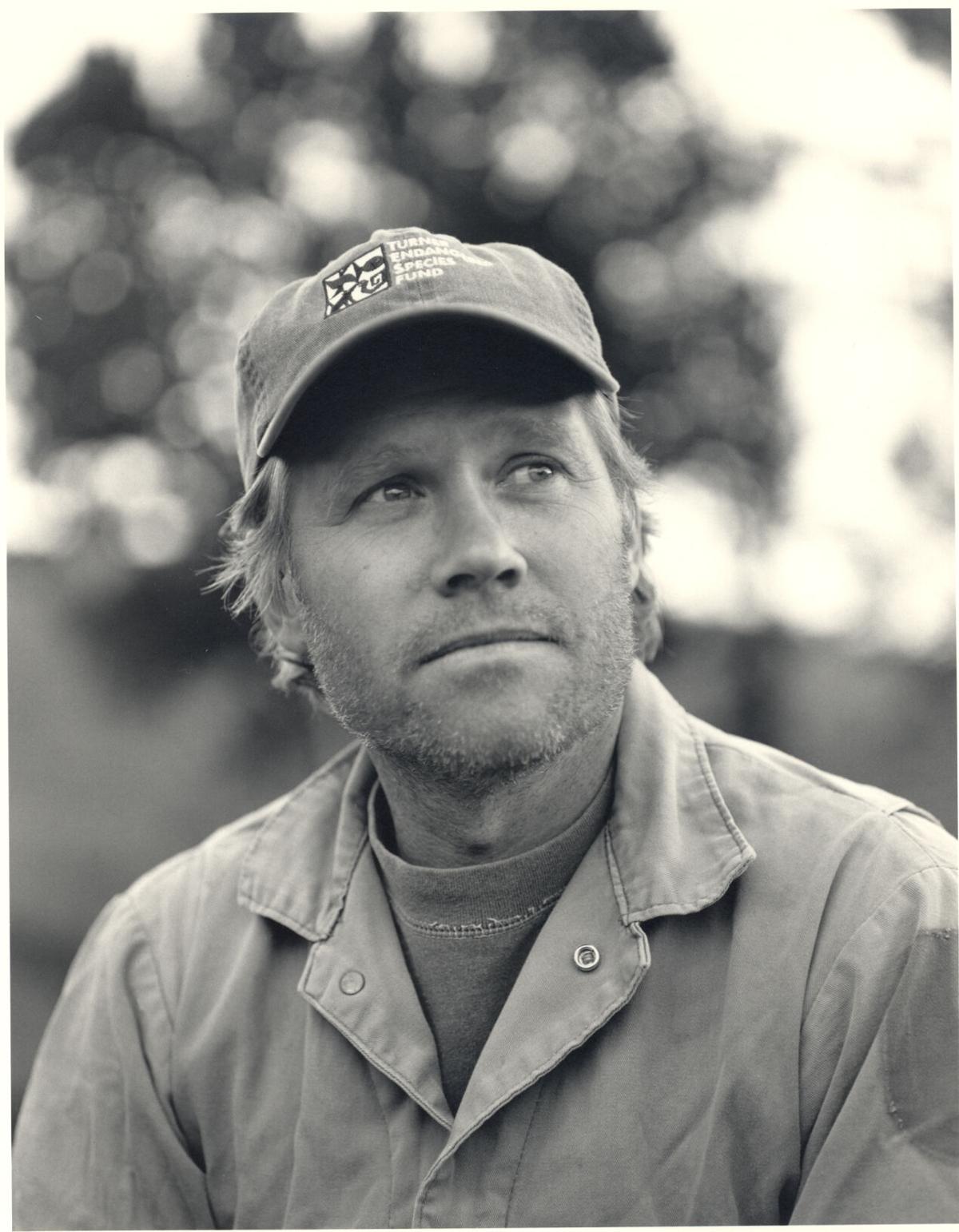
Mike Phillips

With the election on wolf restoration Proposition114 fast approaching, I’d like to offer an honest portrayal of wolves, based on science and decades of boots-on-the-ground experience. My aim is not to lobby you to vote for or against Prop 114. How you vote is your choice. But if you fancy yourself a responsible citizen, it is your duty to cast an informed vote. I aim to help in that regard.
As a wildlife biologist, I have been involved in wolf research and recovery for 40 years. I am the only one in the country with intimate knowledge of every wolf recovery effort since 1980. I served as the first leader of the historic efforts to restore the endangered red wolf to the southeastern U.S. and gray wolf to Yellowstone National Park. As a state legislator for the past 14 years, I have gained intimate knowledge of wolf recovery’s legal aspects. I understand the generalities and specifics of wolf restoration and management better than most people.
Here I consider the scientific consensus from decades of living with and researching wolves. More details on the following claims can be found at Colorado State University’s Center for Human/Carnivore Coexistence .
Wolves and human safety
Wolves represent a tiny threat to human safety. In North America, from 1900 to 2000, no healthy wolf killed a human being. There has been an absence of dangerous interactions between humans and wolves in Minnesota, Michigan, and Wisconsin, even though 22 million people live in those states alongside 5,000 wolves. The same pattern holds for Montana, Wyoming, Idaho, Canada, and many European countries despite thousands of wolves and tens of millions of people.
Nearly all wolves are shy and avoid people. Encounters between the two are rare. Those that do occur typically have resulted from mistaken identities, defensive reactions, habituation, or a person getting between wolves and a dog they were attacking.
Lightning strikes, bee stings, car collisions with deer, inclement weather, or random shootings represent a much more significant threat to humans than wolves.
Wolves and livestock
It is the atypical wolf that kills livestock, and losses to wolves represent an insignificant percentage of livestock on public and private range. Consequently, nowhere do depredations represent a threat to livestock industries. However, depredations can be problematic for individual ranchers. Fortunately, there are good management tools at the ready for preventing and resolving conflicts.
It has always been a challenge for ranchers, especially those who choose to rely on public land, to reduce livestock loss (from various causes) and ensure sufficient weight gain before animals are slaughtered for profit. But for the vast majority, that challenge is not influenced by wolves.
Wolves and big game
For gray wolves, hunting is a dangerous and mostly unsuccessful endeavor. Injuries are common, and about 80% of hunts end in failure. Wolves often starve to death. Despite the difficulties and dangers, wolf predation has the potential to influence prey populations.
Despite this potential, game and fish departments in Minnesota, Michigan, Wisconsin, Montana, Wyoming and Idaho routinely report outstanding, if not record, opportunities to hunt big game throughout wolf range. In Montana, my home state, there are areas in wolf country where elk are so abundant that one can hunt them six months out of the year.
Throughout wolf country in the U.S., big game hunting remains a viable recreational pursuit. It is foolish to suggest that Colorado, which supports hundreds of thousands more deer and elk than the other states, would experience something different.
But beyond big game hunting, wolf predation has the potential to generate ecological benefits. By tending to kill prey that are somehow predisposed to predation, wolves help cleanse big game herds of the maladies that inevitably affect them.
Wolves are ecological engineers. Their predatory habits can cause cascading effects that influence numerous animals and plants, providing badly needed balance to nature. These effects can lead to more plant growth and, in turn, greater biological diversity. Aldo Leopold, the father of wildlife management, explained this clearly in his seminal essay “Thinking Like a Mountain“:
“Since then I have lived to see state after state extirpate its wolves. I have watched the face of many of newly wolfless mountains and seen the south-facing slopes wrinkle with a maze of many new deer trails. I have seen every edible bush and seedling browsed, first to anemic desuetude, and then to death … Such a mountain looks as if someone had given God a new pruning shears and forbidden Him all other activities … I suspect just as a deer herd lives in mortal fear of its wolves, so does a mountain live in fear of its deer.”
Wolves and disease transmission
One of the biggest whoppers offered by opponents to wolf restoration is that the animals would transmit “tapeworm disease” to humans. Notably, scientific evidence notes not a single case of such transmission from anywhere in wolf country. Why? Because it is so easy to avoid ingesting tapeworm eggs from wolves. Simply do not pick up wolf turds. If you do feel compelled to pick up wolf turds, do not eat them or lick your fingers afterward.
On the plus side of disease considerations, wolves, by routinely selecting disease-compromised prey, may prove very useful in combatting chronic wasting disease (CWD), which is common and becoming more so in Colorado’s deer and elk herds.
Notably, CWD could become a zoonotic disease by passing from deer and elk to humans. In contrast to COVID-19, another zoonotic disease, CWD is always fatal. Every Coloradan should support efforts to keep CWD in check.
An objective, science-based portrayal of wolves leads to the conclusion that coexisting with the species is a straightforward affair, requiring little accommodation. For many, restoring Colorado’s natural balance is worth that accommodation. For others, the price is too high.
No matter where you land on the issue, Proposition 114 provides you and fellow Coloradoans the opportunity to take politicians out of the picture and determine the future for wolves in Colorado.
What better use of direct democracy could there be?
Mike Phillips is a wildlife biologist and widely recognized expert on wolf recovery, research and management. For the last 14 years he has served in the state legislature and currently holds a seat in the Montana Senate.


Registered voters on the eve of the 2026 primaries | Cronin & Loevy
Tom Cronin Bob Loevy
tom-cronin-bob-loevy@coloradopolitics.com
Updated 1 day ago
The Colorado Secretary of State’s Office has published the latest voter registration figures for the state and its counties as of June. Colorado ranks among the highest states for independent, or unaffiliated, voters. Only Alaska and Massachusetts have more. New Hampshire, New Jersey, Maine and Oregon also rank highly. So here...

A room for Sundance, a reality check for big-government Boulder | Jon Caldara
Jon Caldara
jon-caldara@coloradopolitics.com
Updated 3 days ago
There are few things more satisfying to watch than socialists getting mugged by reality. The Sundance Film Festival is invading my hometown of Boulder early next year. Sundance drew 85,000 attendees last year in Park City, Utah. Boulder’s hotel room...
Rep. Jeff Crank thinks Democrats are too focused on Trump, not enough on Colorado Springs | Vince Bzdek
Vince Bzdek
vince.bzdek@gazette.com
Updated 3 hours ago
For U.S. Rep. Jeff Crank, who’s unopposed in the Republican primary for the 5th Congressional District but the main target of both candidates in the lively Democratic primary, the big question in the midterms is not who will stand up...

Does character matter anymore? | SONDERMANN
By Eric Sondermann
by-eric-sondermann@coloradopolitics.com
Updated 4 days ago
The last few weeks have been illuminating in the manner of a headlamp pointing the way to some deep, dark, murky netherworld. Graham Platner, a hero to the populist set on the Democratic side, became his party’s Senate nominee in...

Private equity has no place in health care | GUEST COLUMN
Colorado Politics
colorado-politics@coloradopolitics.com
Updated 3 days ago
By Miah Ntepp Of all the financial pressures placed on working people in this country, the skyrocketing costs of health care rank near the top. As families struggle under the cuts to Medicaid made by the Trump administration, they are...

Some pointed questions for the gubernatorial hopefuls | George Brauchler
George Brauchler
george-brauchler@gazette.com
Updated 4 days ago
Earlier this month, the Republican and Democratic candidates for governor participated in a televised interview moderated by well-known, left-leaning legacy media folks. Predictably, the questions asked of the GOP candidates were more aggressive, pointed, biographical and almost entirely disconnected from...
Chaotic funding throws monkey wrench into governor’s-race money madness | Paula Noonan
Paula Noonan
paula-noonan@coloradopolitics.com
Updated 4 days ago
Chaos Monkey, Inc., gave a trifle $20,000 donation to Rocky Mountain Way (RMW), the independent expenditure committee (IEC) supporting U.S. Sen. Michael Bennet for Colorado governor. But why, Coloradans should ask, would a guy who has assigned his contributor name...

Lindsay Datko on school safety, misconduct and transparency in Jeffco schools | The OpEdge Podcast
Tony Olivero
tony.olivero@gazette.com
Updated 5 days ago
Jeffco Kids First founder Lindsay Datko joins The OpEdge to explore concerns about school safety, staff misconduct and transparency in Jefferson County Schools. Datko tells host and investigative columnist Jimmy Sengenberger why she believes Colorado’s second-largest district has too often...

Candidate’s disturbing anti-animal agriculture history | Rachel Gabel
Rachel Gabel
rachel-gabel@coloradopolitics.com
Updated 1 week ago
Rep. Manny Rutinel has busted out a cowboy hat for campaign photos and has thrown it into the ring to represent Colorado’s 8th Congressional District in D.C. He is endorsed by U.S. Sen. Cory Booker, a New Jersey democrat who serves on the Committee...

Marx, Bottoms, a primary death wish for Colorado GOP | Dick Wadhams
Dick Wadhams
dick-wadhams@coloradopolitics.com
Updated 1 week ago
Colorado Republicans stand on the brink of total irrelevance and embarrassment if they nominate one of the two nonsensical, buffoonish candidates running for governor, Victor Marx and Scott Bottoms. Republicans are already in a very defensive, tenuous position as Democrats...
PREV
PREVIOUS

BIDLACK | Smarter than his generals, too?
Hal Bidlack There are many, many things I do not really understand. Some of those things are pumpkin spice in everything this time of year, sub-atomic physics, and the ongoing popularity of the song “I’ll be home for Christmas.” First published during World War II, composer Walter Kent and lyricist Kim Gannon wrote a haunting […]

COUNTERPOINT | 'Down the Las Vegas rabbit hole'
Jeff Hunt Wow, Colorado became Las Vegas quick. I can’t watch a sporting event on television without being inundated with sports betting commercials. The University of Colorado just inked a deal with a sports betting company where CU will get $30 for every gambler they recruit. Even universities are getting into the gambling business! Also […]