

Court orders review of Black woman’s exclusion from jury

A man convicted of murder will be entitled to a new trial if, in fact, prosecutors excluded an African American woman from the jury based on her race, the Colorado Court of Appeals decided on Thursday.
“[I]n our view, releasing a juror about whom a prosecutor knows nothing other than her appearance and national origin may, in itself, suggest a race basis,” wrote Judge David J. Richman for the three-member appeals panel.
Arapahoe County prosecutors charged Kenneth Wayne McCoy with first-degree murder in the shooting death of a man in a parking lot. A jury found him guilty of second-degree murder, and McCoy received a sentence of 96 years in prison.
At the beginning of the trial, there were 112 prospective jurors, of which one, Juror S, was a Black woman who emigrated from Ghana. The court excused all but 38 people for cause or because they indicated a hardship. The prosecution and defense were then each allowed to dismiss a maximum of 12 jurors without cause.
Prosecutors used a peremptory strike to dismiss Juror S and replace her with a woman with “an Irish surname.”
McCoy, who is Black, challenged the exclusion of Juror S on the basis of Batson v. Kentucky, a 1986 U.S. Supreme Court decision that prohibits juror dismissals based on their race. In that instance, an all-white jury convicted a Black defendant after prosecutors excused all of the Black potential jurors.
The Colorado Supreme Court is scheduled to decide the standard by which race may play into a decision to dismiss a juror and whether the Court of Appeals was correct in a separate case to order a new trial for a suspected Batson violation instead of giving the trial court the opportunity to review the issue further.
Kenneth J. Melilli, a professor at Albany Law School of Union University at the time, published an analysis in 1996 about the success rates of Batson challenges by state. His results showed widely varying applications of the precedent: a 39% success rate in New York, for example, compared with 8.5% in Missouri.
“One of the criticisms of the Batson process is that it is too easy for the Batson complainant to meet the prima facie case threshold and too easy for the Batson respondent to avoid detection by offering pretextual explanations which are routinely accepted by the courts,” Melilli wrote.
The appeals panel in the McCoy case noted that for a defendant to state a credible Batson challenge, prosecutors must have dismissed a juror from a “cognizable racial group,” and the circumstances must imply purposeful discrimination. If the evidence is in the defendant’s favor, the prosecution must show they had a non-racial explanation for their action. Ultimately, a judge must decide which side to believe.
McCoy argued that there were only two Black people in the narrowed jury pool, including Juror S, and he could not think of a race-neutral explanation for her dismissal because no one had asked her any questions.
“Your Honor, number one, I would say that I’m offended,” the prosecutor in McCoy’s case countered. “I don’t have to provide a race-neutral reason at all. What the defense has to do is somehow show based upon race alone that I have made this determination, and the court has no information whatsoever in front of it to be able to show that that is the sole reason why I made this determination.”
Arapahoe County District Judge Elizabeth Beebe Volz asked “out of an abundance of caution” for a non-racial reason for excusal. She elaborated that she was “on the fence” about whether McCoy had made a sufficient allegation about Juror S because “the only reason is because she’s the only African American on the jury [there was one other]… . What I can say is there was nothing in the voir dire that would have raised her as a particular problem.”
The prosecutor replied that Juror S’s questionnaire “talks about the idea, you know, obviously she’s been here, she’s from Ghana,” and then pivoted to an already-excused juror who was born in India, arguing that the defense acted questionably by excusing her.
“Frankly what’s good for the goose is good for the gander,” the prosecutor concluded, adding that his race-neutral reason did not have to be plausible.
Volz sided with the prosecution, deciding they were not “deliberately trying to get rid of someone who’s African American,” although the “reason for excusing her is that [the prosecutor doesn’t] know anything about her, as opposed to you know something that makes her not a good juror.”
The appellate panel found that to the contrary, McCoy raised several facts that were “sufficient to raise an inference of discrimination.” Other considerations that weighed in favor discrimination were the prosecution’s strike of a juror of color immediately before Juror S and the fact that Juror S had appeared to be paying attention and had only “benign” responses in her questionnaire.
In the opinion, Richman observed Volz had not explicitly determined whether the prosecutor’s explanation was race-neutral, and that her requirement that the prosecution demonstrate it was “deliberately trying to get rid of someone who’s African American” was too high a threshold.
As such, the “Batson inquiry is inadequate,” he concluded.
The panel sent the matter back to the trial court, with an instruction to determine whether the dismissal of Juror S was race-based. If the answer is yes, McCoy would receive a new trial. If no, McCoy would have the chance to respond with further proof of a racially-motivated strike.
The case is People v. McCoy.

U.S. Supreme Court clears way for Trump mail voting order in advance of midterms
Wire Services
wire-services@coloradopolitics.com
Updated 33 minutes ago
WASHINGTON • The U.S. Supreme Court on Monday cleared the way for President Donald Trump to move ahead with an executive order that seeks to restrict the mailing of ballots to American citizens in an eligible voters list. The executive...
Colorado Supreme Court intervenes in Weld County prosecution dismissed due to Missy Woods misconduct
Michael Karlik
michael.karlik@coloradopolitics.com
Updated 10 minutes ago
The Colorado Supreme Court ordered a Weld County trial judge last week to respond to the district attorney’s claim that he improperly dismissed a criminal case because of “outrageous” conduct by the Colorado Bureau of Investigation. Daniel Lee Eatinger stood...
Trump opens ‘economic D-Day’ offensive against Iran as war nears six-month mark
Christian Datoc
christian-datoc@coloradopolitics.com
Updated 5 hours ago
President Donald Trump is seeking to increase the financial pressure on Iran with new secondary sanctions on nations and foreign actors propping up the regime’s economy as the war between the United States and Tehran nears the six-month mark. Treasury...

Trump announces 50% tariffs on Canadian cars, auto parts, and steel
Naomi Lim
naomi-lim@coloradopolitics.com
Updated 5 hours ago
President Donald Trump escalated the trade war with Canada after talks collapsed last week, announcing Monday that the United States would impose 50% tariffs on cars, trucks, automotive components, and steel starting Jan. 1, 2027. “Canada has been ripping off...
Iran puts out propaganda video tracking Barron Trump’s location, offering $10 million for his assassination
Timothy Nerozzi
timothy-nerozzi@coloradopolitics.com
Updated 7 hours ago
The Islamic Revolutionary Guard Corps is putting a hit out on President Donald Trump’s son, Barron Trump, with an inflammatory video claiming to track his location. State-run television in Iran is broadcasting a propaganda video claiming to show the locations...
Nevada sues Trump administration over Colorado River cuts
Marianne Goodland
marianne.goodland@coloradopolitics.com
Updated 5 hours ago
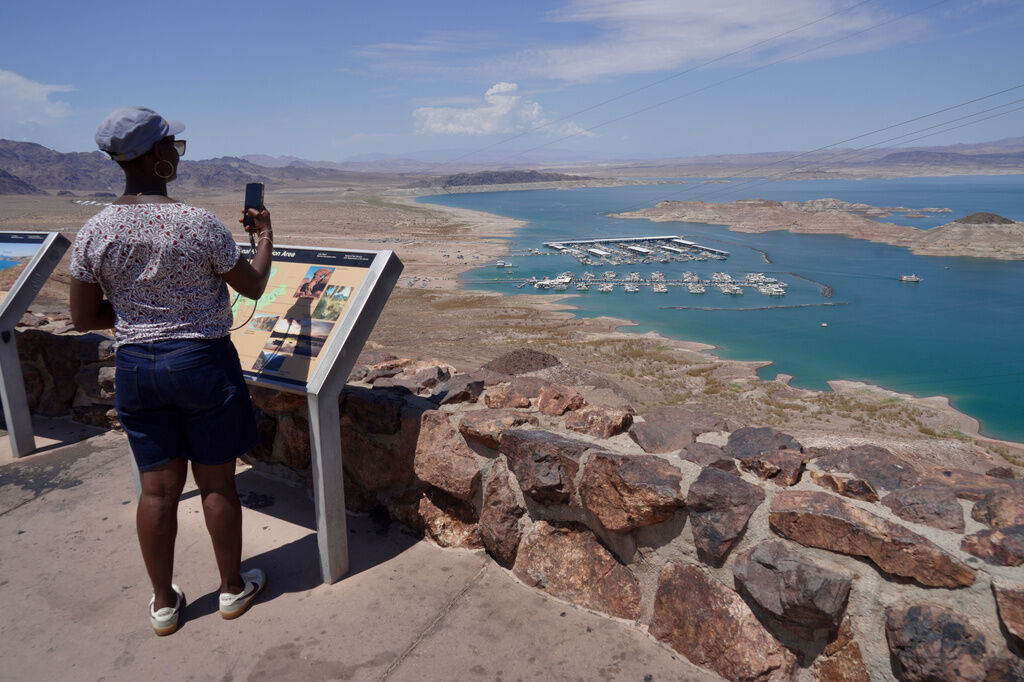
On Monday, the state of Nevada filed a lawsuit against the Trump administration and Interior Secretary Doug Burgum, seeking to block the Colorado River management plan. On Friday, Burgum released a “record of decision” that would reduce water allocations to...

Healthcare Freefall: Longer drives, fewer options for maternity care in Colorado
Thelma Grimes
thelma.grimes@coloradopolitics.com
Updated 9 hours ago
Editor’s Note: Colorado’s healthcare system is entering a period of accelerating instability — a “tsunami,” as multiple leaders describe it — driven by collapsing hospital finances, shrinking Medicaid reimbursements, disappearing services and a political fight over who is responsible for...
Polis requests federal disaster declaration for Colorado wildfires and floods
9News
9news@coloradopolitics.com
Updated 2 hours ago
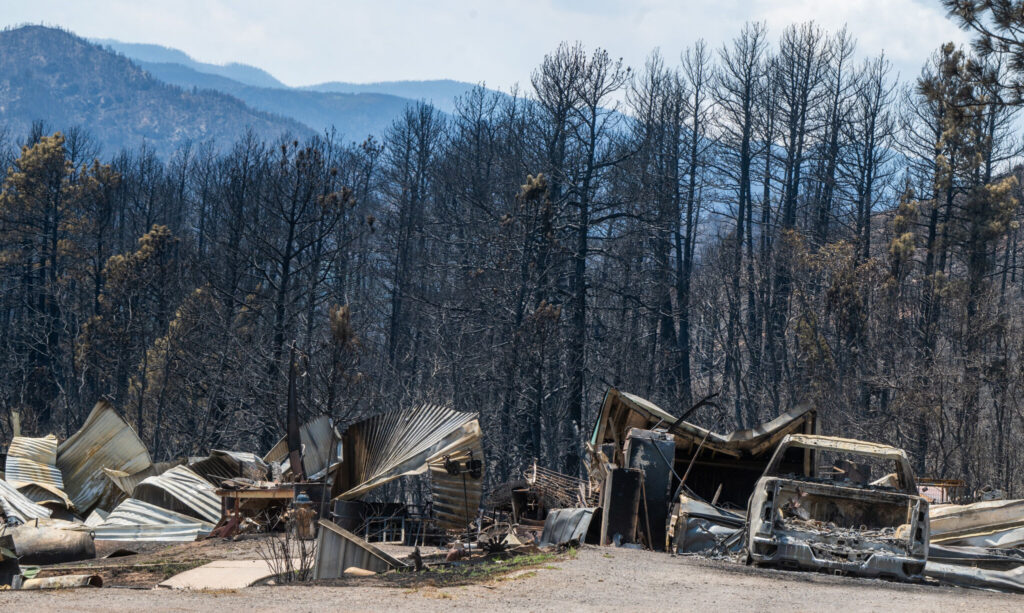
On Sunday, Gov. Jared Polis officially requested a Major Disaster Declaration from President Donald Trump and the Federal Emergency Management Agency to support recovery from two wildfires and the subsequent flooding and debris flows on both burn scars. Polis requested a declaration...
US strikes another boat in eastern Pacific, killing two, Pentagon says
The Associated Press
the-associated-press@coloradopolitics.com
Updated 9 hours ago
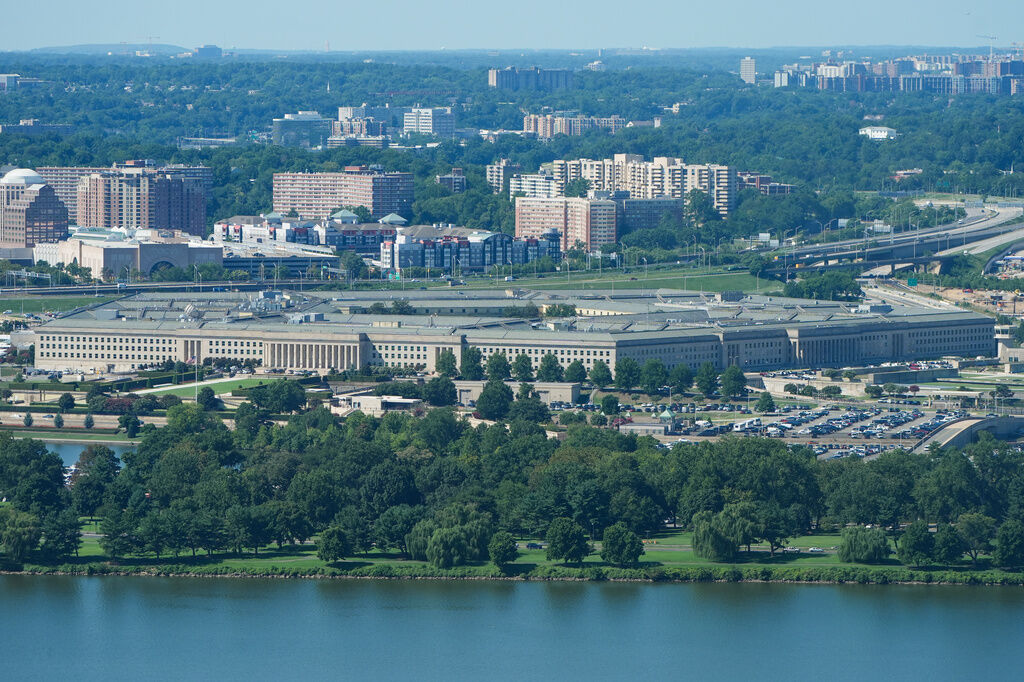
U.S. forces have struck another vessel in the eastern Pacific, killing two people the Pentagon says were trafficking drugs. The U.S. Southern Command announced the strike in a social media post early Monday. The death toll from the Trump administration’s...

Fishing closures are becoming routine as record heat warms rivers in the US West | OUT WEST ROUNDUP
Ernest Luning
ernest.luning@coloradopolitics.com
Updated 3 days ago
MONTANA Fishing restricted as rivers warm LIVINGSTON — Trout need cool water to survive, but record heat this summer has driven water temperatures to lethal levels for fish. Wildlife officials are banning fishing during certain hours on rivers and streams...
PREV
PREVIOUS

Colorado bettors double down on sports wagering in August
Colorado bettors doubled down on sports wagering in August, raising the total to $128.6 million, the Colorado Division of Gaming announced this week. The return of professional sports for a full month played a major role in the big increase with basketball, baseball and hockey wagers combining for nearly 58% of the total bet. Parlays and combination […]
House passes clean energy bill with Neguse wildfire amendment
The U.S. House of Representatives on Thursday approved a clean energy bill by 220-185 that contained a provision to improve forecasting of wildfire smoke. “As wildfires continue to burn across the Western United States, we must make federal investments to provide tools and data to keep communities safe,” said U.S. Rep. Joe Neguse, who was […]