

Colorado ready to launch COVID-19 contact tracing app
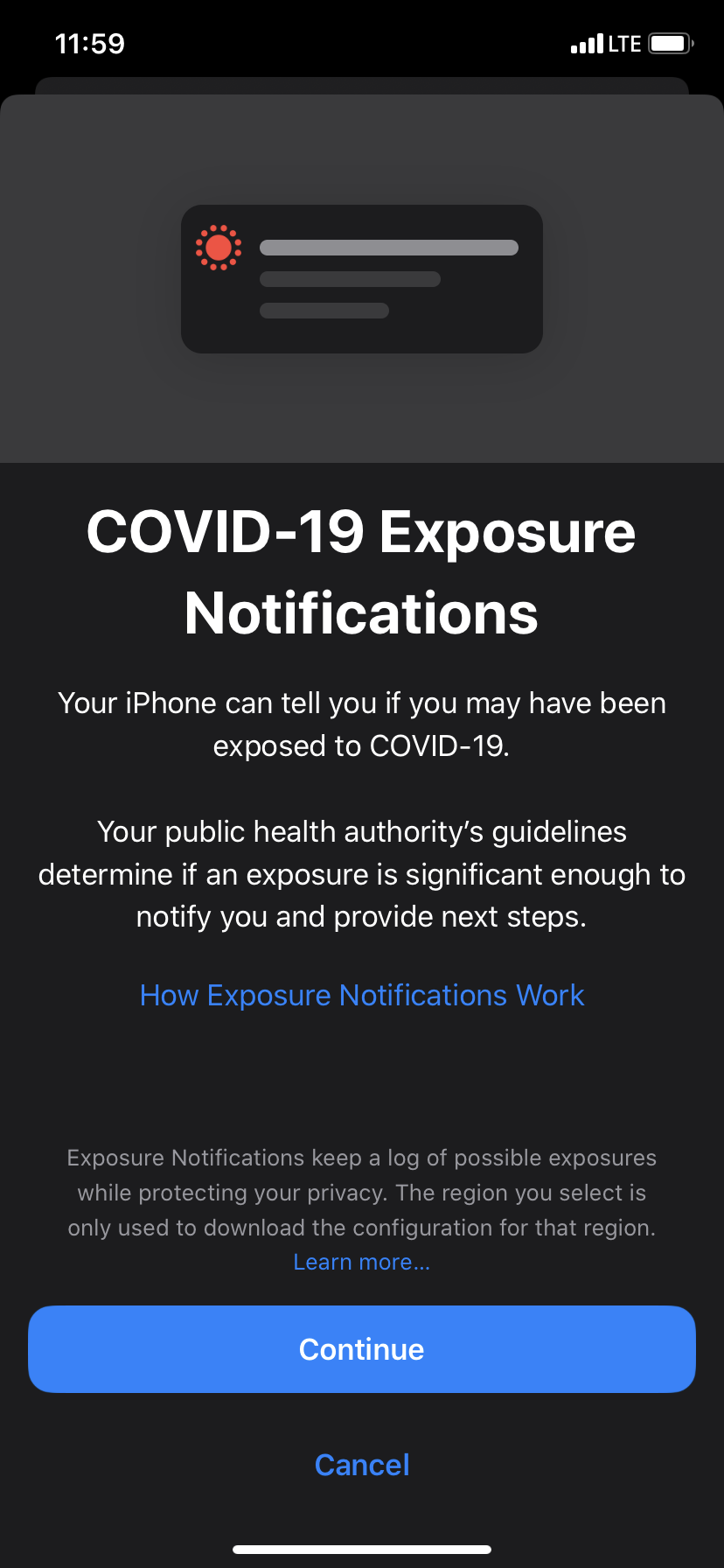
Colorado is preparing to launch a contact tracing app to aid the state in the fight against the coronavirus pandemic and chances are iPhone users have already seen the preliminary steps of the app in motion.
iPhones were eligible for the iOS 13.7 software update on Sept. 1, which gave users the option to be a part of exposure alerts that can notify someone if they’ve been in contact with a positive case of COVID-19, AppleInsider’s tech blog reported.
Android users can also join the contact tracing effort by downloading the ENexpress COVID-19 app.
Health officials consider contact tracing a critical tool in controlling the spread of COVID-19 and with the help of the app health officials said more people will be alerted when they need to get tested.
“Exposure Notifications is a force multiplier for testing and case investigation,” said Sarah Tuneberg, senior COVID advisor at the Colorado Department of Public Health and Environment. “It helps quickly alert people who would otherwise be unaware that they might have been exposed, and lets them know they may need to get tested and quarantine. It’s a powerful way to get people fast, accurate, and actionable information.”
So far, the app is available in Alabama, Arizona, the District of Columbia, Maryland, Nevada, North Dakota, Virginia, Wyoming, and by the end of September —Colorado.
The app is a joint effort between Google and Apple to provide a basic template for public health officials to conduct contact tracing without reinventing software.
Even though the Colorado Department of Public Health and Environment opted will allow the Exposure Notification Express apps use in Colorado, it doesn’t mean users are automatically part of the contact tracing. People must choose to actively participate.
For Apple uses who have the iOS update and choose to participate in the exposure notifications, or people with Androids who download the app, the tracking concept is relatively simple.
If two people have the app on their smartphones and meet for more than 10 minutes within 6-feet of each other, their phones exchange what are called anonymous “tokens” that mark the interaction for up to 14 days. If either person tests positive for COVID-19 within that time frame, they have the option to upload their test result (from a qualified facility) and send a notification to anyone they’ve exchanged tokens with, informing them that there was a possible COVID-19 exposure.
The app gives specific health instructions to users are notified of an exposure. The instructions are tailored to geographic areas with contact information about testing centers and general health advice.
The tokens are anonymous and no identifying information is shared or collected with other users, the state, health agencies, Apple, or Google. The “tokens” are deleted within 14 days of each interaction, according to the state’s public health website.
But once information is digitized it is a matter of time before that information is used negatively against its owner, warned John Soma, the executive director of the Privacy Foundation at the University of Denver.
Despite the risks of sharing information digitally, Soma said users have to weight the cost of sharing information against the benefits.
“You have to balance the public need against the privacy, and clearly it’s needed,” Some said.
Soma recommended users always read the fine print when using applications that share personal information and realize the potential of data breaches.
“It’s no right answer, no wrong answer,” Soma said. “It’s just everybody has to come to the proper conclusion of what works for them.”

Fauci’s private COVID-19 diaries: Six takeaways on fame, prize money and the lab leak debate
The Washington Examiner
the-washington-examiner@coloradopolitics.com
Updated 7 minutes ago
Anthony Fauci’s private writings from 2020 and beyond portray a public health official who was fixated on his growing celebrity while privately grappling with a pandemic response he believed was chaotic, leaderless and consumed by internal rivalries. The writings of...

The outrages mount | Hal Bidlack
Hal Bidlack
hal-bidlack@coloradopolitics.com
Updated 38 minutes ago
My kindly and forgiving editors understand that, from time to time, I can’t help myself from leaping atop my rickety soapbox to vent. And, like many other political commentators have already done, I could easily fill this entire missive with...

Rural Colorado deserves a tax holiday | GUEST COLUMN
Eric Mulder
jstooksberry@gmail.com
Updated 11 hours ago
Spend enough time in Colorado’s Eastern Plains, the San Luis Valley, or the Western Slope, and you’ll see boarded-up storefronts, schools consolidating classrooms, and small rural communities stretching every dollar to keep basic services afloat. Once the backbone of Colorado’s...
Colorado board permits state to appeal injunction against arthritis drug price cap
Marissa Ventrelli
marissa.ventrelli@coloradopolitics.com
Updated 15 hours ago
A Colorado board voted Friday to allow the Attorney General’s Office to fight an injunction against a price cap on a drug that treats arthritis. A U.S. district court judge had granted the company Amgen a preliminary injunction, temporarily blocking...

Federal judge rejects constitutional claims, ‘expressions of hatred’ by Club Q defendant
Michael Karlik
michael.karlik@coloradopolitics.com
Updated 15 hours ago
A federal judge rejected a defendant’s claims that he received constitutionally ineffective assistance of counsel while facing federal hate crime and firearms charges for murdering five people at a Colorado Springs LGBTQ nightclub in 2022. Anderson Lee Aldrich is serving...

Divided 10th Circuit upholds Colorado congestion fee on car rentals
Michael Karlik
michael.karlik@coloradopolitics.com
Updated 11 hours ago
The Denver-based federal appeals court concluded on Monday that a 2024 “congestion impact fee” that lawmakers imposed on short-term vehicle rentals did not conflict with a federal prohibition on certain airport-related charges. Beginning in the 1970s, Congress began limiting the...

Chamber names its Top 25 Most Powerful Women in Business | NONPROFIT REGISTER
Joanne Davidson Special to Colorado Politics
joanne-davidson-special-to-colorado-politics@coloradopolitics.com
Updated 17 hours ago
COLORADO WOMEN’S CHAMBER OF COMMERCE Denver News: Marielena DeSanctis, chancellor of the Colorado Community College System; Terri Jackson, executive director and co-founder of the African American Trade Association and Emily Trujillo, chief operating officer at HCA HealthONE Centennial, are among the 2026 Top 25 Most Powerful Women...
Space Force should measure workforce needs as it prepares to double in size, GAO report says
Mary Shinn
mary-shinn@coloradopolitics.com
Updated 20 hours ago
The Space Force needs more people. It’s just not precisely sure how many more. A Government Accountability Office report released earlier this month found that the youngest and smallest military branch does not have a process to consistently or accurately...

Colorado schools receive $24 million for free meals program
Marissa Ventrelli
marissa.ventrelli@coloradopolitics.com
Updated 15 hours ago
The Colorado Department of Education is providing Colorado schools with nearly $24 million in grant funding to implement a free lunch program. Approved by voters in 2022, the Healthy School Meals for All provides free breakfast and lunch to all...
Secret Service agent placed on administrative leave after arrest for near-deadly hazing ritual
Claire Carter
claire.carter@washingtonexaminer.com
Updated 22 hours ago
A Miami Secret Service agent in Florida was placed on administrative leave following his arrest on Sunday in connection with a near-deadly hazing incident at a University of Miami fraternity. Marquez Christopher Pinder, 29, was arrested alongside two other individuals...