

State launches new program to assist pandemic-hit small businesses with grants and loans

Gov. Jared Polis, joined by lawmakers and philanthropist Kent Thiry, announced the launch of a new program — Energize Colorado — that will provide up to $35,000 in grants and loans for small business.
The application process for the program opens on Monday, and Polis said it will be available to businesses with less than 25 employees. It’s targeted toward those small businesses, including those that are veteran or woman-owned, owned by people of color or in rural Colorado.
The legislation establishing the program is funded with $20 million from CARES Act money plus donations from the Anchor Point Foundation, Gary Community Investments, Gates Family Foundation, Infocu5, Larissa Herda, Pinnacol, The Colorado Health Foundation, Thiry-O’Leary Foundation, Wendy Lea and Zoma Capital.
In a legislative session where few major bills won bipartisan votes, Senate Bill 222 won rare unanimous support from both chambers of the General Assembly.
Democratic Sen. Faith Winter of Westminster, one of the bill’s sponsors, said she was motivated by comments she got from business owners trying to get paycheck protection program (PPP) loans from the federal government. Some called her expressing gratitude when they got the loan, but others called in tears because they lacked the relationship with a bank or the application process was too complicated.
“We had to create something easy to use” and that was focused on small businesses owned by veterans, women, people of color or those located in rural Colorado. Best of all, Winter said, the application will be easy and should take only about 15 minutes to complete.
As introduced, Senate Bill 222 prohibited business owners who had gotten PPP loans from applying for this program. Democratic Sen. Jeff Bridges of Greenwood Village explained that based on conversations he had with Republican Sen. Jim Smallwood of Parker, the bill was changed to allow those who didn’t get as much as they had applied for to seek funding from the new program. “PPP left some folks behind.” This program is an opportunity to fill in some of that gap, he added.
As signed into law, the program gives a preference to those who didn’t get PPP loans but businesses that did get the loans can still apply. It also is intended to help small businesses in Colorado’s tourism industry, hit hard by the pandemic.
The funding is a maximum of $15,000 in grants and $20,000 in low-interest loans per business.
“This is a fantastic way of how we do things right in Colorado,” Bridges said in a Wednesday news conference.
Thiry said the four populations served by the program suffered from challenges even prior to the pandemic. “This is equality of opportunity, and a sacred concept of democracy and a free society” but one of the most difficult to accomplish, he said.
According to a statement from Energize Colorado, on Monday, Aug. 31, the official application will be posted on www.energizecolorado.com/gap-fund and will include frequently-asked-questions and additional information about eligibility. “The application process is not first-come first-serve and will be distributed in phases,” the statement said. Energize Colorado also will provide interested applicants with assistance during the process through a mentorship program.
Polis announced Wednesday the release of new guidelines for those who want to have indoor visits with loved ones in nursing homes and other senior living facilities. Visitors must have a negative test result to make those indoor visits. Some counties may have more leeway on visitations based on low COVID case counts, he explained.
However, the website for the Colorado Department of Public Health and Environment says the guidelines are still in draft form and they are still accepting feedback on those proposed rules through Friday.
The guidelines have six criteria:
- The facility must be in a county with 25 or fewer new active cases per 100,000 people during the past 14 days unless otherwise exempted by the CDPHE;
- The facility must have conducted at least two rounds of 100% baseline testing of all residents and staff;
- The facility must have ongoing COVID-19 testing for its staff;
- The facility cannot have an active outbreak of COVID-19;
- The facility must have at least a 14-day supply of personal protective equipment, without relying on state or local supplies; and
- A facility must have adequate staffing without having to rely on contingency staffing.
The guidelines allow for something else valuable to people in an extended care facility: those who meet criteria two through six can allow in barbers, beauticians, podiatrists, dentists and physical, speech and occupational therapists who agree to be screened.
The governor also addressed new guidance on COVID-19 testing from the Centers for Disease Control and Prevention, reportedly that they no longer recommend asymptomatic people be tested for COVID-19 unless they are in a special at-risk category. Critics have claimed this is a political move by the Trump administration, intended to drive down the number of positive COVID cases and despite the fact that 40% of COVID cases come from contact with those who don’t show symptoms.
Polis said the advice had been misconstrued, and was intended to address a shortage of testing equipment. Colorado doesn’t have that problem, he said. “We have plenty of tests” and anyone who has been in close contact with someone with the virus but is asymptomatic can still be tested and is encouraged to do so. “Those who are exposed should take advantage” of the myriad of free testing sites around the state, he said.


Denver labor acknowledgment proposal faces council committee questions
Deborah Grigsby
deborah.smith@denvergazette.com
Updated 2 hours ago
A proposal to add a labor acknowledgment to Denver City Council proceedings has been delayed by the Finance and Business Committee after members raised questions about its wording, intentions and place in the council’s opening proceedings. The proposal, put forth...
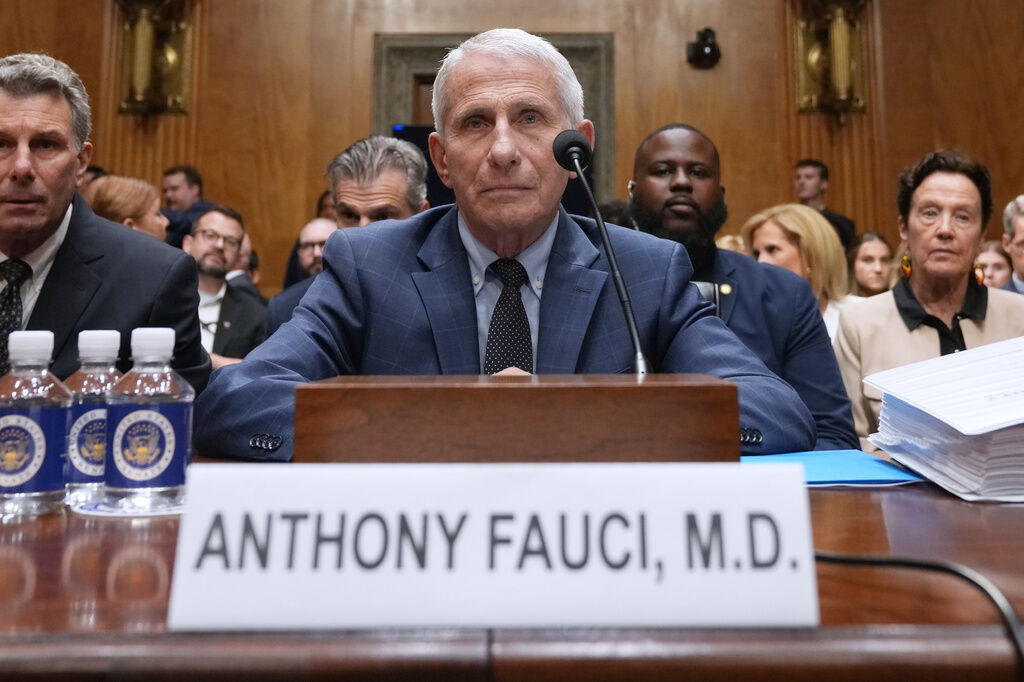
Fauci invokes the Fifth Amendment and declines to testify in GOP-led Senate panel’s COVID-19 hearing
The Associated Press
the-associated-press@coloradopolitics.com
Updated 4 hours ago
WASHINGTON (AP) — Dr. Anthony Fauci on Wednesday invoked the Fifth Amendment and declined to answer questions from senators in a Republican-led committee hearing about his handling of the COVID-19 pandemic. The move injects new drama into the lingering tensions...

Colorado residents rush to buy guns ahead of new restrictions, breaking sales records for several stores
By Debbie Kelley
by-debbie-kelley@coloradopolitics.com
Updated 3 hours ago
Colorado residents are lining up to buy guns ahead of the latest weapons restrictions set to take effect this Saturday. The new law mandates individuals seeking to purchase semiautomatic firearms with detachable magazines to first complete a firearm safety course...

Crime continues to decline in Aurora, police chief says
Kyla Pearce
kyla.pearce@gazette.com
Updated 3 hours ago
Crime in Aurora continued to decline in the first half of 2026, according to Aurora Police Department officials. Crime overall in the city has been on a downward trend since 2024, according to APD. Between Jan. 1 and June 30,...

El Paso County rejects multi-family zoning request near Monument Academy
Savannah Eller
savannah-eller@coloradopolitics.com
Updated 2 hours ago
The El Paso County Board of Commissioners narrowly rejected a developer’s bid to convert land from low- to high-density residential zoning. The request, made by MA Infrastructure, LLC, would have allowed 12 units per acre on half of a 14-acre...
Atop taxes, here’s how much each Colorado resident pays in fees
Marissa Ventrelli
marissa.ventrelli@coloradopolitics.com
Updated 19 hours ago
Each Colorado resident paid nearly $5,000 in state-sanctioned fees last year, according to a report by a policy think tank. The report, which analyzed how fees have affected Colorado’s economy, found that fee revenue has more than tripled since 2008...

Colorado National Guard, Swiss Armed Forces celebrate partnership
Marissa Ventrelli
marissa.ventrelli@coloradopolitics.com
Updated 20 hours ago
Colorado’s National Guard marked a year of partnership with the Swiss Armed Forces at the Governor’s Mansion on Monday. “This anniversary marks one strong year of friendship and collaboration between the State of Colorado and Switzerland,” said Gov. Jared Polis....
Judge allows Trump to refile $15 billion lawsuit against the New York Times
Emily Hallas
emily-hallas@coloradopolitics.com
Updated 21 hours ago
A federal judge declined to dismiss President Donald Trump’s multibillion-dollar lawsuit against the New York Times on Monday, giving him roughly four weeks to amend his case after the outlet moved to toss it on First Amendment grounds. District Judge...
Q&A with Jeffco Public Schools’ interim superintendent on budget deficit, federal investigation
Matt Kyle
matt.kyle@denvergazette.com
Updated 3 hours ago
For the upcoming school year, Robert Stein will serve as Jeffco Public Schools’ superintendent. The 66-year-old Denver native has been semi-retired for the last few years. He spent 40 years in education, as both a teacher and administrator. Most recently,...

Gov. Polis celebrates Colorado’s first-place education ranking by U.S. News
Marianne Goodland
marianne.goodland@coloradopolitics.com
Updated 18 hours ago
Colorado officials said they have something to celebrate this week, in addition to the state’s sesquicentennial birthday on Saturday. U.S. News & World Report on Tuesday gave Colorado its top ranking for education efforts from pre-K to postsecondary, though it...
PREV
PREVIOUS

CSU faculty begin suicide-prevention work after receiving federal grant
Two Colorado State University faculty have received a nearly $800,000 federal grant to expand emergency mental health care access during the pandemic. Deborah Essert, director of the Psychological Services Center, and Brad Conner, director of the addiction counseling master’s program, received money from the U.S. Department of Health and Human Services’ Substance Abuse and Mental […]

Sen. Cory Gardner's 'Both Parties' ad shows supporters from just one party
A Sen. Cory Gardner ad titled “Both Parties” airing on cable and satellite TV networks, tallies up his environmental bonafides related to the recent passage of the Great American Outdoors Act while purporting to represent those who support Gardner from both major political parties. The ad doesn’t identify the parties of the two who endorse […]