

Gov. Jared Polis announces statewide fire ban, hints at extension of last call executive order
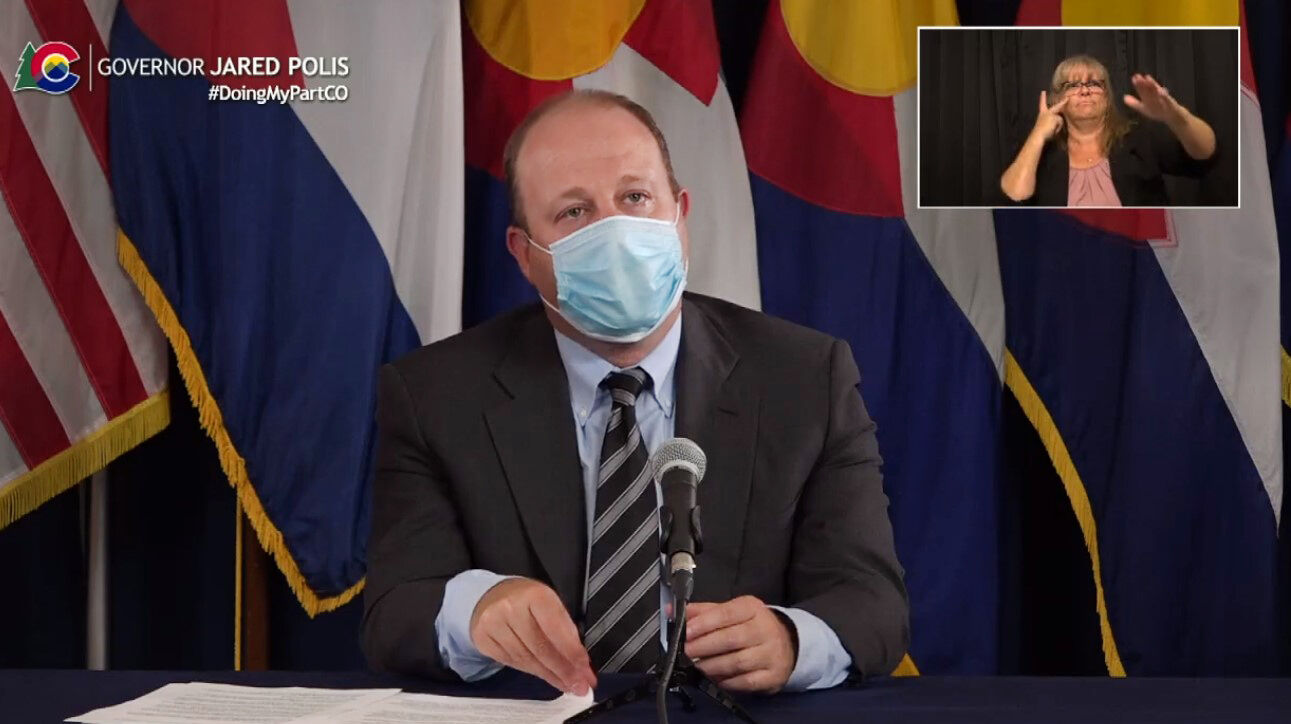
With four major wildfires consuming more than 130,000 acres in Colorado, Gov. Jared Polis Tuesday issued an order banning open fires throughout the state for the next 30 days.
Polis said that three of the four wildfires appear to be human-caused; the one that isn’t is the Pine Gulch fire north of Fruita, where lightning strikes were reported in the area at the time the fire started.
The ban is directed at campfires and fireworks or any other “open source” fire. People can still use barbecue grills, covered fire pits or camp stoves, for example.
Polis was joined at a Tuesday news conference by Dan Gibbs, executive director of the Department of Natural Resources, a certified wildland firefighter who has been on the front lines of the Grizzly Creek wildfire near Glenwood Springs for the past several days.
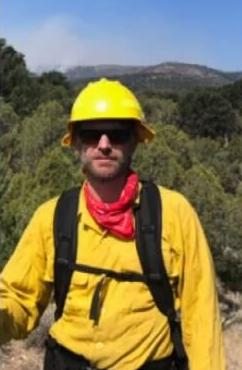
Dan Gibbs, executive director of the Department of Natural Resources, is also a wildland firefighter.

Gibbs described his experience of fighting a wildfire in the era of COVID-19. He got certified as a firefighter when living in Summit County, which had been heavily infested with bark beetles.
Grizzly Creek is now the number-one priority wildfire in the county, Gibbs said. He’s been tasked to a team working on structural protections for homes and buildings near the fire, which started on Aug. 10 and has now grown to more than 26,000 acres.
The fire is raging on both sides of Glenwood Canyon. In addition to the fire, they’re also facing difficulties from falling rocks throughout the canyon, he said.
“Fighting fires during COVID-19 is very different” from the experiences he’s had in the past, he said. Firefighters are dispersed with teams in their own pods. Food and water supplies are brought in daily, and in-person briefings have been replaced by radio transmissions.
“I’m really impressed with the precautions” being taken, Gibbs said. He warned local residents to have an evacuation plan ready, along with an evacuation kit prepared in advance.
Stan Hilkey, executive director of the state’s department of public safety, said three of his divisions are also involved in helping with the wildfires: the division of homeland security, state patrol and the division of fire prevention and control. The state has been able to transfer funds from the disaster emergency fund, which has been used to deal with the pandemic, to the wildfire emergency fund. To date, state costs are estimated at $10.5 million but that figure could certainly grow.
Hilkey said his divisions have been preparing for wildfires despite also having to deal with the pandemic. He also noted a recent contract for an air tanker, which has now flown seven missions on 15 different fires and dropped 82,000 gallons of fire-suppressing product.
The state patrol has been assisting local law enforcement on evacuations, which he said has had to be done differently due to the pandemic. Instead of putting people in schools or gymnasiums, they’ve had to use motels, hotels and college dorms to minimize the risk of spreading COVID-19.
Coloradans also may be experiencing respiratory problems due to the heavy smoke from the fires. Dr. Alexis Burakoff, an epidemiologist with the state health department, said some respiratory symptoms from smoke may be similar to that of COVID-19. When in doubt, contact your healthcare provider and get tested, she said.
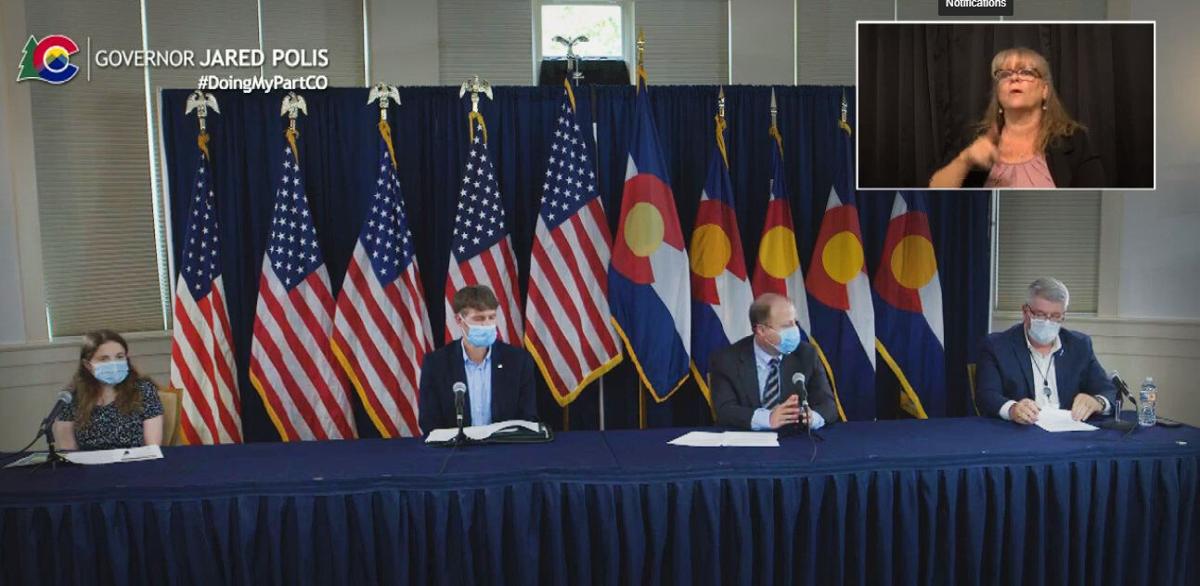
From left, Dr. Alexis Burakoff, an epidemiologist with the state health department, Dan Gibbs, executive director of the Division of Natural Resources, Gov. Jared Polis and Stan Hilkey, executive director of the Department of Public Safety, address the press at Polis' regular conference on the state's response to wildfires and the COVID-19 epidemic.
image from Facebook

Burakoff also noted that the department has been issuing alerts for unhealthy air, which are now in effect for the Front Range and Colorado Springs. She advised people to keep windows closed, and for those with central air conditioning, set it to recirculate air rather than bringing in air from the outside.
The governor also announced that the state’s positivity rate for COVID-19 is at 2.18%, the lowest it’s been since the pandemic started. He attributed it to the steps Coloradans have taken, such as wearing masks, washing hands and social distancing. But that doesn’t mean he’s ready to lift some of the restrictions, such as the last call order that requires bars and restaurants to stop serving alcohol at 10 p.m.
That executive order is due to expire at the end of the week. The state is not ready to return to a normal nightlife, Polis said. “I can confirm there is no place in America” where nightlife is ready to resume the way it existed a year ago, he said. Polis hinted that he may make some changes in that order, which is in progress.
The state is being sued over that order by the Tavern League of Colorado. A Denver District Court judge denied the league a temporary restraining order, and a trial is the next step.
Part of the reason that order isn’t being lifted: college students returning to campus, for which he said he has the greatest concerns for night-time activity. Students are returning to Colorado college campuses from around the state and nation, and from areas with a much greater problem with the virus, and that “heightens our concern.”


Trump lowers flags to half-staff for Dolly Parton: ‘The World loves you’
Naomi Lim
naomi-lim@coloradopolitics.com
Updated 13 hours ago
President Donald Trump is honoring the life of country music legend and philanthropist Dolly Parton by ordering federal buildings across the country to lower flags to half-staff for a week. “Very sad to report that Dolly Parton, one of the...
Ted Cruz suggests GOP realignment coming after Trump leaves office
Emily Hallas
emily-hallas@coloradopolitics.com
Updated 13 hours ago
Sen. Ted Cruz (R-TX) on Monday suggested the Republican Party could embrace a directional shift after President Donald Trump leaves office, a transition that promises to leave a gaping hole in the GOP. Cruz is known as a critical ally...
2 Colorado State troopers shot near Woodland Park; suspect killed
DEBBIE KELLEY
debbie-kelley@coloradopolitics.com
Updated 13 hours ago
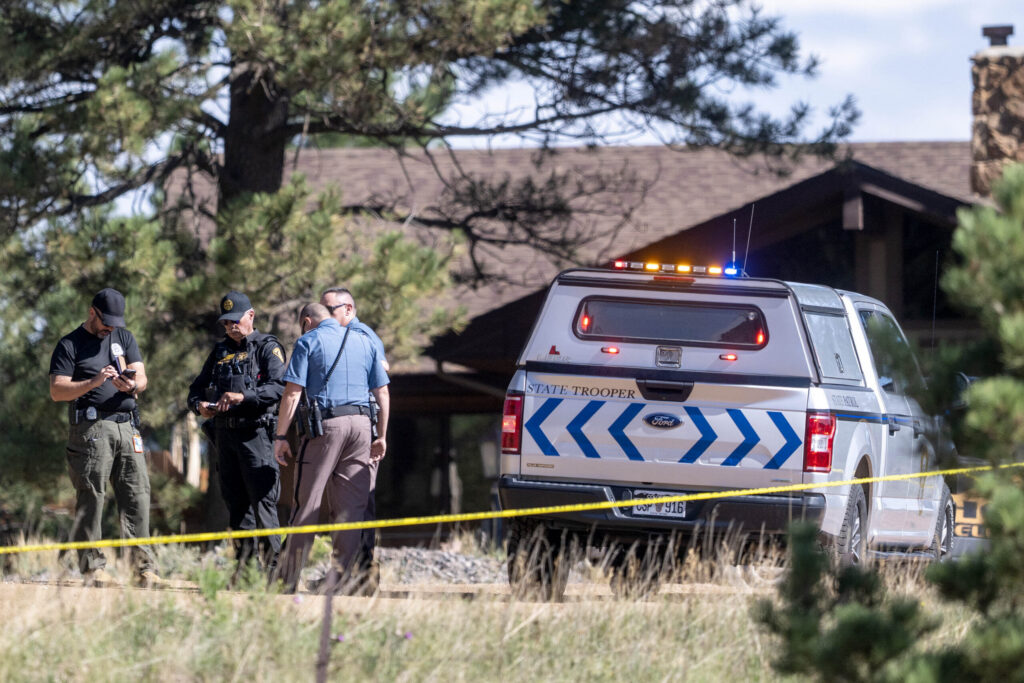
Two Colorado State Patrol troopers were hospitalized, and a suspect is dead after a shooting during a traffic stop Tuesday. The initial incident happened at about 7:15 a.m., when a resident reported suspicious activity in the area near milepost 286...

Aurora moves forward with data center regulations
Kyla Pearce
kyla.pearce@gazette.com
Updated 13 hours ago
The Aurora City Council approved moving forward with two new regulations on data centers and directed staff to come back at the next study session with others. At a council meeting in early August, council members directed city management to...

Aurora City Council considers stricter food truck regulations
Kyla Pearce
kyla.pearce@gazette.com
Updated 13 hours ago
The Aurora City Council is considering passing laws to limit the number of food trucks on properties in the city and how and when they operate. Councilmember Angela Lawson, who sponsored the ordinance, said she understands the importance of food...
Denver murder conviction reversed for incomplete self-defense instruction
Michael Karlik
michael.karlik@coloradopolitics.com
Updated 11 hours ago
Colorado’s second-highest court reversed a defendant’s murder conviction last week because a Denver judge gave an incomplete instruction to the jury about the man’s right to self-defense. Donald R. Gonzales and Gary McLaughlin met up in a Capitol Hill parking...
Colorado lawmaker, House leaders named in workplace-retaliation lawsuit
Marianne Goodland
marianne.goodland@coloradopolitics.com
Updated 14 hours ago
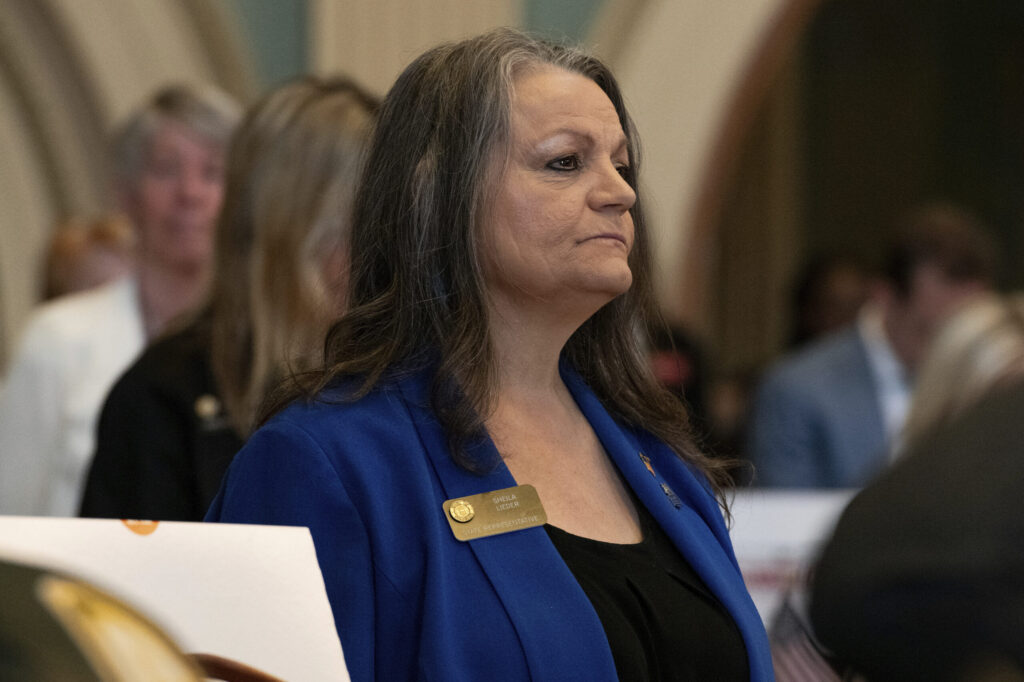
A former legislative aide has filed a lawsuit alleging she was mistreated, illegally directed to perform campaign work and harmed by a House leadership structure she charged was fragmented, politicized and ineffective at protecting employees. The lawsuit, filed by Jennifer...

Secret Service confirms awareness of Iranian state media video threatening Barron Trump’s life
The Associated Press
the-associated-press@coloradopolitics.com
Updated 19 hours ago
WASHINGTON (AP) — The U.S. Secret Service has confirmed it is aware that Iranian state media has aired a video that appears to threaten the life of Barron Trump, President Donald Trump’s youngest son. “The U.S. Secret Service is aware...
Federal judge hears arguments about Colorado’s 3-day gun purchase waiting period
Michael Karlik
michael.karlik@coloradopolitics.com
Updated 19 hours ago
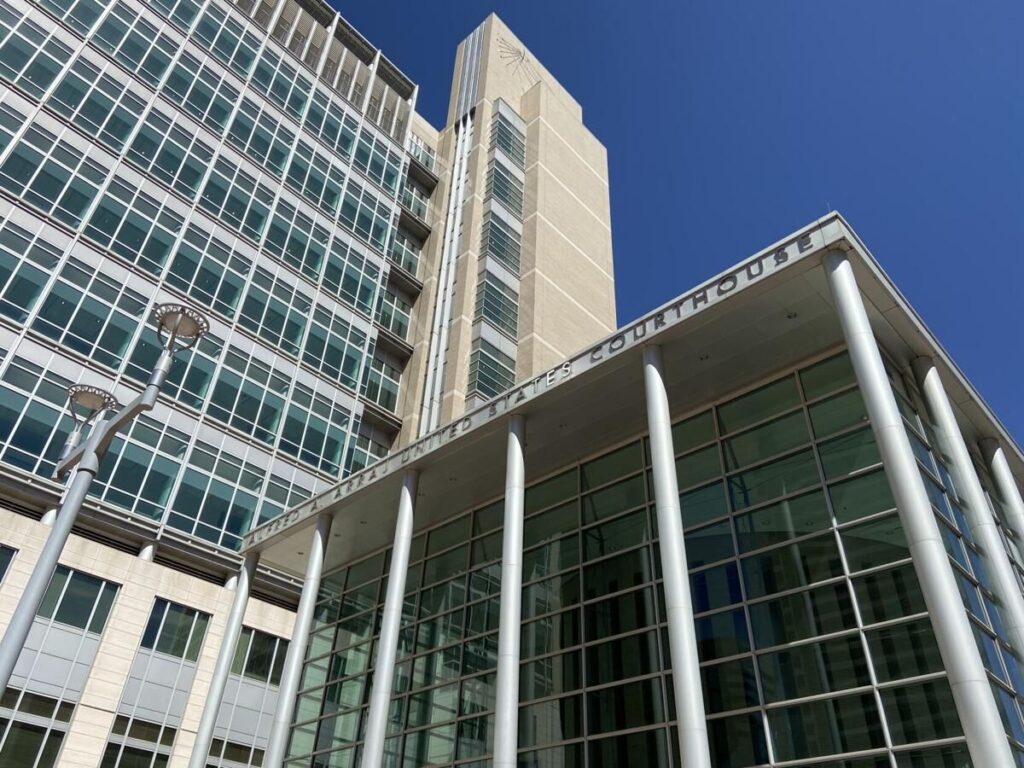
A federal judge heard arguments on Monday about the constitutionality of a 2023 Colorado law that generally imposes a three-day waiting period on firearm purchases after the initiation of a background check. The test that the U.S. Supreme Court created...

Denver auditor finds oversight failures in $175.6M 16th Street project
Nico Brambila
nico.brambila@denvergazette.com
Updated 13 hours ago
Surprise historic sewer discovery delayed completion a year, cost $18M The Denver Auditor recently found significant oversight and contracting problems with the $175.6 million 16th Street Improvement Project, including an $18 million contract increase and a nearly one-year extension that...
PREV
PREVIOUS

Jury convicts man of killing Colo. Springs mayor's son-in-law, driver in Denver crash
A Denver jury has convicted Jeffrey Sloan of killing the son-in-law of Colorado Springs Mayor John Suthers and an Iraqi refugee when he sped through a red light at 61 miles per hour last summer at a major intersection. During a nearly weeklong trial, prosecutors from the 18th Judicial District pointed to circumstances that painted […]
Rep. Leslie Herod joins CU Boulder BIPOC community call for police divestment on campus
The Black, Indigenous and People of Color community of the University of Colorado Boulder campus, joined by Democratic state Rep. Leslie Herod, have called for campus police funding divestment in favor of investment in assisting students of color. During a video conference Tuesday, members from the CU BIPOC community and diversifyCUnow, a coalition of individuals […]