

INSIGHTS | Colorado faces questions on life, death, food and shelter

More and more relief from the economic devastation of the coronavirus feels like a pipe dream, but politics has always had a way of making the blind see and the lame dance, if you listen to operatives tasked with creating an Election Day reality.
The reality of what we’re facing slowly sinks in for some Coloradans. Others remain in deep denial.
This state faces questions about how unemployed people pay their rent, whether their landlords float them credit, how we’ll feed our hungry. The Economist reports this week on the cost of wasted minds rendered by closed schools.
Partisanship, shamefully, continues to be sugar in the engine of solutions.
We have serious issues to deal with, Colorado, but we also have a proxy war for both sides that don’t want to argue about their candidates, presidential or senatorial. Coronavirus seeps through every issue, it seems.
These are bizarre times when the president not only wears a mask but declares it a symbol of American pride. Trump couldn’t help but get in a dig at the Chinese.
“We are United in our effort to defeat the Invisible China Virus, and many people say that it is Patriotic to wear a face mask when you can’t socially distance,” Trump tweeted on Monday, some three months after the Centers for Disease Control and Prevention recommended masks.
“There is nobody more Patriotic than me, your favorite President!”
The Colorado Republican Party sent out a newsletter a few hours later after hawking Make America Great Again face masks, starting at a $20.20 donation.
Polis has tried to tamp down overt partisanship in this crisis.
On Sunday, he was a guest on “This Week with George Stephanopoulos.”
“What’s important for people to know is that this is not ideological,” Polis told the nation. “It’s not partisan. It’s science-based. Masks are a ticket to more freedom. It makes it less likely that businesses will be shuttered. It makes it less likely that people will die. It makes it more likely school will return.”
Here’s what’s not number-based and shouldn’t be ideological: paying the rent.
Polis issued an executive order early on to slow evictions or foreclosures. The legislature acted, as well. Last Friday, the governor signed legislation to create a state office to spend $20 million in the federal relief for housing assistance.
Senate Minority Leader Chuck Schumer said on CNN Wednesday afternoon “there’s a whole bunch of cliffs we’re up against,” as Washington dawdles on a stimulus as unemployed people lose benefits on top of losing federal rental assistance and a moratorium on evictions. “Hundreds of thousands could be kicked out of their homes, he said.
The Eviction Defense Project claims more than 400,000 Coloradans are at risk of eviction.
The broadly held assumption is that because rent is pricey in parts of Colorado, people are more likely to be evicted. The apartment people tell me that’s not how it works. That’s like assuming a person who drives an expensive car is more likely to default on the payments. That’s putting all the chips on one faulty assumption, however.
Drew Hamrick, the senior vice president of government affairs for the Apartment Association of Metro Denver, said, for whatever reason, evictions are way down this year. Statewide, there were 90 in April, May and June. In a normal year, those three months would yield 12,550.
“The only abnormality is virtually no evictions,” Hamrick said.
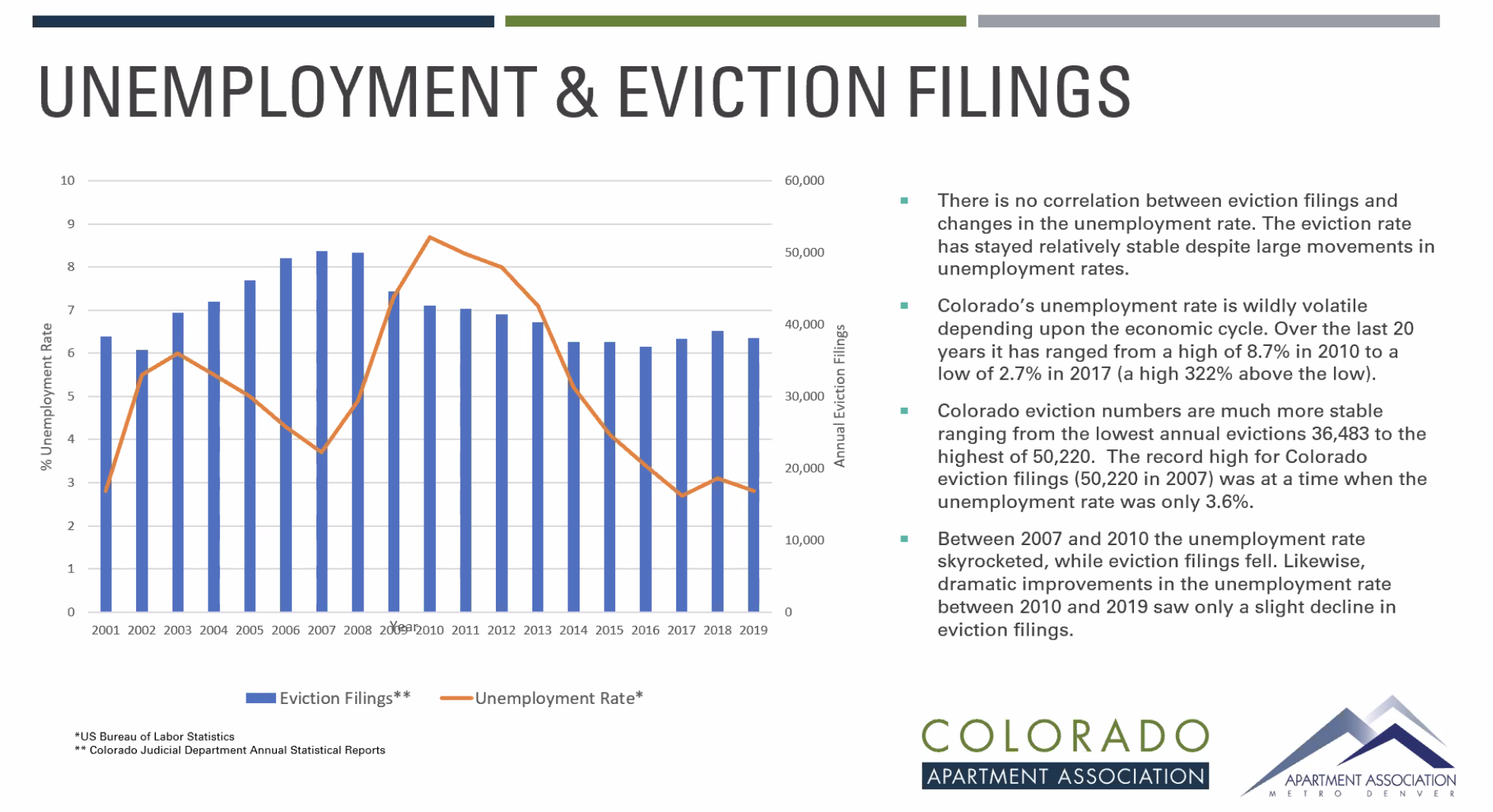
Evictions don’t track with the unemployment rate, he said, looking at the trend lines in a market report Tuesday.
The Colorado Apartment Association noted that the most evictions in one year, 50,220, was in 2007, when the unemployment rate was a very low 3.6%.
Charts show evictions are higher when the economy is booming than when money is tight. Optimism breeds options, concern makes people conservative.
“My belief is that’s because of the motivation of the parties,” Hamrick said. “The property owner, when times are good, believes he has a new customer just waiting for that unit, and likewise, the resident believes they’ve got another unit that’s as good or better coming.
“In worst times, people are working a lot harder to preserve the transaction. The landlord doesn’t make any money at all on an empty unit, and, obviously, all of us need a place to live.”
Prices are more likely to come down. That’s widget-level economics. That’s also what’s happening.
Compared to the second quarter of 2019, average rent in metro Denver dropped by 30 bucks a month to $1,506 this year.
Meanwhile, Lt. Gov. Dianne Primavera was putting out a message more basic than a roof over people’s heads: the food in their stomachs.
She shot a video for Hunger Free Colorado to urge Colorado’s U.S. senators, Republican Cory Gardner and Democrat Michael Bennet, to make feeding families a priority in the next stimulus package by increasing SNAP benefits by 15%.
“The need for food continues to grow and the economic impacts of the pandemic won’t let up anytime soon,” Primavera said. “Rationing meals is the last thing Colorado families need right now.”
The Colorado that existed in January is in the history books that seem like a fantasy now. If Colorado wants to get out of this, it has to get real.


Colorado’s 661‑page budget read aloud after Rep. Bradley invokes procedural rule
Marianne Goodland
marianne.goodland@coloradopolitics.com
Updated 2 hours ago
A rarely used procedural move by Rep. Brandi Bradley, R‑Roxborough Park, has thrown the Colorado House into an extended slowdown, after she invoked her right to have the 661‑page state budget bill read aloud in full. While unprecedented, once Bradley...
Literal reading of budget bill complicates Colorado legislators’ plans for GOP assembly
Marianne Goodland
marianne.goodland@coloradopolitics.com
Updated 32 minutes ago
Republican Rep. Brandi Bradley’s decision to force the full reading of the state budget — called the “long bill” for its obvious length — has not only slowed House business to a crawl but also disrupted her colleagues’ plans for...
10th Circuit provides guidance on police searches of cloud-based data
Michael Karlik
michael.karlik@coloradopolitics.com
Updated 3 hours ago
The Denver-based federal appeals court provided guidance to law enforcement agencies on Monday for ensuring that searches of cloud-based accounts comply with the Fourth Amendment’s requirements. A three-judge panel of the U.S. Court of Appeals for the 10th Circuit noted...

Inflation jumped to 3.3% in March as Iran war drove up oil prices
Zach Halaschak, Washington Examiner
zach.halaschak.washington.examiner@gazetteedit.wpenginepowered.com
Updated 6 hours ago
Inflation spiked in March, rising nine-tenths of a percentage point to 3.3% on the year, as towering energy prices drove up the headline number. The Bureau of Labor Statistics reported the update to the consumer price index on Friday. The...
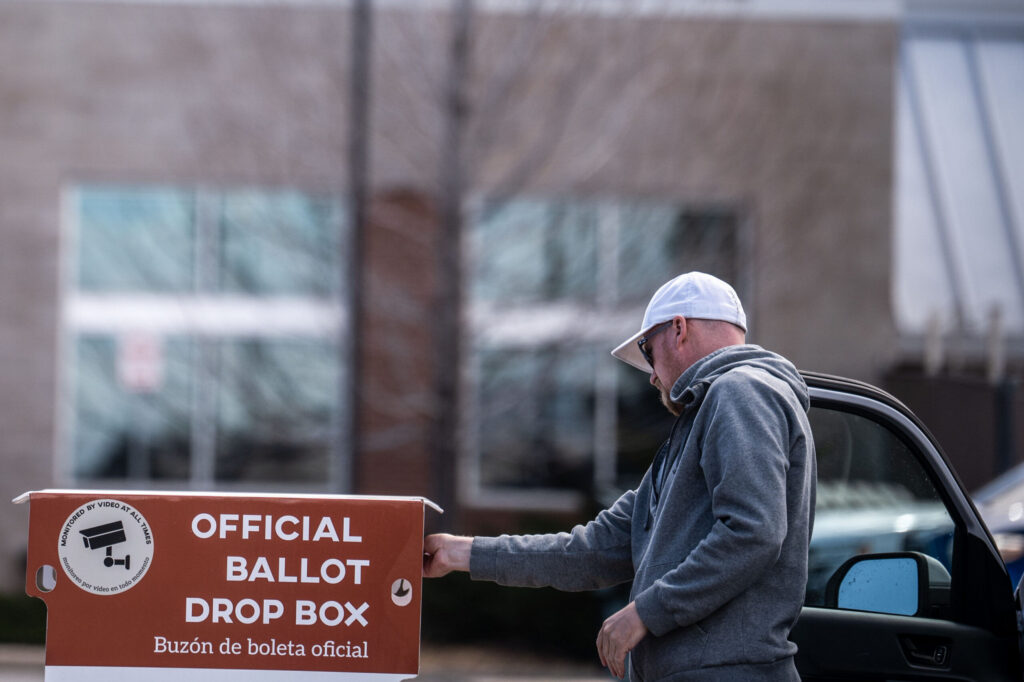
Colorado GOP votes down bid to ask court to prevent unaffiliated voters from voting in June primary
Ernest Luning
ernest.luning@coloradopolitics.com
Updated 2 hours ago
Members of the Colorado Republican Party’s executive committee rejected a proposal Thursday night to seek an emergency injunction in federal court to prevent unaffiliated voters from participating in the state’s upcoming June primary election. The proposed motion, backed by Colorado...
Federal judge releases man after 2 immigration judges disobey order
Michael Karlik
michael.karlik@coloradopolitics.com
Updated 7 hours ago
A federal judge released a man from immigration detention on Thursday after two different immigration judges disobeyed his order in the same case. “At this point, the Court has granted Respondents two bites at the apple to prove detention of...

City of Northglenn, state fail to reach agreement on mental health facility amid safety concerns
Marissa Ventrelli
marissa.ventrelli@coloradopolitics.com
Updated 58 minutes ago
The City of Northglenn said it was unable to reach an agreement with the state on a pair of transitional living facilities for individuals with mental health conditions run by the Colorado Department of Human Services. The facilities, located across...
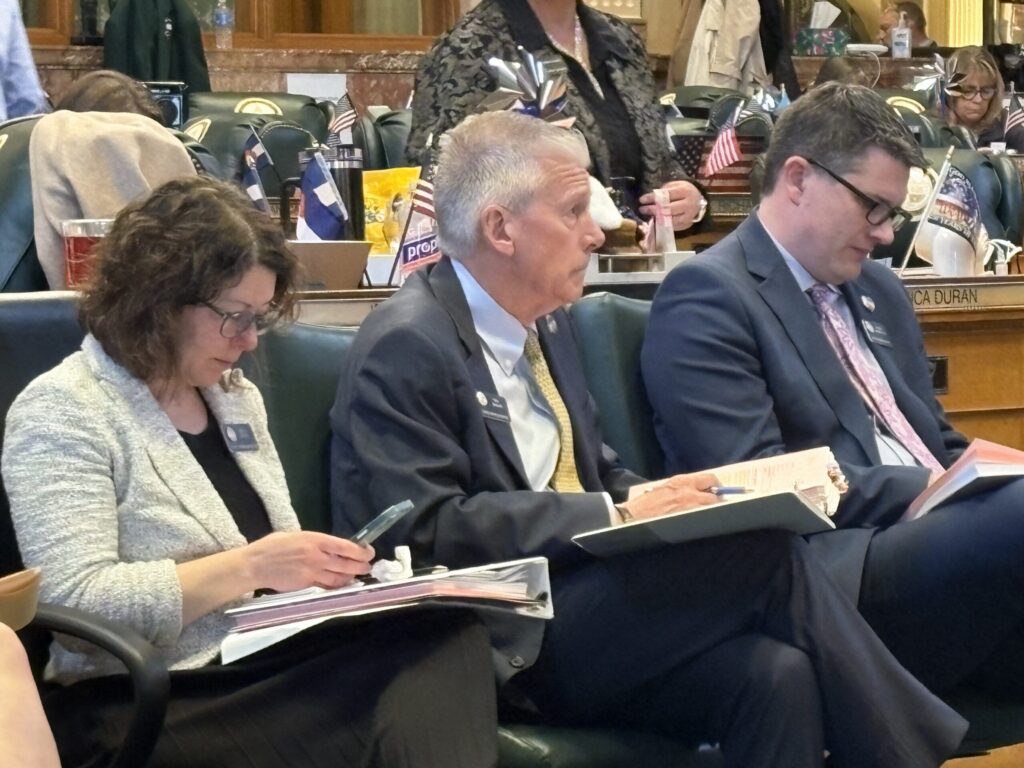
Colorado lawmakers grapple with spending cuts amid $1 billion-plus deficit
Marianne Goodland
marianne.goodland@coloradopolitics.com
Updated 22 hours ago
The battle over Colorado’s budget for next year — which stalled in the House over a procedural maneuver — entered a more difficult phase on Thursday, when legislators grappled with hundreds of millions of dollars in proposed reductions to balance...

New rules for private judges in Colorado include discipline oversight, campaign contributions
David Migoya
david.migoya@gazette.com
Updated 1 day ago
The Colorado Supreme Court recently determined the state’s private judges — retired jurists appointed to oversee civil cases that rarely get public scrutiny — can now make political contributions freely and without reserve, overruling a prohibition that had been in...

Colorado bill reshaping RTD board advances
Marissa Ventrelli
marissa.ventrelli@coloradopolitics.com
Updated 1 day ago
A proposal to reshape the Regional Transportation District’s leadership easily cleared a committee vote Wednesday, advancing the bill sponsors say is needed to revive a transit system still struggling to regain riders and public trust. Critics have countered that, while...
PREV
PREVIOUS
Despite COVID-19 risk, bar owners seek to overturn capacity limits
The Tavern League of Colorado, which represents 200 alcohol-serving establishments, has filed a lawsuit against the state health department for imposing numerical caps on their capacity in an alleged violation of their 14th Amendment right to equal protection under the law. “Defendants have singled out bars and restaurants for unfair and different treatment, despite the […]

CU researchers develop rapid COVID-19 test
At a time when the wait for COVID-19 test results exceeds one week in many parts of the country, researchers at the University of Colorado have developed a saliva-based test that can deliver results in 45 minutes. “Every test that has been approved to date requires that the sample, even if it’s saliva, be processed […]