

Capacity limits, not mask compliance, present ‘biggest challenge’ for Colorado restaurants

Colorado restaurants continue to struggle to stay in business amid the coronavirus pandemic, despite ongoing policy efforts to help keep them afloat.
The latest Colorado Restaurant Association report from June shows that capacity limits are “the biggest challenge” for restaurants, said Sonia Riggs, the head of CRA. Two-thirds of the more than 220 restaurants surveyed by the CRA say they’re turning people away due to capacity limits.
“Even with outdoor expansion programs,” Riggs said, nearly 80% of restaurants are still operating below 50% capacity. More than a third are operating below 30% of their normal capacity.
“Large spaces have been especially squeezed,” she said, as the state’s 50% capacity or 50-person cap, whichever is lower, has meant some are restaurants have been forced to operate below 10% capacity.
“If we don’t see these things change quickly, more than half of Colorado’s restaurants may close by September,” Riggs warned, adding that additional revenue streams, such as the ability to sell alcohol to-go and for delivery, “are critical.”
For some restaurants, she said, “this will be the difference between them surviving and closing permanently.”
Earlier this week, one of Denver’s most beloved restaurants, Racines, announced it was closing for good – months ahead of schedule – due, in large part, to financial complications caused by the pandemic.
On the upside, Riggs points out, about 72% of Colorado restaurants report their diners are complying with face mask rules. Another 88% say patrons are adhering to social distancing requirements.
As cases of the coronavirus are on the rise again in Colorado, local leaders are taking steps to respond, with some – including Denver Mayor Michael Hancock – committing to shut down the local economy for a second time if necessary.
“A second closure would be devastating to restaurants, who are still in an incredibly tenuous position given capacity limits,” Riggs said. “We hope the public does its part to comply with current public health guidelines so that it doesn’t come to that. If indoor dining does close again, that will make outdoor expansion programs all the more important.
“Regardless of what happens with indoor capacity, we are pushing for continued expansion of these programs,” she said, “as they will be a lifeline for restaurants well into the fall as well as next year as restaurants begin to recover.”
In Denver, at least 250 outdoor expansions for restaurants and bars have been approved to give local businesses the opportunity to allow sit-down service while adhering to social distancing guidelines.
As part of the initiative, which kicked off May 18, Denver has closed several streets, including 25th Street from Larimer to Lawrence streets. The city also approved 148 right-of way closures that include partial closures of sidewalks, parking lanes and travel lanes, and is now temporarily allowing “communal dining” that allows multiple restaurants to share a common space outside.
Roughly 2,800 establishments are eligible to apply, according to city spokesperson Heather Burke, including coffee shops, cafes, wineries and distilleries, or other similar places offering food or alcohol. Restaurants and bars are encouraged to submit proposals online, “with considerations for safety, mobility, and local emergency access.”
Once approved, the temporary program will be available through Labor Day, at which point the city will decide whether to extend the opportunity.



10th Circuit rules cognitively impaired man’s risk of lobotomy, mistreatment in Mexico not ‘torture’
Michael Karlik
michael.karlik@coloradopolitics.com
Updated 10 hours ago
The Denver-based federal appeals court concluded last month that a man’s risk of mistreatment or forced lobotomy in his native Mexico did not amount to “torture” that should shield him from deportation. A three-judge panel of the U.S. Court of...
Colorado justices side with news organizations for disclosure of high-level child abuse data
Michael Karlik
michael.karlik@coloradopolitics.com
Updated 14 hours ago
The Colorado Supreme Court ruled on Monday that the state must disclose the number of child abuse reports at individual group living facilities in response to an open records request, as the addresses are already in the public domain. The...
Divided Colorado Supreme Court finds Denver detective did not violate defendant’s Miranda rights
Michael Karlik
michael.karlik@coloradopolitics.com
Updated 10 hours ago
The Colorado Supreme Court determined on Monday that a Denver detective did not improperly resume questioning of a defendant in custody after he invoked his right to counsel. By 4-3, the justices reversed a trial judge’s order that found a...

Colorado Gov. Polis signs social media warrant bill after last year’s veto
Marissa Ventrelli
marissa.ventrelli@coloradopolitics.com
Updated 11 hours ago
Colorado law enforcement will soon have faster access to digital evidence after Gov. Jared Polis signed a pared‑down bill requiring social media companies to acknowledge and respond to search warrants on a tight timeline, a shift from a broader proposal...
Under fire from legislators and critics, Colorado’s top Medicaid official resigns
Marianne Goodland
marianne.goodland@coloradopolitics.com
Updated 14 hours ago
Colorado’s top Medicaid official stepped down on Monday, just as a bipartisan bloc of state senators prepared to formally urge Gov. Jared Polis to remove her over what they called years of mismanagement, waste and costly errors inside the state’s...

Usha Vance launches story time podcast in latest second lady venture
Asher Notheis, Washington Examiner
asher.notheis.washington.examiner@gazetteedit.wpenginepowered.com
Updated 20 hours ago
Second lady Usha Vance unveiled her new story time podcast of reading children’s stories on Monday. The podcast, Storytime with the Second Lady, features either her reading books or inviting a special guest to read, and is part of her...

Out-of-state judges address ex-discipline director’s lawsuit, Colorado justices accept federal invitation | COURT CRAWL
Michael Karlik
michael.karlik@coloradopolitics.com
Updated 22 hours ago
Welcome to Court Crawl, Colorado Politics’ roundup of news from the third branch of government. A pair of out-of-state judges got down to business in a lawsuit brought by Colorado’s former judicial discipline director, plus the state Supreme Court has...
Power grid shutdowns in Colorado bring protection — and problems
Scott Weiser
scott.weiser@gazette.com
Updated 11 hours ago
A downed power line in Sunshine Canyon in the mountains west of Boulder in December posed an electrocution risk to firefighters and bystanders after Xcel Energy re-energized it without repairing it, despite being notified of the break the day before....
Aurora wildland fire contained at Buckley Space Force Base
Nicholas Fogleman
nicholas.fogleman@denvergazette.com
Updated 22 hours ago
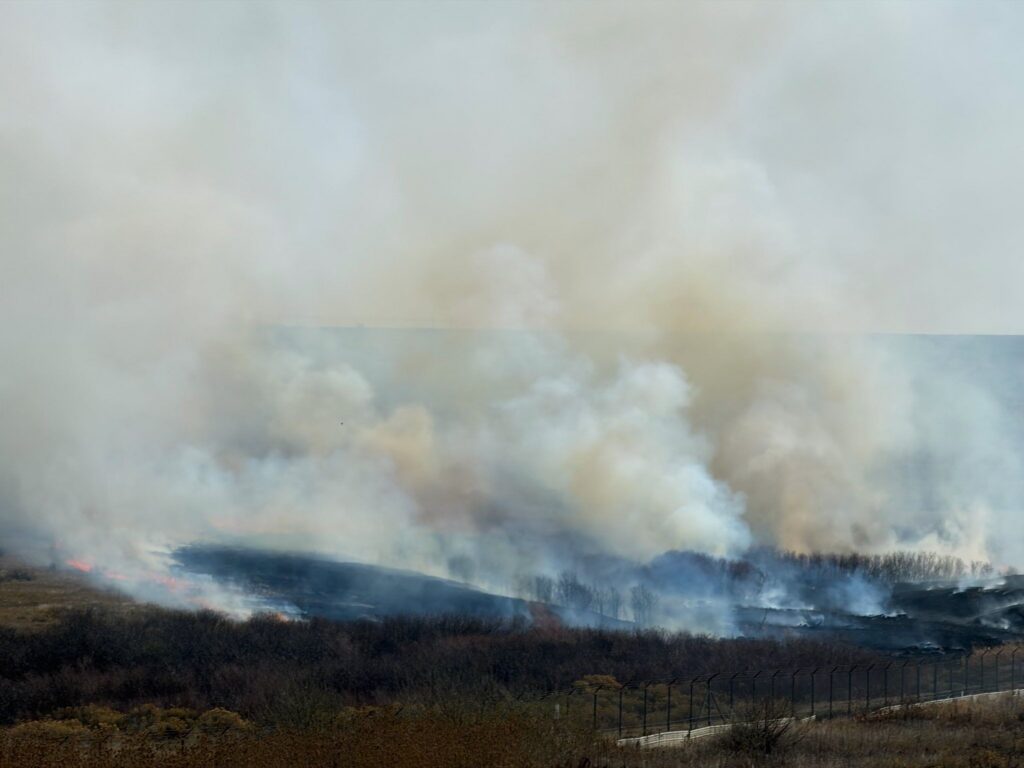
A wildland fire burned Sunday morning on the southwest end of Buckley Space Force Base in Aurora, authorities said. The fire no longer posed a threat and crews were clearing the scene as of 10:53 a.m., according to Aurora Fire...

Unsustainable: How Colorado’s Medicaid spending exploded
Nico Brambila
nico.brambila@denvergazette.com
Updated 24 hours ago
The state’s Medicaid program — which covers about one in four Coloradans — is poised for its largest single-year jump in at least two decades, with officials proposing a $2.3 billion increase, even as lawmakers face a $1.5 billion budget...
PREV
PREVIOUS

Gov. Jared Polis taps former Colorado Democratic Party chair Rick Palacio as chief of staff, temporarily
Just three months after announcing he was joining the powerhouse law and lobbying firm Brownstein Hyatt Farber Schreck, Rick Palacio is stepping into a new role, albeit temporarily: chief of staff to Gov. Jared Polis. Polis announced Thursday morning that Palacio will serve as interim chief of staff while Lisa Kaufmann, who’s been Polis’ chief […]

BREAKING: Gov. Jared Polis, responding to growing calls, to issue mask mandate
Amid growing calls from Democratic lawmakers, small business owners and an online petition, multiple sources have told Colorado Politics that Gov. Jared Polis will issue an executive order Thursday mandating all Coloradans wear masks when they are in public. The governor is expected to announce the decision at a 12:45 p.m. press conference Thursday. A […]