

HUDSON | Our leaders showed leadership amid COVID
Writing in Foreign Affairs this month, the Stanford political scientist Frances Fukuyama argues the COVID-19 pandemic has scheduled a planetary stress test for the strength of national governments and their internal political order. Successful containment has been achieved by both democracies and autocracies – abject failures as well. He posits the three ingredients required for success have been state capacity (economic strength and health system readiness), social trust and political leadership. Polarization and visceral mistrust of government, when paired with blinkered leadership, has produced a leader-of-the-pack public health failure in the United States despite nearly unlimited social capacity. Unfortunately, viral pandemics don’t lend themselves to hiring Joe Shapiro to sit for your SAT exam, as Donald Trump reportedly did according to his niece Mary’s imminent memoir.
COVID-19 containment is not a battle that can be conclusively won, but an unpredictable sequence of surprise attacks that must be survived while minimizing disruption and death. Within our federal system, state governments have faced their own stress tests. Early success, where the “poster boy” for engaged competency was Gov. Gavin Newsom of California, has overrun him with a second wave of infections. So, how is Colorado doing? Jared Polis was ambushed in late March thanks to international visitors, most notoriously a group of carousing Australians who responded to being booted off the slopes in Aspen by fleeing in their rental cars to Vail and Breckenridge for more skiing. It turns out coping with this viral conflagration along Colorado’s mountain corridor provided important lessons.
The legislature shut down with a minimum of intramural grumbling, fled for home and dove under their beds. Few objected to the governor’s decision to lock down businesses statewide. This also paid off. Upon their return to the Capitol last month, the legislature surprised most observers, myself included, by jettisoning the wedge legislation remaining on their desks and striking agreements on a 15% slashing of state budgets. When confronted with public outrage following the police killing of George Floyd in Minneapolis, they struck a first-in-the-nation and surprisingly swift compromise to bring muscular policing to heel. Considerable credit must go to House Speaker KC Becker, Senate President Leroy Garcia, and JBC Chair Daneya Esgar. Yes, these Democrats were in charge, but Republican Senate and House leaders Chris Holbert and Patrick Neville deserve pats on the back for discerning teamwork was required.
It wasn’t a bipartisan lovefest by a long shot, but former Weld County Sheriff and now Republican state Sen. John Cooke and House Judiciary Vice Chair and Democrat Leslie Herod crafted a compromise that recognized public disgust without demonizing law enforcement. Republican Sen. Bob Rankin persuaded JBC Democrats that most cotton candy budget expenditures should be yanked. Taken together, these results partially restore my faith in the possibility that protecting the public interest in Colorado can be a shared responsibility rather than a rock-throwing fight. Dealing with the urgencies of the here and now precluded mush discussion of our “over the horizon” challenges. School finance remains a mess. Transportation funding is the ghost in the attic that everyone can hear dragging its shackles across the Capitol ceiling, and embedded constitutional strictures on taxation and revenues continue to distort spending.
The bipartisan decision to place repeal of the Gallagher Amendment on November’s ballot represents a Hail Mary effort to unravel the Gordian knot of fiscal rules strangling local governments yet seems doomed to fail, absent a massive and expensive public finance tutorial. Voters rejected the most recent repeal attempt by a two-to-one margin. Without a framework of comprehensible structural reforms offered as a package, it seems doubtful homeowners will discard their residential property tax shelter in 2020. The handful of competing fiscal proposals still attempting to reach the ballot face a stiff headwind collecting signatures during a pandemic. The Colorado Supreme Court did them no favor when it ruled that the failure to provide a constitutional alternative to personally witnessed signatures as part of the initiative process, even during a state of emergency, was just tough luck. The failure to anticipate the internet and electronic signatures shouldn’t blind us to their existence today.
Although fringe critics speculate our politicians are wallowing in hog heaven, tickled to death for the opportunity to tell us how to behave – closing bars and gyms, requiring masks and social distancing – nothing could be further from the truth. Jared Polis didn’t run for Governor jonesing to exercise emergency powers. Whatever legacy ambitions he may have brought to his new job are now on hold for a second term. He must tiptoe through a minefield, wary of further outbreaks and an economic crisis that seems likely to persist. Damage control will dominate the next Legislature. Bungle that job and incumbency will become a liability, regardless of party.
But maybe, just maybe, Colorado can be different. We’re in this together after all.

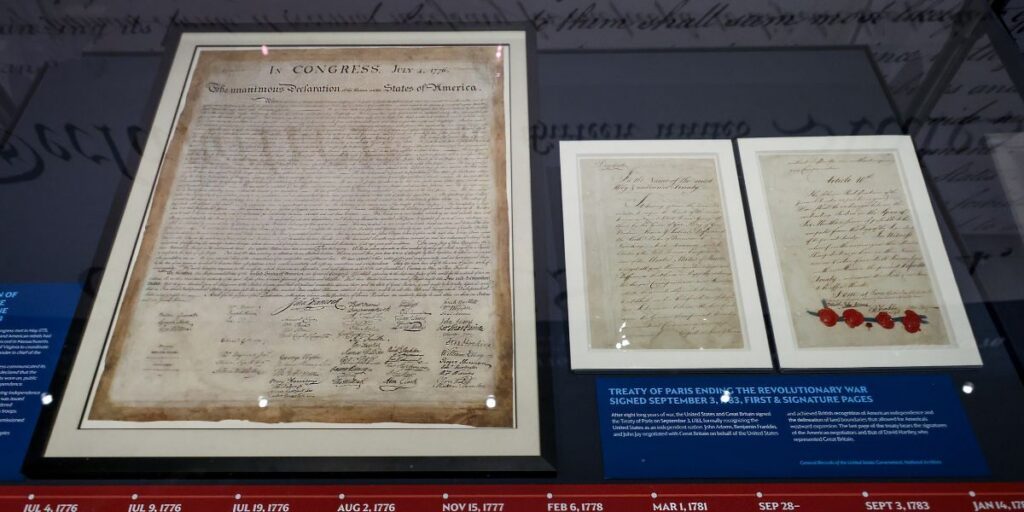
Founding documents reconnect us to our shared American roots – and rebelliousness | Vince Bzdek
Vince Bzdek
vince.bzdek@gazette.com
Updated 11 hours ago
When you first lay eyes on the actual founding documents of our country that, for the first time in history, have traveled together from their gilded cages in Washington to visit us out here in the hinterlands, you’re struck not...
Attorney General Phil Weiser’s underdog campaign for Colorado governor| Cronin and Loevy
Tom Cronin Bob Loevy
tom-cronin-bob-loevy@coloradopolitics.com
Updated 4 hours ago
Phil Weiser, 58, Colorado’s attorney general, is in a heated race against U.S. Sen. Michael Bennet, 61, for the Democratic nomination for governor. They are friends and share mostly similar progressive, Democratic policy views. Primary election day is June 30....
Would you hire Jena Griswold to handle your case? | SONDERMANN
By Eric Sondermann
by-eric-sondermann@coloradopolitics.com
Updated 4 days ago
If you were in a child custody dispute with a former spouse, would you hire an attorney with experience in family law or would you trust your case to an operative with virtually zero mastery? If you were getting ready...
Trends to track as Colorado’s in precarious position pre-gubernatorial primaries | Paula Noonan
Paula Noonan
paula-noonan@coloradopolitics.com
Updated 3 days ago
As they say on Colorado Public Radio’s Marketplace, let’s do the numbers. April 2026 voter registrations continued a long-term Colorado trend with a large majority of new or changed voter registrations joining the unaffiliated cohort. Total registrations of Democrats, Republicans...
High-potency hemp products are hurting Colorado kids | GUEST COLUMN
Colorado Politics
colorado-politics@coloradopolitics.com
Updated 3 days ago
By Heidi Lawrence Six years ago, my daughter, by most metrics, was a typical overachieving teenager. She was a straight-A, pre-professional ballet dancer. She loved school and art, had lots of friends, and above all else, she was kind, funny...
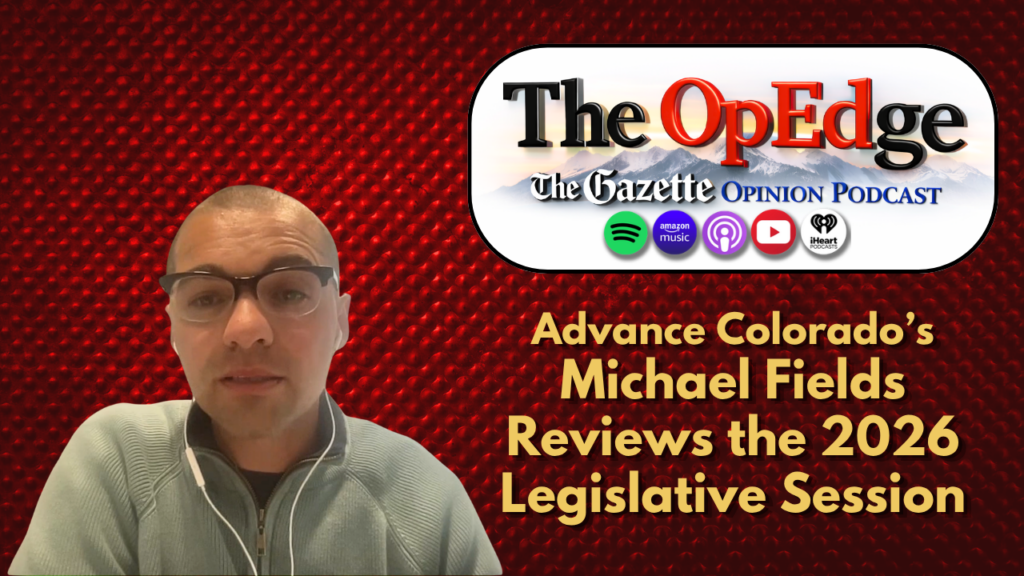
Michael Fields reviews Colorado’s 2026 legislative session | The OpEdge Podcast
Tony Olivero
tony.olivero@gazette.com
Updated 4 days ago
Michael Fields, executive director of Advance Colorado, joins OpEdge host and investigative columnist Jimmy Sengenberger to assess the good, the bad and the ugly of the Colorado General Assembly’s 2026 legislative session. Reflecting on the 120 bills passed in 120...
From secret huddles to Zebulon — the high cost of the Dougco BOCC’s shady governance | PODIUM
Colorado Politics
colorado-politics@coloradopolitics.com
Updated 4 days ago
By Bob Marshall, Lora Thomas and Julie Gooden In Douglas County, a new and dangerous standard of governance has taken root: if the public doesn’t like your plan, simply stop letting the public in the room. During the last year,...
Election must be decided on issues of combating public corruption, restoring integrity in government | FEEDBACK
Colorado Politics
colorado-politics@coloradopolitics.com
Updated 4 days ago
There has been considerable press and outrage regarding Gov. Jared Polis’ commutation of former Mesa County Clerk and Recorder Tina Peters’s remaining prison sentence. The outrage is reinforced by President Donald J. Trump’s creation of a $1.776 billion compensation fund...
Is the ‘penumbra of privacy’ going, going, gone in Colorado? | Hal Bidlack
Hal Bidlack
hal-bidlack@coloradopolitics.com
Updated 5 days ago
Once again, there are too many things in Colorado Politics that are newsworthy and should be written about. Unless my kindly editor will allow me to write a book-length column this week? (Ed: not so much…) First up, I’d like...

Quiet at the state Capitol doesn’t mean silence on energy policy | GUEST COLUMN
Colorado Politics
colorado-politics@coloradopolitics.com
Updated 5 days ago
By Carly West By many accounts, Colorado’s 2026 legislative session was unusually quiet on oil-and-natural-gas policy. There was no sweeping new oil-and-natural-gas package. No major new production restrictions. After years of contentious energy debates dominating the Capitol, the relative quiet...
PREV
PREVIOUS

FEEDBACK | Gardner gives DACA a cold shoulder
Recently, the Supreme Court ruled that the Trump administration did not have the authority to terminate the Deferred Action for Childhood Arrivals program, or DACA. Since 2012, DACA has allowed undocumented immigrants who were brought to the U.S. as children to remain here if they meet certain criteria. The Supreme Court’s decision is worth […]

SENGENBERGER | 'Teaching to the test' cheats kids
Jimmy Sengenberger Last week, the Colorado State Board of Education unanimously approved a measure enabling school districts to “choose their own way of determining if (high school) students are proficient in English and math, instead of using the 11 ways the state had approved.” Not only does it make sense to ensure school districts can assess […]